

United Airlines on Monday experienced and subsequently resolved a "widespread system outage" that briefly impacted its departing flights, adding to a period of significant operational challenges for the U.S. air travel industry. The technology issue, which the airline confirmed was not a cyberattack, led to delays for numerous United flights across its network, though the carrier assured that flights already in progress and those operated by United Express were unaffected. This incident unfolded just three days after a major nationwide ground stop orchestrated by the Federal Aviation Administration (FAA) had brought air traffic to a standstill, raising renewed concerns about the resilience of critical aviation infrastructure.
A Monday Morning Disruption at United
The operational hiccup for United Airlines began early Monday, November 15, 2026, when reports of system failures started to surface across various operational departments. The airline swiftly acknowledged the issue, describing it as a "technology issue" affecting flight departures. While specific details on the nature of the system failure were not immediately released, an internal message circulated by the Air Line Pilots Association (ALPA), representing United pilots, shed further light on the severity of the problem. According to the message, which was seen by CNBC, the outage was "affecting multiple pilot facing applications" and, critically, prevented United from providing "outbound flights with final weights."
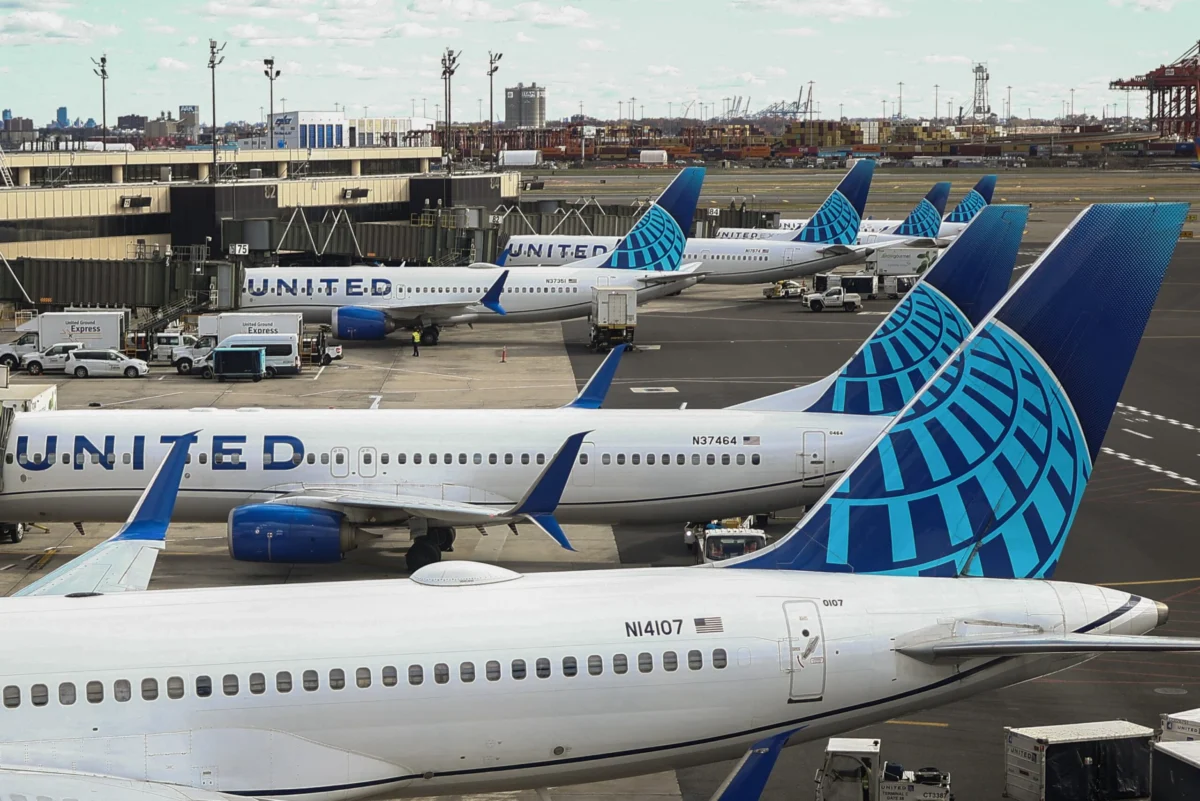
The inability to accurately determine final weights for departing aircraft is a fundamental safety and operational requirement. Pilot-facing applications are integral to modern flight operations, encompassing systems for flight planning, weather briefings, navigation data, crew scheduling, and the crucial weight-and-balance calculations that ensure an aircraft is loaded safely and efficiently for takeoff. Without precise weight data, aircraft cannot be dispatched, leading to immediate ground stops and cascading delays. The affected flights were primarily those scheduled to depart from United’s major hubs, including Newark Liberty International Airport (as depicted in the image on November 15, 2026), Chicago O’Hare, Denver International, Houston George Bush Intercontinental, and San Francisco International.
Within a relatively short timeframe, United Airlines announced that the issue had been resolved. "We have resolved a technology issue that delayed flight departures," the airline stated, emphasizing the minimal broader impact. The prompt resolution helped mitigate a more extensive disruption, limiting the number of cancellations compared to what might have occurred with a prolonged outage. Despite the quick fix, the incident underscored the inherent vulnerabilities in the highly complex and interconnected IT systems that underpin modern airline operations.
The Shadow of the FAA Ground Stop: A Week of Turmoil
United’s Monday outage occurred against a backdrop of heightened scrutiny on the reliability of air travel systems, coming just days after a far more extensive disruption: a nationwide ground stop issued by the FAA on Friday, November 12, 2026. This unprecedented measure, which halted all domestic departures for over four hours, sent ripples of chaos across the country, snarling travel plans for millions of passengers and resulting in widespread delays and cancellations that persisted throughout the weekend.
The FAA ground stop, initiated early Friday morning, stemmed from a critical system failure within the Notice to Air Missions (NOTAM) system, which pilots rely on for vital safety information such as runway closures, navigational hazards, and airport conditions. Transportation Secretary Sean Duffy later attributed the root cause of the NOTAM system’s collapse to a router in Arkansas that had "overwhelmed systems that feed radar and other data for air traffic control." FAA Administrator Bryan Bedford further elaborated, stating that the issue arose during "routine" maintenance intended to upgrade the system from older copper wires to more robust fiber optic infrastructure.
The explanation of a single router causing such a widespread, systemic failure raised significant questions about the FAA’s technological redundancy and disaster recovery protocols. The NOTAM system is not merely an advisory service; it is a critical component of air traffic safety, providing real-time data that pilots and air traffic controllers use to make informed decisions. Its incapacitation led directly to the FAA’s decision to implement the ground stop as a safety precaution, preventing flights from departing without essential information.
The ripple effects of the FAA ground stop were profound. Thousands of flights were delayed or canceled, impacting major airline operations across the country and disrupting connecting flights globally. Passengers faced hours-long waits at airports, uncertain rebooking options, and significant frustration. While FlightAware data indicated significantly fewer flight delays and cancellations on Monday compared to the preceding Sunday, the cumulative effect of two distinct, major disruptions within a single week left many questioning the overall stability of the nation’s air travel infrastructure.
Technical Glitches and Systemic Vulnerabilities
The fact that United’s outage on Monday was distinct from the FAA’s Friday incident—with no indication that the two were related—highlights a broader, systemic challenge facing the aviation sector: the increasing reliance on complex digital infrastructure that, while enabling efficiency, also introduces new points of vulnerability.
Airline IT systems are intricate networks managing everything from passenger reservations, ticketing, and baggage handling to flight planning, crew scheduling, maintenance logs, and fuel management. A glitch in one critical module, such as the "pilot-facing applications" affecting United, can quickly cascade and bring operations to a halt. For instance, if the system responsible for calculating an aircraft’s precise weight and balance—accounting for passengers, cargo, fuel, and crew—becomes inoperable, the aircraft cannot safely depart. This critical data ensures that the plane’s center of gravity is within safe limits for takeoff and flight.
The FAA’s NOTAM system failure, on the other hand, underscored the fragility of essential air traffic control infrastructure. The transition from copper to fiber optics is a necessary modernization effort, promising greater bandwidth and reliability. However, the incident revealed a critical flaw in the execution or redundancy planning for such upgrades, where a single point of failure could disable a nationwide system. This raises questions about whether sufficient testing, fallback systems, and contingency plans were in place to prevent such an widespread impact during a scheduled maintenance activity.
Industry analysts have frequently pointed to the challenges airlines face in maintaining and upgrading their legacy IT systems, many of which have evolved over decades through mergers and acquisitions. These systems often involve a patchwork of older and newer technologies, making them complex to manage and susceptible to unexpected interoperability issues. The cost and complexity of a complete overhaul can be prohibitive, leading airlines to implement incremental upgrades that may not fully address underlying architectural weaknesses.
Official Responses and Calls for Resilience
United Airlines, in its statement, expressed regret for the inconvenience caused to passengers and affirmed its commitment to resolving such technical issues swiftly. The swift resolution on Monday likely averted a larger operational crisis for the airline. However, the ALPA’s internal communication underscored the operational gravity of the situation from the pilots’ perspective, emphasizing that crucial tools were unavailable. Such internal communications are vital for maintaining operational transparency and ensuring pilots are fully aware of any limitations affecting their duties.
From a broader regulatory perspective, the back-to-back incidents are likely to intensify scrutiny from the Department of Transportation (DOT) and Congress. Secretary Duffy’s candid assessment of the FAA’s router failure indicated a recognition of the severity of the Friday ground stop. Moving forward, both the FAA and individual airlines may face increased pressure to demonstrate the robustness of their IT systems, including redundancy measures, cybersecurity protocols, and comprehensive disaster recovery plans.
The economic implications of such disruptions are substantial. While United’s Monday outage was contained, the FAA ground stop on Friday likely cost airlines tens of millions of dollars in lost revenue from cancellations, rebooking expenses, and compensation to affected passengers. Beyond direct costs, there are indirect economic impacts from missed business meetings, disrupted supply chains, and reduced tourism. The cumulative effect of these incidents also erodes passenger confidence, potentially leading to a reluctance to book future travel if reliability concerns persist. A 2023 analysis by the Airlines for America (A4A) trade group estimated that flight delays and cancellations cost the U.S. economy billions annually, factoring in lost productivity and airline operational expenses.
The Path Forward: Investment and Vigilance
The events of November 2026 serve as a stark reminder of the delicate balance between technological advancement and operational resilience in the aviation industry. As air travel volumes continue to recover and grow, the demands on underlying infrastructure—both airline-specific and national air traffic control systems—will only increase.
The incidents highlight a critical need for continuous investment in modern, resilient, and secure IT infrastructure. For airlines, this means not only upgrading passenger-facing systems but also ensuring the core operational platforms, such as those governing flight dispatch and crew management, are robust, redundant, and capable of seamless failover in the event of an outage. For the FAA, the focus must be on enhancing the resilience of critical air traffic control systems, improving maintenance protocols, and ensuring that modernization efforts do not inadvertently introduce new vulnerabilities. This includes rigorous testing of system changes and the implementation of robust backup systems that can take over instantly if a primary system fails.
Furthermore, cybersecurity remains an ever-present threat. While United explicitly stated that its Monday outage showed no indication of a cyberattack, the potential for malicious actors to target critical aviation systems is a constant concern. Both airlines and the FAA must continuously strengthen their cyber defenses to protect against data breaches, system intrusions, and other forms of digital sabotage that could lead to even more severe disruptions.
The recent spate of technical issues underscores the interconnectedness of the modern air travel ecosystem. A failure in one part of the system—whether an airline’s internal network or a national air traffic control component—can have immediate and far-reaching consequences. Moving forward, collaboration between airlines, regulators, and technology providers will be essential to build a more resilient and reliable air travel system for the future, ensuring that the conveniences of modern aviation are not undermined by the fragility of its underlying technology.
— CNBC’s Leslie Josephs and Phil LeBeau contributed to this report.
