

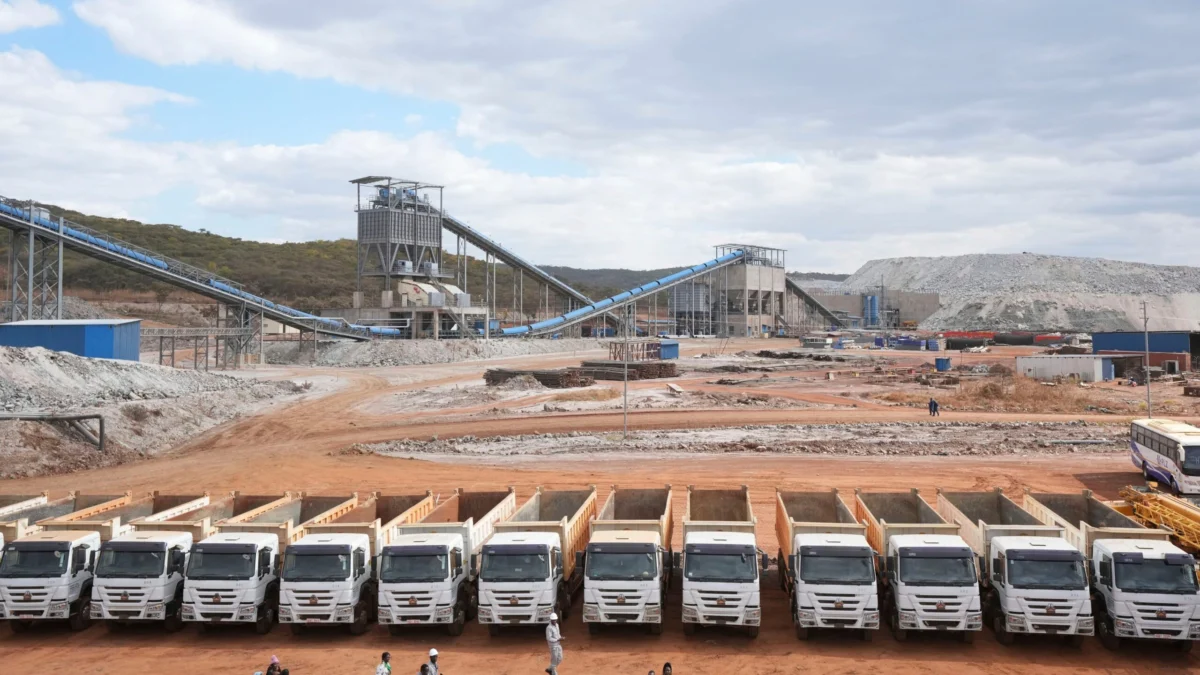
The government of Zimbabwe made a startling announcement on February 25th, catching raw material traders by surprise. Mines and Mining Development Minister Polite Kambamura declared that the export of unprocessed lithium would be prohibited, effective immediately. The statement, delivered with brevity, emphasized the government’s expectation of cooperation from mining firms, citing the decision as being in the "national interest." This abrupt policy shift signals a significant move by Zimbabwe, a nation increasingly recognized for its substantial lithium reserves, to assert greater control over its mineral wealth and potentially reshape the dynamics of the global electric vehicle battery supply chain.
The Rationale Behind the Ban: Value Addition and Economic Control
The decision to ban the export of unprocessed lithium is rooted in a broader strategy by the Zimbabwean government to maximize the economic benefits derived from its rich mineral resources. For years, the country has been a significant producer of lithium, a critical component in the manufacturing of rechargeable batteries for electric vehicles (EVs) and portable electronics. However, a substantial portion of this lithium has historically been exported in its raw or semi-processed forms, meaning the downstream value-addition, such as refining and battery cell manufacturing, largely takes place outside Zimbabwe.
This practice has led to a situation where Zimbabwe, despite possessing vast reserves, has not fully capitalized on the lucrative battery market. The government’s stated objective is to encourage local processing and beneficiation of lithium. By prohibiting the export of raw lithium, Zimbabwe aims to compel mining companies operating within its borders to establish or expand local refining facilities. This would not only create jobs and foster technological development within the country but also allow Zimbabwe to capture a larger share of the global lithium value chain. The potential revenue generated from processed lithium and battery components far surpasses that from raw ore exports.
A Swift and Unilateral Implementation
The immediacy of the ban, effective "ab sofort" (immediately), caught many stakeholders off guard. Typically, such significant policy changes are preceded by extensive consultations with industry players, public announcements, and a defined grace period for compliance. The suddenness of Zimbabwe’s directive suggests a determined effort by the government to assert its authority and accelerate its industrialization agenda.
The statement issued by the Ministry of Mines and Mining Development was concise, leaving little room for immediate negotiation or clarification. The phrase "Die Regierung erwartet, dass die Minenfirmen bezüglich dieser Entscheidung kooperieren" (The government expects mining companies to cooperate regarding this decision) underscored the mandatory nature of the directive. The reference to the decision being "im nationalen Interesse" (in the national interest) frames the policy as a patriotic imperative, aiming to rally domestic support and justify any potential disruption to existing trade relationships.
Zimbabwe’s Lithium Landscape: A Growing Global Player
Zimbabwe is recognized as one of the world’s largest holders of lithium reserves, with significant deposits found in areas like the Bikita, Kamativi, and Arcadia mines. The country’s lithium production has seen a notable increase in recent years, driven by the burgeoning global demand for EVs. In 2022, Zimbabwe’s lithium output was estimated to be around 28,000 metric tons of lithium content, a substantial rise from previous years. The country is projected to become a major global supplier of lithium concentrates and, potentially, refined lithium chemicals in the coming years.
The Arcadia mine, in particular, has been a focal point of investment and development, with Chinese companies playing a significant role in its expansion. These investments have often focused on the extraction and initial processing of lithium. The new export ban directly challenges the existing business models of these foreign and domestic investors, forcing them to re-evaluate their operations and potentially invest in new, more sophisticated processing infrastructure within Zimbabwe.
Reactions and Potential Implications for Stakeholders
The immediate aftermath of the announcement saw a flurry of activity and speculation within the commodities market and among mining companies. While specific official statements from affected companies were not immediately available due to the abruptness of the news, several likely reactions and implications can be inferred:
- Mining Companies: Companies involved in lithium extraction in Zimbabwe are likely facing immediate operational and logistical challenges. They will need to assess the feasibility and cost of establishing or expanding local processing facilities. This could involve significant capital investment, technological adaptation, and securing skilled labor. Some companies might explore joint ventures with international partners to acquire the necessary expertise and funding. Others might face production halts or significant delays if they cannot comply with the new regulations.
- International Buyers and Refiners: Global battery manufacturers and chemical companies that rely on Zimbabwean lithium will need to find alternative sources or adapt their supply chains. This could lead to increased demand and potentially higher prices for lithium from other producing nations such as Australia, Chile, and Argentina. The ban could also accelerate the development of lithium projects in other African countries.
- Chinese Investors: Given the significant involvement of Chinese companies in Zimbabwe’s lithium sector, this ban could have a direct impact on their supply chains. Chinese battery manufacturers and EV producers are major consumers of lithium. They may face pressure to increase their investments in local processing within Zimbabwe or seek to diversify their lithium sourcing strategies.
- Global Battery Supply Chain: The ban could introduce greater volatility and uncertainty into the global lithium supply chain. Lithium is a key bottleneck for EV production, and any disruption to its supply can have ripple effects across the automotive industry. The move by Zimbabwe could spur other resource-rich nations to consider similar "value-addition" policies, leading to a broader shift in how raw materials are traded globally.
- Zimbabwean Economy: In the long term, if successful, the ban could significantly boost Zimbabwe’s economy. Increased local processing would lead to higher export revenues, job creation, and the development of new industries. However, the transition period could be challenging, marked by potential investor uncertainty and the risk of capital flight if the investment climate is perceived as unstable.
A Chronology of Recent Developments
While the February 25th announcement was sudden, it can be seen as the culmination of a growing trend of resource nationalism and a desire for greater economic control by the Zimbabwean government.
- Mid-2023: Reports emerged of the Zimbabwean government exploring measures to boost local beneficiation of lithium and other minerals, with discussions around potential export restrictions on raw materials.
- Late 2023: Increased diplomatic engagement and investment discussions involving Chinese entities and Zimbabwean authorities regarding lithium processing capabilities.
- Early 2024: Growing speculation within industry circles about impending policy changes related to lithium exports.
- February 25, 2024: The official announcement by the Ministry of Mines and Mining Development banning the export of unprocessed lithium, effective immediately.
Broader Economic and Geopolitical Context
Zimbabwe’s move is part of a wider global trend of resource-rich developing nations seeking to move up the value chain and exert greater control over their natural resources. This "resource nationalism" is driven by a desire to avoid the pitfalls of being mere extractors of raw materials, often referred to as the "resource curse," where abundant natural wealth does not translate into broad-based economic development.
The global demand for lithium is projected to skyrocket in the coming decade as the world transitions towards cleaner energy and electric mobility. Forecasts suggest that global lithium demand could more than double by 2030. This surge in demand places countries like Zimbabwe in a strategically important position. The government’s decision to leverage this position by insisting on local processing is a bold move that could significantly alter the economic landscape of the nation and influence global commodity markets.
Furthermore, the geopolitical implications are also noteworthy. As countries increasingly compete for critical minerals essential for the green transition, Zimbabwe’s policy could influence the investment strategies of major global powers, particularly China, the United States, and European nations, all of whom are vying for access to secure and diversified lithium supply chains.
The Path Forward: Challenges and Opportunities
The success of Zimbabwe’s ban on unprocessed lithium exports will hinge on several factors. The government’s ability to create an attractive investment environment for downstream processing will be crucial. This includes ensuring policy stability, providing necessary infrastructure (e.g., reliable power, transportation networks), and fostering a skilled workforce. The government will also need to engage in transparent and constructive dialogue with mining companies to facilitate a smooth transition and mitigate potential disruptions.
For mining companies, the challenge will be to adapt quickly to the new regulatory landscape. This may involve significant capital allocation for new processing plants, research and development into more efficient refining techniques, and partnerships to share expertise and risk.
The international community, including potential buyers of processed lithium and technology providers, will play a role in supporting Zimbabwe’s ambitions. Collaboration on technical assistance and capacity building could accelerate the development of the country’s lithium processing capabilities.
In conclusion, Zimbabwe’s abrupt ban on unprocessed lithium exports represents a significant policy shift with far-reaching implications. It underscores the country’s determination to harness the economic potential of its mineral wealth and asserts its position in the increasingly vital global lithium market. While the immediate impact may be one of disruption and uncertainty, the long-term success of this strategy could pave the way for enhanced economic development and a more equitable distribution of value within the global battery supply chain. The world will be watching closely to see how Zimbabwe navigates this critical juncture.
