

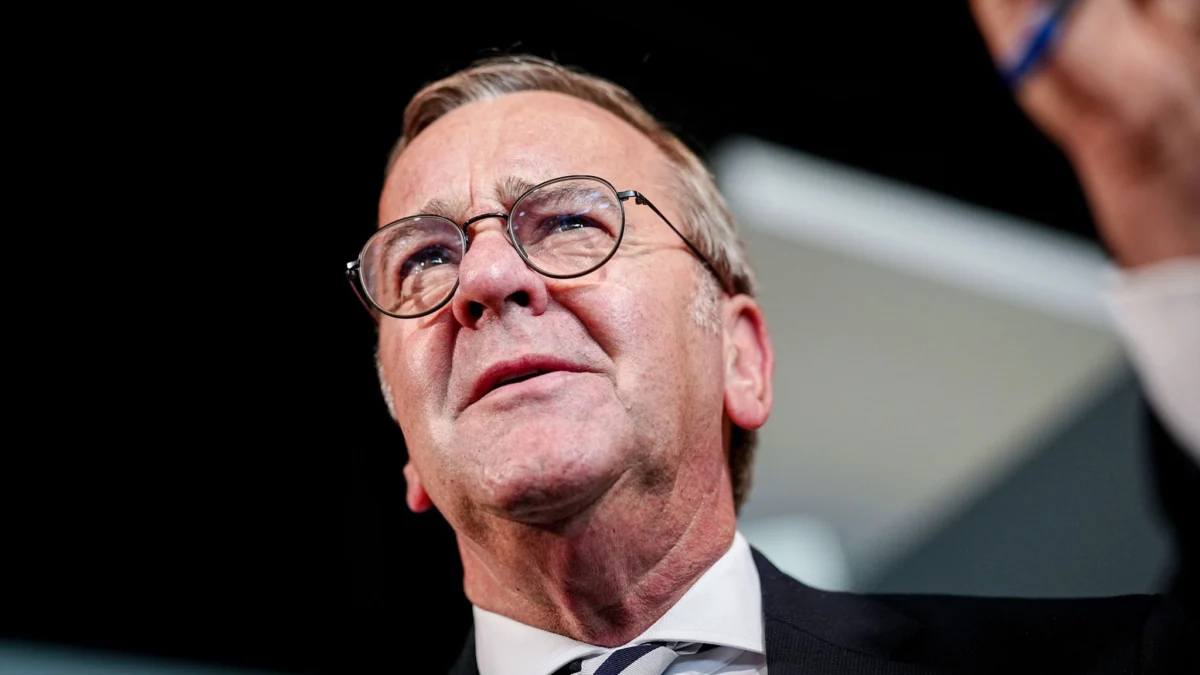
Montreal, Canada – German Defense Minister Boris Pistorius has articulated a vision of significant potential for a more profound strategic partnership between Germany and Canada, emphasizing opportunities that extend far beyond defense and security into critical sectors like energy, raw materials, rare earth elements, and various industrial domains. Speaking in Montreal during his official visit to Canada, Pistorius underscored that Canada shares Germany’s aspiration for an intensified relationship, moving towards a fully-fledged strategic alliance. This sentiment was echoed and solidified through concrete steps during his visit, including the signing of a letter of intent between German submarine manufacturer TKMS and a Canadian counterpart, signaling a shared ambition for collaboration in the defense industry.
The German Minister’s visit, spanning two days, was marked by engagements with key Canadian defense industry players. On the second day of his trip, Pistorius toured prominent defense companies in Montreal, including CAE, a globally recognized leader in simulation technology for pilot training. This visit to CAE underscores Germany’s interest in leveraging Canadian expertise and technological advancements, potentially leading to joint ventures and knowledge exchange in areas crucial for modern military readiness. The signing of the letter of intent by TKMS, a subsidiary of Thyssenkrupp Marine Systems, with an unnamed Canadian entity, represents a tangible step towards enhanced defense industrial cooperation. This agreement is reportedly aimed at exploring avenues for collaboration, potentially involving the development, production, or servicing of advanced naval systems, including submarines, a sector where TKMS holds significant global expertise.
Pistorius’s trip to Canada follows earlier diplomatic overtures made earlier in the week. On Wednesday, the German Defense Minister had actively promoted the expansion of military-political ties and defense procurement cooperation with Canada. His remarks in Montreal and earlier engagements have been framed against a backdrop of evolving geopolitical uncertainties, particularly concerning transatlantic relations. Pistorius specifically advised NATO allies to pursue a resolute strengthening of their own military capabilities in response to perceived unpredictability in relations with the United States.
Strategic Rationale and Context
The timing of Minister Pistorius’s visit and his pronouncements are highly significant. Germany, under the current government, has embarked on a substantial “Zeitenwende” or “turning point” in its defense policy, triggered by Russia’s full-scale invasion of Ukraine in February 2022. This shift has necessitated a re-evaluation of Germany’s defense posture, its military spending, and its international security partnerships. The desire to forge stronger alliances with like-minded nations, such as Canada, is a direct consequence of this strategic reorientation.
Canada, while a close ally within NATO and NORAD, has also been reassessing its defense commitments and capabilities. Like Germany, Canada has expressed concerns about the need to modernize its armed forces and enhance its defense industrial base. The shared challenges of a volatile global security environment, coupled with the economic imperative of developing advanced technologies and securing critical supply chains, provide a fertile ground for deeper bilateral cooperation.
The reference to "energy, raw materials, rare earth elements, and many industrial branches" highlights a broader vision of strategic partnership that extends beyond immediate defense needs. Germany, as a major industrial economy, is heavily reliant on secure access to raw materials, including rare earth elements essential for high-tech manufacturing and renewable energy technologies. Canada, with its abundant natural resources, is a significant global supplier of many of these critical commodities. A strengthened partnership could therefore involve securing these vital supply chains, fostering joint investments in resource extraction and processing, and collaborating on the development of sustainable energy solutions.
Defense Industrial Cooperation: A Deeper Dive
The specific mention of the TKMS letter of intent is particularly noteworthy. TKMS is a world leader in conventional submarine technology, and its potential collaboration with a Canadian partner could have significant implications for both nations’ naval capabilities. Canada has been exploring options for modernizing its aging submarine fleet, and a partnership with a company of TKMS’s caliber could offer a pathway to acquiring advanced, domestically supported platforms. This type of defense industrial cooperation not only enhances military readiness but also fosters job creation, technological development, and economic benefits within both countries.
CAE, the simulation company visited by Pistorius, plays a crucial role in training pilots for a wide range of aircraft, including military platforms. Collaboration in simulation technology can lead to more effective, cost-efficient, and standardized training programs for both German and Canadian air forces, enhancing interoperability and operational effectiveness. Germany’s interest in CAE’s offerings suggests a potential for Germany to procure advanced simulation systems or to collaborate on the development of next-generation training solutions.
Historical Context and Evolving NATO Dynamics
Minister Pistorius’s remarks about focusing on self-reliance and avoiding a passive stance in international relations, metaphorically described as "sitting in front of the White House or another building in the world and staring like a rabbit at a snake," were made at the Cansec defense and security trade show on Wednesday. This statement appears to be a subtle yet clear commentary on the need for European allies, including Germany, to bolster their own defense capabilities independently, rather than solely relying on the security umbrella provided by the United States, particularly in light of recent shifts in U.S. foreign policy rhetoric and priorities.
This sentiment is not new, but it has gained renewed urgency within NATO. The alliance has historically relied on a strong transatlantic bond, with the U.S. playing a leading role. However, varying political administrations in the U.S. have at times signaled a greater focus on domestic issues or a more transactional approach to alliances. This has prompted European nations to consider how they can contribute more effectively to their own collective security and enhance their strategic autonomy within the alliance. Germany’s emphasis on strengthening its own military and fostering closer ties with other reliable partners like Canada is a manifestation of this broader strategic thinking.
Potential Economic and Technological Synergies
Beyond defense, the potential for collaboration in energy and raw materials is substantial. Germany’s commitment to the energy transition, including its ambitious renewable energy targets, necessitates a stable and diversified supply of critical minerals. Canada, as a major producer of critical minerals such as nickel, cobalt, lithium, and rare earth elements, is a natural partner in this endeavor. Joint investments in exploration, extraction, and processing could secure Germany’s supply chains and contribute to the development of sustainable mining practices in Canada.
Furthermore, Canada’s significant expertise in areas like artificial intelligence, quantum computing, and advanced manufacturing could complement Germany’s industrial prowess. Exploring joint research and development initiatives in these sectors could lead to the creation of new technologies and industries, fostering economic growth and innovation in both countries. The concept of a "strategic partnership" implies a deep, multi-faceted relationship built on shared values, mutual trust, and aligned strategic interests, encompassing not just security but also economic prosperity and technological advancement.
Future Outlook and Implications
Minister Pistorius’s visit and his public statements signal a clear intention from Germany to elevate its relationship with Canada to a new level of strategic importance. The potential for deeper cooperation across defense, energy, raw materials, and industrial sectors offers significant benefits for both nations. For Germany, it provides avenues for enhancing its defense capabilities, diversifying its supply chains, and strengthening its economic resilience. For Canada, it opens doors to advanced technology transfer, increased foreign investment, and a stronger strategic partnership with a key European ally.
The success of this envisioned strategic partnership will depend on continued political will, sustained diplomatic engagement, and concrete implementation of collaborative initiatives. The signing of the TKMS letter of intent is a promising first step, and further agreements and joint projects are likely to follow if the momentum is maintained. As the global security landscape continues to evolve, the deepening of ties between Germany and Canada could serve as a model for how like-minded democracies can work together to address shared challenges and build a more secure and prosperous future. The emphasis on self-reliance and robust partnerships reflects a pragmatic approach to contemporary international relations, where alliances are strengthened through mutual contribution and a clear understanding of collective interests.
