

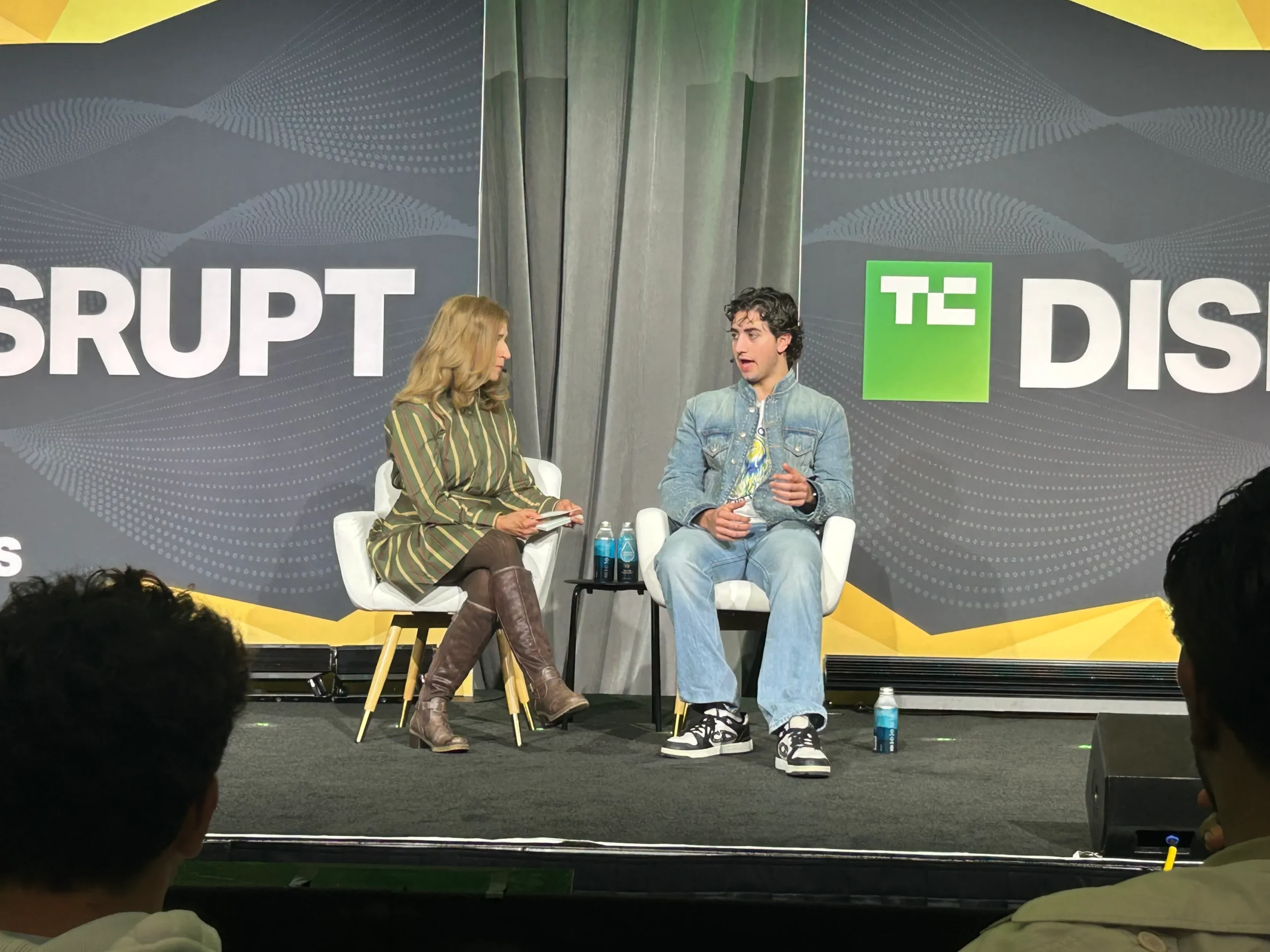
At just 19 years old, Zach Yadegari has already navigated the entrepreneurial landscape with a dexterity that belies his youth, transitioning from a high school graduate to a celebrated founder whose first venture achieved viral fame and a lucrative acquisition. His journey, marked by the rapid ascent of the AI-fueled calorie tracking application Cal AI, culminated in a strategic acquisition by industry titan MyFitnessPal and the subsequent launch of a highly anticipated new AI agent startup, Persona. Yadegari took center stage at TechCrunch Disrupt on Thursday, offering a candid recounting of the unconventional strategies that propelled his companies into the tech spotlight, providing invaluable insights into modern growth hacking and the evolving paradigm of digital entrepreneurship.
The Genesis and Meteoric Rise of Cal AI
Founded in 2024, Cal AI quickly distinguished itself in the crowded health and wellness technology sector by leveraging artificial intelligence to offer a more accurate and intuitive calorie tracking experience. The application’s core innovation lay in its ability to streamline the often tedious process of logging food intake, making it accessible and appealing to a broad user base. However, the technological prowess of Cal AI was only one part of its success story; the true catalyst for its explosive growth was Yadegari’s astute understanding and aggressive deployment of influencer marketing.
Within two years of its inception, Cal AI generated over $30 million in revenue, a staggering figure for an early-stage startup, especially one helmed by a founder still in his teens. This remarkable financial performance underscored the effectiveness of its growth strategy. The company’s trajectory culminated in March [2026] when MyFitnessPal, a venerable name in the digital fitness space, acquired Cal AI for an undisclosed sum, a move that solidified Yadegari’s reputation as a formidable force in tech. This acquisition was not merely a financial transaction but a significant validation of Cal AI’s market penetration and its innovative approach to health technology.
A Masterclass in Influencer Marketing: The Cal AI Playbook
Yadegari’s presentation at TechCrunch Disrupt offered a rare glimpse into the tactical brilliance behind Cal AI’s viral success. He recounted an early, pivotal moment when a single influencer’s post about Cal AI led to an influx of approximately a thousand new users within a mere two days. This initial surge served as a powerful proof of concept, transforming a nascent idea into a scalable growth engine. "From there, we figured out, okay, this can actually work for us," Yadegari explained to an attentive audience. "And so we started recruiting influencers as fast as we could — paying as many people as possible to start posting for us."
The strategy was characterized by its directness and efficiency. Yadegari described it as a "clear formula," linear yet extraordinarily fast. The model was straightforward: each post from an influencer would yield a predictable number of viewers who would then convert into users. This predictability allowed Cal AI to scale its marketing efforts aggressively, pouring resources into a strategy that delivered consistent, measurable returns.
A key differentiator in Cal AI’s influencer strategy was its pragmatic approach to negotiations. Recognizing the financial motivations of many digital content creators, particularly those still establishing their careers, Yadegari and his team adopted a performance-based remuneration model. "A lot of influencers are broke college kids who just want cash," he candidly stated. This insight led to a system where influencers were promised specific payouts contingent on achieving a certain scale of reach or user acquisition. "You just ask them, okay, we’ll pay you this, but we need to get us at least this amount of users and keep posting until you get there." This incentivized model fostered a symbiotic relationship, aligning the influencers’ financial goals with Cal AI’s growth objectives.
Furthermore, Yadegari emphasized the critical importance of identifying the right influencers. Success wasn’t just about reach; it was about engagement and community. "The biggest thing for us was finding influencers that had very tight communities," he noted. These tight-knit communities, often characterized by high trust and active participation, proved to be far more fertile ground for user conversion than broader, less engaged audiences. This focus on qualitative aspects of influence, rather than purely quantitative metrics like follower count, underscores a sophisticated understanding of digital marketing dynamics.
The Broader Context: Influencer Marketing’s Ascendance
Yadegari’s success with Cal AI is emblematic of a broader shift in marketing paradigms. The global influencer marketing market has witnessed exponential growth, projected to reach over $24 billion by 2028. Brands are increasingly allocating significant portions of their marketing budgets to influencer collaborations, recognizing their unparalleled ability to cut through digital noise and connect authentically with niche audiences. Studies consistently show that consumers trust recommendations from influencers more than traditional advertisements, making this channel particularly effective for direct-to-consumer products and apps. Cal AI’s rapid user acquisition and revenue generation serve as a compelling case study for the high return on investment achievable through a well-executed influencer strategy, especially when coupled with a desirable product.
The demographic Yadegari targeted – "broke college kids" – highlights the accessibility of influencer marketing for startups with limited traditional advertising budgets. By identifying and empowering micro- and nano-influencers who possess genuine connection with their followers, Cal AI demonstrated that authentic advocacy can often outweigh the massive, but sometimes less engaged, reach of celebrity influencers. This approach not only optimized costs but also fostered a sense of community around the brand, turning users into evangelists.
MyFitnessPal’s Strategic Acquisition and Market Consolidation
The acquisition of Cal AI by MyFitnessPal in March [2026] was a significant event for both parties and for the health tech industry. MyFitnessPal, a subsidiary of Under Armour until its acquisition by Francisco Partners in 2020, has long been a dominant player in the digital nutrition and fitness tracking market. Its comprehensive database of food items and user-friendly interface have garnered millions of users worldwide. However, the pace of innovation in AI-driven solutions meant that established platforms needed to adapt to remain competitive.
The integration of Cal AI’s advanced AI capabilities into MyFitnessPal’s robust ecosystem presents a powerful synergy. For MyFitnessPal, the acquisition allows it to enhance its core offering with cutting-edge AI, potentially improving accuracy, personalization, and user engagement, especially among a younger, tech-savvy demographic that Cal AI successfully captured. For Cal AI, becoming part of MyFitnessPal provides access to a massive existing user base, extensive resources, and greater market penetration than it might have achieved independently. This move reflects a broader trend of consolidation within the health technology sector, where larger players acquire innovative startups to integrate new technologies and expand their market share. Industry analysts view such acquisitions as critical for established companies to stay relevant in a rapidly evolving digital landscape, particularly in areas like AI and personalized wellness.
Beyond Cal AI: The Dawn of Persona and Pervasive AI
Yadegari’s entrepreneurial drive did not conclude with the successful exit of Cal AI. Earlier this month, he unveiled his next ambitious venture: Persona, a new AI agent startup that has already secured an impressive $10 million in funding. This rapid fundraising success, shortly after the Cal AI acquisition, underscores investor confidence in Yadegari’s vision and execution capabilities.
Persona’s mission is grand: to "make computing seamless with human life." This vision extends beyond typical software applications, aiming to create a personal AI assistant that is omnipresent and deeply integrated into daily existence. Yadegari detailed Persona’s planned ubiquity, stating the AI assistant will "live anyplace with internet connection," including critical communication channels like "iMessage, app, email, phone call." This suggests an AI that isn’t confined to a single app but acts as an intelligent layer across a user’s digital interactions.
A particularly intriguing aspect of Persona’s strategy is its intention to build a "hardware ecosystem around" the application. This commitment to hardware integration differentiates Persona from many purely software-based AI assistants. It hints at a future where dedicated devices or enhanced existing hardware will serve as seamless interfaces for the Persona AI, potentially offering a more intuitive and less intrusive way for users to interact with artificial intelligence. This vision aligns with emerging trends in ambient computing and the development of proactive AI agents designed to anticipate user needs and simplify complex tasks, moving beyond reactive voice commands to truly intelligent assistance. The success of companies like Humane AI Pin and Rabbit R1, despite their nascent stages, indicates a market appetite for dedicated AI hardware that offers a more streamlined, screen-free interaction with digital services. Persona aims to refine and expand upon this concept, potentially creating a new category of personal AI.
Disrupting More Than Just Tech: Education and Entrepreneurship
Yadegari’s journey also offers a provocative commentary on traditional educational pathways. Speaking at Disrupt, with his father proudly in the audience, he acknowledged his family’s support in pursuing his ambitions. However, when asked about the role of higher education in his success, his response was met with audience laughter: "I think the only real reason to go to college is if you want to have a fun social time as a kid and be with other people."
This statement, while delivered with humor, reflects a growing sentiment among a segment of young, driven entrepreneurs who question the necessity of a four-year degree in an era where practical skills, rapid iteration, and direct market engagement often yield quicker and more substantial returns. Yadegari, a Forbes 30 Under 30 alumnus, embodies the archetype of the self-taught, experience-driven founder who has leveraged digital tools and platforms to build multi-million dollar companies without the traditional academic credential. His perspective fuels ongoing debates about the value proposition of higher education in the digital age, particularly for those inclined towards entrepreneurship and technology. While college undeniably offers networking, structured learning, and diverse experiences, Yadegari’s trajectory suggests that for certain individuals, the traditional path might not be the most direct route to significant professional achievement.
The Entrepreneurial Ecosystem at TechCrunch Disrupt
TechCrunch Disrupt, where Yadegari shared his insights, is renowned as a premier platform for showcasing innovation and fostering the startup ecosystem. The event brings together founders, investors, and industry leaders, offering a unique environment for networking, pitching, and learning from the successes and failures of others. Yadegari’s presence as a featured speaker highlights his rapid ascent within the tech community and the recognition of his unique entrepreneurial journey. His candid sharing of strategies, particularly regarding influencer marketing and his views on education, resonates deeply with an audience largely composed of aspiring entrepreneurs and investors seeking the next disruptive idea. The event itself serves as a crucial barometer for emerging trends and a launchpad for future tech giants, making Yadegari’s insights particularly timely and relevant.
Implications for the Future of Tech and Wellness
Zach Yadegari’s story is more than just a tale of personal success; it offers several profound implications for the future of technology and entrepreneurship. Firstly, it underscores the increasing power of AI in personal wellness. As AI becomes more sophisticated, its ability to offer personalized, efficient, and engaging solutions for health tracking will only grow, moving beyond simple data logging to proactive health management. Cal AI’s success is a harbinger of this future, demonstrating how intelligent automation can transform user experience in critical areas like nutrition.
Secondly, his influencer marketing strategy provides a blueprint for startups looking to achieve rapid scale in a crowded digital landscape. It emphasizes authenticity, targeted engagement, and performance-based compensation as key levers for viral growth, a model that will likely be emulated by countless future ventures.
Finally, Persona’s ambitious vision for a pervasive AI agent, integrated with a hardware ecosystem, points towards the next frontier of human-computer interaction. As computing moves further into the background, becoming more ambient and anticipatory, companies like Persona will be at the forefront of defining how AI seamlessly integrates into the fabric of our daily lives, transforming how we work, communicate, and interact with the digital world. Yadegari, still in his formative years, is clearly positioned to be a significant architect of this future, challenging conventional wisdom and setting new benchmarks for entrepreneurial achievement. His journey is a testament to the fact that innovation, strategic acumen, and an unwavering vision can yield extraordinary results, regardless of age or traditional credentials.
