

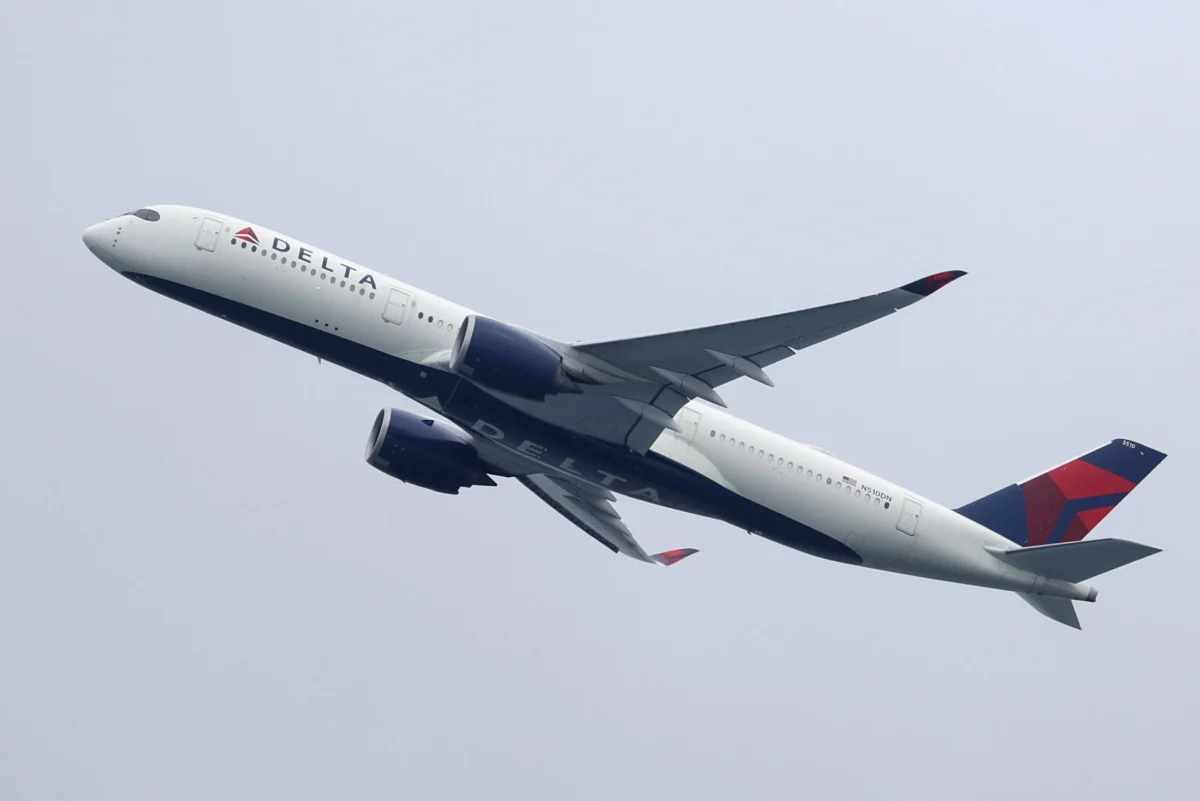
Delta Air Lines has announced a significant delay in the launch of its much-anticipated nonstop service between Atlanta and Riyadh, pushing back the inaugural flight until March following a series of deadly attacks on King Khalid International Airport (RUH) in the Saudi capital. The decision by the major U.S. carrier underscores the escalating security concerns in the region, particularly after a projectile strike on a passenger terminal led to multiple fatalities and injuries.
The planned route, which was originally scheduled to commence on October 23, was poised to be a landmark event. Utilizing an advanced Airbus A350-900 wide-body aircraft, it would have marked the first nonstop commercial flight operated by a U.S. airline connecting the United States directly with Saudi Arabia. This service was not merely a new flight path; it represented a strategic expansion into a burgeoning market, aligning with Saudi Arabia’s ambitious Vision 2030 plan to diversify its economy and significantly boost its tourism and business sectors. The initial enthusiasm surrounding the route’s announcement reflected a growing confidence in the U.S.-Saudi economic and travel corridor, aiming to facilitate easier access for business travelers, pilgrims, and tourists alike.
The security situation at King Khalid International Airport deteriorated rapidly, culminating in a critical incident that directly impacted civilian infrastructure. Since Thursday, the airport has experienced significant disruptions, with FlightAware data indicating that more than 2,000 flights to and from RUH have been canceled. The situation escalated dramatically on Saturday when a projectile, claimed by Yemen’s Iran-backed Houthi movement, struck a passenger terminal. This attack resulted in at least 12 fatalities and left more than 300 people wounded, transforming a routine travel hub into a scene of tragic loss and widespread injury. As of Monday, King Khalid International Airport remained closed to commercial traffic, with recovery efforts and extensive security assessments underway, creating uncertainty for thousands of stranded passengers and disrupted supply chains.
Delta’s decision, while disappointing for travelers and stakeholders on both sides of the Atlantic, was framed by the airline as a necessity driven by paramount safety considerations. "We remain in close contact with relevant government and aviation partners, including Saudia and Riyadh Air, as we monitor the situation," Delta stated in an official release. Reaffirming its long-term commitment to the market, the airline added, "Saudi Arabia remains an important market for Delta, and we are committed to serving the Kingdom for the long-term." This statement suggests ongoing dialogue with local authorities and future partners, indicating that the delay is a temporary pause rather than a permanent withdrawal, reflecting a strategic patience in a volatile environment.

Chronology of Escalation and Regulatory Response
The backdrop to Delta’s postponement is a complex and volatile regional security environment, where the conflict in Yemen has long cast a shadow over the Arabian Peninsula. For years, the Houthi movement has demonstrated its capability to launch missile and drone attacks targeting critical infrastructure within Saudi Arabia, including oil facilities, military installations, and various airports. While such attacks are not unprecedented, the direct strike on a civilian passenger terminal at a major international airport represents a significant escalation, highlighting an increased and unacceptably high threat to civil aviation operations.
- Pre-existing Security Concerns: Prior to the recent incidents, aviation authorities, including the U.S. Federal Aviation Administration (FAA), had periodically issued warnings regarding flying over or near certain parts of the Arabian Peninsula due to ongoing military conflicts. These warnings often advised caution but did not typically restrict direct flights into major airports like Riyadh unless specific, credible threats to civil aviation were identified. The U.S. and Saudi governments have consistently condemned Houthi aggression, framing it as a destabilizing force in regional security and a direct threat to international shipping lanes and civilian infrastructure.
- Thursday’s Initial Reports and Delta’s Monitoring: Reports of initial attacks near Riyadh emerged on Thursday, causing immediate concern within the international aviation community. Delta CEO Ed Bastian, when questioned on Thursday by CNBC about the impending launch of the Atlanta-Riyadh service, acknowledged the developing situation. He stated publicly that the airline had not yet made a definitive decision regarding postponement but emphasized the primacy of safety in all operational considerations. "Obviously, we were disappointed to see the news this week," Bastian said, adding, "Safety is going to make the call." This initial cautious stance underscored the airline’s rigorous internal security assessments and its reliance on up-to-date intelligence, foreshadowing the eventual difficult decision to delay.
- Saturday’s Critical Terminal Strike: The security situation escalated dramatically on Saturday when a projectile directly impacted a passenger terminal at King Khalid International Airport. The attack caused extensive damage to the terminal structure, resulted in multiple civilian casualties, and led to the immediate and complete closure of the airport. The Houthi movement swiftly claimed responsibility for the attack, asserting these actions were in retaliation for ongoing military operations by the Saudi-led coalition in Yemen. This direct targeting of a civilian area within an international airport marked a grave turning point, demonstrating a heightened and severe threat to civilian air travel and infrastructure.
- Sunday’s FAA Warning to U.S. Airlines: In direct response to the heightened threat and the attack on King Khalid International Airport, the U.S. Federal Aviation Administration (FAA) issued an urgent warning to U.S. airlines on Sunday. The advisory specifically cautioned pilots and operators to "exercise caution" when operating in or around Saudi Arabia. The warning cited "safety-of-flight risks associated with ongoing military activities" and potential disruptions to navigation systems. Critically, the FAA’s warning, which is set to remain in effect until December 10, explicitly stated that these threats could pose a "potential risk to aircraft at all altitudes." This broad and unspecific warning signaled a significant elevation of perceived risk, impacting both flights landing in Saudi Arabia and those transiting its airspace, compelling airlines to reconsider their operational parameters.
- Monday’s Official Postponement and Airport Status: Following the FAA’s comprehensive warning and the confirmed continued closure of King Khalid International Airport, Delta Air Lines officially announced its decision to delay the Atlanta-Riyadh service until March. The airport’s ongoing closure on Monday underscored the severity of the damage, the necessity of thorough security assessments, and the time required before resuming safe and full commercial operations. This confluence of events left airlines with little alternative but to re-evaluate their operational plans for the region, prioritizing the safety of passengers and crew above all commercial imperatives.
Broader Impact and Implications for Global Aviation
Delta’s postponement of its inaugural Atlanta-Riyadh service reverberates beyond just a single route, sending ripples through the global aviation industry and highlighting the complex interplay of geopolitics, security, and commercial operations in an interconnected world.
- Aviation Safety and Enhanced Risk Assessment: The incident at King Khalid International Airport forces a fundamental re-evaluation of risk models for airlines operating in or near conflict zones. While airlines typically avoid active war zones, the direct targeting of a major civilian airport terminal in a country not officially considered a war zone presents a new and dangerous challenge. It underscores the need for robust, real-time intelligence gathering and rapid response protocols when security situations deteriorate unexpectedly. Airlines must now consider not only the safety of flight paths but also the resilience and security of ground infrastructure at destination airports, particularly in regions prone to militant activity. The FAA’s warning, covering "all altitudes," suggests comprehensive concerns about both surface-to-air threats and potential electronic warfare tactics, such as GPS jamming or spoofing, that could compromise aircraft navigation and communication systems.
- Impact on U.S.-Saudi Connectivity and Economic Ambitions: The delayed service is a palpable setback for concerted efforts to enhance direct connectivity between the United States and Saudi Arabia. Such direct flights are crucial for fostering robust business ties, facilitating diplomatic exchanges, and supporting the flow of tourists and religious pilgrims. Saudi Arabia’s ambitious Vision 2030, championed by Crown Prince Mohammed bin Salman, heavily relies on opening the country to international visitors and investments, with air travel serving as a primary conduit for this transformation. The establishment of new national carriers like Riyadh Air and ambitious expansion plans for existing airlines like Saudia underscore this vision. Security incidents that deter international airlines and travelers, even temporarily, pose a significant challenge to these transformative economic and social goals, potentially slowing down the pace of diversification and foreign direct investment.
- Geopolitical Ramifications and Regional Stability: The Houthi attack on Riyadh’s airport underscores the persistent threat posed by the Yemen conflict to broader regional stability. The Houthis, widely supported and allegedly armed by Iran, have repeatedly demonstrated their capability to strike deep into Saudi territory, and the targeting of a civilian airport highlights a concerning escalation. This incident will likely intensify international scrutiny of Iran’s role in arming and enabling proxy groups, potentially leading to renewed calls for de-escalation in Yemen and stronger international sanctions against actors deemed to be fueling the conflict. For the U.S., a key ally of Saudi Arabia, the incident reinforces the strategic importance of Gulf security and may prompt further military and diplomatic support to Riyadh to enhance its defensive capabilities.
- Passenger Confidence and Travel Advisories: The attacks have a direct and immediate impact on passenger confidence for travel to the region. Countries, including the U.S. and Australia, were quick to advise their citizens against non-essential travel to parts of Saudi Arabia, particularly those near the Yemeni border or susceptible to missile and drone attacks. Such advisories, while temporary, can significantly depress demand for air travel to affected destinations, leading to financial losses for airlines, the hospitality sector, and the broader tourism industry. Rebuilding traveler trust after such incidents requires not only demonstrable improvements in security but also a sustained period of stability and clear communication from authorities.
- Airline Operational Adjustments and Costs: Beyond Delta, other international carriers operating to Saudi Arabia or overflying its airspace have had to make immediate operational adjustments. Many opted for temporary suspensions or significant schedule reductions to Riyadh, while others may have rerouted flights to avoid perceived high-risk areas within Saudi airspace. These adjustments incur additional operational costs due to longer flight times, increased fuel consumption, and potential crew rest issues, impacting airline profitability. For airlines with existing codeshare agreements or interline partnerships with Saudi carriers like Saudia, the disruptions can create complex logistical challenges for connecting passengers, necessitating extensive rebooking and customer service efforts.
- Long-Term Market Strategy and Investment Climate: While Delta reiterated its long-term commitment to Saudi Arabia, this incident could influence future expansion strategies for airlines considering new routes to the Middle East. It injects an element of heightened geopolitical risk that must be carefully weighed against market opportunities. Airlines typically conduct extensive and exhaustive risk assessments before launching new international services, and events like the Riyadh airport attack add new layers of complexity to these evaluations, potentially leading to more cautious and conservative approaches in regions perceived as volatile. The incident also sends a signal to broader foreign investors, who factor political and security stability into their investment decisions for long-term projects.
Statements from Related Parties and Broader Context
The immediate aftermath of the attacks saw a flurry of reactions and condemnations from various stakeholders, reflecting the gravity of the situation:
- Saudi Authorities: Saudi officials vehemently condemned the attacks as a blatant act of terrorism targeting civilian infrastructure and innocent lives. They initiated immediate and thorough investigations into the incident, mobilizing resources to reinforce security measures at airports and other critical national sites. The Saudi-led coalition in Yemen often responds to such Houthi attacks with retaliatory strikes on Houthi targets within Yemen, further exacerbating the cycle of violence and regional tensions. Their primary focus remains on restoring full operational capacity at King Khalid International Airport, ensuring the safety of travelers, and reassuring international partners of the Kingdom’s unwavering commitment to security.
- U.S. State Department: The U.S. State Department echoed the FAA’s concerns and reinforced its existing travel advisories, urging American citizens to reconsider travel to Saudi Arabia due to the elevated risk of missile and drone attacks. Such advisories are critical for informing citizens of potential dangers and can influence the validity of travel insurance coverage for those who choose to proceed. The U.S. government has consistently affirmed its strong support for Saudi Arabia’s defense capabilities against external threats, viewing the Kingdom as a crucial strategic partner in regional stability.
- Other Airlines and Aviation Bodies: While Delta was the first U.S. carrier to announce a delay for a new service, other international airlines operating existing routes to Riyadh faced immediate decisions regarding their operations. Many opted for temporary suspensions or significant schedule reductions, awaiting clearer guidance from aviation authorities and a tangible improvement in the security situation. The collaborative approach among airlines, aviation regulators, and international aviation bodies like ICAO in sharing threat intelligence and coordinating responses becomes paramount in such crises, ensuring a harmonized and effective safety posture across the industry.
- Houthi Movement: The Houthi movement’s claim of responsibility for the attacks aligns with their stated strategy of targeting Saudi economic and military infrastructure in retaliation for the ongoing Saudi-led intervention in Yemen. Their public statements often frame these actions as legitimate responses to perceived aggression and blockades, highlighting the deep-seated grievances fueling the protracted conflict. The deliberate targeting of a passenger terminal, however, raises serious concerns about potential violations of international humanitarian law and a blatant disregard for civilian lives, drawing widespread international condemnation.
The delayed launch of Delta’s Atlanta-Riyadh service serves as a stark reminder of how geopolitical tensions and regional conflicts can directly impact global commerce, travel, and the daily lives of countless individuals. The incident at King Khalid International Airport is not just a logistical challenge for an airline; it is a critical security event that underscores the fragility of stability in the Middle East and the persistent threats faced by civilian populations and infrastructure caught in the crossfire of regional conflicts. As Saudi Arabia continues its ambitious modernization and opening, ensuring the safety and security of its international gateways will remain a paramount challenge and a key determinant of its success in attracting global partners and visitors. The aviation industry, inherently global and interconnected, remains particularly vulnerable to such external shocks, necessitating constant vigilance, robust intelligence frameworks, and adaptable operational strategies in an increasingly complex world. The path forward for Delta and other carriers will undoubtedly involve close monitoring of security intelligence, sustained dialogue with governmental and aviation partners, and a readiness to adjust plans in response to evolving regional dynamics. The March target for the route’s launch reflects a hopeful but cautious outlook, contingent upon a significant de-escalation of threats and a restoration of confidence in the safety and security of air travel to the Saudi capital.
