

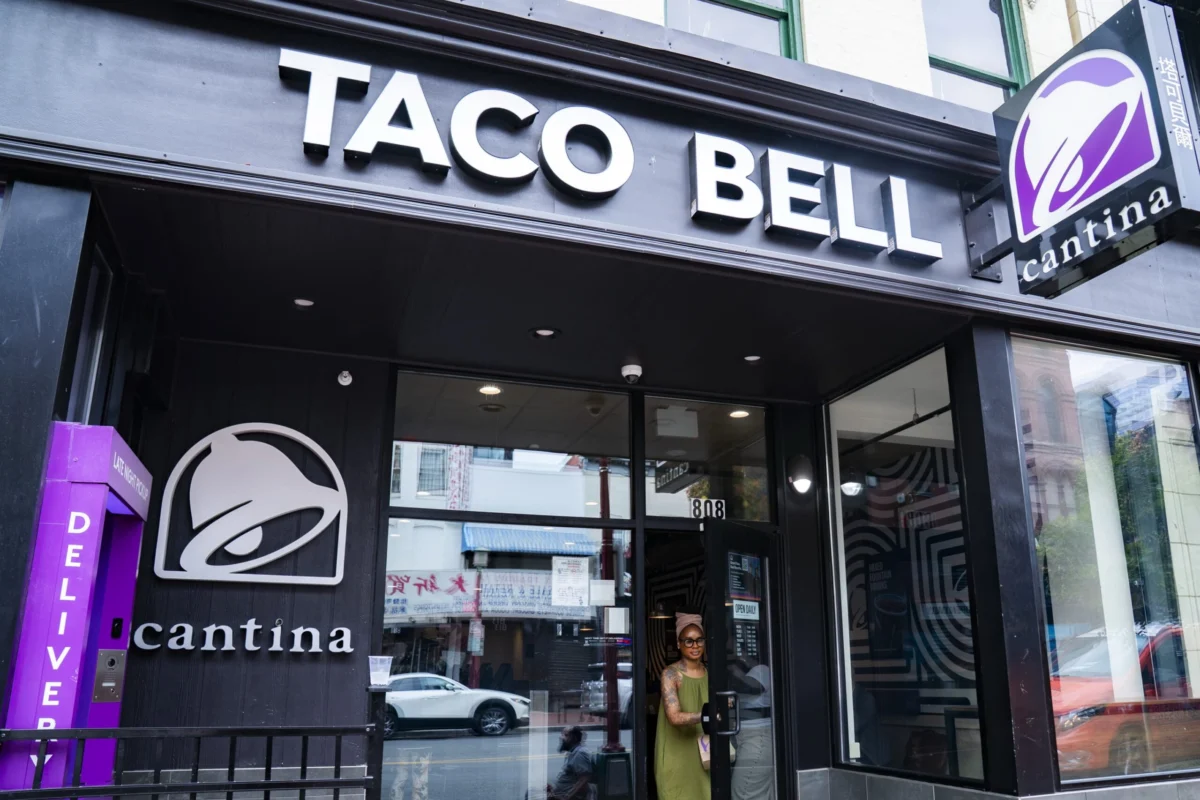
Yum Brands, the global restaurant giant, reported robust fiscal third-quarter earnings on Tuesday, surpassing Wall Street’s expectations, even as its flagship Taco Bell brand navigated the repercussions of a significant cyclospora outbreak linked to iceberg lettuce. The company’s financial performance was further shaped by the strategic divestiture of its Pizza Hut division, a move aimed at streamlining its portfolio and sharpening its focus on core growth engines. Despite the challenges, particularly the temporary downturn in Taco Bell’s same-store sales, Yum Brands executives expressed confidence in the quick-service restaurant (QSR) segment’s resilience and the company’s strategic direction, highlighting a strong rebound for Taco Bell in the latter part of the quarter and into the fourth quarter.
Financial Highlights: A Quarter of Resilience and Strategic Shifts
For its fiscal third quarter, Yum Brands announced net income of $1.62 billion, translating to $5.92 per share. This marked a substantial increase from $397 million, or $1.41 per share, reported in the same period a year earlier, largely driven by gains from the Pizza Hut divestiture. Excluding these one-time gains and other specific items, the company’s adjusted earnings reached $1.56 per share, comfortably exceeding analyst projections.
Net sales for the quarter climbed 4% year-over-year, reaching $2.05 billion. This growth trajectory, however, was not uniform across its brand portfolio. While the overall financial picture was positive, the underlying operational performance showed mixed results, particularly in same-store sales growth. Excluding the impact of Pizza Hut, which was divested during the quarter, Yum’s consolidated same-store sales were flat. This flat performance underscored the drag exerted by Taco Bell’s temporary decline, which overshadowed stronger international performance in some segments.
The Cyclospora Challenge and Taco Bell’s Swift Recovery
The quarter was notably defined by a cyclospora outbreak that gained national attention in July 2026, linked by the Centers for Disease Control and Prevention (CDC) to iceberg lettuce served at Taco Bell locations. Cyclospora cayetanensis is a microscopic parasite that can cause cyclosporiasis, an intestinal infection with symptoms including watery diarrhea, loss of appetite, weight loss, abdominal cramps, bloating, nausea, and fatigue. Such outbreaks, though relatively rare, pose significant public health concerns and can severely impact consumer trust in food establishments. The CDC’s investigation into the Taco Bell outbreak commenced in mid-July, leading to widespread media coverage and heightened public awareness regarding food safety protocols in the fast-food industry.
The immediate aftermath saw a discernible impact on Taco Bell’s sales. Yum Brands executives noted that the weekend of July 18 experienced the most severe decline in customer visits and revenue, coinciding with the peak of news coverage regarding the outbreak. This resulted in a 4% decline in Taco Bell’s same-store sales for the fiscal third quarter. The company acknowledged that diners temporarily pulled back on visits, prioritizing safety concerns following the headlines.
However, Yum Brands CEO Chris Turner highlighted Taco Bell’s impressive resilience and rapid recovery. "Since the end of September, Taco Bell U.S. has been outpacing the [quick-service restaurant] industry on same-store sales growth," Turner stated, emphasizing the brand’s ability to bounce back from adversity. This rebound was evident in early fourth-quarter trends, with Taco Bell’s same-store sales up approximately 1% so far in the current quarter. More impressively, in the last four weeks ended Friday, same-store sales have surged 3% compared with the year-ago period, signaling a strong return of customer confidence.
Strategic Response and Customer Re-engagement
The recovery was not accidental but a result of targeted strategic initiatives. Taco Bell acted swiftly to address customer concerns and rebuild trust. Beyond ensuring rigorous food safety measures, the company focused on re-engaging its customer base, particularly its most loyal patrons. CFO Ranjith Roy explained that "heavy" users of Taco Bell, those who visit frequently, were the quickest to return, with their visit frequency now back to normal levels. Traffic from "medium" and "light" customers has also largely rebounded, reaching about 95% of pre-outbreak levels.
A key component of this recovery strategy was the implementation of weekly Tuesday deals specifically for loyalty program members. These exclusive offers provided an incentive for customers to return and reinforced the value proposition of being a loyal Taco Bell patron. Furthermore, to attract more casual diners and broaden its appeal, Taco Bell leveraged its reputation for innovative marketing and celebrity collaborations. A notable example cited by the company was a partnership with pop star Olivia Rodrigo, which included the launch of a pink-colored Mountain Dew Baja Blast. Such initiatives aim to create buzz, attract younger demographics, and shift public perception away from the outbreak narrative towards exciting new menu offerings and brand experiences.
Internationally, Taco Bell’s much smaller but growing business demonstrated robust performance, reporting a healthy 5% same-store sales growth, largely insulated from the U.S.-centric cyclospora issue. This international strength underscores the brand’s global potential and diversification strategy.
The Strategic Reshaping: Pizza Hut Divestiture
A significant structural change for Yum Brands during the quarter was the complete divestiture of Pizza Hut. This strategic move, which had been under consideration for some time, saw the company shed its global pizza chain in two phases. On August 7, Yum Brands closed the sale of Pizza Hut’s business in mainland China to Yum China, its independent licensee in that critical market. Subsequently, on September 1, the remaining global Pizza Hut operations were sold to LongRange Capital, a private equity firm. Yum’s third-quarter results thus included Pizza Hut’s performance only up until these respective divestiture dates.
This divestiture represents a pivotal moment for Yum Brands, allowing it to streamline its portfolio and concentrate resources on its remaining core brands: KFC, Taco Bell, and Pizza Hut’s former sister brand, The Habit Burger Grill. Analysts generally viewed the move as a strategic de-leveraging and a focus on higher-growth, higher-margin opportunities within its QSR portfolio. Pizza Hut, while a globally recognized brand, had faced increasing competitive pressures in the crowded pizza delivery market, particularly in mature Western markets, and its performance had at times lagged behind its sister brands within the Yum portfolio. The move is expected to simplify Yum’s operational structure, improve capital allocation efficiency, and potentially enhance shareholder value by allowing a more focused growth strategy.
KFC’s Evolving Global Strategy and U.S. Challenges
KFC, another cornerstone of Yum Brands’ portfolio, presented a mixed performance picture during the quarter. Globally, KFC’s same-store sales ticked up 1%, primarily bolstered by strong system sales growth in key international markets, particularly China and Europe. These regions continue to be significant drivers for KFC’s international success, benefiting from ongoing market penetration and effective localized menu strategies.
However, KFC’s performance in its home market, the U.S., presented a contrasting narrative. The U.S. market, now the chicken chain’s third-largest globally, saw system sales shrink by 6% in the quarter. This decline highlights persistent challenges for KFC in a highly competitive and saturated market. Similar to Restaurant Brands International’s Popeyes, which has gained significant traction with its popular chicken sandwich, KFC has struggled to maintain its market share amidst a wave of new competitors and increasingly budget-conscious consumers. The "chicken sandwich wars" have intensified competition, forcing all players to innovate constantly.
Despite these struggles, the U.S. market, while symbolically important, represents only about 5% of KFC’s operating profit, underscoring the brand’s expansive international footprint and the relative insulation of its global performance from domestic headwinds.
To counter the U.S. slowdown and reinforce its global leadership, KFC is embarking on an ambitious strategy to become "the most modern chicken QSR," as articulated by CEO Chris Turner during the earnings call. This vision entails a multifaceted approach, including the rollout of buzzy promotions, a refreshed brand identity, and a wider menu. During the quarter, KFC U.S. launched popcorn chicken, which, despite selling out in many restaurants, was not enough to offset the strong performance of the Hot & Spicy Wings and Potato Wedges promotion during the year-ago period. Looking ahead, the modernization strategy includes upgraded sauces, more diverse beverage options, and a continued focus on menu innovation to attract a broader customer base and enhance the overall dining experience.
Broader Industry Context and Outlook
Yum Brands’ performance reflects broader trends within the quick-service restaurant industry. Foodborne illness outbreaks, while disruptive, are not uncommon, and a company’s ability to respond swiftly and transparently is crucial for maintaining consumer trust. Taco Bell’s rapid recovery underscores the effectiveness of targeted marketing, loyalty programs, and brand resilience in the face of such crises.
The QSR market globally continues to grapple with evolving consumer preferences, inflationary pressures impacting food costs and labor, and an increasingly fragmented competitive landscape. Brands must constantly innovate, not just in menu offerings but also in customer engagement, digital transformation, and value propositions to retain relevance. The strategic divestiture of Pizza Hut by Yum Brands aligns with a broader industry trend where large conglomerates are refining their portfolios to focus on core strengths and high-growth segments.
Analysts following Yum Brands will be keenly watching the sustained rebound of Taco Bell, the successful execution of KFC’s "modern QSR" strategy, and the overall impact of the Pizza Hut divestiture on the company’s long-term growth and profitability. The strong earnings report, despite the operational headwinds, paints a picture of a company capable of navigating complex market dynamics while executing significant strategic transformations, setting a confident tone for its future trajectory in the competitive global restaurant landscape.
