

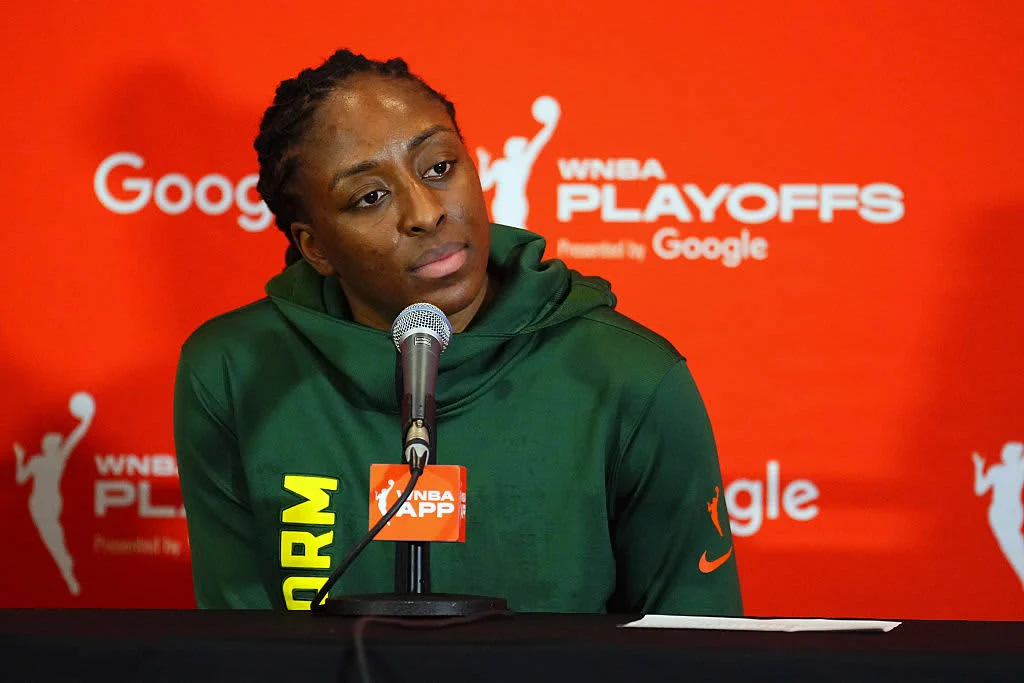
The Women’s National Basketball Player’s Association (WNBPA) on Monday formally ratified the terms of a new collective bargaining agreement (CBA), hailing the deal as "transformational" and proclaiming its impact extends far "bigger than basketball." This pivotal agreement, set to commence with the current season and extend through 2032, signifies a profound shift in the economic landscape for WNBA athletes and marks a new chapter for the league’s long-term sustainability and growth. WNBPA President Nneka Ogwumike succinctly captured the essence of the deal’s most significant outcome with two words: "Bank accounts."
A New Financial Horizon for WNBA Athletes
At the core of the new CBA are substantial increases in player compensation, directly addressing a long-standing demand from athletes for salaries commensurate with their talent and the league’s growing profile. The agreement projects the average player salary to rise to an impressive $583,000 by 2026, with the potential to exceed $1 million annually by the agreement’s conclusion in 2032. This represents an unprecedented leap from the average WNBA salary of approximately $120,000 recorded in 2025.
Furthermore, the maximum salary for individual players is set to reach $1.4 million in 2026, with projections indicating it could grow to more than $2.4 million by 2032. These figures are not arbitrary; they are directly tied to the WNBA’s current financial projections and signify a fundamental restructuring of how player value is recognized within the league. Ogwumike emphasized this connection, stating to CNBC Sport, "Being able to have your worth tied mostly in your salary is all that we’ve been fighting for, and it’s what we were able to achieve." This shift from a fixed salary structure to one more closely aligned with league revenue is a cornerstone of the new deal, fostering a shared incentive for growth between players and ownership.
The substantial increase in compensation is expected to profoundly alter players’ off-season strategies. Historically, many WNBA athletes, including some of the league’s biggest stars, have sought opportunities in international leagues across Europe, Asia, and Australia, where salaries often dwarfed their WNBA earnings. This necessity to play year-round, often involving grueling travel and limited rest, raised concerns about player health, career longevity, and the ability to fully commit to the WNBA season. Ogwumike acknowledged this impending change, noting, "Prioritizing where you want to play is going to look a lot different now that we’ve been able to negotiate a structure, a salary structure, that is tied to the revenue of the business." The increased financial security within the WNBA is anticipated to reduce the reliance on overseas play, allowing players to prioritize rest, recovery, and domestic commitments, potentially enhancing the quality of play and overall player well-being within the WNBA.
The Historical Context: A Long Road to Economic Equity
The journey to this "transformational" CBA has been a long and often challenging one, reflecting decades of advocacy by WNBA players for better conditions and fair compensation. Founded in 1997, the WNBA has steadily built its brand and fan base, yet player salaries have historically lagged significantly behind those in other major professional sports leagues, particularly the NBA.

Previous collective bargaining agreements, such as those signed in 2003, 2014, and 2020, brought incremental improvements but often fell short of addressing the fundamental economic disparities. The 2020 CBA, for instance, introduced significant advancements in areas like maternity leave, childcare benefits, and enhanced travel standards, but the core issue of salary competitiveness remained a persistent point of contention. While it increased the average salary to around $120,000, it also introduced a controversial "prioritization rule." This rule mandated that players arrive at training camp on time or face significant fines and potential ineligibility for the season, effectively forcing players to choose between lucrative overseas contracts and their WNBA commitments. This rule, designed to ensure player presence and reduce conflicts with international schedules, inadvertently highlighted the financial pressures driving players abroad and became a flashpoint for player dissatisfaction.
Over recent years, the growing prominence of the WNBA, fueled by an influx of highly marketable talent, increased media attention, and a surge in fan engagement, intensified calls for a new financial model. Players, often vocal on social media and through player associations, have consistently articulated the need for salaries that reflect the league’s growing revenue streams, including rising TV viewership, expanded media rights deals, and increasing sponsorship interest. The success of alternative leagues like the 3-on-3 league Unrivaled, which offered players additional earning opportunities, further underscored the demand for diverse income streams and greater financial stability for women’s basketball players. This collective push for economic justice set the stage for the intense negotiations that culminated in the recently ratified agreement.
Reconciliation and a Path Forward with League Leadership
The ratification of this new CBA also signals a potential turning point in the relationship between WNBA players and league leadership, particularly Commissioner Cathy Engelbert. In the months leading up to the agreement, several prominent WNBA players, including five-time WNBA All-Star Napheesa Collier, had publicly expressed a "loss of confidence" in Engelbert, citing concerns over empathy, communication, and the pace of progress. These criticisms highlighted a period of strained relations and a perceived disconnect between the players’ aspirations and the league’s direction.
However, Ogwumike’s statements following the CBA’s ratification conveyed a renewed sense of optimism and a commitment to collaboration. "I told her that we’re standing here with you, Cathy," Ogwumike recounted, emphasizing the shared achievement. "We were able to come to this deal and go through the process of this deal, however bumpy or smooth it was, we got here. It’s important for her to understand that we as players are at the table with her and all WNBA leadership to have achieved something that’s incredibly historical. So, I feel like there probably isn’t a better way to represent us settling our differences and moving forward in a league that we all care about then by signing this deal."
This declaration signifies a crucial step towards healing past rifts and establishing a more unified front for the league’s future. The long-term nature of the agreement, extending through 2032, necessitates a sustained partnership between the WNBPA and the WNBA front office. By tying player salaries directly to league revenue, the CBA inherently aligns the interests of both parties. Players now have a direct financial stake in the league’s commercial success, incentivizing them to actively participate in marketing, fan engagement, and growing the WNBA’s overall market footprint. This collaborative framework is essential for leveraging the league’s current momentum and unlocking its full potential.
Broader Implications for the WNBA and Women’s Professional Sports
The implications of this landmark CBA extend far beyond individual player bank accounts. It represents a significant inflection point for the WNBA and, by extension, for the broader landscape of women’s professional sports globally.

Firstly, the enhanced financial package is expected to have a transformative effect on player retention and talent attraction. Higher salaries make the WNBA a more compelling and sustainable career path, potentially enticing top collegiate prospects to forgo international opportunities and commit fully to the domestic league. This influx of talent, coupled with the reduced need for overseas play, promises to elevate the quality of play, making the WNBA product even more exciting and competitive for fans. Improved player welfare, including better travel, medical care, and family benefits (which were part of the previous CBA and are likely maintained or enhanced), will also contribute to a more professional and appealing environment.
Secondly, the new CBA is poised to bolster the WNBA’s commercial viability. A stable, well-compensated player base that is less fragmented by overseas commitments presents a more attractive proposition for media partners and corporate sponsors. Increased salaries can lead to greater brand endorsements for individual players, further raising their profiles and, by extension, the league’s visibility. The long-term nature of the agreement provides certainty for investors and partners, signaling a period of sustained growth and stability, which is crucial for negotiating future media rights deals and attracting significant capital. Analysts widely anticipate that a more valuable and stable WNBA product will command higher fees in subsequent broadcast agreements, creating a positive feedback loop for revenue generation.
Furthermore, this agreement sets a powerful precedent for other women’s professional sports leagues striving for greater equity and financial recognition. As the WNBA demonstrates a successful model for shared revenue and player empowerment, it provides a blueprint and inspiration for athletes in soccer, hockey, volleyball, and other sports who are advocating for similar advancements. The visibility of the WNBA’s success can serve as a powerful bargaining chip for other player associations seeking to elevate their own leagues.
Finally, the cultural impact cannot be overstated. By demonstrating that professional female athletes can achieve significant financial success within their sport, the WNBA reinforces its role as a powerful platform for empowerment and a source of inspiration for young girls and aspiring athletes worldwide. It challenges outdated perceptions about the commercial value of women’s sports and contributes to a broader societal shift towards gender equity in professional arenas.
Challenges and the Road Ahead
While the ratification of this CBA marks a moment of triumph and optimism, the path forward for the WNBA is not without its challenges. The long-term success of the agreement hinges on the league’s ability to generate sustained revenue growth to support the escalating salary structure. This will require continued innovation in marketing, fan engagement strategies, and the expansion of the league’s global footprint. Addressing logistical hurdles such as optimal travel arrangements, ensuring access to top-tier facilities, and continuously enhancing the fan experience will remain critical priorities.
Moreover, while the agreement fosters a renewed spirit of collaboration, maintaining open lines of communication and addressing emergent issues proactively will be essential for preserving the positive momentum between the WNBPA and league leadership. The 2032 horizon of the CBA provides a long period of stability, but it also demands a continuous, shared commitment to growth and adaptation from all stakeholders.
In conclusion, the WNBPA’s ratification of this new collective bargaining agreement is a watershed moment, fundamentally reshaping the economic realities for its players and charting an ambitious course for the league’s future. With unprecedented salary increases, a renewed spirit of collaboration, and a structure designed for shared prosperity, the WNBA is poised to enter an era of unparalleled growth, solidifying its position as a leading force in professional sports and a powerful advocate for women’s athletic excellence.
