

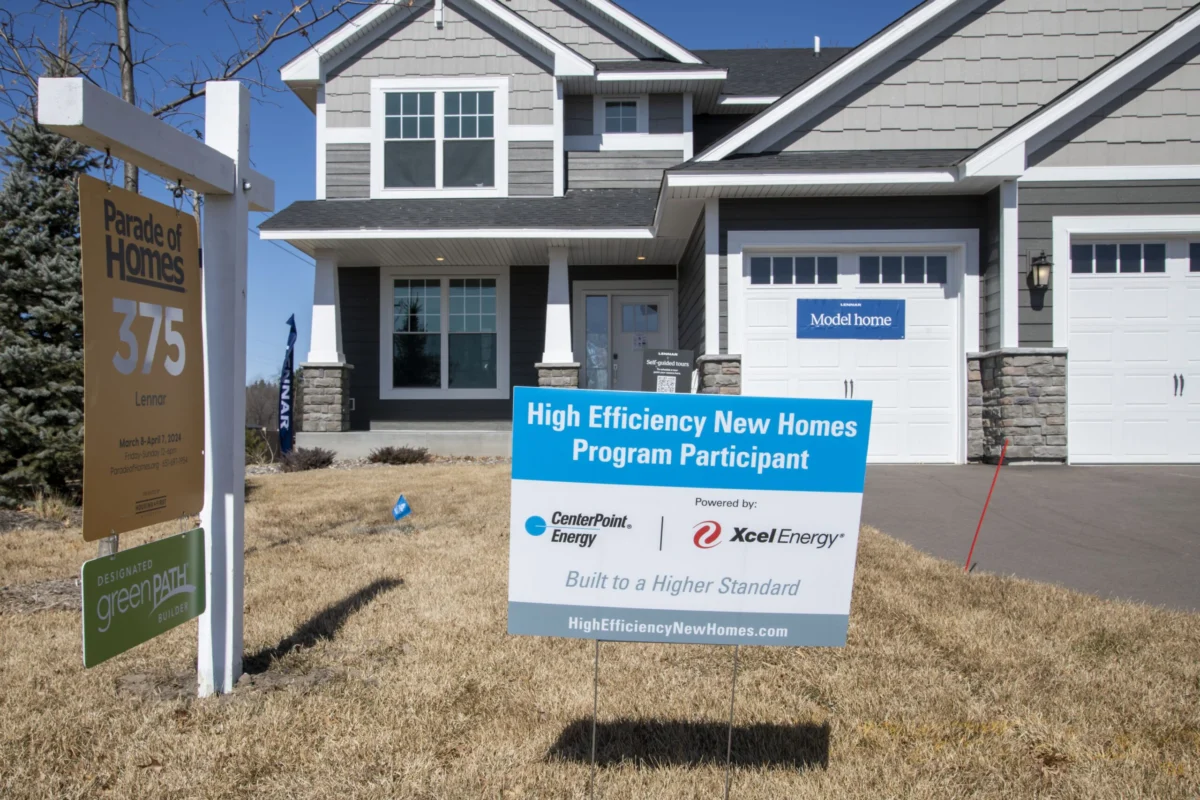
The U.S. housing market experienced a significant contraction in January, with sales of newly constructed homes falling by a sharper-than-expected 17.6% month-over-month. According to data released by the U.S. Census Bureau, the seasonally adjusted annual pace for new home sales dropped to 587,000 units, representing the slowest sales activity observed since the depths of the market slowdown in 2022. This substantial decline surprised housing analysts, who had largely anticipated a much smaller dip, signaling a more pronounced cooling in buyer demand driven by persistent high mortgage rates and a growing supply of available properties. The unexpected severity of the downturn underscores the ongoing challenges faced by the housing sector, which continues to grapple with affordability concerns and an evolving economic landscape.
Deep Dive into January’s Sales Data and Reporting Delays
The reported 587,000 annualized pace for new home sales starkly contrasts with market forecasts that hovered closer to the 700,000-unit mark, underscoring the unexpected severity of the slowdown. This figure not only marks a significant sequential decline from December but also represents an 11.3% reduction compared to sales figures from January of the preceding year. The U.S. Census Bureau, still navigating reporting delays stemming from a government shutdown experienced last year, noted that December’s sales data also underwent a downward revision. This revision, coupled with the current month’s poor performance, paints a clearer, albeit more somber, picture of a weakening trend in new home transactions that extends beyond initial estimates and affects the overall reliability of real-time market assessment.
It is crucial to understand that these sales figures are predicated on signed contracts, meaning they largely reflect purchasing decisions made in preceding weeks or months when mortgage rates were slightly more favorable than their current levels. This inherent lag in reporting means that the full impact of recent rate fluctuations and shifts in buyer sentiment may not yet be entirely visible in the official data, suggesting that subsequent reports could reveal continued softness. For instance, many of the January contracts were likely initiated when the average 30-year fixed mortgage rate was in a lower range, indicating that the market’s current trajectory might be even more challenging than the January numbers suggest.
Mortgage Rate Dynamics and Their Profound Impact
The trajectory of mortgage rates has emerged as a paramount determinant of housing market activity, acting as a direct lever on affordability and buyer enthusiasm. Throughout January, the average rate for a 30-year fixed-rate mortgage fluctuated between 6% and 6.2%, as reported by Mortgage News Daily. However, by the time of this analysis, the current average rate has climbed to approximately 6.36%. While seemingly a modest increase, this fractional rise translates into a tangible and often substantial increase in monthly housing costs for prospective buyers, significantly eroding purchasing power and market accessibility.
This upward creep in rates is intricately linked to the broader economic landscape and the monetary policy decisions of the Federal Reserve. The Fed’s sustained campaign to combat stubbornly high inflation through a series of interest rate hikes has directly impacted the cost of borrowing across the economy. Mortgage rates, in particular, are highly sensitive to these shifts in the federal funds rate and the yields on long-term Treasury bonds, which serve as benchmarks for fixed-rate mortgages. Even a 25-basis-point increase in mortgage rates can add hundreds of dollars to a monthly payment on a typical home loan, pushing many potential buyers out of the market or forcing them to compromise on home size, location, or features.
Beyond the purely financial implications, the psychological impact of rising rates also plays a crucial role. The perception of an unfavorable borrowing environment often prompts potential buyers to defer their purchasing decisions, adopting a "wait and see" approach in anticipation of more favorable borrowing conditions or simply re-evaluating their capacity to afford a new home in the current climate. This creates a challenging and often unpredictable environment for builders reliant on a steady stream of buyer interest and commitment. The "higher for longer" narrative from the Federal Reserve continues to temper expectations for significant rate relief in the near future, suggesting that affordability challenges will persist.
Inventory Surge Signals Market Rebalancing
A direct consequence of softening demand and continued construction activity has been a notable expansion in the inventory of new homes available for sale. The U.S. Census Bureau reported that the supply of new homes rose to a 9.7-month supply in January, a substantial increase from the eight-month supply recorded in December. This figure also stands 7.8% higher than the inventory levels observed in January of the preceding year, indicating a sustained upward trend in available housing stock.
To put this into perspective, a 9.7-month supply is significantly above what is typically considered a balanced market, which usually hovers around a six to seven-month supply. An elevated inventory level indicates that it would take nearly ten months to sell all the homes currently on the market at the current sales pace if no new homes were added. This burgeoning inventory places considerable pressure on homebuilders, who must now contend with a more competitive landscape. With more options available to buyers, the urgency to purchase diminishes, shifting leverage towards consumers and away from sellers. This scenario often compels builders to adopt new strategies to stimulate sales, including a re-evaluation of pricing structures and the introduction of various incentives to differentiate their offerings and clear standing inventory. This rebalancing act, while challenging for builders, could eventually benefit buyers by offering more choice and potentially better value.
Pricing Adjustments and Aggressive Builder Incentives
In response to the dual pressures of increased supply and diminished demand, builders have begun to adjust their pricing strategies with greater urgency. The median price of a new home sold in January was reported at $400,500, marking a 6.8% decline year-over-year. This contrasts sharply with the broader existing home market, where national prices have remained relatively flat or even seen modest increases, primarily due to a persistent shortage of resale inventory and the "locked-in" effect of homeowners with ultra-low mortgage rates.
However, the data indicates a clear and accelerating trend among builders to offer increasing incentives to attract buyers. These incentives extend beyond simple list price reductions and often include creative financial solutions designed to alleviate the burden of high interest rates. Mortgage rate buydowns are a particularly popular strategy, where builders subsidize a portion of the buyer’s interest rate for the initial years of the loan, or even for the entire loan term, making monthly payments more manageable and competitive. Other common incentives include covering closing costs, offering significant upgrades to finishes, appliances, or smart home technology at no additional charge, or providing substantial design credits that allow buyers to customize their homes without incurring extra expenses.
The National Association of Home Builders (NAHB) further corroborated this trend, reporting that an estimated 37% of builders cut prices in March, an uptick from 36% in February. This consistent increase in builders resorting to price reductions and incentives underscores the competitive environment and the persistent challenges they face in moving inventory. For instance, in developments like Lexington Waters in Blaine, Minnesota, where new high-efficiency homes start at a half-million dollars and are HOA-maintained, builders are likely leveraging such premium amenities alongside additional concessions to justify their price points and attract discerning buyers in a tightening market. These strategic moves highlight the industry’s agility in adapting to shifting market dynamics, but also signal the extent of the current headwinds.
Regional Variations in Sales Performance
While the downturn in new home sales was a national phenomenon, its impact was not uniformly distributed across the country. Sales experienced the most pronounced declines in the Northeast and Midwest regions. In these areas, severe winter weather conditions likely played a significant role in dampening buyer activity, hindering construction progress, and making property viewings less appealing. For example, heavy snowfall and freezing temperatures can delay construction timelines, limit open house attendance, and discourage potential buyers from venturing out.
However, the West also witnessed a significant slump, with sales plummeting nearly 22% from December figures. This steep decline in a region typically less affected by harsh winter weather suggests that broader economic factors, rather than seasonal influences alone, are at play. The higher cost of living and already elevated home prices in many Western markets likely exacerbate the impact of rising mortgage rates, pushing affordability even further out of reach for a larger segment of the population. The South, a perennial stronghold for new home construction and population growth, also saw sales soften, though perhaps less dramatically than other regions. This widespread market correction, affecting diverse geographies, indicates a systemic challenge rather than isolated regional anomalies, pointing to national economic pressures as the primary driver.
Background Context: Economic Headwinds and Federal Reserve Policy
The current state of the new home market cannot be fully understood without acknowledging the overarching economic backdrop that has shaped it over the past two years. Since early 2022, the Federal Reserve embarked on an aggressive monetary tightening cycle, raising its benchmark interest rate eleven times from near zero to a range of 5.25%-5.50%. This policy, while deemed necessary to combat stubbornly high inflation that reached multi-decade highs, has had a direct and significant impact on borrowing costs across the economy, making mortgages substantially more expensive for consumers.
The Fed’s consistent message of a "higher for longer" interest rate environment has injected a degree of uncertainty into the market, influencing consumer confidence and investment decisions. Despite a robust labor market, characterized by low unemployment rates and resilient job growth, and surprisingly strong economic growth in some sectors, concerns about persistent inflation, geopolitical instability, and the potential for a future economic slowdown continue to weigh on prospective homebuyers. This creates a delicate balancing act for policymakers and a particularly challenging environment for the housing sector, which is highly sensitive to interest rate fluctuations and broader economic sentiment. The ability of the economy to achieve a "soft landing"—taming inflation without triggering a recession—remains a key determinant of the housing market’s future trajectory.
Industry Reactions and Expert Commentary
Industry stakeholders have offered various perspectives on the evolving market, acknowledging both the immediate challenges and the underlying resilience. Dr. Robert Dietz, Chief Economist for the National Association of Home Builders (NAHB), recently commented, "The market is clearly rebalancing. While builder confidence remains cautious due to high financing costs and regulatory burdens, the willingness to cut prices and offer incentives demonstrates a proactive approach to meet buyers where they are, especially given the affordability challenges posed by current mortgage rates." Dietz further emphasized the ongoing shortage of existing homes as a structural support for new construction in the long run.
Other economists, like those at Moody’s Analytics, suggest that the decline is a necessary "cooling period" after the frenzied, unsustainable pandemic-era boom, rather than a precursor to a deep recession. "We’re seeing a return to more normalized market dynamics," stated a senior housing analyst from a major financial institution, who preferred to remain anonymous due to company policy, "but the key differentiator remains the persistent shortage of existing home inventory. This structural undersupply continues to channel some demand towards new construction, even with short-term dips in sales velocity."
Individual builders, while acknowledging the tougher sales environment, are actively adapting their strategies. A representative from a national homebuilder with operations across the Sun Belt emphasized, "We’re focusing more on entry-level and move-up buyers, offering smaller, more affordable floor plans and heavily promoting rate buydowns. The underlying demand is still there, driven by demographic shifts, but buyers are much more sensitive to monthly payments now. We have to be creative." This sentiment is echoed by many in the industry, highlighting a strategic shift towards value, efficiency, and innovative financial incentives to bridge the affordability gap.
Broader Economic Implications of a Slowing Housing Market
The health of the housing sector is a critical barometer for the broader economy, often serving as a bellwether for consumer confidence and investment. A sustained downturn in new home sales has ripple effects across numerous industries. Construction, a significant contributor to the Gross Domestic Product (GDP), faces reduced activity, impacting jobs not only on construction sites but also in related fields such as manufacturing building materials (lumber, steel, concrete), appliance production, home furnishings, and various real estate services like lending, insurance, and brokerage.
The decline in median new home prices, while potentially beneficial for some prospective buyers, could also temper the "wealth effect" associated with rising home equity. When homeowners feel their property values are increasing, they tend to feel wealthier and are more inclined to spend. A flattening or declining trend in home prices could lead to more cautious consumer spending, which forms a significant portion of economic activity. While the overall economy has shown resilience in the face of aggressive monetary tightening, a prolonged slump in housing could pose a significant headwind to achieving the desired "soft landing" from inflation without triggering a broader economic recession. Policymakers closely monitor housing data for signs of broader economic distress or, conversely, stabilization that could inform future interest rate decisions and fiscal policies.
Looking Ahead: Outlook and Persistent Challenges
The immediate outlook for the new home market remains complex and hinges on several key variables. A pivotal factor will be the future trajectory of inflation and, consequently, the Federal Reserve’s monetary policy. Any clear and sustained indications of disinflation could pave the way for potential interest rate cuts, which would provide a much-needed boost to affordability and buyer confidence by lowering monthly mortgage payments. However, the timing and magnitude of any such cuts remain uncertain.
Persistent challenges continue to weigh on the sector. Elevated construction costs for labor, land, and materials continue to squeeze builder margins, limiting their ability to significantly drop prices without impacting profitability. The ongoing scarcity of existing homes for sale, often referred to as the "locked-in effect" where homeowners are reluctant to sell due to their historically low mortgage rates (many locked in rates below 4%), continues to channel some demand towards new construction. This structural undersupply in the resale market provides a floor for new home sales, preventing a more catastrophic collapse.
Yet, the ability of builders to entice buyers in an environment of higher borrowing costs will be crucial. The focus on energy efficiency, as seen in developments like those in Blaine, Minnesota, and strategic incentives will likely define the market through the coming months, as both buyers and builders navigate this period of rebalancing. The interplay between interest rates, inventory levels, consumer sentiment, and broader economic stability will determine the pace and shape of the housing market’s recovery.
In conclusion, January’s sharp decline in new home sales underscores a challenging period for the U.S. housing market. Driven by elevated mortgage rates, a growing inventory, and evolving buyer expectations, the sector is undergoing a significant rebalancing. While builders are actively adapting with price adjustments and incentives, the path to a sustained recovery remains closely tied to broader economic conditions and the future direction of interest rates, necessitating a cautious but adaptive approach from all market participants.
