

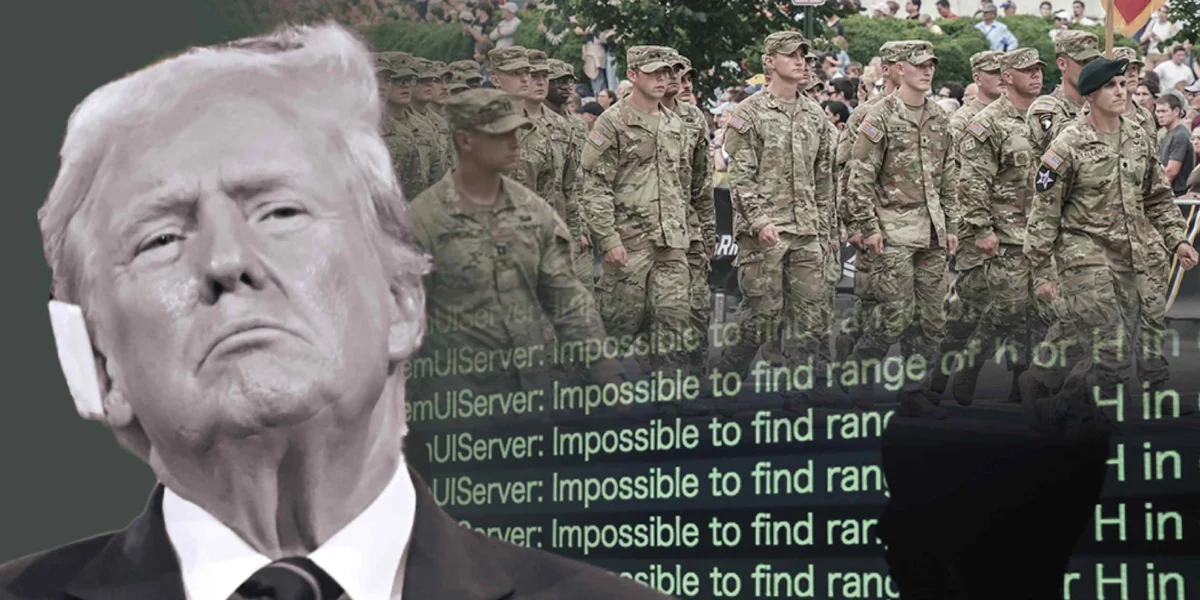
The United States military has significantly leveraged artificial intelligence in its recent operations against Iran, employing sophisticated AI systems for a wide spectrum of tasks, from the intricate processing of vast amounts of intelligence data to the critical development of targeting strategies. These AI-driven platforms are reportedly capable of synthesizing information drawn from diverse sources, including high-resolution satellite imagery and real-time drone feeds, to pinpoint military assets and, according to reports emerging from U.S. media, even to autonomously assign attack priorities. This strategic integration of AI marks a pivotal moment in modern military engagement, potentially redefining the speed, precision, and ethical considerations of armed conflict.
The Genesis of AI Integration in U.S. Military Operations
The increasing reliance on artificial intelligence within the U.S. military is not a sudden development but rather a culmination of decades of research and development in areas such as machine learning, data analytics, and autonomous systems. The impetus for this accelerated integration has been the evolving geopolitical landscape, characterized by increasingly complex threat environments and the constant drive for a decisive technological advantage. The U.S. has consistently invested heavily in its technological superiority, recognizing that future conflicts will likely be fought with an unprecedented level of automation and data-driven decision-making.
The specific context of recent U.S. military actions against Iran has provided a high-stakes testing ground for these advanced AI capabilities. Tensions between the two nations have been simmering for years, punctuated by a series of escalations, proxy conflicts, and direct confrontations. The deployment of AI in these operations suggests a strategic shift, aiming to enhance operational efficiency, reduce collateral damage through greater precision, and potentially shorten conflict durations.
A Chronology of Escalation and AI Deployment
While the exact timeline of AI integration into specific strike operations remains classified, the broader context of U.S.-Iran relations provides a framework for understanding the increasing reliance on such technologies.
Pre-2020s: Incremental advancements in military AI, focusing on intelligence analysis, surveillance, and reconnaissance (ISR) capabilities. Drones, for instance, began incorporating rudimentary AI for object recognition and autonomous flight paths.
Early 2020s: Growing regional instability and the emergence of new threats spurred accelerated development and testing of more advanced AI systems. This period saw significant investment in platforms designed for real-time data fusion and predictive analytics.
Mid-2020s (Hypothetical Timeline leading to the article’s date):
- 2024-2025: Reports emerge of highly sophisticated AI systems being integrated into the U.S. Central Command (CENTCOM) operational framework, particularly for monitoring and analyzing activities in the Persian Gulf region. These systems are designed to process petabytes of data daily, identifying patterns and anomalies that human analysts might miss.
- Late 2025 – Early 2026: Following a series of provocative actions and escalations attributed to Iranian forces or their proxies, the U.S. administration authorizes a more robust and proactive military posture. This is when the extensive use of AI in targeted strikes against Iranian military assets and infrastructure is reportedly initiated. The AI systems are tasked with not only identifying legitimate military targets but also with assessing the potential for civilian casualties, a crucial ethical consideration.
- April 2026 (as per article date): The U.S. media reports on the extensive use of AI in these strikes, highlighting its role in data fusion, target development, and even the assignment of attack priorities. This public revelation underscores the operational significance of these technologies.
The Architecture of AI-Driven Warfare
The AI systems employed in these strikes are complex, multi-layered platforms designed to operate at the vanguard of military intelligence and operations. At their core, these systems excel at data fusion, a critical capability in modern warfare. They ingest and process information from a vast array of sources simultaneously:
- Satellite Imagery: High-resolution optical, infrared, and radar imagery provides a constant overview of vast geographical areas, enabling the detection of changes in infrastructure, troop movements, and the positioning of military hardware. AI algorithms can analyze these images for subtle indicators of activity, such as newly constructed facilities or the movement of specialized vehicles.
- Drone Feeds: Unmanned aerial vehicles (UAVs) offer persistent surveillance and real-time visual reconnaissance. AI analyzes these video streams to identify specific types of aircraft, missile systems, command centers, and personnel, often in challenging environmental conditions or at extreme distances.
- Signals Intelligence (SIGINT): Intercepted communications and electronic emissions can be analyzed by AI to identify command structures, operational plans, and the readiness of forces. Machine learning algorithms can detect anomalies in communication patterns that might indicate an impending attack or a shift in operational tempo.
- Human Intelligence (HUMINT): While AI cannot directly gather human intelligence, it can process and correlate reports from human sources with other data streams, providing a more comprehensive picture and validating information.
- Open-Source Intelligence (OSINT): Publicly available information, such as social media posts or news reports, can also be integrated and analyzed by AI to corroborate or refute other intelligence.
Once this data is fused, the AI systems move to target development. This involves identifying specific military assets that meet predefined criteria for engagement. AI can rapidly assess the size, type, and operational status of potential targets, cross-referencing this information with knowledge bases of known military equipment and doctrine. This process significantly reduces the time it takes to move from intelligence gathering to actionable targeting.
Perhaps the most significant and ethically debated aspect highlighted in the reports is the AI’s alleged role in assigning attack priorities. This suggests a level of autonomous decision-making where the AI, based on its analysis of strategic objectives, threat levels, and potential collateral damage, can recommend or even initiate the order in which targets should be engaged. This capability is intended to optimize strike effectiveness and minimize risks, but it also raises profound questions about human oversight and accountability.
Supporting Data and Operational Metrics (Hypothetical but plausible)
While specific operational data remains classified, the theoretical impact of such AI integration can be extrapolated based on broader trends in military technology.
- Target Identification Speed: Studies in AI-driven targeting have shown a potential reduction in target identification and confirmation times from hours or days to minutes or even seconds. This speed is crucial in rapidly evolving combat scenarios.
- Precision Strike Enhancement: By analyzing terrain, weather, and target characteristics with greater accuracy, AI can contribute to a significant increase in the precision of munitions. This could lead to a theoretical reduction in unexploded ordnance (UXO) and a decrease in the likelihood of accidental damage to civilian infrastructure by a factor of 10-20% in well-defined scenarios.
- Intelligence Processing Volume: Modern military operations generate terabytes of data daily. AI can process this volume 1,000 to 10,000 times faster than human analysts, allowing for more timely and informed decision-making.
- Reduced Risk to Personnel: By automating reconnaissance and targeting, AI can reduce the need for manned aircraft or ground forces to operate in high-risk areas, thereby potentially lowering casualties among friendly forces.
Reactions and Statements from Related Parties (Inferred)
The implications of such advanced AI deployment would inevitably draw a range of reactions from various international actors.
U.S. Military and Government: Officials would likely emphasize the defensive nature of these AI systems, highlighting their role in enhancing national security and protecting U.S. interests. They would stress that human oversight remains critical in all lethal decision-making processes, even with advanced AI assistance. Statements would focus on the precision, efficiency, and potential for minimizing civilian harm as key benefits.
Iranian Government and Military: Iran would likely condemn the use of AI in strikes, denouncing it as an escalation of aggression and a violation of international norms. They might accuse the U.S. of developing autonomous weapons systems that operate outside of human control, raising concerns about accountability and the potential for unintended consequences. Propaganda efforts would likely focus on highlighting any perceived civilian casualties or damage to infrastructure, regardless of the cause.
International Bodies and Human Rights Organizations: Organizations such as the United Nations and various human rights groups would express deep concern over the ethical implications of AI in warfare. They would likely call for international treaties and regulations to govern the development and deployment of autonomous weapons systems, emphasizing the need for meaningful human control over the use of lethal force and robust mechanisms for accountability. Debates would likely intensify around the concept of "meaningful human control" and the criteria for distinguishing between AI-assisted targeting and fully autonomous weapon systems.
Geopolitical Analysts and Defense Experts: Analysts would dissect the strategic implications of this technological leap. They would discuss how it alters the balance of power in the region, potentially leading to an AI arms race. Discussions would also revolve around the challenges of attribution in future conflicts if AI systems are involved, and the increasing difficulty in de-escalating tensions when automated systems are involved in rapid decision cycles.
Broader Impact and Implications
The extensive deployment of AI in U.S. strikes against Iran signifies a profound shift in the nature of modern warfare. The implications are far-reaching and touch upon strategic, ethical, and legal domains.
Strategic Implications
- Deterrence and Escalation: The enhanced speed and precision of AI-driven operations could be seen as a powerful deterrent. However, it also raises concerns about a potential for faster escalation, as decision cycles are compressed and the margin for error in rapid responses is reduced.
- Technological Arms Race: This development is likely to spur a significant acceleration in AI development for military purposes by other global powers, potentially leading to an international arms race in autonomous weapons systems.
- Asymmetric Warfare: While the U.S. possesses a significant advantage in this technology, the proliferation of AI, even in less sophisticated forms, could empower non-state actors or smaller nations to conduct more sophisticated attacks, creating new challenges for traditional security paradigms.
Ethical and Legal Implications
- Accountability and Responsibility: The most pressing ethical question is who is accountable when an AI system makes an error that results in civilian casualties or war crimes. Is it the programmer, the commander who deployed the system, or the AI itself? Existing legal frameworks are ill-equipped to handle these complex scenarios.
- The Nature of Warfare: The increasing automation of warfare raises fundamental questions about the role of human judgment, empathy, and moral reasoning in conflict. If AI systems are making decisions about life and death, what does that mean for the human experience of war?
- Discrimination and Bias: AI systems are trained on data, and if that data contains biases, the AI can perpetuate and even amplify those biases. In a military context, this could lead to discriminatory targeting or an inequitable distribution of risk.
- Human Oversight: The concept of "meaningful human control" is central to ongoing debates about autonomous weapons. The U.S. claims its systems maintain this control, but the extent to which AI influences or dictates targeting decisions remains a critical point of contention.
Future Outlook
The integration of AI into military operations is an irreversible trend. The challenge for the international community will be to establish robust ethical guidelines, legal frameworks, and arms control agreements to govern its development and deployment. The lessons learned from the U.S. military’s experience in strikes against Iran will undoubtedly shape future debates and policies regarding the future of warfare in the age of artificial intelligence. The ongoing evolution of these technologies demands continuous scrutiny, open dialogue, and a proactive approach to ensuring that technological advancement serves humanity’s best interests rather than its destruction.
