

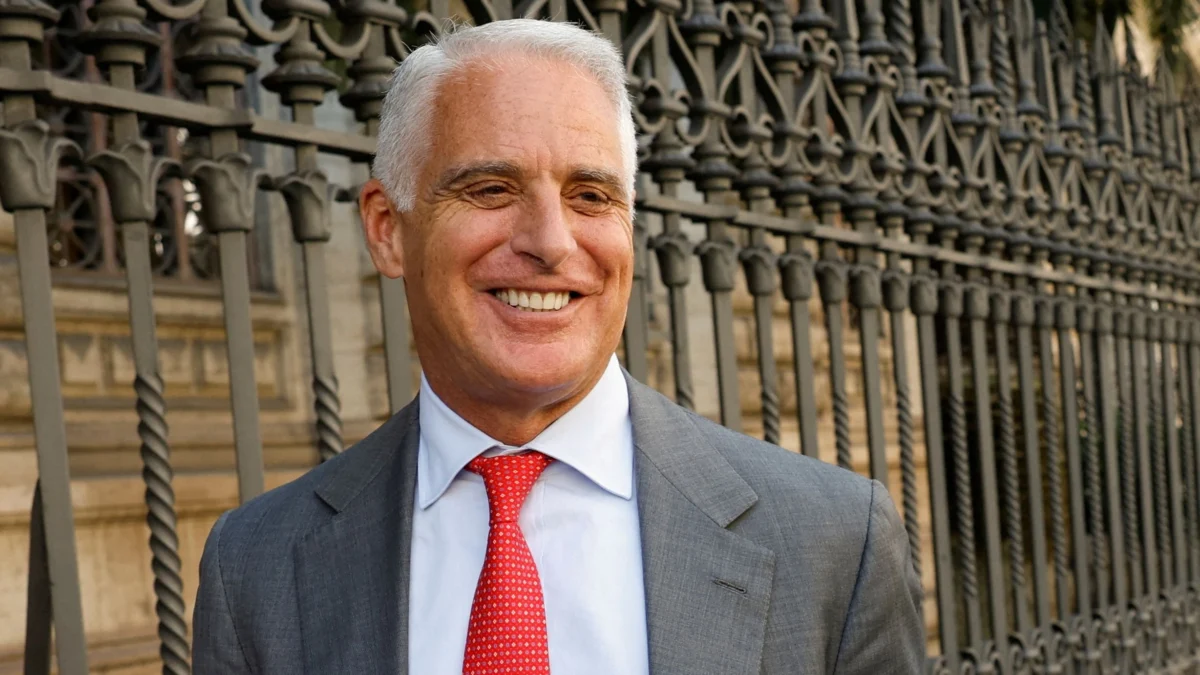
Andrea Orcel, the CEO of UniCredit, is reportedly on the verge of orchestrating the acquisition of Commerzbank, a move that would significantly reshape the European banking landscape. This potential deal marks a pivotal moment for both institutions, with implications extending far beyond the immediate financial sector. Orcel, known for his assertive management style and a penchant for bold strategic maneuvers, has previously demonstrated his capacity for large-scale integration and restructuring, most notably within his own organization. The prospect of him leading a major acquisition of a German cornerstone bank like Commerzbank has generated considerable interest and speculation among industry observers, investors, and policymakers.
The Italian banking giant UniCredit, under Orcel’s leadership, has been engaged in strategic evaluations of its European footprint. Commerzbank, Germany’s second-largest lender, has been navigating a complex period of transformation, seeking to solidify its market position and enhance profitability amidst a challenging economic environment. Reports of Orcel’s involvement in potential acquisition talks have been circulating for some time, but recent developments suggest a more concrete trajectory towards a deal. The move, if finalized, would represent one of the most significant cross-border banking mergers in recent European history, underscoring Orcel’s ambition to consolidate UniCredit’s standing as a leading European financial powerhouse.
Andrea Orcel: A Profile in Strategic Rigor
Andrea Orcel is a figure synonymous with a no-nonsense approach to finance. His career, marked by high-profile investment banking roles before his tenure as CEO of UniCredit, has been characterized by a relentless pursuit of efficiency, profitability, and strategic growth. Colleagues and former associates often describe him as charismatic yet demanding, possessing an unwavering focus on achieving ambitious targets. His approach to leadership is often likened to the intensity and discipline required in high-stakes sports, a parallel he himself has drawn in personal interviews.

Orcel’s management philosophy emphasizes a clear vision, decisive action, and a willingness to make difficult decisions. This has been evident in his leadership at UniCredit, where he has overseen significant restructuring efforts aimed at streamlining operations, divesting non-core assets, and enhancing capital allocation. His commitment to these principles has not always been met without internal friction, but his track record suggests a consistent ability to drive organizational change and deliver on strategic objectives. This proactive and often aggressive stance is precisely what fuels the speculation surrounding his potential involvement with Commerzbank.
The Strategic Rationale Behind a Potential Commerzbank Acquisition
The potential acquisition of Commerzbank by UniCredit, spearheaded by Andrea Orcel, presents a compelling strategic rationale. Commerzbank, with its significant presence in the German market, offers UniCredit an opportunity to bolster its footprint in Europe’s largest economy. Germany’s banking sector, while mature, remains a crucial market for cross-border financial services, and a strong foothold there could unlock substantial growth opportunities.
For UniCredit, acquiring Commerzbank could lead to significant synergies. These could include cost savings through the consolidation of overlapping operations, such as IT infrastructure, back-office functions, and administrative departments. Revenue synergies might arise from cross-selling opportunities, leveraging Commerzbank’s established customer base in Germany with UniCredit’s broader range of financial products and services. Furthermore, a combined entity could achieve greater economies of scale, enhancing its competitive position against other major European banks and a growing array of fintech challengers.

Navigating a Complex European Banking Landscape
The European banking sector is undergoing a profound transformation, driven by evolving regulatory frameworks, technological disruption, and shifting customer expectations. In this environment, consolidation has become a recurring theme as banks seek to achieve greater scale and efficiency. Deals like the potential Commerzbank-UniCredit merger are part of this broader trend.
Commerzbank, in particular, has faced its share of challenges. The bank has been working to adapt to low-interest-rate environments and increased competition, necessitating a series of strategic adjustments. Its merger with Dresdner Bank in 2009, for instance, was a significant event that aimed to create a stronger German banking champion. However, the integration proved complex, and Commerzbank has continued to refine its strategy in the years since.
UniCredit, meanwhile, has been on a path of strategic revitalization under Orcel. The bank’s "Team 23" strategic plan, launched in 2019, aimed to improve profitability, strengthen capital ratios, and optimize its international network. Orcel’s arrival in 2021 signaled a renewed focus on execution and a more aggressive approach to achieving these goals. His known preference for bold moves makes a significant acquisition like Commerzbank a logical, albeit ambitious, next step.
The German Government’s Stake and Potential Reaction
The German government, through its sovereign wealth fund, holds a significant stake in Commerzbank, a legacy of the 2008 financial crisis. This ownership interest means that any potential acquisition would likely involve close consultation and agreement with government stakeholders. The German authorities have historically prioritized the stability and competitiveness of their domestic banking sector, and their reaction to a foreign takeover of a national champion like Commerzbank would be closely watched.
Historically, German governments have been cautious about allowing key national assets to fall under foreign control, particularly in strategic sectors like finance. However, the economic realities of the European banking market often necessitate cross-border consolidation. Any deal would likely be scrutinized for its impact on financial stability, competition, and employment within Germany. It is plausible that the German government would seek assurances regarding the future of Commerzbank’s operations in Germany, its workforce, and its commitment to serving the German economy. Given Orcel’s reputation, it is also likely that the German government would engage in rigorous due diligence to ensure the long-term viability and strategic alignment of any proposed transaction.
A Chronology of Speculation and Potential Developments
The narrative surrounding a potential UniCredit bid for Commerzbank has been developing over an extended period, marked by periods of intense speculation followed by relative quiet. While specific timelines for merger discussions are rarely disclosed, the general trajectory can be understood through key industry events and consistent reporting from financial news outlets.

Pre-2021: The seeds of speculation were sown as Commerzbank grappled with its strategic challenges and UniCredit, under previous leadership, also underwent strategic reviews. Analysts and market commentators frequently discussed the possibility of consolidation within the European banking sector, often citing Commerzbank as a potential target due to its size and market position.
2021-2023: The appointment of Andrea Orcel as CEO of UniCredit in 2021 injected new momentum into these discussions. Orcel’s reputation for aggressive deal-making and his stated ambition to strengthen UniCredit’s European presence led to renewed speculation about his interest in the German market. During this period, reports emerged suggesting that UniCredit had indeed explored various strategic options, including potential acquisitions, with Commerzbank frequently named as a prime candidate. These reports were often based on anonymous sources within the financial industry.
Mid-2023 Onwards: As the European economic landscape continued to evolve, with rising interest rates and increased focus on efficiency, the rationale for consolidation became even more pronounced. Reports intensified that discussions between UniCredit and Commerzbank, or their advisors, were becoming more substantive. This phase is characterized by a greater degree of seriousness attributed to the potential transaction, moving beyond mere theoretical possibility to active exploration.

Present Day: The current situation suggests that negotiations may be approaching a critical juncture. While no definitive agreement has been announced, the persistence of such high-level discussions points towards a significant likelihood of a deal progressing. The coming weeks and months will be crucial in determining whether this potential merger will materialize, requiring the careful navigation of regulatory approvals, stakeholder buy-in, and the complex integration of two major financial institutions.
The Impact of Orcel’s Management Style: A Sporting Analogy
Andrea Orcel’s personal interests in sports like skiing, waterskiing, and boxing are often cited as metaphors for his professional approach. He has himself acknowledged that these activities require intense focus and a commitment to the present moment, lest one face the consequences of a lapse in concentration. This is particularly relevant to his management style.
During a virtual meeting in mid-July, Orcel reportedly shared this perspective with a journalist, explaining that the necessity of absolute focus in these sports mirrors his approach to high-stakes financial negotiations. At Wasserski or during a boxing match, he stated, any distraction can lead to a fall or a knockout blow. This intense concentration and strategic foresight are precisely the qualities that observers believe he would bring to a complex acquisition like that of Commerzbank. He needs to be fully engaged, anticipating every move and counter-move, to succeed in the high-stakes arena of international finance.

This implies that Orcel would likely approach the Commerzbank negotiations with a similar level of dedication and strategic precision. He is not one to shy away from a confrontation, and his "boxing" approach suggests a willingness to engage directly and decisively with all parties involved, including Commerzbank’s management, its shareholders, and the German government. His objective would be to "knock out" any obstacles and secure a favorable outcome for UniCredit, much like a boxer aims to win by points or by a decisive knockout.
Broader Implications for the European Banking Sector
The successful completion of a UniCredit-Commerzbank merger would have profound implications for the broader European banking sector.
- Increased Consolidation: It could catalyze further consolidation across the continent, encouraging other banks to explore similar mergers and acquisitions to remain competitive. This could lead to a more concentrated banking landscape, with a few dominant players holding significant market share.
- Enhanced Competition: While consolidation can reduce the number of players, a larger, more efficient entity like a merged UniCredit-Commerzbank could also intensify competition by offering a wider array of services and potentially more competitive pricing.
- Innovation and Digitalization: The pressure to integrate and streamline operations could accelerate the adoption of new technologies and digital banking solutions, as the combined entity seeks to leverage its scale for digital transformation.
- Regulatory Scrutiny: Such a significant cross-border deal would inevitably attract intense scrutiny from European and national regulatory bodies, including competition authorities and financial supervisors, ensuring that the merger does not create systemic risks or stifle market competition.
The potential acquisition of Commerzbank by Andrea Orcel’s UniCredit represents a significant moment for European finance. It is a testament to Orcel’s strategic vision and his willingness to pursue ambitious goals. As the negotiations progress, the industry will be watching closely to see how this high-stakes maneuver unfolds and what impact it will have on the future of banking in Europe. The combination of Orcel’s assertive leadership with Commerzbank’s established German presence could indeed create a formidable new force in the European financial landscape, but the path to such a future is paved with complex negotiations and significant strategic challenges.
