

Versant Media Group, the media conglomerate recently spun out from Comcast’s NBCUniversal, on Thursday significantly raised its full-year guidance for 2026, signaling robust confidence in its strategic direction and the accelerating momentum of its digital brands, including Fandango and GolfNow. This optimistic outlook, underscored by executives’ references to "strength" across its overall business model, follows a strong second quarter performance that surpassed Wall Street expectations and sent the company’s shares soaring more than 6% by the close of trading. The upward revision to its financial projections highlights Versant’s successful navigation of a dynamic media landscape, balancing the enduring challenges facing traditional linear television with aggressive expansion into high-growth digital and transactional sectors.
The company now anticipates total revenue for fiscal year 2026 to fall within an impressive range of $6.2 billion to $6.45 billion. This marks a substantial increase from previous forecasts, reflecting an improved revenue trajectory. Concurrently, Versant has adjusted its expectations for adjusted earnings before interest, taxes, depreciation, and amortization (EBITDA) to between $1.9 billion and $2.05 billion, further cementing the company’s belief in its operational efficiency and profitability improvements. These revised figures provide a clear indication to investors that Versant’s post-spin-off strategy, centered on diversification and digital innovation, is beginning to yield tangible results, even as the broader industry grapples with profound shifts in consumer behavior and advertising spend.
A Strategic Pivot: Versant’s Journey Post-Comcast Spin-Off
This latest earnings report marks Versant’s third financial disclosure since its highly anticipated spin-off from Comcast’s NBCUniversal at the beginning of the year. The journey to independence began much earlier, with Comcast announcing its intention to spin off its cable networks into a separate publicly traded entity in November 2024. The strategic rationale behind this move was multifaceted. For Comcast, it allowed the company to sharpen its focus on its core broadband and cable communications businesses, potentially unlocking value by separating assets with differing growth profiles and capital requirements. For the newly formed Versant Media Group, it presented an opportunity to operate with greater agility, tailor its investment strategies more directly to its portfolio of media assets, and pursue growth avenues unconstrained by the broader corporate objectives of a diversified telecommunications giant.
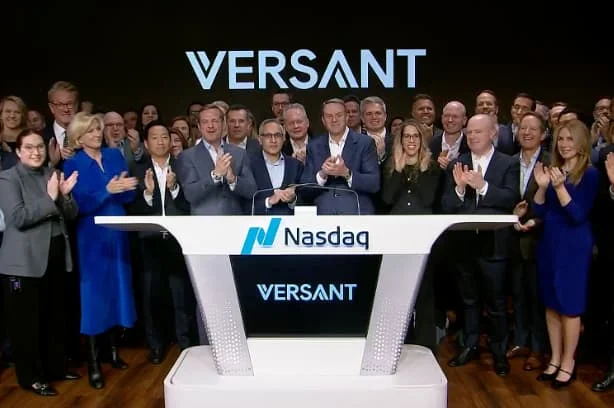
Versant officially commenced trading as a public company on the Nasdaq stock exchange in January, introducing a significant new player to the media investment landscape. Its initial portfolio included a diverse array of assets: a strong stable of pay TV networks such as the financial news powerhouse CNBC, the political news channel MSNBC, The Golf Channel, the general entertainment channels USA Network, Syfy, Oxygen, and E!. Crucially, it also encompassed a burgeoning collection of digital brands, most notably Fandango for movie ticketing and content, and GolfNow for tee-time reservations. The spin-off was closely watched by industry analysts, who viewed it as a bellwether for how traditional media assets could be restructured and re-imagined for the streaming era. The challenge for Versant was clear: to demonstrate that a portfolio of legacy linear channels, even those with strong brands, could thrive alongside and be strategically integrated with rapidly expanding digital platforms.
Q2 Performance Exceeds Expectations Amidst Industry Headwinds
Versant’s second-quarter results, ending June 30, provided compelling evidence of its strategic progress. The company not only met but exceeded Wall Street’s consensus estimates on both the top and bottom lines, a crucial indicator of operational health and investor confidence. While overall revenue for the quarter declined by 3.8% year-over-year to $1.64 billion, this figure still outpaced analyst projections, suggesting effective management in a challenging market.
A deeper dive into the Q2 financials reveals a nuanced picture, reflecting the ongoing dichotomy within Versant’s business model:
-
Linear TV Under Pressure, Yet Resilient: Revenue from linear television, encompassing channels like USA Network, Syfy, Oxygen, and E!, saw a 6.3% decline during the quarter, totaling $954 million. This reduction was primarily attributed to subscriber declines, a persistent industry-wide trend as consumers increasingly "cut the cord" or "shave the cord" in favor of streaming alternatives. Despite these headwinds, Versant’s earnings once again underscored the enduring power of live sports and news. These categories continue to be potent magnets for viewers and, consequently, for advertising dollars on traditional TV platforms. The ability of channels like CNBC, MSNBC, and The Golf Channel to deliver real-time, event-driven content provides a degree of insulation from the broader linear TV erosion. CEO Mark Lazarus highlighted the company’s proactive efforts to stabilize its distribution base, announcing the successful completion of new carriage agreements with "two large distribution partners, one in the U.S. and one in Canada." Many of Versant’s foundational distribution deals were established during its tenure under NBCUniversal, making these new agreements vital for securing future access to audiences.
-
Digital Platforms as Growth Engines: In stark contrast to linear TV, Versant’s platforms segment, which includes the high-growth digital brands Fandango and GolfNow, demonstrated encouraging upward momentum. Revenue for this segment increased by 0.8% to $225 million for the quarter. More impressively, when excluding the company’s divestiture of SportsEngine, platforms revenue surged by a robust 9.3%. This acceleration was primarily driven by higher revenue at Fandango, fueled by an increase in movie ticket purchases and video-on-demand transactions, signaling a healthy recovery in cinematic experiences and digital content consumption. Simultaneously, GolfNow reported stronger bookings, payments, and subscription revenue, reflecting continued engagement in the golf sector. These digital assets are central to Versant’s long-term strategy, offering diversified revenue streams less dependent on traditional cable bundles.
-
Advertising Revenue Shows Stabilization: Advertising revenue for the quarter stood at $423 million, experiencing a modest decline of 0.6%. While still a decrease, this marked a significant improvement compared to the rate of decline observed during the same period last year. Versant attributed this stabilization to higher ratings across its networks, particularly those heavily centered on news and sports content. This suggests that while the overall ad market is shifting, premium live content still commands significant advertiser interest, especially on platforms that can deliver engaged, targeted audiences. The company’s ability to slow the rate of advertising decline is a positive sign, indicating effective monetization strategies for its key content pillars.
Strategic Imperatives: Diversification and Digital Transformation
A cornerstone of Versant’s post-spin-off strategy is an aggressive push toward revenue diversification. Versant executives have repeatedly articulated a clear objective: to significantly reduce reliance on the linear TV model, which currently accounts for more than 80% of its revenue. The ambitious aim is to achieve a revenue mix where 50% originates from its digital, platform, subscription, ad-supported, and transactional businesses. This target underscores a profound recognition of industry trends and a commitment to future-proofing the company’s financial model.
To accelerate this transformation, Versant leadership has actively pursued an inorganic growth strategy, exploring acquisitions of non-traditional media businesses that can broaden its revenue streams and inject new growth vectors. This strategy has already yielded notable results:
-
Expansion in the Golf Ecosystem: This week, Versant successfully closed its acquisition of Full Swing, a prominent golf simulation company. This move is highly synergistic, building upon Versant’s existing golf-centric digital assets, which include the digital media platform GolfPass and the tee-time reservation service GolfNow. The integration of Full Swing allows Versant to offer a more comprehensive, end-to-end golf experience, from booking tee times and consuming content to enhancing the game through simulation technology. This creates a powerful ecosystem capable of attracting a broader base of golf enthusiasts and unlocking new monetization opportunities.
-
Enhancing Digital Capabilities with AI: Earlier this year, Versant strategically acquired StockStory, an artificial intelligence-powered technology platform. StockStory specializes in providing sophisticated financial analysis, market insights, and data-driven stock recommendations. This acquisition directly benefits CNBC, Versant’s flagship financial news brand, by enhancing its digital offerings, providing cutting-edge tools for its audience, and potentially driving increased engagement and subscription opportunities for premium content. It signifies Versant’s commitment to leveraging advanced technology to bolster its digital news and information services.
Beyond acquisitions, Versant is also investing in organic digital growth initiatives:
-
Fandango’s Streaming Evolution: In a strategic move to expand its digital footprint and capitalize on the growing free ad-supported streaming television (FAST) market, Versant has launched a free, ad-supported Fandango streaming service. This initiative aims to significantly increase advertising inventory and user engagement for the platform by offering a wide array of content without a subscription fee, thereby broadening Fandango’s reach beyond its core ticketing business.
-
USA Sports and Bundesliga Partnership: Versant’s USA Sports recently announced a significant multi-year media rights deal with the German soccer league Bundesliga. This agreement brings live matches of one of Europe’s top football leagues to USA Network and Fandango, commencing in August. This acquisition of premium live sports content is critical. It not only provides valuable programming for the linear USA Network, potentially boosting ratings and advertising revenue, but also offers compelling content for the Fandango platform, driving traffic and user engagement across Versant’s digital ecosystem.
Financial Nuances and Shareholder Returns
While the overall revenue decline was better than expected, and digital segments showed growth, Versant’s net income attributable to shareholders did see a decline of 30% year-over-year, settling at $211 million, or $1.49 per share, down from $302 million, or $2.09 per share, a year earlier. The company attributed this drop to several factors inherent in its transition to an independent public entity: lower overall revenue, increased public company operating costs, interest expense related to the Comcast separation, and an increased tax expense largely due to the divestiture of SportsEngine.
Adjusted EBITDA also decreased by 8.9% to $624 million. However, to provide a more direct comparison of performance for the pre-spin portfolio companies against current results, Versant also reported a "stand-alone adjusted EBITDA," which was up 3% year-over-year. This adjusted metric is crucial as it removes the distorting effects of the separation, offering a clearer picture of the underlying operational health. Versant stated that this increase reflected effective cost management, including lower programming expenses and reduced operational costs, which successfully offset the revenue declines experienced in certain segments.
In a clear demonstration of its commitment to shareholder value, Versant declared a quarterly cash dividend for the third consecutive quarter, maintaining it at 37.5 cents a share. This consistent dividend payout signals financial stability and confidence in future cash flows. The latest dividend is payable on October 22 to shareholders of record as of the close of business on October 1.
Furthermore, Versant actively engaged in capital allocation strategies designed to enhance shareholder returns. The company confirmed the completion of a previously announced $100 million accelerated share repurchase agreement, through which it repurchased nearly 2.4 million shares of Class A common stock. As of June 30, a substantial authorization of approximately $800 million remained for future repurchases. Underscoring its ongoing commitment to this strategy, Versant announced plans to enter into a similar $100 million stock repurchase agreement on August 7, which it anticipates will close during the third quarter. These share repurchases reduce the number of outstanding shares, thereby boosting earnings per share and providing a direct return to investors.
Outlook and Broader Industry Implications
Versant Media Group’s updated guidance and strong Q2 performance paint the picture of a company actively and strategically transforming itself in a rapidly evolving media landscape. The raise in full-year guidance suggests a growing confidence in the execution of its diversification strategy, particularly the integration and growth of its digital assets. While the challenges facing linear television, driven by continued cord-cutting and shifting advertising dollars, remain significant, Versant’s ability to leverage its premium live news and sports content, coupled with aggressive investment in digital platforms and strategic acquisitions, positions it to navigate these shifts.
The successful spin-off from Comcast has provided Versant with the autonomy to make swift, market-responsive decisions, enabling it to aggressively pursue new growth opportunities in areas like golf simulation, AI-driven financial insights, and ad-supported streaming. The industry will closely watch how Versant continues to balance the monetization of its established linear assets with the accelerated build-out of its digital and direct-to-consumer offerings. Its trajectory will serve as an important case study for other legacy media companies striving to reinvent themselves for the future. With a clear strategic roadmap, a growing digital footprint, and a commitment to shareholder returns, Versant Media Group is making a compelling case for its long-term viability and growth in the competitive media ecosystem.
Disclosure: Versant Media Group is the parent company of CNBC.
