

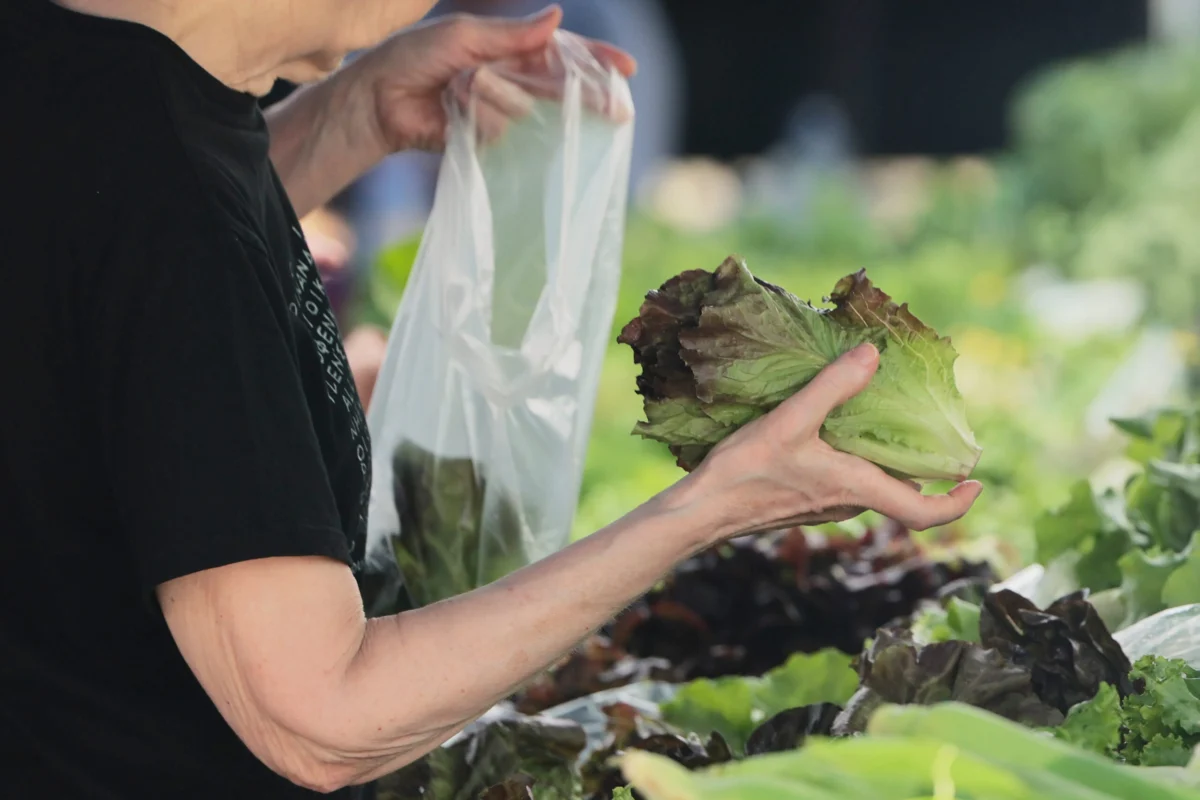
A widespread Cyclospora outbreak has sent shockwaves through the American food industry, particularly impacting the salad and fresh produce sectors, prompting a sharp decline in consumer confidence and significant financial setbacks for major restaurant chains and grocery retailers. While warm weather traditionally boosts salad sales, fears surrounding the ongoing parasitic infection have led consumers to actively avoid lettuce and other greens this summer, reshaping dining habits and forcing companies to scramble to reassure their customer base.
The crisis escalated dramatically in mid-July following a critical announcement from the Food and Drug Administration (FDA) that linked the outbreak to contaminated iceberg lettuce. This revelation immediately translated into measurable declines across the industry. Data from Placer.ai revealed a stark 24% drop in traffic to Chopt Creative Salad Co. locations on July 18, the very day the FDA issued its public warning. The ripple effect was swift and severe. Fast-casual giant Sweetgreen reported on Thursday that consumer anxieties over the outbreak had shaved approximately six percentage points off its same-store sales in July, compelling the company to revise its full-year outlook downwards. Adding to the industry’s woes, upstart chain Salad and Go, already grappling with pre-existing business challenges, filed for Chapter 11 bankruptcy earlier this week, citing the Cyclospora outbreak as the exacerbating factor that led to the closure of all its locations.
The impact has not been confined to restaurant chains alone. Grocery stores have also felt the sting of consumer apprehension. NielsenIQ data indicates a precipitous 14% plunge in dollar sales of prepackaged salads during the four-week period ending July 25, compared to the same period last year. This widespread avoidance underscores the depth of public concern regarding the safety of fresh produce.
The Genesis of the Crisis: A Chronology of the Outbreak
The timeline of the Cyclospora outbreak reveals a rapidly unfolding public health challenge that has grown in scale and complexity.
- Mid-July 2026: Public health authorities begin to track an increasing number of Cyclospora infections across multiple states.
- July 18, 2026: The FDA makes a pivotal announcement, identifying iceberg lettuce processed at Taylor Farms’ central Mexico facility as the probable source of the widespread outbreak. This critical linkage triggers immediate public health warnings and a wave of consumer avoidance.
- Late July 2026: Taylor Farms voluntarily initiates a recall of all products supplied from the implicated facility, an essential step in containing further spread. Initial reports link Yum Brands’ Taco Bell as the only national restaurant chain directly associated with the multistate outbreak due to its frequent use of iceberg lettuce in popular menu items like the Crunchwrap Supreme and Cheesy Gordita Crunches. Taco Bell initially experiences a dip in sales and restaurant traffic, but Yum executives quickly report signs of recovery by late July, suggesting consumer confidence in the chain’s broader menu or its specific handling of the issue.
- Late July – Early August 2026: The FDA confirms it is actively investigating at least six other distinct Cyclospora outbreaks, though these involve significantly fewer reported cases and lack clear culprits, highlighting the inherent difficulties in tracing foodborne pathogens. Meanwhile, the overall reported cases linked to the iceberg lettuce outbreak surpass 10,000 nationwide.
- August 5, 2026: Salad and Go files for Chapter 11 bankruptcy, citing the Cyclospora outbreak as a major contributing factor to its financial collapse.
- August 6, 2026: Sweetgreen cuts its full-year outlook, explicitly attributing the revision to consumer concerns related to the Cyclospora outbreak.
- August 7, 2026: News reports continue to detail the ongoing impact, with some signs of cautious optimism emerging from certain regions.
Understanding Cyclospora: The Pathogen and its Perils
Cyclospora cayetanensis is a microscopic, water-borne parasite that causes cyclosporiasis, an intestinal illness. Unlike bacterial or viral foodborne pathogens, Cyclospora is a protozoan parasite, and its lifecycle involves shedding oocysts in feces, which, if consumed, can infect new hosts. The parasite typically spreads through contaminated food or water, often linked to fresh produce that has come into contact with contaminated water or soil, or has been handled by an infected individual. Common culprits in past outbreaks have included lettuce, green onions, raspberries, basil, cilantro, and other fresh herbs.
Symptoms of cyclosporiasis can be unpleasant and prolonged, including watery diarrhea, loss of appetite, weight loss, abdominal cramps, bloating, increased gas, nausea, and fatigue. While most healthy individuals recover, the illness can be severe for young children, the elderly, and those with compromised immune systems. The incubation period for Cyclospora can range from 2 to 14 days, often making it notoriously difficult for public health authorities to pinpoint the exact contaminated ingredients and source in a timely manner, thereby complicating outbreak investigations and containment efforts. This characteristic challenge has been evident in the current outbreak, despite the FDA’s success in identifying the Taylor Farms facility.
The scale of the current outbreak is significant, with at least 10,000 people sickened across the country. Michigan has emerged as the hardest-hit state, reporting over 12,400 cases and tragically, two deaths attributed to the infection. Public health authorities, including the FDA, have advised consumers to take extra precautions, such as thoroughly washing all fruits and vegetables, and discarding outer layers of produce like lettuce, to minimize the risk of exposure, even as the specific source is believed to be identified.
Financial Fallout: Industry-Wide Repercussions
The economic repercussions of the Cyclospora outbreak have been extensive, highlighting the vulnerability of the food service and retail sectors to food safety crises. The immediate decline in foot traffic and sales reported by chains like Chopt and Sweetgreen underscores how quickly consumer trust can erode. Sweetgreen’s decision to cut its full-year outlook is a significant indicator of the expected lingering impact on its bottom line, reflecting not just a temporary dip but a revised projection for future performance. The bankruptcy of Salad and Go serves as a grim reminder of how such an outbreak can push already struggling businesses over the edge, especially in a competitive market segment.
Beyond the specialized salad chains, the broader restaurant industry has felt indirect effects. Even Chipotle Mexican Grill, a burrito chain that uses romaine lettuce as a topping and fresh cilantro extensively in its guacamole and salsas, reported a softening of sales. Chipotle CFO Adam Rymer noted a dip of approximately 200 basis points in the second half of July, directly attributing it to the industry-wide issue around Cyclospora. This impact came amidst separate challenges for Chipotle, which also made headlines for recalling jalapeño peppers potentially contaminated with salmonella, part of a broader outbreak sickening over 300 people. The confluence of these events has created a climate of heightened food safety scrutiny, further unsettling consumers.
Grocery stores, typically seen as a more stable segment, have also experienced considerable declines in sales of prepackaged salads, indicating a shift in consumer purchasing habits away from convenience items perceived as risky. The collective financial strain on producers, distributors, and retailers of fresh produce, particularly lettuce, is substantial, affecting jobs and profitability throughout the supply chain. While Cava, another fast-casual chain known for its bowls and salads, has yet to report its earnings, analysts are closely watching for any similar impacts when its quarterly results are released.
Corporate Response and Damage Control

In the face of plummeting sales and an erosion of consumer trust, restaurant chains have been compelled to implement swift and strategic public relations and operational measures to reassure their customers.
Sweetgreen, for example, adopted a proactive communication strategy, emphasizing a key differentiator: it does not serve iceberg lettuce. CEO Jonathan Neman took to X (formerly Twitter) on the chain’s 19th birthday to publicly state that Sweetgreen has "never served iceberg lettuce" and exclusively sources its greens from U.S.-based growers. This message was clearly designed to distance the brand from the specific contaminated product and origin.
Similarly, Nick Kenner, founder and CEO of Just Salad, utilized LinkedIn to detail his chain’s rigorous food safety protocols. His post highlighted specific measures, such as peeling and discarding the outer leaves of romaine and kale, and implementing double-washing procedures for all leafy greens. Such transparency aims to build confidence by showcasing the extra steps taken to ensure product safety.
Chopt also engaged in direct communication with its customer base, posting on Instagram to affirm its commitment to food safety. The company’s message underscored that "Food safety has always been at the heart of how we operate," and pledged to "continue monitoring guidance from public health officials and remain committed to earning your trust every time you choose Chopt." These public statements are crucial for maintaining brand integrity and encouraging patrons to return.
Beyond public statements, these companies, and likely many others across the industry, are undoubtedly reviewing their supply chains, auditing suppliers, and reinforcing internal food handling procedures. The long-term implications may include a stronger emphasis on domestic sourcing, enhanced traceability technologies, and more stringent requirements for suppliers, particularly those operating internationally. The goal is not merely to weather the current storm but to establish more resilient and transparent food safety frameworks that can withstand future challenges.
A Glimmer of Hope? Signs of Recovery and Evolving Guidance
Amidst the widespread concern, there have been some promising signs that the danger may be receding, offering a potential path to recovery for the beleaguered industry. A significant development came from the Michigan Health Department, which on Thursday updated its guidance, advising residents that they could resume eating lettuce and salad greens. The agency stated, "The broad, precautionary recommendation to avoid bagged salad mixes during the Cyclospora outbreak is no longer in effect," adding that "Residents may resume their usual food handling practices and make choices based on their individual risk tolerance." This update from the state hardest hit by the outbreak, which reported over 12,400 cases and two deaths, is a crucial indicator that new infections are slowing and the immediate threat linked to specific products is diminishing.
This shift in official guidance, coupled with the reported recovery of sales at Taco Bell, suggests that consumers might be gradually regaining confidence, at least in certain segments or brands. The ability of a major chain like Taco Bell to rebound quickly after initial negative publicity underscores the potential for effective communication and crisis management to mitigate long-term damage.
Despite the pervasive fear, not all consumers have abandoned their appetite for fresh greens. A Sweetgreen location in downtown Manhattan, for instance, remained bustling with diners and delivery drivers during peak lunch hours on a recent Friday. Sherine Naveed, a 35-year-old laser technician from Long Island, exemplified this resilience, picking up her usual Sweetgreen salad order without altering her dining habits. "I have two kids," she noted, "They’re already pretty germ-y," suggesting a personal calculus of risk that some consumers maintain. While individual responses vary, these instances provide a cautious optimism for the industry that consumer behavior, once disrupted, can eventually normalize as the immediate threat subsides and public health advisories evolve.
Broader Implications for Food Safety and Supply Chains
The Cyclospora outbreak of 2026 serves as a potent reminder of the fragility of modern food supply chains and the critical importance of robust food safety protocols. The incident is likely to trigger a reevaluation of current practices across the entire fresh produce industry, from cultivation and harvesting to processing, distribution, and retail.
One significant implication is the increased scrutiny on sourcing. The identification of a central Mexico facility as the likely culprit highlights the complexities and risks associated with global supply chains. Companies may increasingly consider diversifying their sourcing strategies, investing more heavily in domestic production, or implementing more stringent third-party audits and traceability measures for international suppliers. Technologies such as blockchain, which can provide an immutable record of a product’s journey from farm to fork, may see accelerated adoption as companies seek to enhance transparency and pinpoint contamination sources more rapidly in future incidents.
The outbreak also underscores the ongoing challenge of food safety regulation and enforcement. Despite advances in food science and public health infrastructure, the long incubation period of Cyclospora and the difficulty in tracing specific contaminated ingredients mean that outbreaks can become widespread before their source is identified and contained. This event may prompt calls for increased funding for regulatory agencies like the FDA, as well as greater collaboration between public health officials, industry stakeholders, and international partners to prevent and respond to cross-border contamination.
Consumer behavior, shaped by events like this, could also see long-term shifts. While some consumers, like Sherine Naveed, remain unfazed, others may permanently alter their purchasing habits, favoring produce with clear labels of origin, organic certifications, or those perceived as less risky. Demand for "locally sourced" or "farm-to-table" options might increase, driven by a desire for greater transparency and reduced supply chain complexity. The role of social media in disseminating information, both accurate and speculative, has also been critical, amplifying the sense of crisis and forcing companies to engage in rapid, public damage control.
Finally, the outbreak reveals the differential resilience within the food industry. While established players like Yum Brands can leverage their scale and diversified menus to weather the storm, smaller, more specialized chains like Salad and Go are far more vulnerable, with a single food safety crisis having the potential to be catastrophic. This could lead to further consolidation in the fast-casual segment as smaller players struggle to meet increasingly demanding food safety standards and manage public perception during crises. The combination of this Cyclospora outbreak and the separate salmonella issue affecting Chipotle underscores a broader, systemic challenge for food safety in an era of complex supply chains and heightened consumer awareness. The path to full recovery for the salad industry will require sustained effort, renewed commitment to safety, and effective communication to rebuild trust among a wary populace.
