

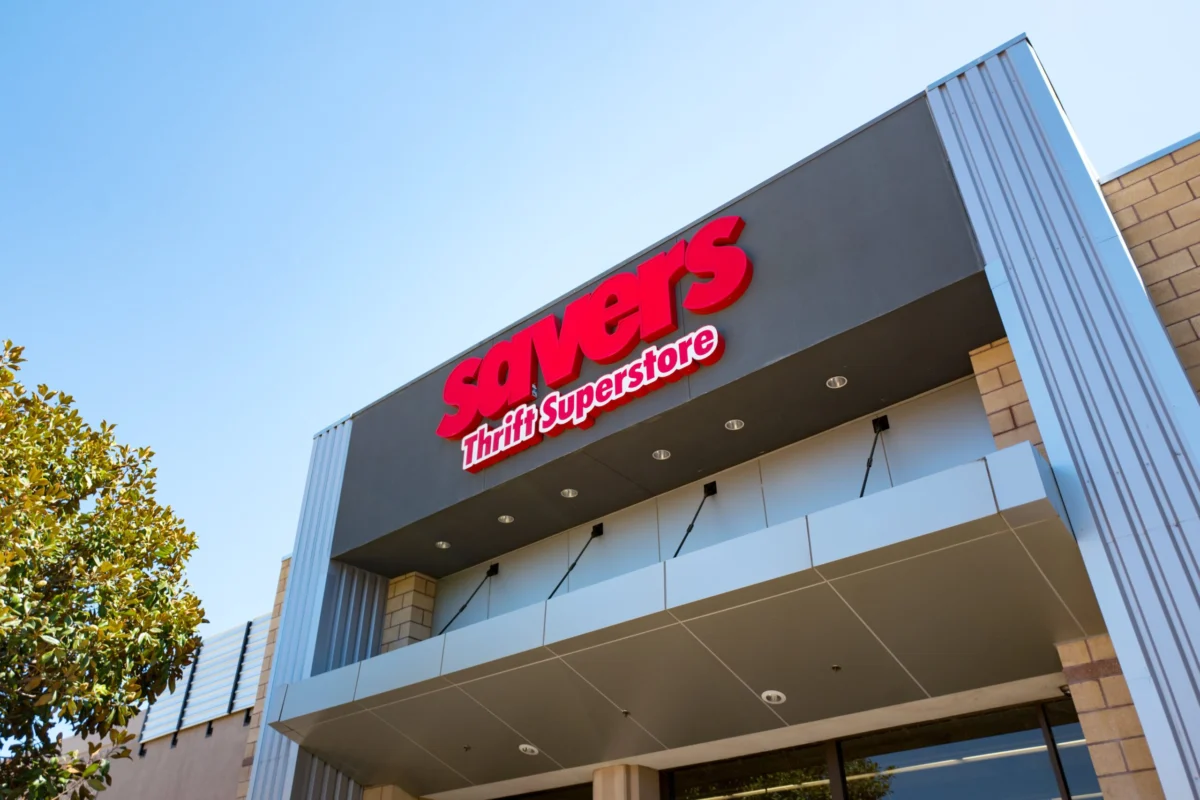
Savers Value Village, a prominent name in the global thrift retail sector, has announced the launch of ThriftIQ, an innovative artificial intelligence platform designed to optimize product pricing across its extensive inventory. This strategic deployment marks a significant step in the company’s broader modernization efforts, aiming to bring enhanced consistency and efficiency to the notoriously complex task of pricing secondhand goods. The initiative, exclusively revealed to CNBC, positions Savers at the forefront of leveraging advanced technology to navigate the burgeoning recommerce segment, which is experiencing unprecedented growth worldwide.
The Strategic Imperative: AI in a Dynamic Thrift Market
The decision to integrate AI into its core operations comes as the secondhand retail market continues its rapid expansion, driven by a confluence of economic, environmental, and consumer behavioral shifts. Savers, operating 375 stores globally as of the end of the second quarter, processes an staggering volume of merchandise—more than 1 billion pounds of reusable goods annually. Pricing this diverse and constantly rotating inventory, which includes everything from designer apparel to household items, has historically been a labor-intensive and subjective process. Variables such as brand recognition, condition, current fashion trends, seasonal demand, and even regional preferences all play a critical role, making consistent and optimal pricing a formidable challenge.
Traditional manual pricing methods, while rooted in human expertise, can lead to inconsistencies, missed revenue opportunities, and varying customer experiences. Savers’ CEO, Mark Walsh, articulated the tangible benefits observed during the pilot phase, stating, "We’re getting clear sell-throughs, larger baskets, it’s helping our new stores ramp more favorably, and obviously there is the profitability improvements." This highlights the multi-faceted impact of an optimized pricing strategy, extending beyond mere cost reduction to enhancing customer satisfaction and accelerating market penetration for new store locations.
ThriftIQ: A Deep Dive into the Technology
Developed in a two-year partnership with data science and technology consulting firm Kaizen Analytix, ThriftIQ leverages Savers’ proprietary datasets, meticulously compiled over nearly two years. This extensive data encompasses historical sales, inventory characteristics, market trends, and a myriad of other factors that influence the value and desirability of secondhand items. The AI platform is initially focused on the men’s and women’s apparel assortment, a high-volume and high-variation category within Savers’ product offerings.
Crucially, Walsh emphasized that ThriftIQ employs a fixed-pricing model, not dynamic pricing. "It’s not dynamic pricing, and once those garments are priced and tagged, that tag doesn’t change," he clarified. This distinction is vital for maintaining customer trust and predictability, as consumers browsing thrift stores often appreciate the transparent, upfront pricing. The AI’s role is to determine the optimal initial price for each item, ensuring it reflects its true market value while remaining competitive and appealing to value-conscious shoppers. The company’s goal is to maintain average prices at roughly 40% to 70% below traditional retail prices, offering significant savings to customers while ensuring fair value for the goods.
The platform’s intelligent algorithms analyze a vast array of data points for each item, including brand, material, style, condition, and comparative market data, to suggest a precise price point. This not only streamlines the pricing process but also injects a level of data-driven objectivity that was previously unattainable on such a scale. By reducing the manual effort required, store employees can reallocate their time to other value-added activities, such as merchandising, customer service, and inventory processing, thereby boosting overall store productivity. Walsh underscored this point, stating the tool is "not meant to get rid of manual labor in stores, but rather make workers more productive."
Phased Rollout and Ambitious Targets
The implementation of ThriftIQ has followed a carefully planned, phased approach. The platform has already been successfully deployed in 58 pilot stores, where it has processed and priced more than 25 million items. This extensive pilot program allowed Savers to refine the algorithms, validate the pricing models, and measure the real-world impact before a broader rollout. Buoyed by the positive results, Savers expects to double the number of items priced by ThriftIQ by the end of the current year. The full deployment of the platform across more of its U.S. and Canadian locations is anticipated to continue through early 2028, signifying a long-term commitment to this technological transformation.
This methodical rollout strategy is characteristic of major technological integrations within large retail enterprises. It allows for continuous feedback loops, incremental improvements, and ensures that the system is robust and scalable enough to handle the immense volume and variety of goods that flow through Savers’ supply chain. The extensive timeline also suggests a comprehensive integration strategy, touching various aspects of the company’s operational infrastructure.
The Broader Context: A Surging Secondhand Economy
The launch of ThriftIQ comes at a pivotal moment for the secondhand retail sector. Macroeconomic pressures, including persistent inflation and fluctuating consumer confidence, have compelled a growing number of shoppers to seek more affordable alternatives to new retail. This trend has significantly accelerated the mainstream adoption of thrift shopping, transforming it from a niche pursuit into a widely accepted and often preferred shopping choice across diverse demographics.
According to various industry reports, including those by ThredUp and GlobalData, the secondhand market is experiencing exponential growth. ThredUp’s 2023 Resale Report projected that the total secondhand market, encompassing both traditional thrift and online resale, is expected to grow by 158% by 2032, reaching an estimated $350 billion. The report further highlighted that 75% of consumers have shopped for secondhand apparel, an increase from 62% in 2022. This surge is particularly pronounced among younger consumers, with Gen Z and Millennials leading the charge, driven not only by cost savings but also by a heightened awareness of sustainability and ethical consumption.
Chief Financial Officer Michael Maher articulated this powerful industry momentum: "We are benefiting from some very powerful secular momentum in this space. Thrift has gone, and is continuing to go, mainstream in retail, and so we see that in the younger customers, in the more affluent customers, for example, that are adopting thrift." He added that Savers is actively contributing to this evolution by "bringing investment, technology, innovation and execution to that." This statement underscores Savers’ ambition not just to participate in the growing market but to actively shape its future through technological leadership.
Savers’ Financial Performance and Strategic Outlook
The unveiling of ThriftIQ coincided with Savers’ announcement of its robust second-quarter earnings, further highlighting the company’s strong financial health and strategic trajectory. For the second quarter, Savers reported a 7.4% increase in total net sales, reaching $448.2 million. Comparable store sales, a key metric indicating the performance of stores open for at least a year, also saw a healthy increase of 4.4%. These figures demonstrate the company’s ability to drive sales growth in a competitive retail landscape.
Net income for the quarter stood at $21.6 million, or 14 cents per share, an improvement over $18.9 million, or 12 cents per share, in the prior-year period. Maher also noted that the company achieved its third consecutive quarter of year-over-year growth in earnings before interest, taxes, depreciation, and amortization (EBITDA), a crucial indicator of operational profitability.
The financial impact of ThriftIQ has already been factored into Savers’ updated 2026 guidance. The company now expects to return to a "high-teens adjusted EBITDA margin within the next three years." This projection signals strong confidence in the AI platform’s ability to drive significant improvements in profitability and operational efficiency. An adjusted EBITDA margin in the high teens would place Savers among the top performers in the retail sector, reflecting excellent cost management and robust revenue generation. This long-term financial target underscores the strategic importance of technological innovations like ThriftIQ in securing the company’s future growth and market leadership.
Implications for the Recommerce Industry and Beyond
Savers’ adoption of AI for pricing is not merely an internal operational enhancement; it sets a precedent for the broader recommerce industry. As the secondhand market matures, competition intensifies, and consumer expectations for consistency and value rise, technological differentiation will become increasingly crucial. Other players in the resale space, from large chains to online platforms, will likely observe Savers’ progress with keen interest, potentially accelerating their own investments in similar AI-driven solutions for inventory management, authentication, and pricing.
Beyond the immediate retail implications, this move also highlights the expanding role of AI in fostering a more sustainable circular economy. By optimizing the pricing and sale of reusable goods, Savers contributes to extending the lifecycle of products, reducing waste, and lessening the environmental footprint associated with new manufacturing. This aligns with a growing global imperative for sustainable business practices and responsible consumption.
From a consumer perspective, ThriftIQ promises a more consistent and reliable shopping experience. Predictable pricing means shoppers can more easily identify value and trust that they are getting a fair deal, which can further attract new customers and build loyalty. The ability to maintain average prices at significantly lower rates than traditional retail, while simultaneously enhancing profitability through efficiency, represents a win-win scenario for both the business and its clientele.
Leadership’s Vision for the Future
Both CEO Mark Walsh and CFO Michael Maher consistently articulate a forward-looking vision for Savers, one that is firmly rooted in innovation. Walsh’s statement, "Savers is transforming thrift through innovation, and I couldn’t be more excited about the trajectory of the business," encapsulates the company’s proactive stance. Maher echoed this sentiment, describing ThriftIQ as "just the latest chapter of transformative innovation" and a "core plank of our long-term strategic plan," confirming that the company is "constantly looking at innovation."
This commitment to continuous improvement and technological investment positions Savers Value Village not just as a participant in the secondhand market, but as a leader aiming to redefine the thrift retail experience. By embracing AI to solve complex operational challenges, Savers is not only securing its own growth trajectory but also demonstrating the transformative power of technology in a sector traditionally defined by manual processes and serendipitous discovery. As ThriftIQ continues its rollout, its impact will likely resonate throughout the recommerce industry, signaling a new era of data-driven, efficient, and customer-centric secondhand retail.
