

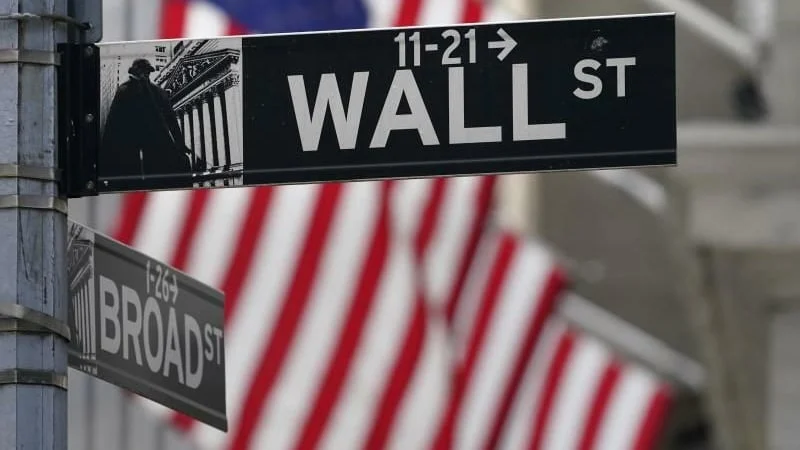
New York – Following declines at the beginning of the week, U.S. stock markets experienced further losses on Tuesday. The Wall Street indices opened in negative territory, weighed down by escalating oil prices and persistent concerns over rising interest rates. This confluence of factors has created a cautious trading environment, with investors closely monitoring global economic developments and their potential impact on corporate earnings and investment strategies.

The current market downturn can be traced back to a series of interconnected economic pressures. The recent surge in crude oil prices, driven by geopolitical tensions, has reignited inflation fears. Simultaneously, the prospect of continued interest rate hikes by central banks, particularly the U.S. Federal Reserve, to combat this inflation is creating uncertainty about future borrowing costs and economic growth.
Bond Market Volatility and Global Repercussions
A significant contributing factor to the market’s unease has been the sharp rise in bond yields. In Japan, the yield on ten-year government bonds reached a milestone of three percent on Tuesday, a level not seen in approximately three decades. This surge in Japanese government bond (JGB) yields is indicative of a broader trend of rising yields across global bond markets. Markus Koch, a market analyst, noted that "It’s not just Japan’s government bonds that are seeing upward pressure on yields." This global shift in bond market sentiment has far-reaching implications.

The increasing yields on long-term government bonds serve as a benchmark for borrowing costs across the economy. As these yields rise, so too do the interest rates for corporate loans and mortgages. This makes it more expensive for businesses to finance investments and for individuals to purchase homes, potentially dampening economic activity and slowing down the real estate market. Jochen Stanzl, Chief Analyst at Consorbank, cautioned that "If yields continue to rise sharply, a situation could quickly develop where the poor sentiment from the bond market spills over to stocks."
Geopolitical Tensions Fuel Oil Price Surge
Adding to the market’s woes, tensions in the Middle East have escalated, directly impacting oil prices. President Donald Trump announced on the social media platform Truth Social that the United States was targeting Iranian sites near the Strait of Hormuz. He stated this action was in retaliation for Iran’s alleged attempt to lay naval mines and for firing eight rockets at a U.S. military base in Jordan. Trump warned that any Iranian response to this "very justified attack" would be met with a significantly harsher and higher-level response.

This geopolitical development has had an immediate and substantial impact on energy markets. The price of Brent crude oil for December delivery saw a significant increase, rising by 6.9 percent to over $94.50 per barrel. Similarly, U.S. West Texas Intermediate (WTI) crude for October delivery climbed by up to 5.0 percent, reaching $90 per barrel. Thomas Altmann, a portfolio manager at QC Markets, commented on the correlation: "With oil prices rising, inflation worries and interest rates are also increasing."
The Federal Reserve’s Balancing Act
The rising oil prices and persistent inflation are creating a complex dilemma for the U.S. Federal Reserve. The central bank is tasked with a dual mandate: to maintain price stability and to promote maximum employment. Currently, achieving both objectives simultaneously is proving challenging.

The Fed’s stance on interest rates has become a focal point of market anxiety. Following a period of holding the benchmark interest rate steady in the range of 3.5 to 3.75 percent, recent signals from Fed officials have suggested a potential for further rate hikes. Notably, Fed Chair Kevin Warsh, in a speech at the Jackson Hole Symposium, indicated openness to rate increases under certain conditions. This has led market participants to price in a higher probability of a rate hike at the Federal Reserve’s next meeting in September. At the CME futures exchange, two-thirds of market participants are anticipating such a move.
The upcoming August jobs report for the United States is expected to be a crucial indicator for the Federal Reserve’s future monetary policy decisions. "Unexpectedly strong labor market data could be interpreted by the market as bad news, as it could increase expectations of an interest rate hike," noted analyst Chris Larkin of E*Trade. Conversely, signs of a weakening labor market might compel the Fed to reconsider aggressive rate hikes, though this could also signal a broader economic slowdown.

Kyle Rodda, an analyst at Capital.com, highlighted this predicament: "The Fed could find itself in a dilemma, having to weigh stubborn inflationary pressure against a deteriorating labor market, especially after official employment figures last month surprisingly showed a decline in employment." This delicate balancing act underscores the uncertainty surrounding the Fed’s next moves and their potential impact on the global economy.
Historical Context and Broader Economic Implications
The current market environment is reminiscent of periods of economic uncertainty where inflation and interest rate dynamics play a pivotal role. Historically, central banks have employed monetary policy tools to manage inflation, often through adjusting interest rates. However, the effectiveness and timing of these interventions are critical, as aggressive tightening can stifle economic growth, while insufficient action can allow inflation to become entrenched.

The interplay between energy prices, inflation, and monetary policy has been a recurring theme in economic cycles. The surge in oil prices, often linked to geopolitical events, can have a cascading effect, increasing production costs across various industries and contributing to broader inflationary pressures. This, in turn, can prompt central banks to consider tighter monetary policies, which can impact investment decisions, consumer spending, and asset valuations.
The "bond market nervousness" that is currently driving yields to multi-year highs (as indicated by a related article from Handelsblatt) is a direct reflection of these concerns. Investors are demanding higher returns to compensate for the perceived risks associated with inflation and the potential for further interest rate increases. This can lead to a reassessment of asset allocation, with a potential shift away from riskier assets like equities towards safer havens like bonds, although rising bond yields themselves can present a risk.

The broader economic implications of sustained high oil prices and rising interest rates are significant. For consumers, it can mean higher costs for fuel, transportation, and everyday goods. For businesses, it translates to increased operating expenses and potentially higher borrowing costs, which can affect profitability and investment plans. The housing market, heavily reliant on mortgage rates, is particularly sensitive to changes in interest rate environments.
As markets navigate this complex landscape, the focus remains on key economic data releases and the pronouncements of central bank officials. The ability of policymakers to strike a delicate balance between controlling inflation and supporting economic growth will be paramount in determining the trajectory of financial markets and the global economy in the coming months. The current volatility serves as a stark reminder of the interconnectedness of global financial systems and the profound impact of geopolitical events and macroeconomic policies on investment decisions and economic well-being. The coming weeks will likely see continued scrutiny of inflation indicators, labor market data, and any further signals from monetary authorities regarding their policy intentions.
