

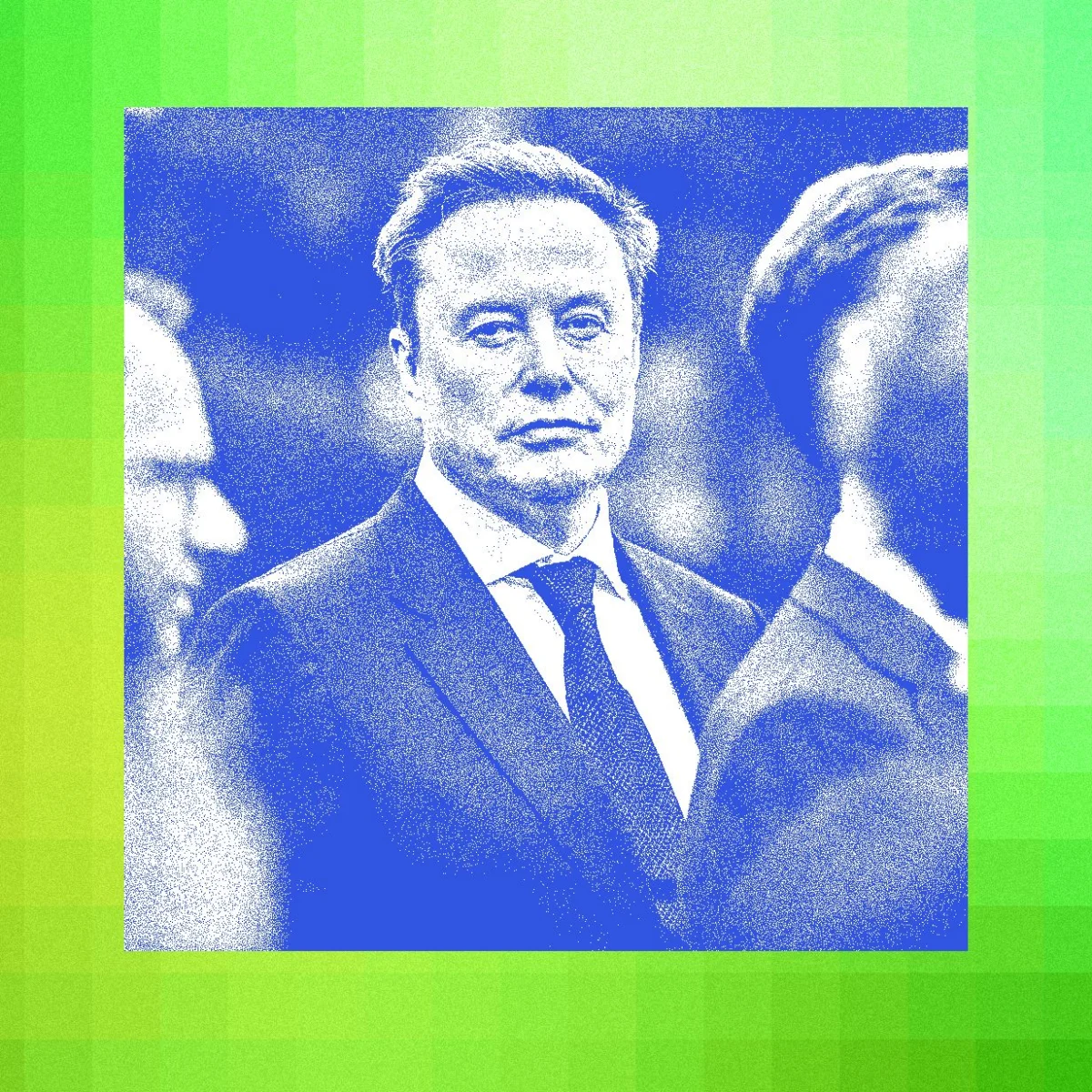
This week on WIRED’s "Uncanny Valley" podcast, hosts Zoë Schiffer and Leah Feiger delved into a trio of compelling narratives shaping the current technological and political landscape. Their discussion ranged from the significant financial maneuvers of Elon Musk’s America PAC in crucial Senate races, to the increasingly prominent philosophy of effective altruism and its entanglement with AI safety debates, and finally, the intense backlash faced by a graphic designer for her work on Meta’s new AI assistant logo.
Musk’s America PAC: A Strategic Surge in Midterm Elections
A central focus of the episode was the substantial financial footprint of Elon Musk’s America PAC in the lead-up to the 2026 midterm Senate races. While the PAC was instrumental in supporting Donald Trump’s successful presidential bid in 2024, spending over $260 million, its current strategy for the midterms appears more targeted and, in some respects, more aggressive. WIRED has developed a real-time tracker to monitor the PAC’s expenditures, revealing a strategic emphasis on opposing Democratic candidates rather than exclusively bolstering Republican contenders.
The data indicates a stark imbalance in spending: for every dollar America PAC spends in direct support of a Republican candidate, more than two dollars are directed towards opposing a Democrat. This approach is particularly evident in races deemed critical for determining the balance of power in the Senate. In Texas, a state where several of Musk’s companies are headquartered, the PAC reportedly invested approximately $9 million to attack Democratic candidate James Talarico, while allocating around $1 million to support Ken Paxton. Similar patterns of significant spending against Democrats and more modest support for Republicans have been observed in key Senate races across Ohio and Iowa, among others.
This strategic allocation of funds is not arbitrary. These are precisely the races that could determine whether Democrats gain control of the Senate. Such a shift in power could expose Musk and his vast business empire to intensified investigations and regulatory scrutiny, a prospect he has publicly expressed concern about. Schiffer noted Musk’s past statements, including his assertion that a Kamala Harris presidency would lead to detrimental "California-like" policies, underscoring his motivation to influence the political landscape to protect his business interests.
Leah Feiger highlighted that Democratic sources have expressed anticipation of launching numerous investigations and subpoenas should they secure control of the Senate. This creates a palpable sense of urgency for figures like Musk and other prominent tech leaders who may face increased oversight. The discussion also touched upon the difficulty of holding individuals as powerful and influential as Musk accountable, citing the relatively small fine he received in the past for misleading statements about taking Tesla private as an example of how significant financial penalties might not act as a sufficient deterrent for a trillionaire.
The Rise of Effective Altruism in the AI Safety Debate
The podcast also explored the burgeoning influence of "effective altruism" (EA), a philosophy that has rapidly transitioned from a niche intellectual pursuit to a central tenet in the discourse surrounding artificial intelligence safety. At its core, effective altruism advocates for the use of evidence and reason to determine the most effective ways to improve the world. This involves maximizing positive impact through the allocation of time, money, and resources.
While the philosophy itself is not inherently tied to AI, a significant portion of its adherents are deeply involved in AI research and development. They perceive advanced AI as a potential existential risk to humanity, making the mitigation of this risk the paramount concern. This perspective gained significant traction following comments from AI researcher Jacob Coxon, who publicly voiced concerns about advanced AI potentially leading to human extinction.
The Trump administration has reacted sharply to the growing influence of EA, labeling it a "dangerous ideology" and urging a preference for "Americanism" over the philosophy. This official condemnation signals a clear ideological divide, with some viewing EA proponents as overly alarmist or even anti-progress.
Zoë Schiffer clarified that effective altruism exists on a spectrum. While some interpretations and extreme viewpoints can appear radical, many individuals who identify with EA approach the subject with thoughtful consideration and without the fervor of religious zealots or cult members. The movement is widespread, with various groups and communities engaging in discussions about maximizing positive impact.
The application of EA principles to AI safety presents a compelling, albeit complex, argument. If there is even a small probability that a technology could lead to the extinction of humanity, then dedicating significant resources to prevent this outcome becomes a rational and ethically imperative course of action. This has led to a situation where prominent AI safety researchers are appearing on platforms like those of Tucker Carlson and Joe Rogan, bringing the debate into mainstream public consciousness.
The podcast highlighted the perceived split within major AI development companies. Sam Altman, CEO of OpenAI, is often categorized as representing a "growth at all costs" approach, driven by capitalist ambitions. In contrast, Dario Amodei, CEO of Anthropic, is seen as embodying a more cautious, safety-focused perspective, aligning with EA principles. While Amodei himself may not explicitly identify as an effective altruist, his company’s researchers appear to be heavily influenced by the philosophy, emphasizing the need to develop AI responsibly to benefit humanity.
The controversy surrounding EA stems from its focus on trade-offs. In pursuit of maximizing good or minimizing harm on a global scale, adherents might consider actions in the present that could be perceived as detrimental, believing these are necessary sacrifices to avert a greater future catastrophe. Furthermore, the notion that one’s own company is uniquely positioned to prevent AI-driven extinction can create a powerful incentive to "win" the AI race at any cost.
Backlash Against Meta’s Muse Logo Designer: AI and Artistic Integrity
The episode concluded with an examination of the intense backlash faced by freelance designer and lettering artist Jessica Hische after she revealed her involvement in creating the logo for Meta’s new AI assistant, Muse. Hische, known for her corporate design work that helps fund her independent art ventures, shared her involvement in a newsletter, preemptively acknowledging potential criticism. Her message emphasized the value of large companies hiring independent artists rather than relying solely on AI-generated designs.
The post was shared on Threads, where it ignited a firestorm of negative reactions. Hische reported facing widespread disgust and disappointment from individuals who had previously followed her work. The online onslaught included personal attacks, speculation about her finances, and even the dissemination of her home address. This intense digital mobbing persisted for several days.
Hische’s situation is particularly poignant given her nuanced perspective on AI’s impact on creative professions. Her husband works in AI, and while he embraces the technology, Hische has expressed concerns about its potential to undermine commercial art. She noted a significant decline in her corporate design inquiries in recent years, a trend she attributes to the rise of AI. Therefore, when Meta approached her, she viewed it as a critical opportunity to secure income that supports her small businesses in Oakland, including a stationery store and a space for art workshops.
The compensation for her work on the Muse logo was reportedly around $12,500 for what she described as a sprint of a couple of days. While she found this remuneration acceptable for the time invested, it starkly contrasts with the perceived value of a logo for a major tech company. The backlash from a segment of the design community, characterized as "AI purists," viewed her decision to work on the project as an endorsement of AI technology and a betrayal of artistic principles.
Hische ultimately expressed no regret for her decision, though she questioned whether she regretted discussing it publicly. She felt she was advocating for independent artists by highlighting a company that chose to collaborate with one. Her stance is that big tech companies may be hesitant to commission artists if they fear facing public condemnation. She believes a symbiotic relationship, albeit complex, is possible between these entities. The discussion drew parallels to fictional portrayals of artists grappling with corporate demands and the ethical implications of their work in the tech industry.
Looking Ahead: WIRED/Tired Picks
Concluding the episode, Schiffer and Feiger shared their "WIRED/Tired" segments. Feiger recommended subscribing to WIRED.com and emphasized the importance of taking breaks from the news cycle, suggesting the new season of "The Great British Bake Off" on Netflix as a source of comfort and relaxation. Schiffer expressed her fatigue with the prevalence of first-person present tense in contemporary literary fiction, praising George Saunders’ "Victory Lap" for its innovative narrative style and her admiration for his insights on the creative process.
