

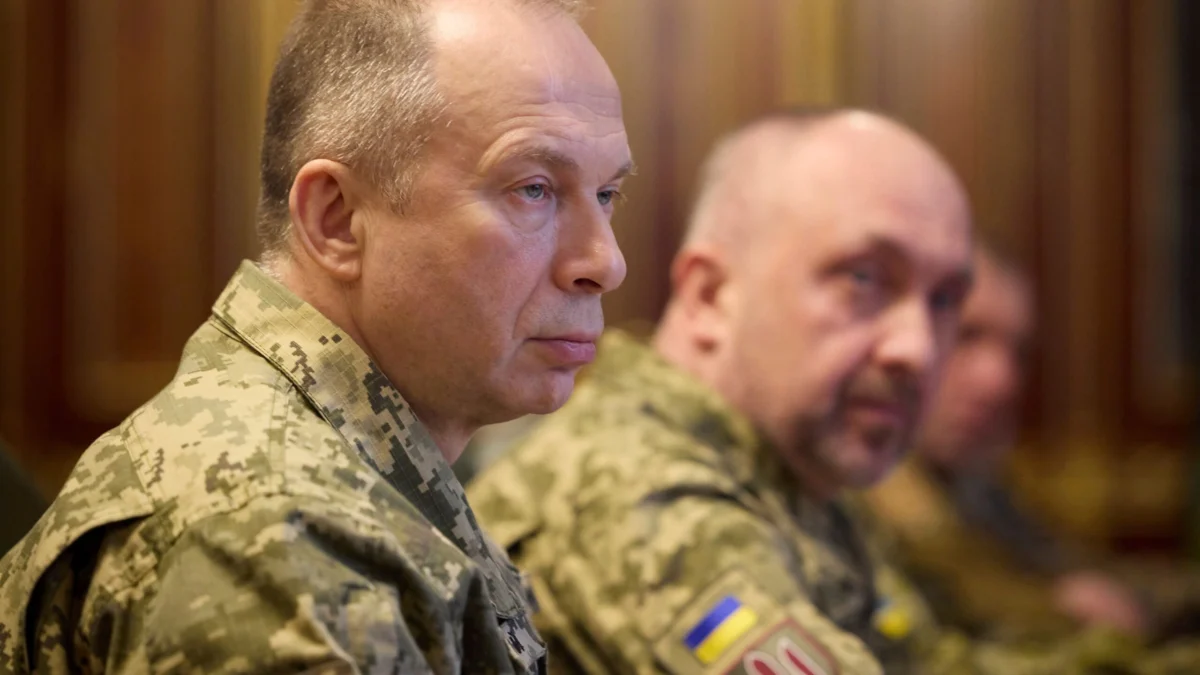
Kyiv, Ukraine – In a significant shake-up at the apex of Ukraine’s military command, President Volodymyr Zelenskyy has dismissed Army Chief Oleksandr Syrskyi. This decision, announced via the President’s Telegram channel, follows days of mounting public pressure and internal dissent, signaling a potential shift in Ukraine’s approach to the ongoing conflict with Russia. Mykhailo Drapatyi has been appointed as the new Commander-in-Chief, a move that underscores the dynamic nature of Ukraine’s wartime leadership.
The dismissal of Syrskyi, who had held the position of Commander-in-Chief since February 2024, comes on the heels of another high-profile cabinet change: the removal of the popular Mykhailo Fedorov as Minister of Defense the previous week. Fedorov, a relatively young figure at 35, publicly articulated his disagreements with Syrskyi, who received his military training during the Soviet era. This public airing of differences highlighted a strategic divergence, primarily centered on the future direction of the war effort. Fedorov had been a vocal proponent of utilizing advanced drone technology for strikes against Russian targets, a strategy that had garnered international praise for its effectiveness and innovation.
President Zelenskyy, in his announcement, expressed explicit gratitude to the outgoing General Syrskyi, acknowledging his military contributions. However, the persistent street protests in the wake of Fedorov’s dismissal created an untenable situation for the President, compelling him to engage in extensive consultations with military officials over several days. These discussions, as revealed on the social media platform X (formerly Twitter), were crucial in shaping the eventual leadership change. A subsequent meeting between Zelenskyy and Fedorov on Tuesday evening, according to Zelenskyy’s spokesperson Dmytro Lytvyn, further cemented the administration’s decision-making process. Details regarding Fedorov’s new role, if any, remain undisclosed.
The Unfolding Crisis: A Timeline of Events
The recent leadership changes in Ukraine did not emerge in a vacuum. They are the culmination of simmering tensions and strategic debates that have been amplified by the prolonged and arduous nature of the war.
- Early February 2024: Oleksandr Syrskyi is appointed Commander-in-Chief, taking the helm of Ukraine’s armed forces.
- Early May 2024 (approximate): Reports begin to surface regarding strategic disagreements between Syrskyi and other key figures, particularly Minister of Defense Mykhailo Fedorov.
- Mid-May 2024: President Zelenskyy dismisses Mykhailo Fedorov as Minister of Defense. This move is met with significant public outcry and protests, with many citizens expressing their support for Fedorov and questioning the President’s decision.
- Late May 2024: Fedorov publicly speaks out about his conflict with Syrskyi, characterizing it as a difference in strategic vision for the war. The focus of this dispute is reportedly on the integration of new technologies, especially drones, versus more traditional military approaches.
- Late May 2024: President Zelenskyy publicly acknowledges the protests and states that he is listening to the concerns of the Ukrainian people. He indicates that he is engaged in high-level discussions with both Fedorov and Syrskyi.
- Late May 2024 (Tuesday evening): A meeting between President Zelenskyy and Mykhailo Fedorov takes place, signaling ongoing deliberations about the future military leadership.
- Late May 2024 (Following days): Persistent street protests continue, intensifying the pressure on President Zelenskyy to address the military leadership situation.
- Late May 2024 (Current announcement): President Zelenskyy announces the dismissal of Oleksandr Syrskyi as Commander-in-Chief and the appointment of Mykhailo Drapatyi to the position.
This chronology highlights a period of intense internal deliberation and public engagement, where the President has clearly responded to both political and strategic pressures.
Strategic Divergences: Drones vs. Traditional Warfare
The core of the internal conflict appears to stem from differing philosophies on how to prosecute the war against a numerically superior and well-entrenched Russian military. Mykhailo Fedorov, a figure closely associated with Ukraine’s digital transformation initiatives, championed the innovative use of drones. This approach has been lauded for its cost-effectiveness, precision targeting, and ability to strike deep within Russian-held territory and even on Russian soil. Ukraine’s successful drone program has been a key element in its defensive and offensive capabilities, often compensating for a lack of heavy artillery and air superiority.
General Syrskyi, on the other hand, comes from a more traditional military background, forged in the Soviet-era military doctrine. While not inherently a disadvantage, this background may have led to a preference for established tactics and a potentially slower adoption of rapidly evolving technologies. The conflict, therefore, can be seen as a clash between a modern, tech-centric approach and a more conventional military strategy. The international community has largely recognized the efficacy of Ukraine’s drone warfare, and Fedorov’s public advocacy for it resonated with a population eager for decisive action and technological advantage.
Background Context: A War of Attrition and Innovation
Ukraine has been engaged in a full-scale war with Russia since February 2022, following years of simmering conflict after the 2014 annexation of Crimea and the war in Donbas. The initial phase of the full-scale invasion saw Ukraine successfully defend its capital, Kyiv, and push back Russian forces in several key regions. However, the conflict has since evolved into a brutal war of attrition, characterized by trench warfare, artillery duels, and intense positional battles, particularly in the eastern and southern regions of Ukraine.
In this context, innovation and adaptability have become critical for Ukraine’s survival. The country has consistently sought to leverage its technological prowess and the agility of its leadership to overcome Russia’s quantitative advantages in manpower and weaponry. The development and deployment of advanced drones, including long-range reconnaissance and strike drones, have been a cornerstone of this strategy. These drones have been instrumental in intelligence gathering, disrupting Russian logistics, and degrading enemy assets. Furthermore, Ukraine has also benefited from Western military aid, which has included advanced weaponry and training, further bolstering its capabilities.
The leadership changes now occurring suggest that President Zelenskyy may be seeking to consolidate a command structure that is more aligned with a forward-looking, technology-driven strategy, potentially to accelerate offensive operations and enhance defensive resilience. The appointment of Mykhailo Drapatyi, whose background and specific strategic leanings are yet to be fully detailed in public statements, will be closely watched.
Supporting Data and International Reactions
While specific internal military data is often classified, the efficacy of Ukraine’s drone program has been indirectly supported by various reports and analyses. Independent military observers have noted the significant impact of Ukrainian drone strikes on Russian military infrastructure, fuel depots, and command centers. For instance, reports from organizations like the Royal United Services Institute (RUSI) and the Atlantic Council have highlighted the strategic importance of Ukraine’s drone capabilities in disrupting Russian military operations.
The international community’s reaction to Ukraine’s military leadership changes has been cautious, with most governments emphasizing their continued support for Ukraine’s sovereignty and territorial integrity. Statements from NATO member states have generally reiterated their commitment to providing military and financial assistance. However, the internal dynamics of leadership changes can influence the perception of stability and strategic coherence, which are crucial for continued international backing. The emphasis on technological innovation, as championed by figures like Fedorov, aligns with the capabilities that Western allies are eager to support and integrate into Ukraine’s defense.
Broader Impact and Implications
The dismissal of General Syrskyi and the subsequent appointment of Mykhailo Drapatyi carry significant implications for Ukraine’s war effort.
- Strategic Reorientation: The move signals a potential emphasis on modernized warfare, possibly accelerating the integration of artificial intelligence and advanced drone technology into battlefield operations. This could lead to more dynamic and less attritional combat approaches.
- Morale and Public Trust: While the protests indicate a degree of public discontent with previous decisions, the outcome – a change in command – may reassure citizens that their voices are being heard. However, the effectiveness of the new leadership will ultimately determine sustained public confidence.
- Relationship with Allies: A clear and unified strategic direction, particularly one that embraces technological advancements, is likely to be well-received by Western military partners who are investing heavily in Ukraine’s defense capabilities. It could streamline aid and enhance joint operational planning.
- Internal Cohesion: The public nature of the dispute between Fedorov and Syrskyi highlighted potential rifts within Ukraine’s leadership. The resolution of this issue, through the dismissal, aims to restore a sense of unity, but the underlying strategic debates may persist.
- Operational Effectiveness: The immediate impact on military operations will depend on the transition period and the ability of the new Commander-in-Chief to effectively lead and implement strategic objectives. Drapatyi’s experience and vision will be critical in this regard.
The coming weeks and months will be crucial in assessing the impact of this significant leadership transition. Ukraine faces an existential threat, and its ability to adapt, innovate, and maintain internal cohesion will be paramount in its continued struggle for survival and eventual victory. The appointment of Mykhailo Drapatyi marks a new chapter in this ongoing narrative, one that will be closely scrutinized by both domestic and international observers.
