

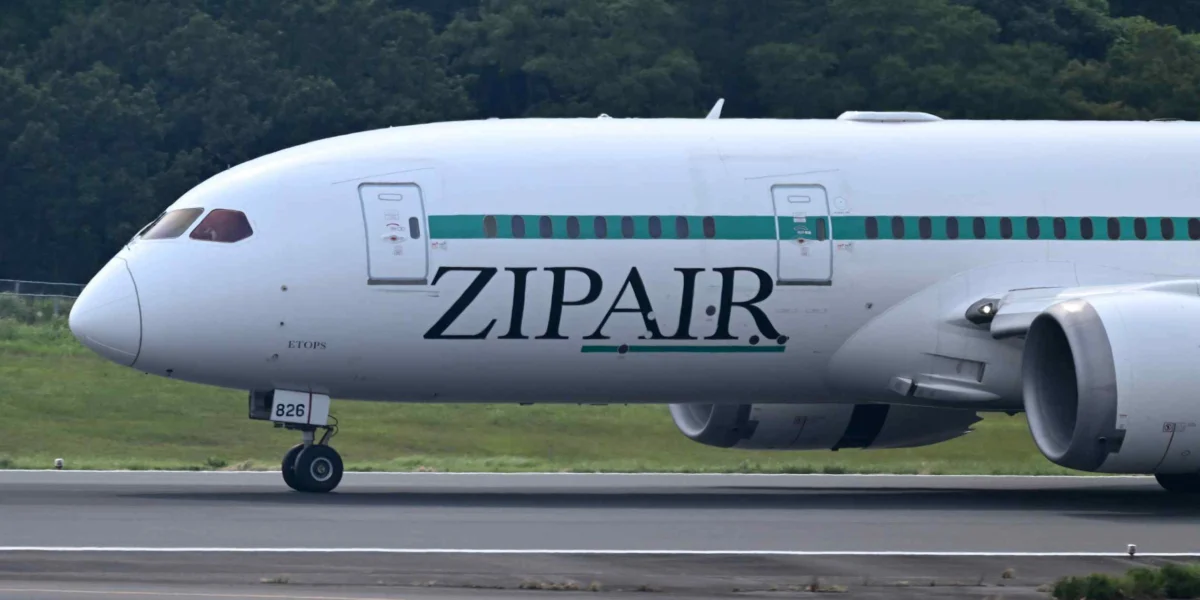
NARITA, Japan — Japanese budget carrier Zipair Tokyo launched a new route from Narita International Airport near Tokyo to the Malaysian capital of Kuala Lumpur, on Tuesday, aiming to capture a wide range of demand beyond business and leisure travel. This strategic expansion marks a significant step in Zipair’s ambition to establish Narita as a crucial transit hub, connecting North America and Asia. The inaugural flight, TG 365, departed Narita at 17:05 JST and is scheduled to arrive at Kuala Lumpur International Airport (KLIA) at 23:50 MYT the same day, operating four times a week.
Strategic Expansion Aims to Leverage Narita’s Geographic Advantage
The introduction of the Narita-Kuala Lumpur service is more than just an addition to Zipair’s growing network; it is a calculated maneuver to capitalize on Narita International Airport’s strategic location as a gateway between North America and Southeast Asia. For years, Narita has served as a major international gateway for Japan, but Zipair’s strategy is to transform it into a more dynamic transit point, particularly for long-haul routes that might otherwise necessitate more expensive or less direct connections. By offering competitive pricing and a streamlined transit experience, Zipair aims to attract a diverse passenger base, encompassing not only traditional leisure and business travelers but also those seeking more economical options for visiting friends and relatives (VFR), as well as cargo and logistics operations.
The airline’s parent company, Japan Airlines (JAL), has been instrumental in supporting Zipair’s development, providing access to crucial resources and expertise. While JAL operates its own extensive international network, Zipair is positioned to serve a different market segment, one that prioritizes cost-effectiveness without compromising on safety and reliability. This dual-airline strategy allows the JAL group to cover a broader spectrum of the aviation market, catering to both premium and budget-conscious travelers.
A Timeline of Zipair’s Growing Network
Zipair Tokyo, established in July 2018 as a wholly-owned subsidiary of Japan Airlines, commenced operations in October 2020 amidst the unprecedented challenges of the COVID-19 pandemic. Despite the turbulent global aviation landscape, the airline demonstrated resilience and strategic foresight.
- July 2018: Zipair Inc. is established as a wholly-owned subsidiary of Japan Airlines.
- October 2020: Zipair begins scheduled passenger services, initially focusing on domestic routes and then expanding to international destinations.
- November 2020: The airline launches its first international route between Narita and Bangkok.
- February 2021: A second route to Seoul is introduced, further solidifying its presence in Northeast Asia.
- July 2021: Zipair announces its intention to launch services to North America, a key component of its long-term strategy.
- December 2021: The airline receives its U.S. Federal Aviation Administration (FAA) foreign air carrier certification, paving the way for trans-Pacific operations.
- April 2022: Zipair commences its first trans-Pacific route, connecting Narita with Honolulu, Hawaii.
- July 2022: The route to San Jose, California, is launched, marking Zipair’s entry into mainland North America.
- October 20, 2026: The Narita-Kuala Lumpur route is officially inaugurated, adding a crucial link in Southeast Asia and strengthening the Narita hub.
The introduction of the Kuala Lumpur route follows a series of strategic expansions, including services to Honolulu and San Jose, California, which have already underscored Zipair’s ambition to connect the Pacific rim. The airline’s fleet currently consists of Boeing 787-8 Dreamliners, a versatile aircraft well-suited for long-haul operations and known for its fuel efficiency.
Supporting Data and Market Context
The demand for air travel between Japan and Southeast Asia has shown a robust recovery post-pandemic. According to data from the International Air Transport Association (IATA), air passenger traffic in the Asia-Pacific region has been steadily increasing, with a particular surge in demand for leisure and VFR travel. Kuala Lumpur, as a major economic and tourism hub in Southeast Asia, represents a significant market.
The Narita-Kuala Lumpur route is expected to operate four times a week, with flight TG 365 departing Narita at 17:05 JST and arriving at KLIA at 23:50 MYT. The return flight, TG 366, will depart KLIA at 00:50 MYT and arrive at Narita at 08:55 JST. This schedule is designed to facilitate convenient connections for passengers traveling from North America to Southeast Asia and vice versa.
Zipair’s pricing strategy is a key differentiator. While specific fares for the new route were not immediately released, the airline is known for offering highly competitive prices, often significantly lower than full-service carriers. This approach aims to unlock new travel possibilities for a broader demographic. For instance, a typical round-trip fare on a major carrier between Tokyo and Kuala Lumpur can range from $600 to $1000 USD, depending on the season and booking time. Zipair’s pricing is anticipated to be in the $350-$500 USD range, making international travel more accessible.
Furthermore, the cargo potential of this route should not be overlooked. The Narita-Kuala Lumpur corridor is a significant trade lane, and Zipair’s freighter capacity, though currently limited to the passenger aircraft’s belly hold, can contribute to the movement of goods between the two regions. As demand for e-commerce and time-sensitive goods continues to grow, efficient air cargo solutions become increasingly vital.
Official Responses and Industry Perspectives
While direct statements from Zipair’s top executives regarding the Kuala Lumpur launch were not available at the time of reporting, the airline’s broader strategic objectives have been clearly articulated. In previous announcements, Zipair President and CEO Shinya Katanozaka has emphasized the company’s vision of becoming a leading low-cost carrier in Asia, with a strong focus on trans-Pacific connectivity via Narita.
"Our goal is to provide a new kind of air travel experience – one that is affordable, reliable, and enjoyable," Katanozaka has stated in past remarks. "By expanding our network and leveraging our strategic hub at Narita, we are opening up new opportunities for travelers to explore the world."
Industry analysts have largely viewed Zipair’s expansion positively, recognizing the airline’s astute positioning in a recovering but increasingly competitive market. "Zipair is playing a smart game," commented aviation analyst Sarah Chen. "They are identifying underserved niches and capitalizing on the growing demand for affordable long-haul travel. Narita’s infrastructure and Japan’s reputation for safety provide a strong foundation for their ambitions."
The Malaysian aviation authorities have also expressed optimism about the new route. A spokesperson for the Malaysian Ministry of Transport noted, "The introduction of Zipair’s direct flights to Kuala Lumpur will undoubtedly enhance connectivity between Malaysia and Japan, fostering stronger economic ties and boosting tourism."
Broader Impact and Implications for the Aviation Landscape
The successful launch of the Narita-Kuala Lumpur route has several far-reaching implications for both Zipair and the broader aviation industry.
Strengthening Narita as a Transit Hub
Zipair’s strategy directly challenges the dominance of other major Asian hubs, such as Singapore Changi Airport and Incheon International Airport, in connecting North America and Southeast Asia. By offering a compelling low-cost alternative, Zipair can attract passengers who might have previously routed through these other hubs. This could lead to increased passenger traffic, greater revenue for airport services, and a broader range of flight options for travelers. The success of this route could also encourage other low-cost carriers to consider similar hub-and-spoke models using Narita.
Redefining Low-Cost Long-Haul Travel
Zipair is at the forefront of a growing trend in low-cost long-haul travel. Historically, long-haul flights have been the domain of full-service carriers, characterized by higher ticket prices and extensive onboard amenities. Zipair, along with a few other emerging LCCs, is demonstrating that it is possible to offer competitive long-haul services at significantly lower price points by optimizing operations, reducing ancillary services, and focusing on a streamlined passenger experience. This could democratize long-haul travel, making it accessible to a much wider segment of the global population.
Impact on Traditional Carriers
The expansion of LCCs like Zipair inevitably puts pressure on traditional full-service carriers. These carriers may need to adapt by either launching their own low-cost subsidiaries, adjusting their pricing strategies, or enhancing their value propositions to retain market share. The increased competition could lead to more competitive fares across the board, benefiting consumers.
The Role of Technology and Fleet Modernization
Zipair’s reliance on the Boeing 787-8 Dreamliner is a testament to the growing importance of modern, fuel-efficient aircraft in the low-cost long-haul segment. These aircraft offer superior operating economics, allowing airlines to maintain profitability on lower fare structures. The airline’s commitment to digital services and efficient ground operations further contributes to its cost-effectiveness.
Future Growth Prospects
The success of the Narita-Kuala Lumpur route will likely serve as a catalyst for further expansion. Zipair has previously expressed interest in adding more destinations in Southeast Asia, as well as further developing its North American network. Potential future routes could include cities in Vietnam, the Philippines, and Indonesia, further solidifying Narita’s position as a vital gateway to the dynamic Asian market. The airline’s ability to adapt to evolving market demands and maintain its competitive edge will be crucial for its long-term success in the ever-changing global aviation landscape. The strategic importance of this new route cannot be understated, as it represents a bold step towards a more interconnected and accessible world for air travelers.
