

Turboden America, a subsidiary of the Mitsubishi Heavy Industries (MHI) Group company Turboden S.p.A., has finalized a comprehensive three-year framework agreement with Fervo Energy to supply Organic Rankine Cycle (ORC) units for the development of up to 35 "GeoBlocks." This strategic partnership aims to deploy a total of 1,750 megawatts (MW) of dispatchable, carbon-free power capacity across the United States. The agreement represents a significant milestone in the commercialization of next-generation geothermal energy, providing a streamlined procurement and manufacturing path to meet the surging electricity demands of the domestic power grid and energy-intensive industries such as artificial intelligence and data center operations.
Under the terms of the agreement, Turboden will provide the specialized power generation equipment necessary to convert geothermal heat into electricity using its proprietary ORC technology. The framework is designed to shorten lead times for current and future projects, establishing a resilient supply chain and predictable delivery timelines. As Fervo Energy continues to scale its operations, this collaboration ensures that the necessary infrastructure is available to support rapid deployment, moving away from the traditional, bespoke engineering timelines that have historically slowed large-scale geothermal adoption.
The Strategic Shift Toward Dispatchable Renewables
The partnership between Turboden and Fervo Energy comes at a critical juncture for the U.S. energy sector. While wind and solar power have seen massive growth over the last decade, their intermittent nature presents challenges for grid stability. Geothermal energy, particularly Enhanced Geothermal Systems (EGS), offers a solution by providing "firm" or "baseload" power—electricity that is available 24 hours a day, regardless of weather conditions.
Paolo Bertuzzi, President of Turboden America LLC and CEO of Turboden S.p.A., emphasized the importance of this collaboration in the context of modern energy needs. He noted that the relationship between the two companies has matured over the past two years, leading to a mutual commitment to stabilize the power grid with clean, reliable energy. Bertuzzi highlighted that the agreement positions Turboden to scale its delivery in the U.S. market, providing megawatts of new generation precisely where and when they are required by utilities and industrial consumers.
Tim Latimer, CEO and co-founder of Fervo Energy, echoed these sentiments, noting that the expansion of their work with Mitsubishi Heavy Industries is a foundational step in scaling geothermal technology. By integrating Turboden’s proven ORC technology with the global manufacturing and logistics capabilities of MHI, Fervo aims to build a robust supply chain capable of supporting gigawatt-scale geothermal developments.
Understanding the GeoBlock and Organic Rankine Cycle Technology
At the heart of this agreement is the "GeoBlock" concept—a modular approach to geothermal power plant design. Rather than building unique, massive power stations for every site, Fervo and Turboden are utilizing standardized, repeatable units. This modularity allows for faster construction, easier maintenance, and the ability to scale capacity incrementally as new wells are drilled and brought online.
The technology utilized within these GeoBlocks is the Organic Rankine Cycle (ORC). Unlike traditional geothermal plants that use high-temperature steam to turn turbines, ORC systems use an organic fluid with a lower boiling point than water. This allows the system to generate electricity from lower-temperature heat sources more efficiently. The organic fluid is heated by the geothermal brine, vaporized to drive a turbine, and then cooled and condensed back into a liquid to repeat the cycle in a closed-loop system.
One of the primary advantages of Turboden’s ORC turbines is their environmental profile. The systems convert heat into power without increasing fuel consumption, water use, or carbon dioxide emissions. Furthermore, the technology is versatile; while it is being deployed here for geothermal applications, it can also be used to recover waste heat from gas turbines and various industrial processes, making it a cornerstone of industrial decarbonization efforts.
Chronology of Development: From Proof of Concept to Cape Station
The framework agreement builds on a successful history of collaboration between the two firms. The timeline of their partnership reflects the rapid acceleration of the EGS sector:
- Initial Collaboration (2022-2023): Turboden and Fervo began a strategic relationship to explore the integration of ORC units with Fervo’s horizontal drilling and multi-stage stimulation techniques.
- Cape Station Phase I Contract: Turboden was previously contracted to supply ORC units for three 50 MW GeoBlocks at Fervo’s flagship Cape Station project in Utah.
- Current Progress (Early 2025): The Phase I project at Cape Station has reached the advanced commissioning stage. Engineers and technicians are currently finalizing the startup procedures, with the first delivery of electricity to the grid expected later this year.
- Framework Agreement (Current): The new three-year deal expands this relationship to cover up to 35 additional GeoBlocks, totaling 1.75 GW of capacity.
- Future Milestones: Phase I of Cape Station is expected to deliver 100 MW of baseload power by 2026. Phase II is slated to add an additional 400 MW by 2028, with the full site permitted for up to 2,000 MW (2 GW).
The Role of Cape Station and the Utah Geothermal Corridor
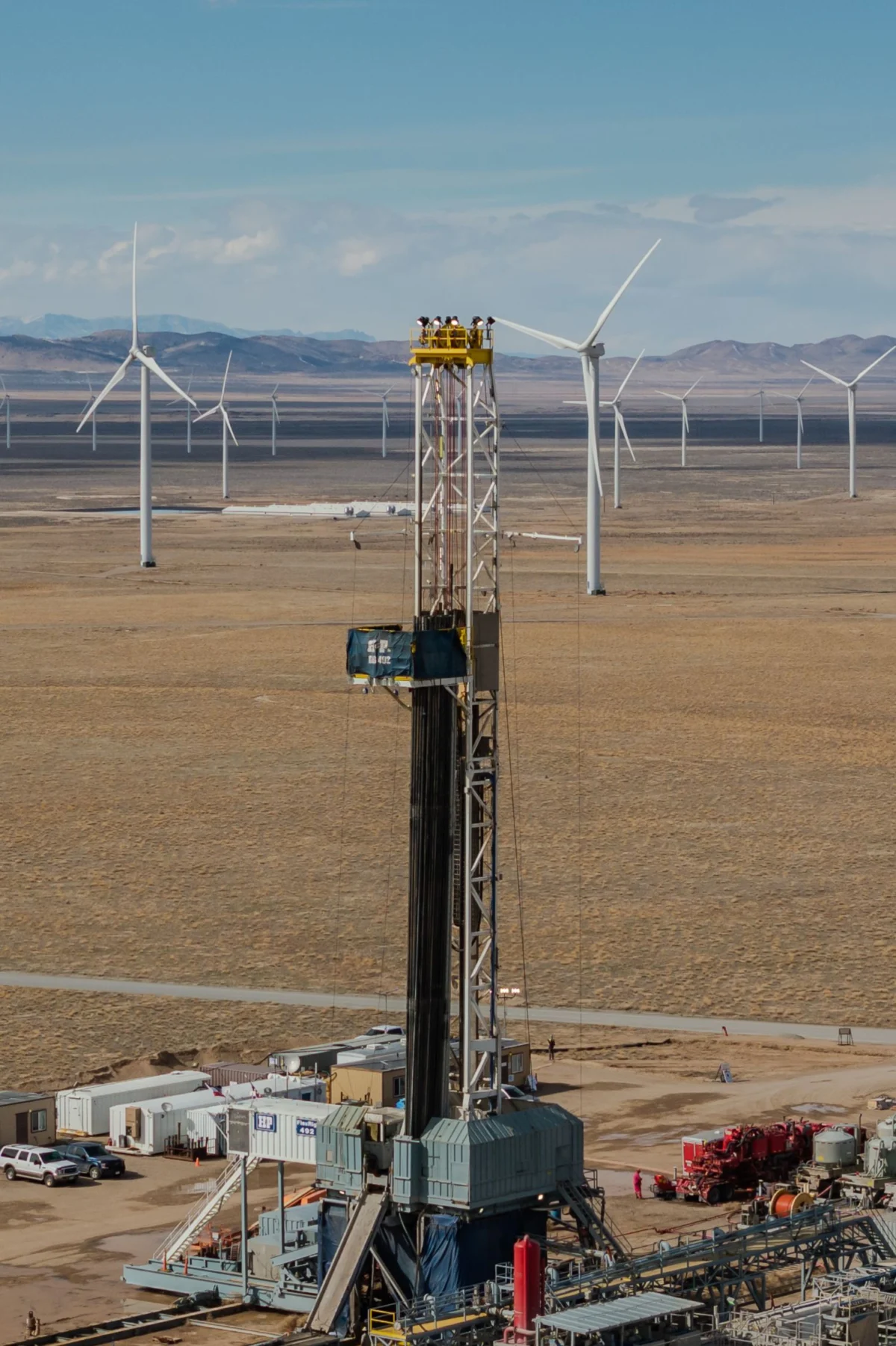
Cape Station, located in Beaver County, Utah, is currently the world’s largest enhanced geothermal systems development. Unlike traditional geothermal projects that rely on naturally occurring pockets of steam or hot water, EGS creates a man-made reservoir. This is achieved by injecting water into hot, dry subsurface rock formations. The water circulates through fractures in the rock, absorbing heat, and is then pumped back to the surface to drive the ORC turbines.

The project covers approximately 631 acres, including 148 acres of public lands managed by the Bureau of Land Management (BLM). The choice of Utah as a hub for this technology is not accidental. The southwestern portion of the state is recognized as one of the most promising geothermal regions in North America. Researchers estimate the area contains more than 10 GW of high-quality geothermal reserves.
Furthermore, Cape Station benefits significantly from its proximity to the Department of Energy’s (DOE) Frontier Observatory for Research in Geothermal Energy (FORGE). The FORGE site has served as a critical laboratory for the industry, conducting years of research into drilling techniques, reservoir stimulation, and monitoring. The data and innovations produced by FORGE have directly informed Fervo’s commercial operations, reducing the geological and financial risks associated with large-scale EGS.
Market Implications: Addressing the Data Center Power Crunch
A major driver behind the 1,750 MW agreement is the urgent need for electricity to power the next generation of data centers. Large technology companies, including Google, Microsoft, and Amazon, have set ambitious "24/7 Carbon-Free Energy" (CFE) goals. These goals require that every kilowatt-hour of electricity consumed by their facilities be matched by carbon-free generation on the same grid at the same time.
Intermittent sources like solar and wind cannot meet this requirement alone without massive, expensive battery storage. Geothermal energy, however, provides a steady, non-fluctuating supply of power. By fast-tracking these projects through the framework agreement, Turboden and Fervo are positioning geothermal as the primary alternative to nuclear or natural gas with carbon capture for tech firms seeking clean baseload power.
The ability to deliver "dispatchable" power—meaning the plant can adjust its output based on grid demand—makes geothermal an even more attractive asset for grid operators. As more coal and gas plants retire, the reliability provided by Fervo’s GeoBlocks will be essential for preventing blackouts and managing the complexities of a modern, renewable-heavy grid.
Supporting Data: The Landscape of U.S. Geothermal Energy
The United States is currently the world leader in installed geothermal capacity, yet the resource remains largely underutilized compared to its potential. The following data highlights the current state of the industry:
- Total Installed Capacity: Approximately 3,900 MW, accounting for roughly 25% of the global total.
- Geographic Concentration:
- California: 66.6% of total U.S. geothermal generation.
- Nevada: 26.1%.
- Utah: 3.2%.
- Hawai‘i: 2.1%.
- Oregon: 1.3%.
- Idaho and New Mexico: Less than 1% combined.
- Future Potential: Estimates suggest that with the widespread adoption of EGS technology, the U.S. could reach over 90 GW of geothermal capacity by 2050.
The 1,750 MW framework agreement between Turboden and Fervo alone represents nearly 45% of the current total U.S. geothermal capacity. This illustrates the transformative scale of the partnership; if fully realized, it would single-handedly increase the nation’s geothermal footprint by nearly half.
Broader Impact and Industry Outlook
The collaboration between Turboden America and Fervo Energy is likely to serve as a blueprint for the future of the geothermal industry. By treating geothermal development as a repeatable industrial process rather than a series of one-off construction projects, the companies are addressing the "cost curve" challenges that have historically limited the sector.
The involvement of Mitsubishi Heavy Industries via Turboden provides the financial and technical "heaviness" required to reassure investors and utilities. MHI’s global footprint ensures that as Fervo identifies new sites across the Western United States and potentially international markets, the equipment manufacturing capacity will be there to meet the demand.
As Phase I of Cape Station nears completion and the first GeoBlocks begin delivering power to the Utah grid, the industry will be watching closely. Success in Utah will likely trigger a wave of similar agreements as other developers seek to replicate the Fervo-Turboden model. With the backing of federal research, favorable permitting on public lands, and a clear market signal from the tech sector, enhanced geothermal systems are moving from a promising experimental technology to a central pillar of the American energy transition.
