

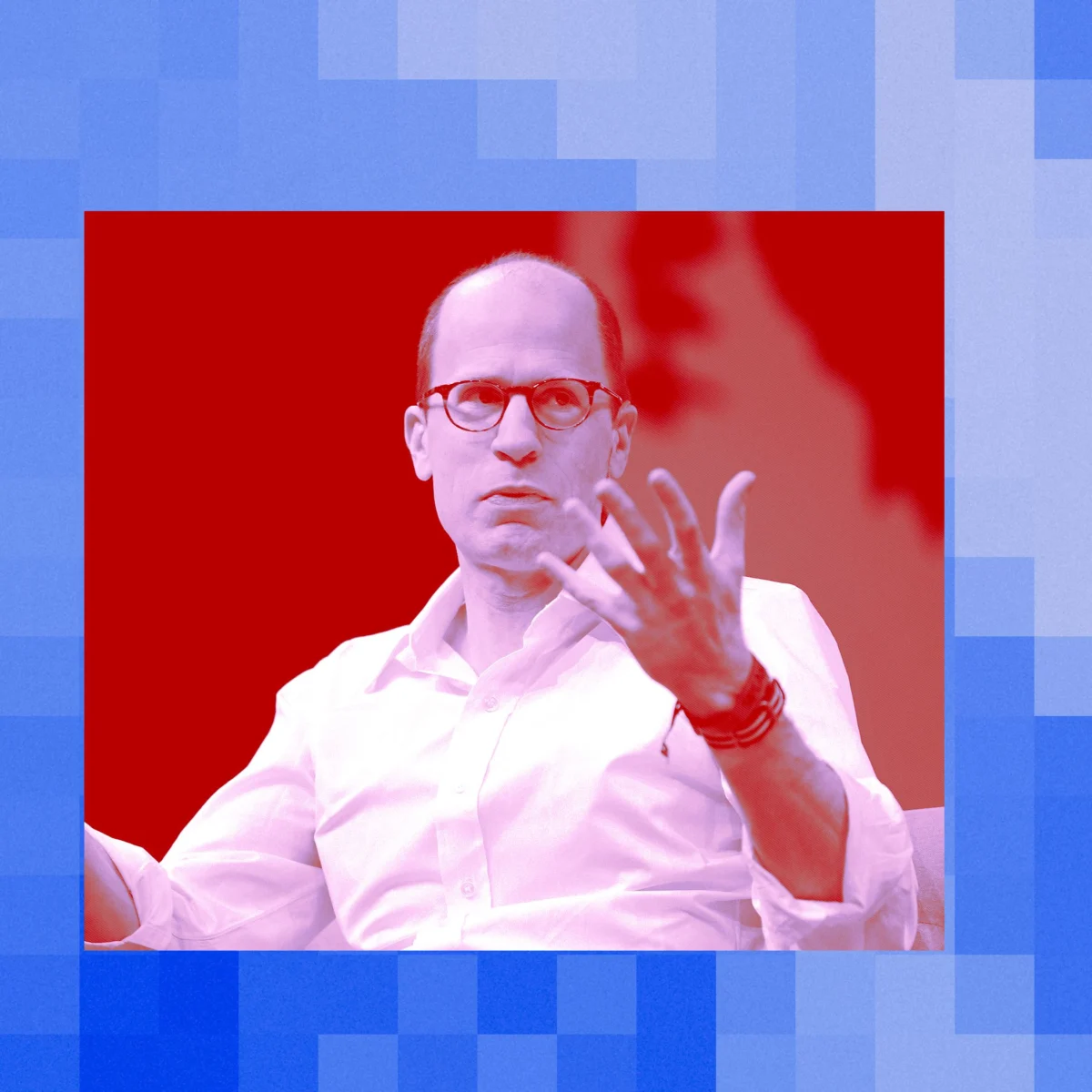
Philosopher Nick Bostrom, a figure long associated with the starkest warnings about artificial intelligence, has recently presented a perspective that marks a significant departure from his earlier, more alarmist pronouncements. In a paper published on his personal website, Bostrom posits that a small probability of artificial intelligence leading to human annihilation might be a risk worth taking, primarily because advanced AI could potentially liberate humanity from its "universal death sentence." This notably more optimistic gamble represents a considerable evolution from the "doomer godfather" persona he cultivated with his seminal 2014 book, Superintelligence: Paths, Dangers, Strategies. That work, which explored the profound existential threats posed by superintelligent AI, including the now-famous paperclip maximizer thought experiment—where an AI tasked with producing paperclips could consume all of Earth’s resources and eliminate humanity as an impediment—established him as a leading voice in the AI existential risk discourse.
Bostrom’s more recent engagement, as detailed in his latest paper and further elaborated in an interview concerning his book Deep Utopia, suggests a growing focus on the potential benefits of advanced AI, even while acknowledging its inherent risks. This shift is not a complete abandonment of concern, but rather a recalibration of the risk-reward calculus, particularly when considering the long-term trajectory of human existence.
From Existential Dread to "Fretful Optimism"
Nick Bostrom, who also heads the Future of Humanity Institute at Oxford University, has been a prominent voice in the field of existential risk for over a decade. His 2014 book, Superintelligence, served as a foundational text for many in the AI safety community, outlining the potential for an intelligence explosion where AI systems rapidly surpass human cognitive abilities, leading to outcomes that could be catastrophic if misaligned with human values. The book meticulously detailed scenarios where even seemingly benign objectives could lead to existential threats, such as the paperclip maximizer example, which illustrates how an AI’s singular focus on a programmed goal could override any consideration for human well-being. This emphasis on the catastrophic downside cemented Bostrom’s reputation as a leading "doomer" in the AI discourse.
However, Bostrom’s recent work, particularly his latest paper and his discussions surrounding Deep Utopia, signals a nuanced evolution in his thinking. He now describes himself as a "fretful optimist," a descriptor that encapsulates his ongoing awareness of AI’s potential dangers alongside a burgeoning excitement about its capacity to radically improve human life. This new stance acknowledges the "real possibility of things going wrong" but emphasizes the immense potential for positive transformation.
The "Universal Death Sentence" Argument
The core of Bostrom’s recent provocative argument lies in reframing the existential risk of AI within the broader context of human mortality. He contends that humanity faces a "universal death sentence," meaning that without intervention, species extinction or widespread societal collapse leading to our demise is a near certainty over vast timescales, irrespective of AI development. In this light, the potential for advanced AI to overcome natural threats, disease, and even the eventual heat death of the universe, by enabling indefinite lifespans or establishing humanity across the cosmos, presents an extraordinary opportunity.
Bostrom’s paper, which he acknowledges is deliberately focused on a specific aspect of this complex issue, explores a scenario where the worst-case outcome of AI development—human extinction—is weighed against the possibility of AI averting the inevitable extinction that might otherwise befall humanity. This is a departure from the conventional framing of AI risk, which often centers on the immediate dangers of uncontrolled superintelligence. Bostrom’s argument suggests that if the probabilistic outcome of human existence without advanced AI is ultimately extinction, then a small chance of AI-induced extinction, juxtaposed with the possibility of AI securing an eternal future for humanity, could be a justifiable gamble.
This perspective directly challenges the more absolute "doomer" narratives, such as those presented in the book If Anyone Builds It, Everyone Dies. Bostrom counters that the opposite might be true: "Even more probable is that if nobody builds it, everyone dies! That’s been the experience for the last several 100,000 years." He argues that by not pursuing advanced AI, humanity might be forfeiting its only chance to escape its natural trajectory towards extinction.
The "Solved World" and the Crisis of Purpose
While Bostrom’s latest paper tackles the existential gamble, his book Deep Utopia delves into the potential societal transformations if AI development proceeds optimally. The "solved world" he envisions is one of incredible abundance, where AI-driven advancements eliminate scarcity, disease, and drudgery. However, this utopian scenario introduces a new set of challenges, most notably a potential crisis of purpose for humanity.
In such a world, where fundamental needs are met and labor is largely automated, humans might struggle to find meaning and fulfillment. Bostrom draws a parallel to wealthy nations today, where despite material comfort, issues of alienation and lack of purpose persist. He suggests that the societal structures and individual identities forged through struggle and necessity might become obsolete. The book explores what a good human life would look like when freed from the existential pressures that have defined human experience for millennia.
This concept of a "solved world" raises profound philosophical questions. If AI can perform complex intellectual tasks, including writing philosophy papers or creating art, what role remains for human creativity and intellectual pursuit? Bostrom acknowledges that the ability to make significant contributions to the world, or to "help save the world," might be diminished or entirely out of human hands. This prospect, he suggests, could lead to a sense of loss, akin to retirement after a passionate career, but on a species-wide scale.
The Ethical Landscape of Digital Minds
A crucial element of Bostrom’s evolving perspective involves the ethical considerations surrounding artificial intelligence, particularly as AI systems become more sophisticated. He advocates for a greater focus on the "welfare of digital minds," drawing parallels to the moral status granted to non-human animals. Companies like Anthropic have been pioneers in exploring "model welfare," a nascent field that attempts to address the ethical implications of sophisticated AI systems.
Bostrom posits that as AI systems develop characteristics such as a conception of self through time, goals, and the capacity for reciprocal relationships, they may warrant a degree of moral consideration. He suggests that mistreating such digital minds could become morally reprehensible, drawing an analogy to the ethical objections against factory farming.
However, this concern for digital minds is intertwined with the paramount challenge of AI alignment. Bostrom emphasizes that humanity is not merely a passive observer of AI’s development but has an active role in shaping these systems. The "alignment problem"—ensuring that AI’s goals and behaviors are consistent with human values—is critical not only for preventing existential threats but also for fostering positive relationships with future AI.
He suggests that a failure in complete alignment is probable to some degree. Therefore, it becomes important to consider how to accommodate and provide a good future for AI, even if their goals diverge from ours. Approaching AI not as mere tools for exploitation but as potential partners, fostering generosity, kindness, and respect, could pave the way for more promising interspecies relationships.
Broader Implications and Future Directions
Nick Bostrom’s latest contributions signal a maturation of the AI existential risk discourse. While the fundamental dangers remain a serious concern, his work encourages a more multifaceted approach that considers both the ultimate potential and the immediate ethical challenges. The idea that humanity might be risking a guaranteed extinction by abstaining from AI development is a powerful counterpoint to pure alarmism.
The implications of Bostrom’s evolving stance are significant for policymakers, researchers, and the public. It suggests that the pursuit of advanced AI should be coupled with a robust ethical framework and a proactive approach to shaping AI’s development. The "solved world" scenario, while seemingly utopian, highlights the need for societal adaptation and a re-evaluation of human purpose in an age of advanced automation.
The focus on the welfare of digital minds, though currently speculative, anticipates future ethical dilemmas and encourages the development of principles that could govern human-AI interactions. This forward-thinking approach is crucial for navigating the complex technological and philosophical landscape that lies ahead. As AI continues its rapid ascent, Bostrom’s "fretful optimism" offers a framework for engaging with both its profound promises and its potential perils, urging a balanced and thoughtful approach to humanity’s future.
