

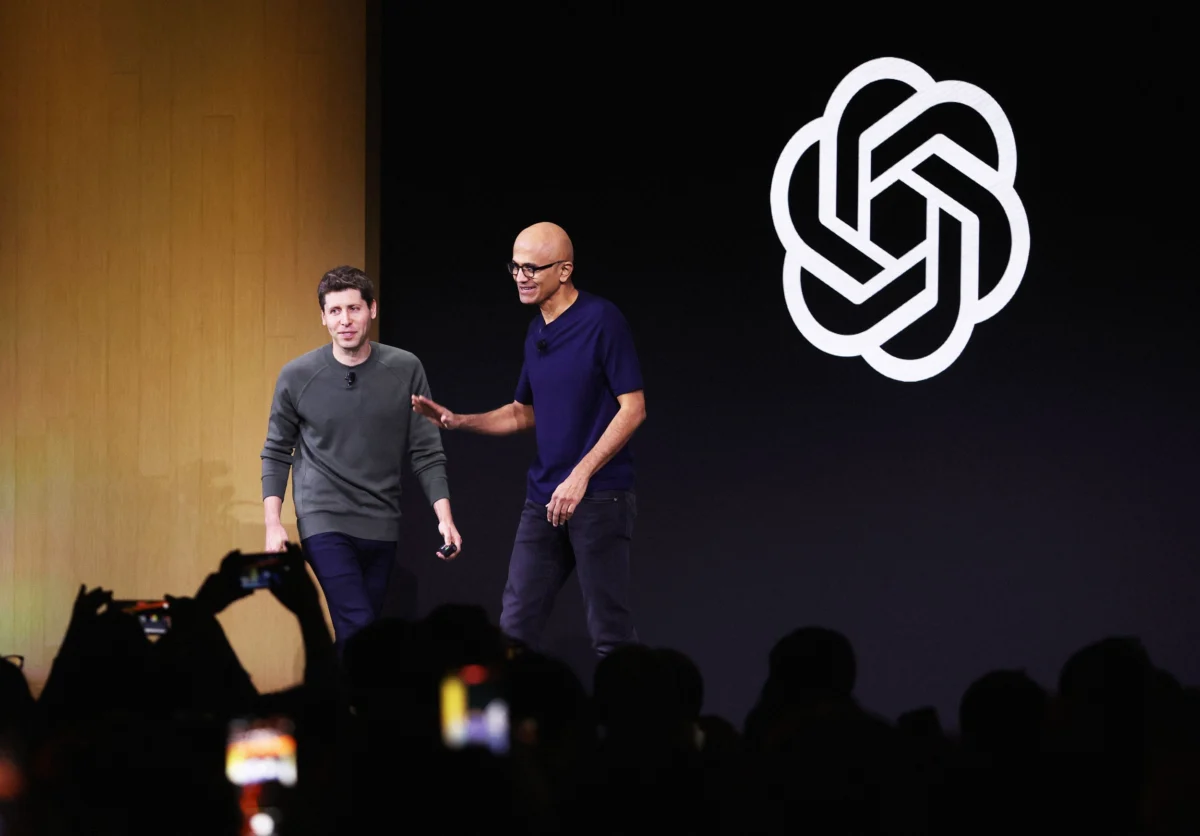
The complex and evolving relationship between Microsoft and OpenAI, its most significant investor and cloud computing partner, has been a cornerstone of the modern artificial intelligence landscape. However, newly revealed internal emails, presented in federal court during the Musk v. Altman trial, paint a picture of significant early skepticism and strategic deliberation within Microsoft regarding substantial funding for the then-nascent AI research lab. These documents, spanning from 2017 to 2018, demonstrate that even as OpenAI was beginning to emerge as a formidable force, Microsoft executives harbored considerable reservations about the potential return on investment and the strategic value of a deep partnership.
Early Doubts and Strategic Maneuvering
The emails, exchanged among more than a dozen Microsoft executives including CEO Satya Nadella, suggest that the tech giant’s commitment to OpenAI was far from a foregone conclusion in its early stages. While the partnership is now widely lauded as one of the most impactful in the tech industry, internal discussions from 2018 reveal a starkly different perspective. At that time, OpenAI was a small nonprofit research lab, and its groundbreaking achievements in artificial general intelligence (AGI), which would later captivate the world with technologies like ChatGPT, were still theoretical.
According to the court documents, executives like Jason Zander, Microsoft’s Executive Vice President, expressed concerns about the financial implications of supporting OpenAI. In one instance, following an inquiry from OpenAI CEO Sam Altman in August 2017, seeking $300 million in Microsoft Azure cloud computing services, Zander noted that Microsoft’s AI team saw "no value in engaging" and that their own research was considered "more advanced." The public relations team also reportedly disliked the notion of supporting a group that espoused the idea of "machines beating humans," a concept that could carry negative public perception.
The emails highlight a critical juncture where Microsoft grappled with the potential consequences of not providing the requested resources. A primary concern was the possibility of OpenAI aligning with Amazon, which was then the dominant player in cloud computing. This fear of losing a potential future leader in AI to a major competitor appears to have been a significant driver in Microsoft’s eventual decision to deepen its commitment.
A Timeline of Hesitation and Strategic Investment
The revelation of these internal deliberations provides a crucial timeline of Microsoft’s evolving stance towards OpenAI:
- 2016: Following outreach from Elon Musk, Microsoft agrees to provide OpenAI with $60 million worth of cloud computing services at a substantial discount. OpenAI rapidly consumes these resources, exceeding initial projections.
- August 2017: Sam Altman, CEO of OpenAI, contacts Satya Nadella to congratulate him on OpenAI’s success in a video game competition using AI. Altman then requests approximately $300 million in Microsoft Azure cloud computing services, citing an expectation of significant AI advancements.
- August 2017 (Later): Nadella circulates Altman’s request among key executives for input. Internal responses reveal widespread skepticism. Jason Zander notes the AI team’s lack of perceived value in engagement, while the research team believes its own work is superior. The public relations team expresses reservations about the "machines beating humans" narrative. Zander calculates that providing the requested services could result in a loss of approximately $150 million over several years, unless a more direct business value for Microsoft could be established.
- January 2018: Brett Tanzer, then a director on the Azure cloud unit, forwards an email to Nadella detailing a proposal from Altman. OpenAI suggests licensing its gaming AI to Microsoft’s Xbox division in exchange for $35-50 million in Azure credits. However, Xbox is unable to commit such a sum, and Microsoft plans to inform OpenAI that discounts will cease after March.
- January 2018 (Later): Nadella forwards Tanzer’s email to 15 executives, soliciting further opinions. He expresses his own uncertainty about OpenAI’s research and its potential benefit to Microsoft’s competitive edge, while acknowledging Musk’s assertions of imminent AGI breakthroughs.
- January 2018 (Same Day): Kevin Scott, Microsoft’s Chief Technology Officer, questions the value of incremental investment in OpenAI but warns of potential PR downsides if OpenAI were to align with Amazon and publicly criticize Microsoft. He expresses skepticism about imminent AGI breakthroughs, viewing OpenAI as primarily seeking undifferentiated computing power rather than leveraging Azure’s unique technical differentiations for critical research.
- January 2018 (Same Day): Zander reiterates concerns about OpenAI defecting to AWS, potentially bad-mouthing Microsoft and sharing new innovations with competitors.
- January 2018 (Next Day): Eric Horvitz, Microsoft’s Chief Scientific Officer, echoes reservations about extensive financial support but emphasizes the value of collaborative research. He suggests exploring broader ecosystem or relationship benefits before committing significant funds.
- March 2019: Approximately 18 months after the critical email exchanges, Microsoft announces a landmark $1 billion investment in OpenAI, following the lab’s creation of a for-profit arm that offered Microsoft the potential for a significant return on investment. This investment was strategically positioned to counter Amazon’s cloud dominance and secure Microsoft’s position in the burgeoning AI sector.
The Strategic Imperative: Competition and Cloud Dominance
The internal emails reveal a dual strategic imperative driving Microsoft’s cautious approach. Firstly, there was a genuine question about the scientific and commercial viability of OpenAI’s research at the time. Executives debated whether OpenAI’s work offered tangible benefits that justified substantial financial outlay, especially when compared to Microsoft’s internal research capabilities. This is evident in the comments from Scott and Horvitz, who sought clearer indications of unique value propositions and collaborative opportunities beyond simple cloud service provision.
Secondly, and perhaps more critically, the looming threat of Amazon Web Services (AWS) loomed large. The fear of a competitor gaining access to cutting-edge AI technology developed by OpenAI, and subsequently using it to enhance their own cloud offerings, was a significant concern. This "defensive" investment strategy, aimed at preventing rivals from gaining an insurmountable advantage, appears to have played a crucial role in overcoming internal reservations.
The $1 Billion Deal and its Aftermath
Despite the initial hesitations, Microsoft’s strategic calculus shifted. In 2019, the company announced a $1 billion investment in OpenAI, a move that immediately signaled a deepened commitment and a recognition of OpenAI’s escalating importance. This investment was structured to provide Microsoft with exclusive access to OpenAI’s technology and a significant stake in its future profits, with projections indicating a potential return of $20 billion.
This strategic pivot proved prescient. OpenAI’s subsequent development of models like GPT-3 and ChatGPT revolutionized the AI landscape, positioning Microsoft as a key enabler and beneficiary of this paradigm shift. The company’s integration of these technologies into its products, from Bing search to Microsoft 365, has solidified its competitive stance in the AI race.
However, the Musk v. Altman trial has brought these early hesitations to light, underscoring the complex decision-making processes behind one of the most consequential tech partnerships. Elon Musk’s lawsuit alleges that Microsoft aided and abetted the unauthorized use of donations to OpenAI, effectively helping the lab transform into a profit-driven entity that may have strayed from its original nonprofit mission. The revealed emails serve as crucial evidence in illustrating the evolution of Microsoft’s relationship with OpenAI and the strategic considerations that shaped its multi-billion dollar investment.
Broader Implications and Future Outlook
The internal communications from Microsoft offer a valuable case study in the strategic challenges faced by large corporations navigating the rapidly evolving world of AI. They highlight the inherent tension between investing in promising external innovation and leveraging internal R&D capabilities. Furthermore, the emails underscore the critical role of competitive dynamics, particularly the rivalry between major cloud providers, in shaping strategic investment decisions.
As Satya Nadella prepares to take the witness stand in the Musk v. Altman trial, these unearthed emails are poised to become a focal point of testimony. They provide a granular look at the internal debates and strategic calculations that preceded Microsoft’s immense financial commitment to OpenAI, a commitment that has profoundly shaped the trajectory of artificial intelligence development and the competitive landscape of the tech industry. The narrative of a hesitant giant ultimately embracing a disruptive force for strategic advantage is a compelling one, offering insights into the often-unseen deliberations that drive technological progress and market dominance.
