

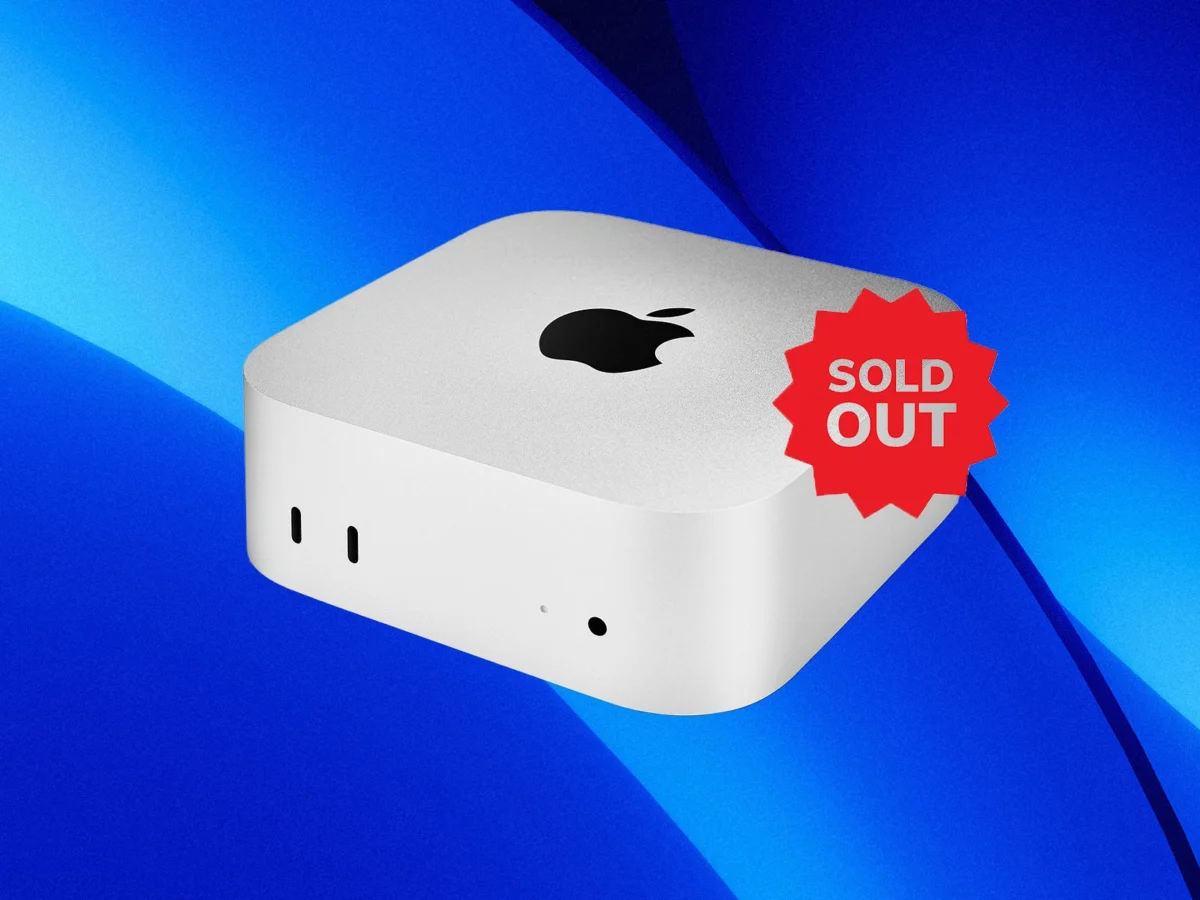
Apple CEO Tim Cook revealed on the company’s latest earnings call that the surging demand for the Mac Mini, its compact yet powerful screen-free desktop computer, could lead to supply constraints lasting "several months." This scarcity is directly linked to the recent surge in coders identifying the Mac Mini as an ideal platform for agentic artificial intelligence tasks. Cook’s remarks underscore a significant, and perhaps unexpected, pivot in the perceived utility and market demand for Apple’s more accessible desktop offering.
The Mac Mini’s Unexpected Ascent in the AI Era
During the quarterly earnings call held on Thursday, Tim Cook elaborated on the burgeoning demand for specific Mac models. "On the Mac Mini and Mac Studio, both of these are amazing platforms for AI and agentic tools," Cook stated in response to an analyst’s inquiry. He further emphasized the speed of this adoption, noting, "And customer adoption of that is happening faster than we expected." This candid admission points to a confluence of technological advancements and market realization that has propelled the Mac Mini from a niche product to a highly sought-after piece of hardware within the burgeoning AI development community.
The codifying of the Mac Mini’s suitability for agentic AI tasks, which involve AI agents acting autonomously to achieve goals, has been a gradual but significant development in recent months. Developers have found that the Mac Mini’s blend of processing power, compact form factor, and the Unix-based macOS operating system provides a robust and cost-effective environment for running complex AI models and experiments. This has led to a significant uptick in its popularity among those working on the cutting edge of artificial intelligence research and development, often requiring dedicated machines for intensive computations and persistent agent operations.
Broader Financial Performance and Product Line Challenges
Cook’s comments regarding the Mac Mini’s demand surge came against the backdrop of another record-setting financial quarter for Apple. While the company’s flagship iPhone sales fell slightly short of some analyst expectations, the demand for the upcoming iPhone 17 model has been exceptionally strong. Concurrently, Apple’s lucrative subscription services business continues its impressive growth trajectory, demonstrating the company’s diversified revenue streams and resilience in various market segments.
However, the quarter was not without its challenges, as Apple grappled with supply constraints across both its iPhone and Mac product lines. The primary driver for iPhone shortages has been a limited supply of the advanced chips that power the devices, a critical component in the global semiconductor supply chain. For the Mac business, however, Cook identified a dual set of factors contributing to the scarcity. The rapid adoption of generative AI, as highlighted by the Mac Mini’s popularity, is one significant contributor. The other is the unexpected surge in demand for Apple’s new, more affordable MacBook Neo laptop, which has also experienced robust sales, further stretching production capabilities.
Analyzing the Mac Mini’s Market Impact
Historically, Mac sales represent a smaller portion of Apple’s overall revenue compared to the iPhone. In this particular quarter, Mac sales amounted to $8.4 billion, a stark contrast to the nearly $57 billion generated by iPhone sales. The Mac Mini, in particular, constitutes an even smaller segment of this Mac revenue. However, the emergence of powerful open-source AI tools, such as OpenClaw which launched earlier this year, has fundamentally altered this dynamic. OpenClaw and similar platforms have provided developers with accessible yet potent AI development environments, and the Mac Mini has emerged as a preferred hardware choice due to its combination of sufficient processing power and a dedicated computing environment ideal for agentic AI tasks. This has resulted in Mac Minis flying off the shelves at an unprecedented rate.
The tangible impact of this demand is evident in customer wait times. Some eager customers have already been waiting for months for their Mac Mini orders. MacRumors reported in early March that Apple had temporarily ceased sales of a particular Mac Mini configuration that included 512 GB of RAM, indicating severe supply chain pressures for that specific component. As of last week, the base model of the Mac Mini was entirely sold out from Apple’s online store, a testament to the overwhelming customer interest and the company’s struggle to keep pace with demand.
Leadership Transition: A New Era for Apple
Beyond the product-specific challenges, the earnings call also addressed a significant leadership transition within Apple. Tim Cook, who has helmed the company for over a decade, announced his intention to step down as CEO later this year. He will transition to the role of executive chairman. Cook stated that this is "the right moment" to make this shift, citing several factors, including Apple’s robust financial standing and an "incredible" upcoming product roadmap. He expressed confidence in his successor, John Ternus, describing him as "a person of remarkable character and a born leader."
Ternus, who will assume the CEO position, joined the call briefly to offer his endorsement of Cook’s leadership and to reassure investors about his own commitment to a "deliberate and thoughtful approach" in leading the company. He echoed Cook’s optimism regarding the company’s future product pipeline. While both executives were discreet about the specifics of this highly anticipated product roadmap, the underlying message conveyed was one of continued innovation and strategic growth for Apple.
Implications for the Tech Landscape and Future Outlook
The current situation with the Mac Mini highlights a critical trend in the technology sector: the democratization of advanced computing power. As AI tools become more accessible, the demand for capable and relatively affordable hardware to run them intensifies. The Mac Mini, by virtue of its design and price point, has found itself at the nexus of this revolution. This surge in demand, while presenting supply chain challenges for Apple, also signifies a broadening of the user base for its desktop products, potentially attracting a new demographic of developers and AI enthusiasts.
The supply chain issues, particularly the chip shortages, are a persistent concern for the entire technology industry. Apple’s ability to navigate these constraints will be crucial for maintaining its market position and customer satisfaction. The company’s investment in its own silicon, exemplified by its M-series chips, is a strategic move aimed at mitigating some of these external dependencies.
The leadership transition also marks a significant moment for Apple. Tim Cook’s tenure has been characterized by tremendous growth, brand expansion, and a consistent focus on user experience and privacy. John Ternus faces the challenge of building upon this legacy while steering the company through an evolving technological landscape. The emphasis on an "incredible" product roadmap suggests that Apple is poised to continue its trajectory of innovation, potentially with a renewed focus on areas that leverage its hardware and software ecosystem, such as artificial intelligence and personalized computing experiences.
The long-term implications of the Mac Mini’s rise as an AI workhorse are yet to be fully realized. It could signify a shift in how developers perceive and utilize Apple hardware for specialized computing tasks. Furthermore, it underscores the increasing importance of dedicated hardware solutions for the advancement of AI, moving beyond the realm of cloud-based computing for certain applications. The current demand, while challenging, presents an opportunity for Apple to solidify its position in the burgeoning AI development ecosystem. The company’s ability to scale production and meet this demand will be a key indicator of its agility and foresight in adapting to the rapidly changing demands of the technological frontier.
