

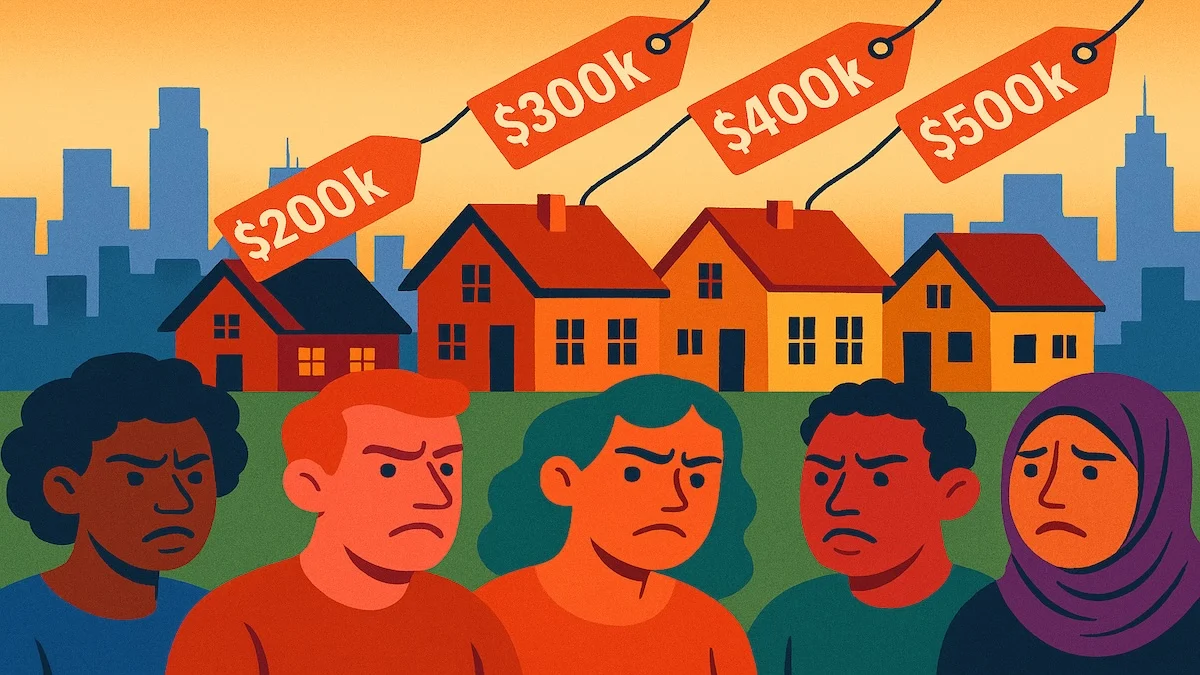
The traditional American trajectory of adulthood—falling in love, getting married, and then purchasing a home—has undergone a fundamental structural inversion over the past decade. For decades, the real estate industry operated on the assumption that housing was the backdrop against which life’s milestones occurred. However, a significant shift in market dynamics has transformed the home-buying process from a consequence of a relationship into a prerequisite or a primary driver of the relationship itself. This evolution, observed by industry veterans and supported by emerging demographic data, suggests that the financial math of real estate is now dictating the timing and nature of modern romantic partnerships.
The Evolution of the Real Estate Consultation
In the early 2010s, the typical consultation between a real estate broker and a couple was characterized by an emotional hierarchy. Prospective buyers prioritized the "vibe" of a neighborhood, the aesthetic appeal of a backyard for a future pet, and the logistical convenience of a commute. Financial considerations, while present, were often viewed as the secondary mechanism required to facilitate an already-made emotional decision. The broker’s role was largely that of a lifestyle curator.
By the early 2020s, this dynamic had flipped. The "financial audit" now precedes the "dream." Today, the initial conversations in real estate offices across the country are dominated by granular discussions regarding debt-to-income ratios, the stability of secondary income streams, and the contingency plans for mortgage payments should one partner face job instability. The emotional decision to move in together or commit to a long-term partnership is increasingly being superseded by a cold, hard calculation of whether two people can afford to exist in the same space. The math of the market has entered the relationship, effectively turning romantic partnerships into something resembling corporate mergers.
The Chronology of a Shifting Market
The transformation of the housing market can be traced through several distinct phases over the last forty years. In 1981, first-time homebuyers represented a robust and younger segment of the market. During that era, the median age of a first-time buyer was significantly lower, and the entry-level housing stock was more accessible relative to median wages.
However, the sequence of life milestones began to stretch as the 21st century progressed. According to data from USAFacts and the U.S. Census Bureau, the average age of marriage has climbed steadily. In 2015, the average age for women was approximately 26 and for men 28. By 2024, those figures rose to 28 and 30, respectively. While cultural shifts toward self-discovery and career establishment are often cited as the primary causes, economic research increasingly points to housing costs as the definitive driver.
The most jarring statistical shift occurred in the share of first-time buyers. In 2024, first-time buyers accounted for only 21 percent of all home purchases, the lowest share recorded since the National Association of Realtors (NAR) began tracking the data in 1981. Furthermore, the median age of the first-time homebuyer reached an all-time high of 40. This represents a "compressed life sequence," where the decade of life usually reserved for family expansion and geographic stability is now spent in a state of financial preparation and delay.
The Financial Incentive for Partnership
The current real estate climate has created a "singles tax" that serves as a powerful, albeit unromantic, incentive for cohabitation and marriage. Analysis of major metropolitan markets reveals a staggering disparity between the cost of living alone and the cost of living as a couple. In markets like Washington D.C., single buyers can face nearly $18,000 more in annual housing costs compared to couples who split the same expenses.
This gap is not merely a budgetary inconvenience; it is a structural force. For a single professional earning a high-percentile income, the path to homeownership remains fraught with obstacles that would have been negligible twenty years ago. As a result, the decision to enter a committed relationship is increasingly becoming a financial strategy. While few couples would admit to choosing a partner for their credit score or down-payment contribution, the economic incentives are unavoidable. The "pull" toward couplehood is no longer just emotional; in many high-cost-of-living areas, it is the only viable path to long-term housing security.
Transactional Friction and the Barrier to Entry
Beyond the monthly mortgage payment, the sheer cost of the transaction itself has become a deterrent to household formation. On a median-priced home in the current market, closing costs, inspections, and associated fees can require between $25,000 and $40,000 in liquid cash. This is a requirement that occurs after a buyer has already committed to the purchase and often after months of emotional investment.
For the majority of Americans, particularly those without a "financial backstop" such as an inheritance or parental assistance, these fees represent a terminal barrier. The industry has historically been reluctant to address this cost structure, much of which is comprised of legacy pricing models and administrative friction. While the real estate industry focuses its public-facing analysis on interest rates and inventory levels, it rarely addresses the human cost of these transactional hurdles.
The result is a bifurcated market: those with family wealth who can navigate the transaction costs, and those who must rely on a dual-income partnership to bridge the gap. This has created a environment where the "American Dream" of homeownership is increasingly reserved for those who can maintain a stable, high-earning partnership for several years before even entering the market.
Broader Sociological and Economic Implications
The implications of these housing trends extend far beyond the real estate sector, impacting national demographics and the broader economy. High housing costs have been consistently linked to lower birth rates and delayed family formation. When the median age of a first-time homebuyer is 40, the window for having children and building multi-generational wealth is significantly narrowed.
Furthermore, the "merger" mentality of modern relationships may have long-term effects on social stability. If relationships are formed or maintained primarily for economic survival, the underlying emotional foundation may be subject to different pressures than in previous generations. The financial pressure is not merely a parallel stressor; it has become the primary language through which couples negotiate their future.
Industry Response and the Path Forward
The real estate industry’s traditional response to these challenges has been to focus on technical metrics: cap rates, months of supply, and median days on market. While these are essential data points for investors, they fail to capture the reality of the struggle facing the modern consumer.
There is a growing call for "disruption" that goes beyond user-interface improvements or faster mortgage apps. True disruption, according to industry critics like Blake O’Shaughnessy, must involve a genuine reduction in the financial weight of the transaction itself. This includes challenging the legacy fee structures and finding ways to lower the barrier to entry for first-time buyers who lack generational wealth.
Platforms that focus on reducing the "cash at table" requirements or providing alternative paths to equity are beginning to gain traction. These innovations recognize that the current model is no longer sustainable for a significant portion of the population.
Conclusion: A New Social Contract
The American housing market has moved from being a backdrop for adult life to being its primary negotiator. The sequence of life has been rewritten by the reality of the balance sheet. For the modern couple, the journey toward a home is a gauntlet that tests the strength of their financial partnership long before they ever receive the keys to a front door.
The industry’s refusal to speak honestly about these pressures has created a disconnect between market analysis and human experience. As housing remains the largest expense for most households, its role in shaping the most personal decisions of American life—who we love, when we marry, and if we have children—will only continue to grow. The American dream remains a potent cultural symbol, but it now requires a level of financial synchronicity and endurance that previous generations never had to contemplate. Until the structural costs of entering the market are addressed, the "math in the relationship" will remain a permanent fixture of the modern romantic landscape.
