

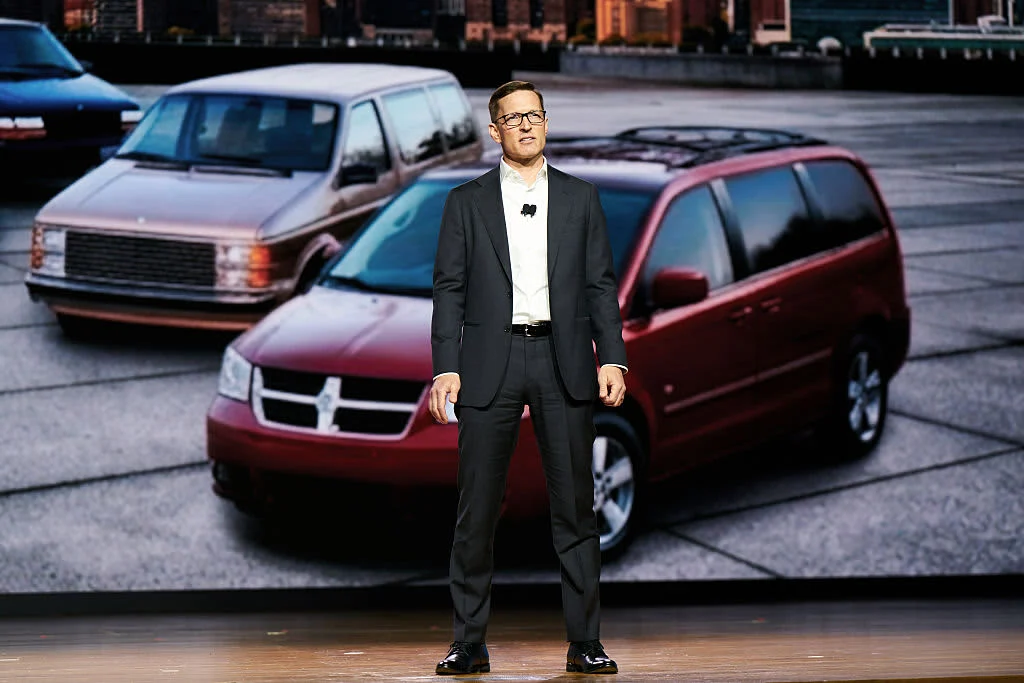
New York, NY – In a bold declaration that challenges prevailing automotive industry narratives, Matt McAlear, CEO of Chrysler and Dodge, asserted at the New York International Auto Show (NYIAS) that the minivan is far from obsolete; in fact, it is poised for a significant resurgence. Unveiling the latest iteration of the Pacifica Pinnacle, the highest-end trim of Chrysler’s sole product line, McAlear’s statements underscored a strategic pivot for a brand often viewed as being in decline, signaling a renewed focus on the segment it is credited with inventing. This defiant stance comes as Chrysler, a marque that once stood as a titan of American automotive manufacturing, has seen its product portfolio dwindle to a single family of minivans, a situation many industry observers interpret as a harbinger of its eventual demise. However, the company maintains a different outlook, buoyed by recent market data suggesting a modest but consistent uptick in minivan sales.
Chrysler’s long-standing promise of new products beyond its minivan offerings is expected to gain clarity at parent company Stellantis’ investor day on May 21 in Auburn Hills, Michigan. While McAlear remained tight-lipped about specifics, he hinted at "a lot of things in the works" for the brand, yet chose to emphatically champion its current flagship vehicle, the Pacifica. "We absolutely see the minivan market growing, and we believe there’s an opportunity for Chrysler to continue its growth year over year," McAlear stated, proudly noting that Chrysler currently holds the top sales position within the segment. This assertion is not merely a statement of brand loyalty but is underpinned by a confluence of evolving consumer needs, economic realities, and a re-evaluation of vehicle utility that could redefine the minivan’s place in the modern automotive landscape.
A Legacy Reimagined: The Minivan’s Historical Journey and Modern Renaissance
The narrative of the minivan in the United States is inextricably linked with Chrysler. The automaker is widely celebrated for mainstreaming the segment in the early 1980s with the introduction of the Dodge Caravan and Plymouth Voyager. These vehicles revolutionized family transportation, offering unparalleled interior space, versatile seating configurations, and ease of access through sliding doors, features that quickly made them indispensable for suburban families. Rivals swiftly followed suit, leading to a golden age for minivans through the 1990s. However, the turn of the millennium witnessed a dramatic shift in consumer preferences. The allure of sport utility vehicles (SUVs), marketed as more rugged, adventurous, and stylish alternatives, began to erode the minivan’s dominance. This trend saw many manufacturers gradually abandon the segment, leaving a handful of dedicated players.
The decline was stark: minivan sales constituted a mere 1.7% of the total U.S. automotive market in 2017, according to Edmunds data. This nadir represented a significant retreat from their peak market share, which had once hovered around 8-10% in the late 1990s. Yet, recent years have shown signs of a reversal. By 2025, minivan market share had crept up to 2.4%, a seemingly small but statistically significant increase that points to a renewed interest in these adaptable "multipurpose vehicles." This modest resurgence is not a return to past glories, but rather a strategic consolidation within a niche market, where surviving players are now finding renewed demand.
Economic Drivers and Evolving Consumer Priorities
One of the primary catalysts behind the minivan’s quiet comeback appears to be economic pragmatism. The average transaction price for a large SUV, a direct competitor for family hauling duties, reached a staggering $77,215 in 2025, as reported by Edmunds. In stark contrast, the average minivan price stood at $48,269, placing it just slightly above the overall industry average cost for a new vehicle of $48,402. This considerable price differential makes minivans a far more accessible option for many families grappling with rising costs of living and tighter budgets. The value proposition of a minivan – offering superior space and functionality at a significantly lower price point than comparable large SUVs – is increasingly resonating with cost-conscious consumers.
Beyond price, the minivan’s inherent practicality remains a powerful draw. The Pacifica Pinnacle, unveiled at the NYIAS, exemplifies this with features commonly found in luxury family vehicles, such as integrated rear-seat entertainment screens for long road trips. However, it also boasts unique advantages that set it apart: the revolutionary Stow ‘n Go seating system, allowing both second and third-row seats to be completely folded flat into the floor, creating an expansive, flat cargo area unmatched by most SUVs. This unparalleled versatility caters to a diverse range of needs, from hauling sports equipment and musical instruments to accommodating large grocery runs or even serving as a mobile workshop.
Challenging the "Family Hauler" Stigma: Towards a Rugged Aesthetic
For much of its history, the minivan has been pigeonholed as the quintessential "family hauler," an image that, while accurate, has also contributed to a perceived lack of excitement or adventure. Recognizing this stigma, manufacturers like Chrysler are actively exploring ways to broaden the minivan’s appeal. The Chrysler Grizzly Peak concept, for instance, showcased at past events, featured knobby tires and a roof rack, hinting at a more rugged, outdoorsy aesthetic designed to appeal to consumers seeking adventure without sacrificing practicality. McAlear acknowledged this evolving consumer desire, stating, "We’re looking at it. We’re trying to figure out if there’s a way to do it because people love it. And it is unlike anything you’ve ever seen from a minivan brand before." This experimentation suggests a strategic effort to diversify the minivan’s identity, moving beyond its traditional suburban confines.

McAlear further elaborated on the Pacifica’s superior storage capacity, citing anecdotal evidence from owners who leverage its expansive interior for unconventional uses. He recounted a racecar driver friend who transports a shifter kart in the back, alongside his children, without the need for a trailer, and a kiteboarding enthusiast who safely stores his gear inside, avoiding the hassle and security risks of roof-mounted transportation. These examples highlight the often-underestimated utility of minivans for niche activities, demonstrating their adaptability beyond the typical family commute.
Market Dynamics: A Segment of Few but Fierce Competitors
The U.S. minivan segment is characterized by a limited number of players, creating an environment where even small shifts in sales can have significant implications. Beyond Chrysler’s Pacifica (which includes the rebadged Pacifica LX, formerly Voyager), the primary competitors are the Toyota Sienna, Honda Odyssey, and Kia Carnival. The electric Volkswagen ID. Buzz, while technically a van, is carefully positioned by VW to avoid the "minivan" label, signaling the lingering perception challenges.
Chrysler’s Pacifica sales saw only a slight increase in 2025, though the more affordably priced LX model experienced a larger proportional jump. While first-quarter 2026 sales for the Pacifica were down, the brand reported a robust nearly 84% year-over-year increase in March, indicating volatile but potentially upward-trending demand.
Toyota’s Sienna, which offers a hybrid powertrain, has seen strong momentum. Sales surged by 35% in 2025 and continued to climb in the first quarter of 2026. While not Toyota’s best-selling model, its consistent growth underscores consumer appreciation for its fuel efficiency and reliability within the segment. Honda’s Odyssey also experienced a 10% sales increase last year, though it saw a dip in the first quarter of 2026, suggesting the market is not without its fluctuations.
The Kia Carnival has emerged as a particularly successful model, posting strong sales volumes in both 2025 and the first quarter of 2026. While its sales figures do not yet rival Kia’s popular SUVs like the Telluride, they are only a few thousand units shy of the three-row Sorento, demonstrating significant traction. Eric Watson, vice president of sales operations for Kia America, attributes the Carnival’s success to its family-friendly practicality. "Carnival is just a great family, practical vehicle," Watson said, emphasizing its appeal to parents seeking power sliding doors and versatile configurations. Kia’s innovative design approach, which incorporates body panel styling cues to give the illusion of an SUV rather than a traditional minivan, has also played a crucial role. "I think that attracts a lot of people and lowers that stigma of being a minivan family," Watson added, highlighting a clever strategy to overcome market biases.
The Future of Chrysler and the Minivan Segment
The revival of the minivan, however modest, offers a lifeline and a potential strategic direction for Chrysler. For a brand that has endured years of uncertainty and a shrinking product line, the Pacifica’s continued relevance and sales performance are critical. The brand’s commitment to the segment, exemplified by the unveiling of the high-end Pinnacle trim (starting above $56,000, while the LX starts just over $41,000), demonstrates confidence in its niche.
McAlear’s closing remarks encapsulate the core argument for the minivan’s enduring appeal: "We’re actually seeing a resurgence. At the end of the day, these things make life easier and you don’t always have to impress everybody." This sentiment speaks to a shift in consumer priorities, where practicality, value, and ease of use are increasingly valued over perceived sportiness or status symbols.
The upcoming Stellantis investor day will be pivotal for Chrysler. While the minivan segment provides a stable foundation, the brand’s long-term viability will likely depend on its ability to introduce new products that resonate with a broader market, potentially leveraging electrification and advanced technology. The current focus on the Pacifica, however, serves as a powerful reminder that sometimes, innovation lies not just in creating something entirely new, but in reimagining and championing the inherent strengths of an existing, often overlooked, product category. The minivan, once considered passé, is proving that functionality and intelligent design can indeed find a renewed appreciation in a complex and ever-evolving automotive market. Chrysler’s bet on its resurgence is a calculated move that could redefine its future, anchored by the very vehicle that first cemented its place in American automotive history.
