

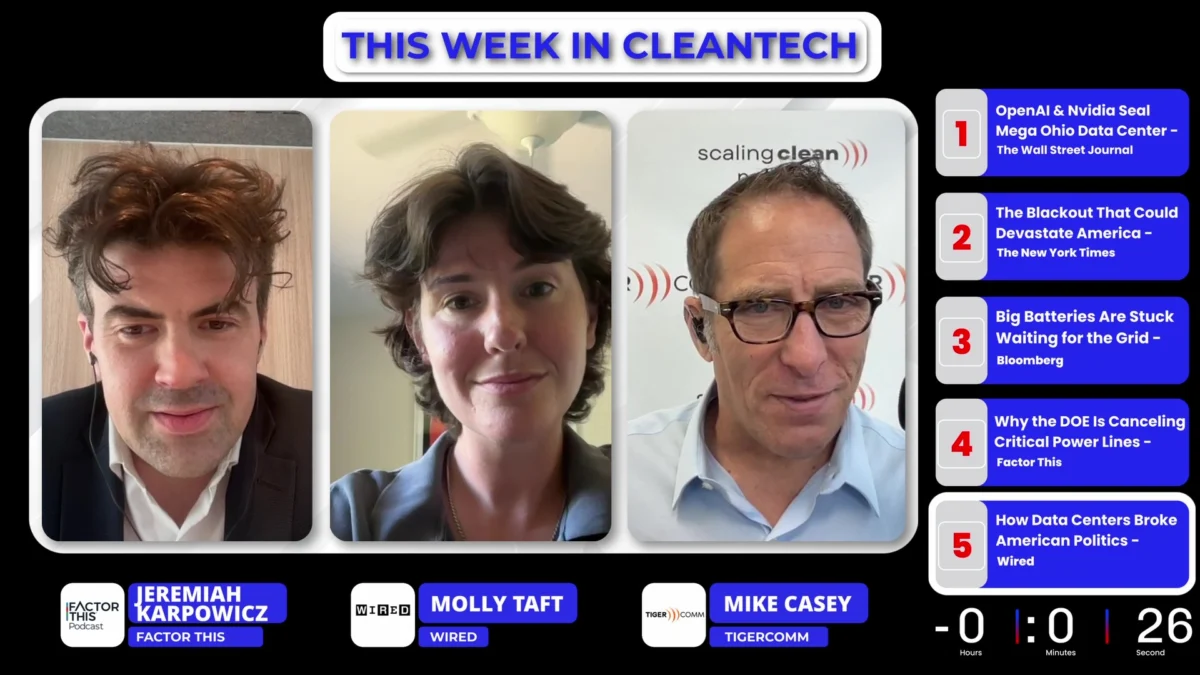
The rapid escalation of artificial intelligence development and the resulting demand for massive data processing facilities have reached a critical inflection point, forcing a fundamental reckoning with the physical limitations of the United States electrical grid. As tech giants like OpenAI and Nvidia commit hundreds of billions of dollars to infrastructure projects, they are encountering a domestic power system burdened by aging components, supply chain paralysis, and a growing wave of bipartisan political opposition. This convergence of high-tech ambition and industrial-age infrastructure has created a volatile landscape for the energy sector, characterized by record-breaking lease agreements on one hand and systemic vulnerabilities that threaten national security on the other.
The Ohio Mega-Project: OpenAI and Nvidia’s Multi-Billion Dollar Gamble
In a move that signals the unprecedented scale of the AI infrastructure race, OpenAI has finalized a 20-year lease for a 10-gigawatt data center complex in southern Ohio. The project, facilitated by SoftBank’s SB Energy, represents the largest single data center commitment in history. To put the 10-gigawatt figure in perspective, a single gigawatt is roughly equivalent to the output of a large nuclear power plant or 3.1 million photovoltaic panels; the Ohio facility, at full capacity, will require energy equivalent to the consumption of several mid-sized American states.
The financial architecture of the deal is as complex as its physical footprint. Nvidia Corporation has agreed to backstop the value of the completed facility for up to $105 billion. This guarantee serves as a critical de-risking mechanism, allowing SB Energy to secure the necessary loans for construction without lenders fearing the financial fallout should OpenAI’s market position shift over the two-decade term. This $105 billion commitment is a strategic pivot from earlier reports suggesting Nvidia was considering an all-encompassing $250 billion guarantee. That original proposal faced significant pushback from Wall Street investors, leading to a 5% drop in Nvidia’s stock price in late July 2024 due to concerns over excessive exposure.
Under the finalized terms, Nvidia has secured its position as the exclusive chip provider for the first half of the campus and has taken a $1.5 billion equity stake in SB Energy. This vertical integration—where the chip designer, the software developer, and the energy provider are financially tethered—reflects a new era of "sovereign AI" infrastructure where technology firms must behave like traditional utility developers to ensure their operational survival.
The Fragility of the National Grid: A Nine-Substation Threshold
While tech companies plan for massive expansion, federal modeling suggests the underlying infrastructure is more precarious than previously understood. Recent analysis by the Federal Energy Regulatory Commission (FERC) has identified a terrifyingly low threshold for systemic failure: the disabling of just nine critical substations nationwide could result in a total, country-wide blackout.
The primary vulnerability lies in Large Power Transformers (LPTs). These units, often the size of a small house, are responsible for stepping down high-voltage electricity from transmission lines for local distribution. Despite their importance, LPTs remain largely bespoke, hand-built machines. The United States currently manufactures only 20% of its required supply, leaving the nation dependent on a global supply chain that is currently stretched to its breaking point.
The timeline for procurement has reached a state of crisis. A decade ago, the average age of the U.S. transformer fleet was approximately 40 years—the typical end-of-life estimate for such equipment. Today, many of these units are operating well beyond their intended lifespan. Compounding this aging problem is the surge in demand; analysts predict that the combined pressure of replacing old units and powering new AI data centers could double the demand for LPTs by 2027. Currently, lead times for a single custom transformer can reach five years, with costs soaring to $14 million per unit. Experts warn that a coordinated physical or cyber-attack on these nodes could result in a recovery period measured in years, as the specialized rail cars required to move these multi-ton units are in extremely short supply across North America.
Innovation Amidst Scarcity: The Rise of Solid-State Solutions
In response to the steel shortages and manufacturing delays plaguing the transformer market, new technological entrants are attempting to disrupt the traditional hardware cycle. Drew Baglino, former Tesla executive and founder of Heron Power, was recently recognized as "Cleantecher of the Week" for his work in developing solid-state transformers.
Unlike traditional units that rely on grain-oriented electrical steel—a material currently seeing severe global shortages—Heron Power’s solid-state gear utilizes power electronics to manage voltage. This approach not only bypasses the steel bottleneck but also offers greater modularity and digital control. Heron Power recently closed a $140 million funding round to establish a domestic manufacturing facility capable of producing 40 gigawatts of equipment annually. This level of domestic production is seen as a vital component in reducing the 5-year wait times currently paralyzing grid upgrades.
The 750-Gigawatt Interconnection Logjam
The transition to a cleaner, more resilient grid is further stymied by a massive administrative and logistical bottleneck known as the interconnection queue. As of 2025, approximately 750 gigawatts of battery storage projects are stalled in various stages of the approval process. These batteries are essential for balancing the intermittent nature of renewable energy and providing the "instant-on" power required by data centers.
The median wait time for a project to move from application to commercial operation has ballooned from 1.5 years in 2015 to 5 years today. While regulatory hurdles play a role, the primary culprit is a lack of physical grid hardware. Utilities such as Pacific Gas and Electric (PG&E) have reported that even basic components like circuit breakers now require nearly four years for procurement. Without these components, utilities cannot perform the necessary grid reinforcements to allow new storage projects to "plug in" without risking local circuit overloads. This creates a paradoxical situation where the very technology needed to stabilize the grid cannot be deployed because the grid is too fragile to receive it.
Federal Policy Reorientation: Abandoning Transmission Corridors
The Department of Energy (DOE) has recently shifted its strategy regarding the expansion of the nation’s transmission backbone. In a controversial move, the DOE announced the cancellation of the review process for the final three proposed National Interest Electric Transmission Corridors (NIETCs). These corridors were intended to be designated geographic zones where the federal government could exercise enhanced permitting authority and provide low-interest loans to accelerate high-priority transmission lines.
The three canceled corridors would have spanned 3,500 miles, providing critical links between the Canadian power markets and the PJM interconnection (the largest grid operator in the U.S.), as well as expanding energy access for tribal nations. Secretary of Energy Chris Wright characterized the previous NIETC review process as "ineffective" at achieving its goals of reliability and cost reduction.
Instead of pursuing broad geographic corridors, the DOE is pivoting toward direct financial support for established utility incumbents. This includes multi-billion dollar loan packages:
- $1.6 billion and $3.3 billion to American Electric Power (AEP) and its subsidiaries.
- Over $26 billion in loan guarantees for Southern Company subsidiaries, including Georgia Power and Alabama Power.
This shift suggests a federal preference for "brownfield" expansion—upgrading existing utility assets—rather than "greenfield" projects that require navigating complex multi-state permitting and land-use battles.
The Sociopolitical Backlash: A New Cross-Partisan Opposition
As the physical and financial scale of data center development becomes more apparent to the public, a significant political movement has emerged to oppose their construction. What was once a localized "Not In My Backyard" (NIMBY) sentiment has evolved into a sophisticated, cross-partisan coalition.
According to a recent Gallup poll, 70% of Americans now express opposition to the construction of large-scale data centers in their immediate communities. This sentiment is fueled by concerns over massive water consumption for cooling, the noise generated by industrial-scale HVAC systems, and the perception that these facilities drive up local electricity rates while providing few long-term jobs.
This opposition is uniting traditionally disparate groups. Right-wing populists, concerned about energy sovereignty and land rights, are finding common ground with left-leaning environmentalists focused on the carbon footprint of AI and the preservation of rural landscapes. The digital footprint of this movement is expanding rapidly; membership in social media groups dedicated to opposing data center expansion grew from 100,000 in late 2023 to over 500,000 by mid-2024.
The political consequences are already manifesting:
- Legislative Moratoriums: Over a dozen states have introduced legislation to pause data center development, with New York successfully passing a moratorium on certain energy-intensive facilities.
- Local Volatility: In Indianapolis, a pro-development council member was targeted in a heated public campaign, and multiple states have seen arrests of protesters at construction sites.
- Tax Scrutiny: Many local governments are reconsidering the massive tax abatements previously used to lure big tech, questioning whether the strain on local infrastructure outweighs the economic benefits.
Analysis of Implications: A Future Defined by Constraints
The current state of the cleantech and energy sector reveals a profound tension between the virtual world and the physical world. The "infinite" scalability of AI software is meeting the "finite" reality of copper, steel, and community consent.
For the tech industry, the 10-gigawatt Ohio project represents a template for the future: massive, self-funded, and deeply integrated with hardware providers. However, this model may only be accessible to the wealthiest "hyperscalers" like OpenAI, Microsoft, and Google, potentially creating a tiered internet where only the largest players can afford the energy "entry fee."
For the utility sector, the 5-year lead times for transformers and circuit breakers represent a systemic risk. If the grid cannot be modernized at the pace of technological demand, the "nine-substation" vulnerability identified by FERC will only intensify as the system is pushed to its thermal and mechanical limits.
Ultimately, the path forward will likely require a combination of the "solid-state" innovations pioneered by firms like Heron Power and a more transparent dialogue between tech developers and the communities they inhabit. As the DOE moves away from national corridors toward direct utility funding, the burden of grid stability falls increasingly on private corporations and state-level regulators. The coming years will determine if the United States can rebuild its industrial backbone in time to support its digital future, or if the "blackout that could devastate America" remains a looming, unaddressed reality.
