

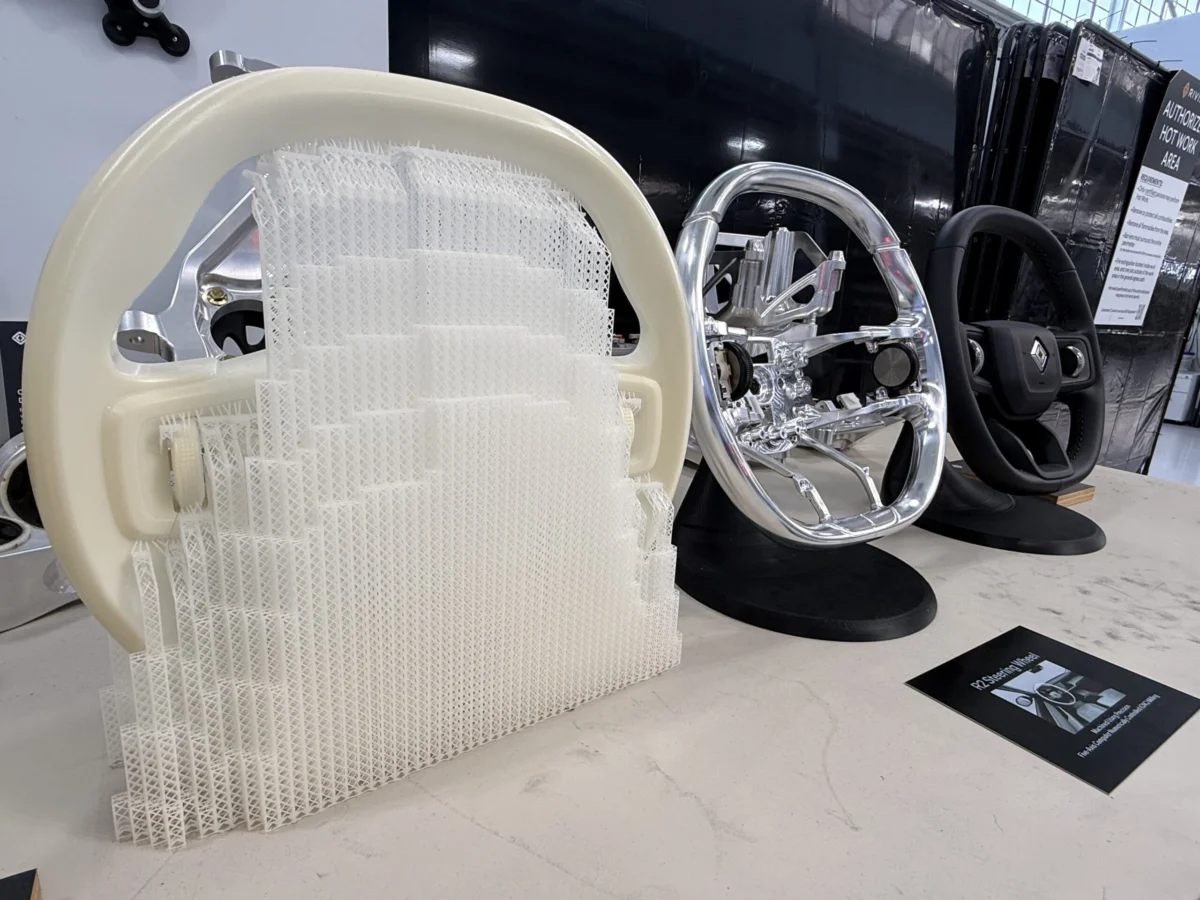
DETROIT – A quiet revolution is underway on the factory floors and design labs of the global automotive industry, as leading manufacturers, from established giants like Ford Motor and General Motors to innovative newcomers such as Rivian Automotive, are rapidly integrating three-dimensional printing into their core operations. This paradigm shift, leveraging technology that has matured significantly over the past decade, promises to redefine vehicle development, production efficiency, and supply chain resilience, fundamentally altering how cars are conceived, built, and maintained. Automakers are embracing additive manufacturing to drastically reduce costs, accelerate development cycles, and unlock unprecedented design flexibility across a spectrum of applications, from intricate vehicle components and specialized accessories to critical tooling for assembly lines and advanced testing units for research and development.
The strategic pivot towards widespread 3D printing is no longer an experimental venture but a commercial imperative. Jared Beck, head of Rivian’s additive manufacturing, articulated this necessity during a recent tour of the automaker’s expansive 3D-printing facilities in suburban Detroit. "At this point, we don’t have a choice but to scale up and begin using it through all factions of Rivian," Beck stated, underscoring the irreversible trend. He added, "We’re going to be democratizing 3D printing for the entire company," signaling a commitment to integrate the technology into every conceivable aspect of their operations.
The Transformative Benefits of Additive Manufacturing
Also known as additive manufacturing, 3D printing constructs three-dimensional objects by depositing material layer by layer, directly from digital designs. Unlike conventional subtractive manufacturing methods that remove material from a larger block, additive processes build up an object, minimizing waste and enabling geometries previously impossible to achieve. The machines utilize a diverse array of materials, including various plastics, advanced composites, ceramics, and an increasing range of metals, transforming digital blueprints into tangible components.
The spectrum of 3D printing equipment is vast, ranging from accessible hobbyist devices costing a few hundred dollars to highly sophisticated industrial systems commanding hundreds of thousands, if not millions, of dollars. The choice of machine depends on factors such as the required precision, the size of the object, and the specific material properties. These advanced printers can produce single, highly customized pieces or generate hundreds of smaller parts in a single batch, often utilizing powdered materials or liquid resins.
Rivian, for instance, has already invested over $5 million in its 3D-printing infrastructure, with annual material costs for these operations now approximating $1.7 million. Despite these substantial outlays, Beck asserts that the machines typically achieve a return on investment within a single year. The technology’s financial advantages are multifaceted: it significantly lowers supplier tooling costs, streamlines complex logistics, and dramatically compresses production times for parts, shifting lead times from weeks down to days, or even mere hours. "It’s well in the millions [for savings], but the main thing is speed for Rivian," Beck emphasized, highlighting the critical role of agility in today’s fast-paced automotive development cycles.
Rivian’s latest expansion of its additive manufacturing capabilities includes the integration of new machines capable of building flexible silicone parts, opening doors for innovative applications in interior components and seals. Furthermore, the company is installing dedicated 3D printing bays at its Normal, Illinois plant, empowering employees to print parts on demand, fostering a culture of immediate problem-solving and rapid iteration. "3D prints should be readily available for every engineer so that they can make a part and get it in their hands as soon as possible," Beck articulated, advocating for pervasive accessibility to the technology. Beyond prototyping and tooling, Rivian has successfully employed 3D printing for electric-motor models used in fluid testing, creating precise screw guides for tooling, stamping press inserts, and even some production-ready trim pieces designed to fill gaps in early vehicle builds.
A Historical Perspective: From Prototypes to Production
The roots of 3D printing trace back to the early 1980s, with the invention of stereolithography (SLA) by Charles Hull in 1984. Initially dubbed "rapid prototyping," the technology primarily served to create quick models and prototypes for design validation. Its adoption in the automotive sector began cautiously in the late 20th century, largely confined to concept development and ergonomic studies, allowing designers and engineers to physically interact with their digital creations much earlier in the design process.
Over the past two decades, significant advancements in materials science, printer resolution, speed, and cost-effectiveness have transformed 3D printing from a niche prototyping tool into a viable method for producing functional parts. The automotive industry, characterized by complex designs, diverse material requirements, and stringent performance standards, has been a key driver and beneficiary of these innovations. The market for additive manufacturing in automotive has shown robust growth, with industry reports projecting continued expansion. For instance, the global automotive 3D printing market size was valued at approximately USD 2.3 billion in 2022 and is projected to grow at a compound annual growth rate (CAGR) exceeding 20% over the next several years, indicating its increasing strategic importance.
Established Automakers Double Down on Additive Manufacturing

The momentum in additive manufacturing is equally strong, if not more expansive, at legacy automakers like Ford and General Motors, which have utilized 3D printing for many years, integrating it into their massive assembly plants and global engineering networks. These companies, with their vast production scales and intricate supply chains, leverage the technology to optimize efficiency and maintain operational continuity.
Ford, for example, rather than concentrating all 3D printing resources in a single location like Rivian, has established dedicated additive manufacturing departments across many of its plants. These decentralized hubs are tasked with producing and distributing needed parts directly at the point of use. A notable innovation in this strategy is the implementation of a vending machine for 3D-printed parts near the production line for its F-150 pickup trucks, located close to its Dearborn, Michigan headquarters.
Gregory Foresi, a Ford mechanical engineer who managed the 3D-printing lab at the River Rouge plant from 2024 until recently, elucidated the impact of this decentralized approach. "By putting the vending machine up, all the team leaders have access," Foresi explained. "We’re able to keep that thing stocked rather than have a bunch of parts laying around in the lab. So that’s been pretty huge." Foresi’s lab, equipped with roughly two dozen machines, has been instrumental in printing thousands of tools, many of which are custom-designed by employees to solve specific production challenges. These include bespoke torque bit sockets, hood jackers, and specialized hand tools for smoothing adhesives, demonstrating the technology’s capacity for highly tailored solutions.
Ford employees can leverage a dedicated app to request specific auto parts or tools for printing. The company’s 3D-printing teams then assist in developing these solutions or prioritize production based on need, with machining times for different parts ranging from hours to days, or even weeks for more complex components. Foresi highlighted that creating these tools via 3D printing enables unique designs, faster procurement, and often significantly lower costs compared to traditional manufacturing methods. The technology has also proven invaluable for maintaining production continuity. Foresi recounted an instance where a critical machining wheel was needed to keep an assembly line running; Ford was able to 3D print a temporary part until a permanent replacement from a supplier became available. While acknowledging that the temporary prints "didn’t perform as well, and it’s not really a replacement for the ones that we were purchasing," he affirmed that "they kept the plant running," underscoring the technology’s role in mitigating downtime.
Ford anticipates deploying 3D printing labs at more than 23 plants globally by the end of this year. The company’s official 3D-printing program currently encompasses over 200 machines, with additional printers operating outside the formal program, reflecting a broad and deep integration across its manufacturing ecosystem.
General Motors, Ford’s crosstown rival, has similarly expanded its engagement with 3D printing. While long utilizing the technology for research and development and within its plants, GM has recently scaled up its use for low-volume production vehicles and specialized components. This includes an expansion of industrial Stratasys printers, which can cost hundreds of thousands of dollars depending on the specific use case, required training, and certification. For its bespoke Cadillac Celestiq, a highly customizable electric vehicle with a starting price around $300,000, GM employs 135 3D-printed components. The technology also contributes to its performance Cadillac Blackwing sedans, including a unique medallion on the manual shifter knob, showcasing its ability to deliver premium, intricate details.
Fadi Abro, senior global director of automotive and mobility at Stratasys, a leading 3D-printing company, praised GM as an exemplary case study in how companies can "standardize and then scale" 3D printing. Abro noted that "the material properties improved so significantly that the use cases improved," indicating a pivotal maturation of the technology. He added that Stratasys collaborates with virtually every major automaker, emphasizing the industry-wide trend. "From a product perspective, we have to get the technology to become faster and more accessible, in an economic sense," Abro stated, pointing to ongoing efforts to enhance the speed and cost-effectiveness of additive manufacturing solutions.
Broader Implications: Supply Chain, Customization, and Sustainability
The widespread adoption of 3D printing carries significant implications that extend beyond immediate cost savings and speed enhancements.
- Supply Chain Resilience: The ability to print parts on demand, locally, and rapidly offers a powerful buffer against supply chain disruptions, which have plagued the automotive industry in recent years. This localized production capability reduces reliance on distant suppliers and complex logistics networks, minimizing lead times and transportation costs.
- Design Freedom and Customization: Additive manufacturing liberates designers from the constraints of traditional manufacturing methods. It enables the creation of highly complex geometries, lattice structures, and organic shapes that can significantly reduce part weight (improving fuel efficiency or EV range) and consolidate multiple components into a single printed part, thereby simplifying assembly and reducing potential failure points. This design freedom also opens new avenues for vehicle personalization and customization, particularly for niche models or premium offerings.
- Reduced Waste and Sustainability: By building objects layer by layer, 3D printing inherently produces less material waste compared to subtractive methods. Furthermore, the potential for lighter vehicle components contributes to better energy efficiency throughout a vehicle’s lifespan. On-demand production of spare parts can also reduce inventory waste, while localized manufacturing decreases the carbon footprint associated with global shipping.
- Accelerated Innovation: The rapid prototyping capabilities of 3D printing dramatically shorten product development cycles. Engineers can quickly test and iterate on designs, moving from concept to functional prototype in days rather than weeks or months, fostering a culture of continuous innovation.
Challenges and the Road Ahead
Despite its transformative potential, 3D printing in the automotive sector still faces challenges. Scaling the technology for true mass production remains an area of active development; while excellent for low-volume parts, tooling, and prototypes, it generally cannot match the speed and cost-efficiency of traditional methods like injection molding or stamping for millions of identical parts. Material limitations, though rapidly improving, still exist for certain high-stress or extreme-environment applications. The need for post-processing (cleaning, curing, surface finishing) for many printed parts adds steps to the manufacturing workflow. Furthermore, regulatory hurdles and certification processes for safety-critical 3D-printed components are complex and require rigorous testing and standardization.
Looking ahead, the trajectory for 3D printing in the automotive industry is one of continued growth and integration. As materials become stronger, printers become faster and more affordable, and processes become more automated, additive manufacturing is poised to play an even more central role. Experts anticipate further advancements in multi-material printing, intelligent software for design optimization, and integrated post-processing solutions. The vision of a truly "digital factory," where parts are designed, optimized, and printed on demand with minimal human intervention, is steadily moving closer to reality. The automotive industry’s enthusiastic embrace of 3D printing is not merely a technological upgrade; it represents a fundamental rethinking of manufacturing, promising a future of more agile, efficient, and innovative vehicle production.
