

The global cruise industry, a robust sector known for its resilience and capacity for growth, has recently demonstrated remarkable financial strength. Leading operators Carnival Corporation, Royal Caribbean Group, and Norwegian Cruise Line Holdings have all posted strong earnings for their most recent quarters, defying the headwinds of significantly rising fuel prices. This impressive performance highlights a critical strategic divergence among these giants in how they confront one of their most substantial operating expenses: bunker fuel. While some opt for financial instruments to cushion price shocks, others are doubling down on operational efficiencies to simply use less fuel.
The surge in global energy prices has been a dominant theme in recent economic cycles, with Brent crude oil, a key international benchmark, reaching multi-month highs, settling above $115 per barrel in recent trading periods. This upward trajectory is largely attributed to escalating geopolitical tensions in the Middle East and ongoing supply concerns that have cast a shadow of uncertainty over global energy markets. With no immediate resolution to these complex geopolitical dynamics, the pressure on the "lifeblood" of the cruise industry—its fuel supply—appears poised to persist, potentially extending into the crucial holiday travel season and beyond. This prolonged volatility underscores the strategic urgency for cruise lines to implement effective cost mitigation measures.
The Hedging Gambit: Royal Caribbean and Norwegian’s Approach
For Royal Caribbean Group and Norwegian Cruise Line Holdings, the primary defense against volatile fuel costs is "hedging." This sophisticated financial strategy involves using derivative instruments, such as futures contracts, options, and swaps, to lock in future fuel prices or to limit exposure to adverse price movements. By entering into these agreements, companies aim to reduce the uncertainty associated with fluctuating energy markets, effectively creating a financial buffer against sudden price spikes.
The rationale behind hedging extends beyond merely managing operational costs; it also plays a crucial role in managing investor expectations on Wall Street. As Jefferies analyst David Katz articulated in a recent interview, public companies often hedge not just to control direct fuel expenses but also to stabilize their stock performance. "When you’re public, the Street will trade your stock around based on the price of fuel," Katz explained. "The Street’s argument is that volatility puts pressure on your multiple." By reducing earnings volatility tied to fuel prices, hedging can make a company’s financial outlook more predictable, which in turn can foster greater investor confidence and potentially lead to a higher valuation multiple for its stock.
While Katz acknowledged that, "mathematically it is most likely true that over the long term it is more expensive" to hedge due to the costs associated with derivative contracts and potential missed opportunities when prices fall, he emphasized the strategic benefit: "The benefit of having less fuel volatility in the model and less trading volatility is [it’s] good for your multiple." This perspective underscores that the value of hedging often lies in its ability to manage risk and perception, rather than simply achieving the lowest possible average fuel cost over time.
Royal Caribbean, in its most recent quarterly report, highlighted its proactive stance, with CEO Jason Liberty confirming the company was "a little bit over 60% hedged here for 2026," referring to its anticipated fuel consumption for the upcoming fiscal year. This significant hedging position, Liberty stated, is "helping insulate us from some of the impacts on the rising fuel costs." Despite this insulation, he acknowledged that the surge in prices was still impactful, noting it "evaporated a good chunk of our Q3 earnings beat into the full-year guide." This illustrates that while hedging mitigates risk, it doesn’t entirely eliminate the financial pressure from extreme market movements.
Norwegian Cruise Line Holdings has adopted a similar strategy, reporting that it had hedged approximately 48% of its projected fuel consumption for 2026. This balanced approach allows Norwegian to benefit from some price stability while retaining exposure to potential downside in fuel costs. For both Royal Caribbean and Norwegian, hedging is a cornerstone of their financial risk management, providing a layer of predictability in an otherwise unpredictable global energy landscape.
Carnival’s Consumption Crusade: A Different Path
In stark contrast to its peers, Carnival Corporation has steadfastly maintained a different philosophy regarding fuel cost management. Since 2019, under the leadership of CEO Josh Weinstein, Carnival has championed an aggressive, "maniacal" focus on cutting fuel consumption rather than relying on hedging. Weinstein articulated this strategy plainly in a recent CNBC interview: "At the end of the day, fuel is an input cost for us. The best thing that we can do to control that cost is to use less."
This approach aligns with a broader industry trend towards sustainability and operational efficiency, but Carnival has made it its central pillar for managing energy costs. The company’s third-quarter earnings report last month provided compelling evidence that this strategy is indeed paying off. Carnival not only beat analysts’ expectations on both the top and bottom lines but also reported an all-time high net income of $1.9 billion.
Weinstein further elaborated on "Squawk on the Street" that Carnival has slashed its unit fuel consumption rate by an impressive 26% since 2019. This substantial reduction has translated into significant cost savings, with Weinstein estimating approximately $700 million saved in 2026 alone based on this sustained improvement in consumption efficiency. The initiatives driving these savings are multifaceted, encompassing fleet modernization with more fuel-efficient ships, optimization of itineraries to reduce sailing distances and speeds, enhanced hull coatings to minimize drag, and advanced energy management systems onboard.
Despite these efficiency gains, the sheer magnitude of the fuel price increase is undeniable. Carnival spent $615 million on fuel in the third quarter, representing about 7.3% of its total revenue. This marks an increase from the $425 million, or 6.7% of revenue, spent in the fourth quarter of 2025, before the most recent spike in fuel prices. Looking ahead, Carnival projects its fuel costs to rise further to $640 million in the fourth quarter, underscoring that even with stringent consumption controls, the absolute cost remains substantial. However, the critical metric is the rate of consumption relative to passenger capacity, which Carnival has demonstrably improved.
Financial Performance Under Pressure: A Deeper Dive
The recent earnings reports offer a granular view of how these strategies are translating into financial outcomes for each cruise line.
Carnival Corporation:
Carnival’s third-quarter results were a strong affirmation of its consumption-focused strategy. The company reported record net income, signaling robust demand and effective cost management despite the absence of hedging. Its $615 million fuel spend in Q3, while higher in absolute terms than Q4 2025, represented a slightly larger percentage of revenue (7.3% vs. 6.7%), indicating that even with efficiency, rising prices exert pressure. The projected $640 million fuel cost for Q4 suggests continued vigilance will be required. The company’s ability to achieve an all-time high net income demonstrates that strong demand and operational discipline can effectively counteract rising input costs, especially when those input costs are mitigated through efficiency.
Royal Caribbean Group:
Royal Caribbean’s third-quarter performance also saw it surpass analyst expectations for earnings per share, though it narrowly missed on revenue. Its hedging strategy was explicitly cited by CEO Jason Liberty as a key factor in mitigating the impact of rising fuel costs. The company spent approximately $347 million on fuel in Q3, accounting for about 6.2% of its revenue. This is a lower percentage than Carnival’s, possibly reflecting the benefit of hedging, compared to $293 million (6.8% of revenue) in Q4 2025. Royal Caribbean projects a further increase to $379 million in fuel costs for Q4. Despite these challenges, Liberty emphasized the enduring strength of consumer demand, stating, "It’s not that we don’t see points of challenges, but really what we’ve seen is that even in those points of challenges, the consumer comes roaring back." This robust demand is evident in strong Q3 bookings and high-teens percentage increases for 2027 reservations, suggesting the ability to pass on some costs.
Norwegian Cruise Line Holdings:
Norwegian Cruise Line Holdings also delivered strong results for its third quarter, beating both top and bottom-line estimates with $2.9 billion in revenue and adjusted earnings per share of $1.12. Its hedging strategy, covering roughly 48% of 2026 consumption, provides a degree of protection. Norwegian’s Q3 fuel spend was around $196 million, representing 6.6% of its revenue. This is a lower share of revenue than the 7.4% ($167 million) spent in Q4 2025, indicating that while absolute costs are up, the efficiency or hedging benefits are helping manage the percentage impact on revenue. The company projects a slight increase in fuel consumption for Q4, from 239,000 metric tons in Q3 to 255,000 metric tons. CFO Mark Kempa, amidst the company’s turnaround efforts and macro-environmental challenges, expressed confidence in the results: "These results reinforce our confidence in the appeal of our products and the opportunity to translate stronger revenue performance and disciplined cost management into improved profitability."
Broader Implications and Future Outlook
The contrasting strategies employed by these cruise giants highlight a fundamental debate in corporate finance: whether to manage commodity price risk primarily through financial engineering (hedging) or through direct operational control (consumption reduction). Both approaches have demonstrated their merits in the current environment, allowing the companies to deliver strong earnings despite significant external pressures.
Market Perception and Investor Confidence:
For investors, the transparency and predictability offered by hedging can be attractive, as it smooths out earnings volatility. However, Carnival’s success demonstrates that a clear, consistently executed operational efficiency strategy can also instill confidence, particularly when it yields tangible, measurable savings. The long-term implications for stock multiples and investor appetite will likely depend on which strategy proves more sustainable and adaptable in a continuously evolving energy market.
Consumer Demand and Pricing Power:
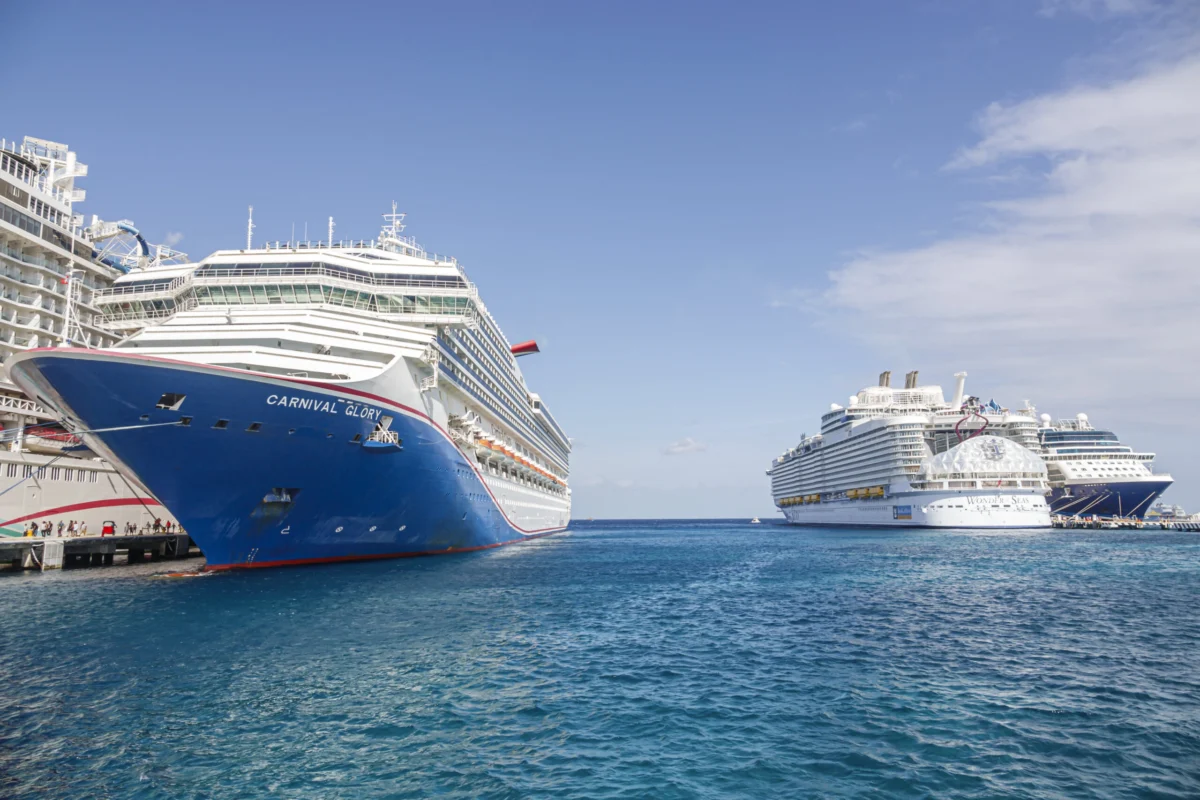
A crucial takeaway from the recent earnings calls is the remarkable resilience of consumer demand for cruise vacations. Despite rising costs that could theoretically translate into higher ticket prices, all three companies reported strong bookings. This suggests that the value proposition of cruising remains compelling, and consumers are willing to absorb some price adjustments. This pricing power is vital for the industry’s ability to offset rising input costs, including fuel. The image of "Docked and arriving cruise ships in Cozumel, Mexico" visually reinforces this vibrant demand, with vessels continually bringing tourists to popular destinations, underscoring the ongoing operational requirements and thus the continuous demand for fuel.
Environmental Stewardship and Sustainability:
Carnival’s emphasis on reducing fuel consumption also carries significant environmental benefits, aligning with growing pressures for industries to decarbonize. By using less fuel, companies inherently reduce their carbon footprint and emissions, contributing to global sustainability goals. This dual benefit—cost savings and environmental responsibility—could give consumption-focused strategies an edge in the long run, especially as regulatory frameworks for emissions become stricter and consumer preference shifts towards more sustainable travel options. Royal Caribbean and Norwegian are also investing in cleaner fuels and technologies, but their primary immediate response to price volatility is financial hedging.
Technological Advancements and Long-Term Solutions:
The debate between hedging and consumption reduction is not mutually exclusive, and in the long term, all cruise lines are exploring more fundamental shifts. This includes investments in LNG-powered ships, shore power connections, and potentially future alternative fuels like methanol or hydrogen. These technological advancements aim to reduce both fuel consumption and reliance on traditional bunker fuel, offering a more permanent solution to both cost volatility and environmental impact. However, the transition to these cleaner technologies is capital-intensive and will take many years, making current strategies for managing conventional fuel costs critically important in the interim.
In conclusion, the cruise industry’s ability to navigate surging fuel prices while posting robust earnings underscores its inherent adaptability and strong consumer appeal. Whether through sophisticated financial hedging or rigorous operational efficiency, these companies are demonstrating diverse yet effective approaches to mitigate a major operational challenge. As global energy markets remain volatile and geopolitical tensions simmer, the strategic choices made by Carnival, Royal Caribbean, and Norwegian will continue to shape their profitability, competitive standing, and long-term sustainability in the dynamic world of leisure travel.
