

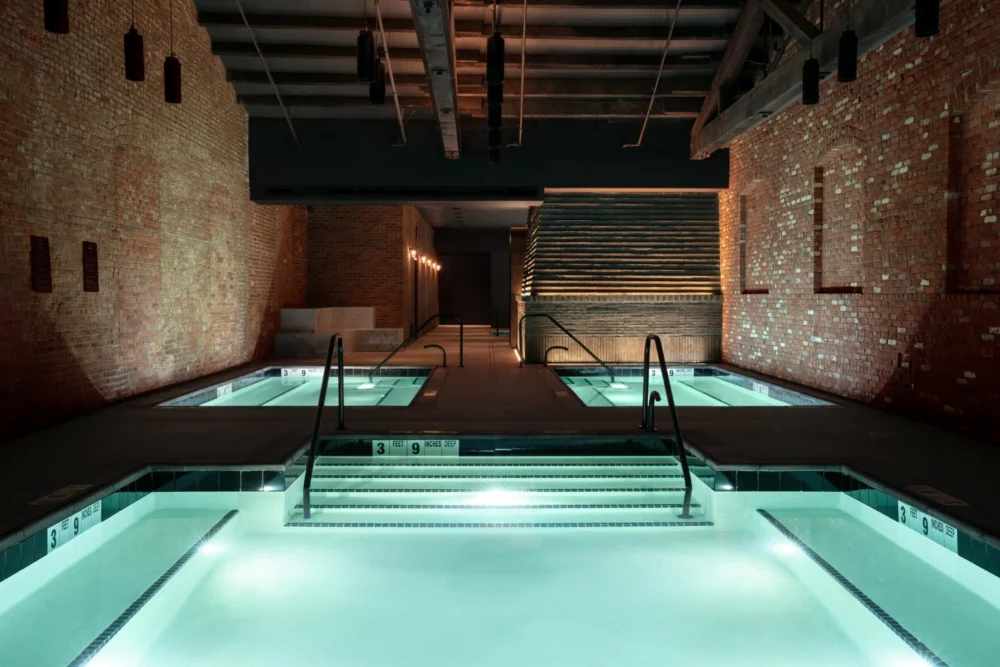
In a significant societal shift, a burgeoning trend of wellness-oriented "third spaces" is rapidly gaining prominence, offering individuals alternatives to traditional social venues and addressing a widespread yearning for genuine connection and holistic well-being. These establishments, distinct from home (first place) and work (second place), are increasingly becoming hubs for health-conscious communities, driven by a post-pandemic re-evaluation of lifestyle priorities and a growing awareness of the pervasive issue of loneliness in an increasingly digital world. This phenomenon is not only redefining social interaction but also creating a vibrant and lucrative segment within the global wellness industry.
The impetus behind this movement is vividly illustrated by individuals like Grace Guo, a 31-year-old New Yorker who, a few years ago, sought social environments that didn’t revolve around alcohol. Newly sober and surrounded by friends with similar lifestyle choices, Guo discovered spaces like Bathhouse and Othership – social wellness clubs designed to foster community around health improvement. "Honestly, it kind of just feels like going to a spa together and spending an afternoon together. I think for me, it just feels much better rather than staying out late at night," Guo shared with CNBC, articulating a sentiment echoed by a growing demographic. Her search for "third spaces" with a focus on health, wellness, and peacefulness underscores a broader cultural pivot towards mindful living and authentic communal engagement.
The Commercial Boom in Conscious Connection
The demand for these intentional gathering places has translated into significant commercial success. Bathhouse, which launched in Brooklyn, New York, in 2019, has seen remarkable growth, projecting an impressive $120 million in run rate revenue by the close of the current year, as exclusively disclosed to CNBC. While specific financials for Othership remain private, their rapid expansion points to a similar trajectory. This financial vitality extends beyond new entrants; established players are also capitalizing on the trend. Life Time, a publicly traded gym chain, strategically reallocated resources towards premium wellness several years ago. Initially met with investor skepticism, this pivot has proven prescient, with Life Time’s stock more than doubling since October 2023, signaling market validation for integrated wellness offerings.
Companies, both nascent and established, are actively tailoring their services to meet the evolving desires of consumers like Guo. She notes an increased focus on health, wellness, and peacefulness within her social circle, driving her search for communities where she can "plug into a community, or where can I go to express a particular interest that I have and find like-minded people?" For Guo, the appeal of places like Othership, with its saunas, cold plunges, and structured evening slots, lies in its capacity to "shock us out of our routine and complacency," overcoming the inertia often associated with pursuing new interests or social connections.
Revisiting Ray Oldenburg’s "Third Place" Concept
The concept of a "third space" is not a contemporary invention. It was first articulated by sociologist Ray Oldenburg in his seminal 1989 book, "The Great Good Place." Oldenburg defined third places as public spaces separate from the primary environments of home (the first place) and work (the second place), where individuals can gather informally, build relationships, and foster a sense of community. Historically, these encompassed diverse locales such as neighborhood coffee shops, barbershops, libraries, and even local pubs, characterized by their accessibility, neutrality, and role in nurturing civic life and social interaction among people from varied backgrounds.
However, the definition and criticality of third spaces have undergone a significant evolution over the past few years. Richard Kyte, a professor at Viterbo University in Wisconsin and author of "Finding Your Third Place," observes that while he has taught courses on third places for nearly two decades, the term only entered mainstream discourse recently. This turning point, Kyte suggests, largely coincided with the onset of the COVID-19 pandemic. The global lockdowns and subsequent redefinition of social interaction forced a collective reckoning with the profound costs of loneliness and social isolation. "It really came home to us during the pandemic that this was not healthy," Kyte told CNBC, highlighting how the closure of many traditional third spaces during this period simultaneously spurred a renewed interest in their necessity.
The Epidemic of Loneliness in a Digital Age
The heightened awareness of social isolation has been compounded by an increasingly digital-first society. Despite the proliferation of social media platforms, artificial intelligence, and chatbots, younger generations, in particular, are finding that digital connections often fall short of fulfilling their innate human need for genuine, in-person interaction. "We’ve got all of this huge investment in technology that increases the ease and desirability of being independent," Kyte noted, pointing out the paradox where technology, while connecting, can also isolate by reducing the impetus for face-to-face engagement.
Statistical data starkly underscores the depth of this loneliness crisis. Cigna’s 2025 "Loneliness in America" report indicates that a staggering 67% of Gen Zers and 65% of millennials report feeling lonely. Further reinforcing this trend, a 2024 Harvard survey revealed that 67% of adults experience social and emotional loneliness due to a lack of meaningful group affiliations. This pervasive sense of disconnection creates a fertile ground for the emergence of spaces specifically designed to foster belonging.

Harry Taylor, co-founder of Othership, along with his wife and friends, conceived their venture precisely to merge the burgeoning wellness trend with a direct antidote to this isolation. "We understand that there’s a huge market for people to meet other people. Loneliness is an epidemic right now," Taylor affirmed to CNBC. He added, "We realized, just through doing this, it has the capacity for people to come together and just be themselves, be vulnerable." This vision highlights the crucial role these new third spaces play in addressing a pressing public health concern.
Wellness as the "New Luxury" and a Catalyst for Connection
The evolution of third spaces now frequently incorporates specific purposes, often justifying the membership fees that can range from modest drop-in rates to several thousands of dollars per month for exclusive clubs. Wellness, in particular, has emerged as a dominant theme, transforming into a coveted commodity. The global wellness market, encompassing everything from fitness and nutrition to mental well-being and beauty, is projected to reach nearly $10 trillion by 2030, according to estimates from the Global Wellness Institute. This expansive growth underscores a fundamental shift in consumer values, where health is increasingly perceived not merely as an absence of illness, but as a holistic state of being, a pursuit, and indeed, a luxury. Harvey Spevak, chairman of Equinox, recently articulated this sentiment to CNBC, stating that "health is the new luxury." This perspective frames wellness as a premium experience, akin to high-end travel or fine dining, and one that consumers are willing to invest in.
Bathhouse, for instance, draws inspiration from the ancient European bathhouse legacy, offering a sophisticated wellness experience across its approximately 90,000 square feet of facilities in New York City. With amenities like saunas and cold plunges, available for both guided and unguided sessions starting at $40 for a drop-in, the company’s two New York locations collectively serve around 1,000 customers daily. Co-founder Travis Talmadge explained their motivation: "It was really apparent that there was no bathhouse-like concept that was really oriented towards a modern consumer, especially not in America." Talmadge emphasized their focus on creating a deeply human experience, blending physical well-being with communal engagement. "Our spaces are really large scale, so one of the nice things is that everybody kind of feels like a background actor on set, where there’s just so many people moving around," he described. "You can have this really personal time, either by yourself or with somebody else, but then you’re in this environment with a lot of people doing the same thing." This model has proven highly successful, with Talmadge reporting a "surplus of demand" and "very healthy margins," fueling plans to open seven additional locations by 2027.
Othership, with locations in New York and Canada and further expansion planned, also embodies this wellness-centric approach. It integrates practices from diverse cultures to address physical, mental, emotional, and spiritual well-being. Members can opt for free-flow sessions, allowing for self-directed use of the space; structured classes that alternate between saunas and cold plunges with group-led activities; or "socials" that mimic the vibrant atmosphere of clubs but without alcohol, emphasizing presence and genuine interaction. Co-founder Harry Taylor recounts numerous instances of customers forming new friendships, celebrating life milestones, and finding a profound sense of belonging while simultaneously prioritizing their health. The deliberate creation of alcohol-free environments was a core tenet of Othership’s vision, aiming to provide spaces for live comedy, music, and other cultural events traditionally associated with alcohol consumption, but in a health-conscious setting. Taylor highlights the stark contrast between digital and in-person connection: "There’s so much social media, which gives us the false perception that there’s social engagement and interaction, but so many of us have experienced when we’re doomscrolling, it almost even does the opposite. There’s a void in the wake of that social satiation that we all require as humans, so it’s that coming together and just being so real with one another that really creates a deep sense of belonging."
Beyond Traditional Wellness: Skincare and Shared Experiences
The formation of wellness communities extends beyond saunas and cold plunges, manifesting in diverse forms. Glo30, a membership studio founded 13 years ago, operates locations across the country, offering personalized skincare treatments. Its innovative approach to community building involves scheduling appointments on the hour, fostering organic social connection among members who share common experiences. Arleen Lamba, Glo30’s founder and CEO, explains, "Community building is a lot about not just getting the results and [feeling] good, but also being able to have a commonality on their experiences and share what they feel." Lamba observes that "as people come into the studio, people are also leaving the studio, and we recognize that they recognize each other, they would actually make new friends." She notes a particular surge in social groups forming in treatment rooms post-pandemic, indicating a heightened craving for intimate, yet not overwhelming, social interaction. Glo30’s growth reflects this demand, with its franchise units in development increasing by 67.5% in the past two years.
While urban centers like New York and Los Angeles have spearheaded the wellness club boom, Glo30’s widespread presence across states like Texas, Arizona, and North Carolina demonstrates the national scope of this desire for connection. Lamba emphasizes that these spaces attract a wide demographic, from families and couples to groups of friends, all seeking a place where they feel seen and appreciated. "The third space is interesting because it creates a true connection," she asserts. "We get to be witness to someone’s life – their highs, their lows, their middles – and we are the constant, and that, to me, is what the third space is about: No matter what kind of day you had out there, good or bad or medium, this space belongs to you. And when you come to this space, people will know you, see you, appreciate you and be glad you’re there."
Broader Implications and the Future of Community
The proliferation of "third spaces" transcends the wellness sector, encompassing exclusive restaurant memberships, specialized gyms, creative studios, and various social clubs. This broader trend reflects a fundamental shift in consumer behavior and societal values, where individuals are actively seeking environments that facilitate genuine human connection, personal growth, and a sense of belonging outside the confines of their homes and workplaces. The economic implications are significant, creating new business models, driving investment in experiential services, and further segmenting the leisure and hospitality markets.
Societally, these spaces offer a vital antidote to the modern epidemic of loneliness, fostering mental well-being and social cohesion. They represent a conscious effort to reclaim communal spaces in an age often characterized by isolation and digital detachment. While accessibility and cost remain important considerations, the underlying demand for these intentional gathering places is undeniable. As the global wellness economy continues its robust expansion, and as individuals increasingly prioritize holistic health and authentic connection, the role of these innovative "third spaces" is poised to grow even more critical, fundamentally reshaping how communities are built and sustained in the 21st century.
