

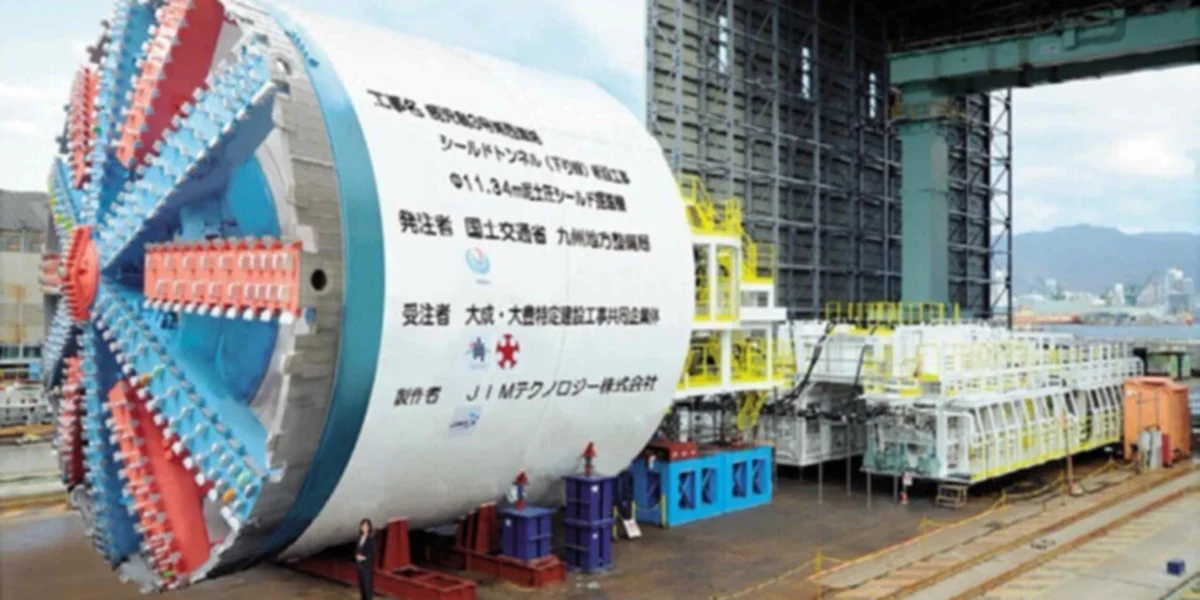
TOKYO – In a significant stride towards addressing Japan’s persistent labor shortages and enhancing construction efficiency, Japanese general contractor Taisei has announced the successful demonstration of autonomous operation for a colossal tunnel-boring machine (TBM) powered by artificial intelligence. This groundbreaking achievement saw the AI-driven excavator not only match but demonstrably surpass the precision of seasoned human operators in complex tunneling tasks. The development marks a pivotal moment for the construction industry, signaling a future where advanced robotics and AI play an increasingly integral role in large-scale infrastructure projects.

The Challenge of Precision and Labor in Construction
The construction sector, particularly in Japan, has long grappled with a dual challenge: an aging workforce and a dwindling supply of skilled labor, coupled with the inherent demand for extreme precision in infrastructure development. Tunneling, a critical component of urban development and transportation networks, exemplifies these challenges. The subterranean environment presents inherent risks, and the accuracy required to maintain structural integrity, avoid geological hazards, and ensure public safety is paramount. Traditionally, this level of precision has relied heavily on the experience and nuanced judgment of human operators, who possess years of accumulated knowledge and the ability to adapt to unforeseen subterranean conditions. However, as experienced workers retire and fewer young individuals enter the trades, the capacity to undertake these vital projects is increasingly strained.
Taisei’s initiative to develop an AI-powered autonomous TBM directly confronts this critical juncture. The company has invested considerable resources and expertise in developing algorithms and sensor technologies capable of replicating and even augmenting human capabilities. The success of this demonstration is not merely a technological feat; it represents a strategic response to an urgent societal and economic need.

Genesis and Development of the AI Tunneling System
The journey towards this autonomous TBM began several years ago, as Taisei, like many in the industry, recognized the long-term implications of demographic shifts. Early research and development focused on understanding the complex decision-making processes of TBM operators. This involved extensive data collection from real-world tunneling operations, including geological surveys, machine performance metrics, operator input, and environmental readings.
A key phase in the development involved creating sophisticated AI models, primarily leveraging deep learning and reinforcement learning techniques. These models were trained on vast datasets to learn the intricate relationships between various parameters – such as rock density, soil composition, ground pressure, and the TBM’s operational settings (e.g., rotation speed, thrust force, water pressure). The objective was to enable the AI to predict potential issues, optimize drilling parameters in real-time, and execute maneuvers with a level of consistency and accuracy that can be difficult to maintain for extended periods by human operators.

The hardware integration was equally crucial. The TBM itself was retrofitted with an array of advanced sensors, including lidar, ultrasonic sensors, high-definition cameras, and seismic monitors. These sensors provide the AI with a continuous, comprehensive understanding of the surrounding environment and the TBM’s interaction with it. Sophisticated actuators and control systems translate the AI’s decisions into precise physical actions, allowing for minute adjustments to the machine’s operation.
The Demonstration: A Benchmark in Precision
The recent demonstration, details of which were shared on November 6, 2026, involved a large-scale tunnel-boring operation. While the specific location and duration of the full demonstration have not been fully disclosed, reports indicate that the AI-controlled TBM achieved a level of accuracy in maintaining the specified tunnel diameter and alignment that exceeded the performance of a control group of veteran human operators. This is particularly noteworthy as human operators often rely on a combination of sensory feedback, experience, and manual adjustments to achieve optimal results.

The AI system’s advantage lies in its ability to process vast amounts of data instantaneously and make microscopic adjustments without fatigue or human error. For instance, in anticipating a change in ground conditions, the AI can preemptively adjust the cutter head pressure or advance rate, thereby preventing potential instability or damage. This proactive approach, driven by predictive analytics, is a significant departure from more reactive methods sometimes employed by human operators.
The company’s press release highlighted that the autonomous system demonstrated remarkable consistency, maintaining a tighter tolerance on the tunnel’s trajectory and cross-section over extended periods. This consistency is vital for subsequent construction phases, such as lining the tunnel with concrete segments, which require a precisely shaped bore for efficient installation.

Addressing Labor Shortages: A Strategic Imperative
Japan’s demographic crisis, characterized by a rapidly aging population and a declining birthrate, has created a severe labor deficit across numerous industries, with construction being one of the most affected. The Ministry of Land, Infrastructure, Transport and Tourism has repeatedly flagged the shortage of skilled construction workers as a major impediment to national infrastructure development and maintenance. Projections indicate that the gap between demand for construction workers and available labor could widen significantly in the coming decade.
Taisei’s investment in AI automation is a direct strategic response to this critical issue. By automating high-precision tasks that traditionally required highly skilled human intervention, the company aims to:

- Mitigate Labor Dependency: Reduce reliance on a shrinking pool of experienced operators.
- Enhance Productivity: Increase the speed and efficiency of tunneling operations through continuous, optimized performance.
- Improve Safety: Minimize human exposure to hazardous subterranean environments by enabling remote or autonomous operation.
- Maintain Quality: Ensure a consistently high standard of precision, even in challenging geological conditions.
- Facilitate Training: While direct operators might be fewer, the AI system can provide valuable data for training future generations of construction professionals who will work alongside automated systems.
Broader Implications for the Construction Industry
The success of Taisei’s AI-driven TBM has far-reaching implications beyond the immediate benefits for the company. It serves as a powerful proof of concept for the wider adoption of AI and robotics in heavy construction.
H2: Technological Advancements and Future Applications

This breakthrough is likely to accelerate research and development in several key areas:
- Advanced Sensor Fusion: Integrating diverse sensor data to create a more holistic understanding of the work environment.
- Predictive Maintenance: AI algorithms analyzing TBM performance to predict and prevent mechanical failures, further reducing downtime.
- Human-AI Collaboration: Developing interfaces and protocols for seamless collaboration between human supervisors and autonomous construction equipment.
- Adaptability to Diverse Geologies: Enhancing AI models to handle an even wider range of soil and rock conditions, including complex fault lines and seismic zones.
H3: Economic and Societal Impact

The potential economic and societal impacts are substantial:
- Infrastructure Development: Enabling the timely completion of critical infrastructure projects, such as high-speed rail lines, urban transit systems, and water management facilities, which are essential for economic growth and quality of life.
- Cost Efficiency: While initial investment in AI technology is significant, the long-term benefits of increased efficiency, reduced waste, and minimized project delays could lead to substantial cost savings in large-scale projects.
- Reshaping the Workforce: The construction industry will likely see a shift in skill requirements, with an increasing demand for AI technicians, data analysts, and robotics engineers, alongside a continued need for skilled tradespeople who can manage and oversee automated systems. This necessitates proactive educational and retraining programs.
- Global Competitiveness: For nations like Japan, embracing such advanced automation is crucial for maintaining a competitive edge in global infrastructure development and technological innovation.
Official Reactions and Industry Outlook
While specific official statements from government bodies or competing firms are yet to be widely disseminated, the consensus within the industry is one of anticipation and cautious optimism. Industry analysts suggest that this demonstration by Taisei is likely to spur similar investments and research initiatives from other major construction conglomerates in Japan and internationally.

A spokesperson for the Japan Federation of Construction Contractors (JFCC), speaking anonymously, noted that "this development is precisely the kind of innovation we need to see to secure the future of our industry. The integration of AI into such critical machinery is a testament to Japanese engineering prowess and a vital step towards overcoming our demographic challenges."
The timeline for widespread deployment of fully autonomous TBMs across all projects remains to be seen. Factors such as regulatory approvals, the cost of retrofitting existing fleets, and the continued refinement of AI robustness in unpredictable environments will play a role. However, the successful demonstration by Taisei represents a clear signal that the era of AI-driven construction is no longer a distant prospect but a tangible reality, poised to redefine the landscape of civil engineering and infrastructure development. The company’s proactive approach underscores a commitment not just to technological advancement, but to building a sustainable and efficient future for the construction sector in the face of evolving societal needs.
