

Düsseldorf – In the complex world of large industrial corporations, product development is often a significant undertaking in coordination and data management. Engineers design components in one software suite, simulation teams meticulously test them in another, and further departments handle cost calculations and manufacturing processes in yet more disparate systems. This intricate ecosystem can quickly involve hundreds of specialized programs, leading to a critical bottleneck: the movement, adaptation, and relaying of data between these platforms. Consequently, development cycles can stretch for weeks, a problem that intensifies with every new tool introduced into the workflow, escalating complexity.
Addressing this pervasive challenge is Synera, a Bremen-based startup that aims to revolutionize industrial processes by automating these crucial data-handling steps. Instead of relying on human engineers to shuttle information between systems, Synera is deploying AI agents designed to manage these complex data flows. This innovative approach has not only fueled significant growth for the company but has also recently culminated in a substantial new round of funding, securing €35 million. This investment underscores the growing recognition of AI’s potential to streamline and accelerate critical industrial operations.
Synera’s Funding Milestone and Investor Confidence
The significant €35 million funding round was spearheaded by Revaia, a prominent European growth investor. The investment round saw participation from UVC Partners, ISAI Cap Ventures, and existing investors including BMW iVentures, Cherry Ventures, and Spark. This influx of capital is a strong testament to the confidence these investors have in Synera’s vision and its demonstrated ability to deliver tangible value in a highly competitive market.
Benjamin Erhart, an investor at UVC Partners, highlighted Synera’s potent market positioning. "Synera’s platform strikes a crucial chord in the industry," Erhart stated. "There’s immense pressure to develop products faster and produce them more affordably. The competitive landscape, particularly with the rise of competitors from China, is intensifying, making efficiency gains paramount." This sentiment is echoed by many within the industrial sector, where agility and cost-effectiveness are no longer just advantages but necessities for survival and growth.
The Genesis of Synera: From Engineering Services to AI Automation
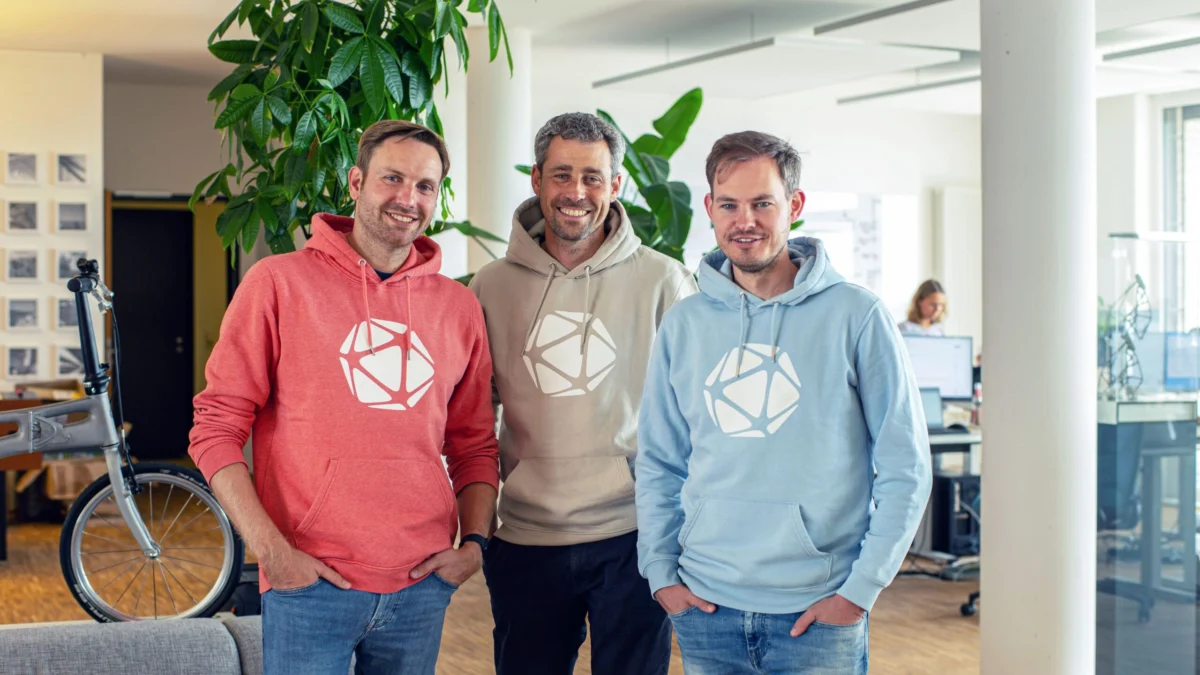
Synera was founded in 2018 by Moritz Maier, Daniel Siegel, and Sebastian Moeller. Initially, the trio operated as engineering service providers, specializing in optimizing components for clients, particularly within the automotive sector. During this hands-on work, a recurring issue became starkly apparent: the primary impediment to development speed was not the complexity of the engineering itself, but the cumbersome coordination between disparate software tools and departments.
This realization spurred the founders to develop their own scripts and connections to bridge these software gaps, effectively automating parts of the workflow. As customer demand for these bespoke software solutions steadily grew, the business idea for Synera began to crystallize. The company’s evolution from a service-based model to a product-focused AI automation platform reflects a deep understanding of industry pain points and a strategic pivot to address them at scale.
Synera’s Platform: Orchestrating the Engineering Workflow
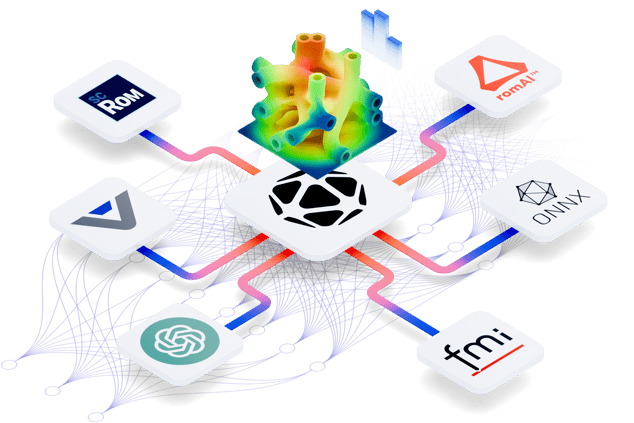
At its core, Synera’s platform is designed to integrate and orchestrate existing engineering and enterprise systems. The company claims its platform can currently connect with over 80 different engineering and business systems. The objective is not to replace these established tools but to create a seamless, intelligent layer that allows them to communicate and collaborate effectively.
For engineers within client companies, Synera’s platform is designed to feel akin to an advanced chat system. Users can articulate their objectives, such as the development of a specific component, and the AI agents then execute the necessary individual steps. This includes autonomously distributing data and tasks to the relevant systems and teams. For instance, one agent might be tasked with constructing a component, another with simulating its properties, and a third with calculating associated costs. An overarching agent then coordinates the entire sequence, ensuring a smooth and efficient progression from concept to completion.

This system-wide orchestration offers substantial time savings. Where traditional teams might require several weeks to iterate on a single component, Synera’s agents can reportedly explore numerous development variations in mere minutes. This dramatic acceleration directly impacts the "time-to-market," enabling companies to bring their products to customers significantly faster.
Synera’s Impressive Client Portfolio and Growth Trajectory
The company boasts an impressive roster of clients spanning 15 countries, including globally recognized names such as Airbus, NASA, Volvo Trucks, Miele, and Stihl. This diverse client base underscores the broad applicability and effectiveness of Synera’s AI-driven automation solutions across various industrial sectors. The company attributes its significant revenue doubling in the past year, in part, to the success and adoption of its platform by these leading organizations. Looking ahead, Synera CEO Moritz Maier has set an ambitious target: "This year, we aim to triple our revenue," he stated, signaling a strong growth outlook for the company.

A Closer Look at Synera’s Technology and Market Differentiation
Investors and industry analysts point to Synera’s unique technical foundation as a key differentiator in the burgeoning AI agent market. Benjamin Erhart of UVC Partners emphasizes this point: "Synera effectively combines generative AI with precise engineering methodologies." He further elaborates that the foundation of Synera’s agent system is built upon more than 100,000 validated processes, meticulously developed over several years. "This robust foundation ensures that the results generated are technically sound and reliable," Erhart added.
This adherence to rigorous engineering principles is crucial, especially when contrasted with purely language-model-based AI solutions. Such models often struggle to accurately represent the complex physical and constructive requirements inherent in industrial design and manufacturing. Erhart projects that, in the medium term, AI agents will be capable of handling approximately 50 percent of the time engineers currently dedicate to development processes.

Filip Dames from Cherry Ventures also highlighted the continuous improvement loop inherent in Synera’s approach. "The company benefits immensely from real-world usage data," Dames noted. "By integrating into industrial processes, the systems are constantly refined and enhanced, leading to increasingly sophisticated and effective automation."
From a user perspective, Synera’s focus on engineering applications sets it apart. Julien Hohenstein, Head of Digitization in Research and Development at BMW Group, a long-standing client, remarked, "Many competitors initially focused on text processing, sales, or traditional coding. Synera’s clear focus on engineering applications provides a distinct advantage." BMW’s involvement with Synera has been particularly close, with Hohenstein describing it as having "almost a co-development character."
Synera’s Vision: The "Jarvis" for Engineers
Synera’s ambitious long-term vision is to create a highly autonomous system that functions as a digital engineer, capable of independently managing development processes and, in the future, even automating aspects of production. CEO Moritz Maier draws a compelling parallel to the AI system "Jarvis" from the Marvel Cinematic Universe, particularly the "Iron Man" franchise. "Tony Stark speaks to the AI, and it builds him a fusion reactor or his suit," Maier explained. "This is the kind of capability we aim to enable with Synera in the future."
While this vision is still in its nascent stages, Synera has established a clear roadmap for its development. The company anticipates a functional prototype with limited capabilities by the end of this year or early next. Currently, developers must configure the agents for each specific use case, defining rules and workflows. However, the long-term goal is to automate even these configuration steps, making the platform more accessible and user-friendly.
The company’s immediate strategic focus, fueled by the recent funding, is on expansion, with a particular emphasis on the United States market. "The American market is currently our fastest-growing segment," Maier confirmed. Concurrently, Synera plans to expand its workforce, which currently comprises around 80 employees.

Navigating the Challenges of AI Adoption in Industry
The successful integration of AI agents like those developed by Synera into the complex workflows of large industrial enterprises is not without its challenges. Beyond the technical implementation, a significant hurdle lies in the cultural and organizational shift required. Adopting AI agents that deeply embed into product development processes necessitates changes in established work practices, shifts in responsibilities, and a re-evaluation of existing power dynamics.
Engineers will not become obsolete; rather, their roles will evolve. The focus will likely move away from manual clicking within individual software tools towards the higher-level tasks of overseeing, directing, and evaluating automated processes. This transition requires not only technological adoption but also a significant investment in training and change management to ensure a smooth and effective integration of AI into the human workforce.

Benjamin Erhart of UVC Partners acknowledges this aspect: "Synera has strategically positioned itself in hard-to-access market segments with relatively limited capital. This early entry, coupled with a robust technological approach, provides a strong foundation for future growth."
Filip Dames of Cherry Ventures views Synera’s current position as a pioneering step into a nascent market. "The market for these types of AI agents is just beginning to emerge," he observed. "However, AI is increasingly becoming the guiding force in both development and production, making Synera’s offering exceptionally timely and relevant."
The journey toward fully autonomous AI-driven engineering is ongoing, but Synera’s significant funding, impressive client roster, and clear technological vision position it as a key player in shaping the future of industrial innovation. The company’s ability to bridge the gap between advanced AI capabilities and the practical demands of complex engineering workflows will be crucial as it navigates the evolving landscape of manufacturing and product development.
