

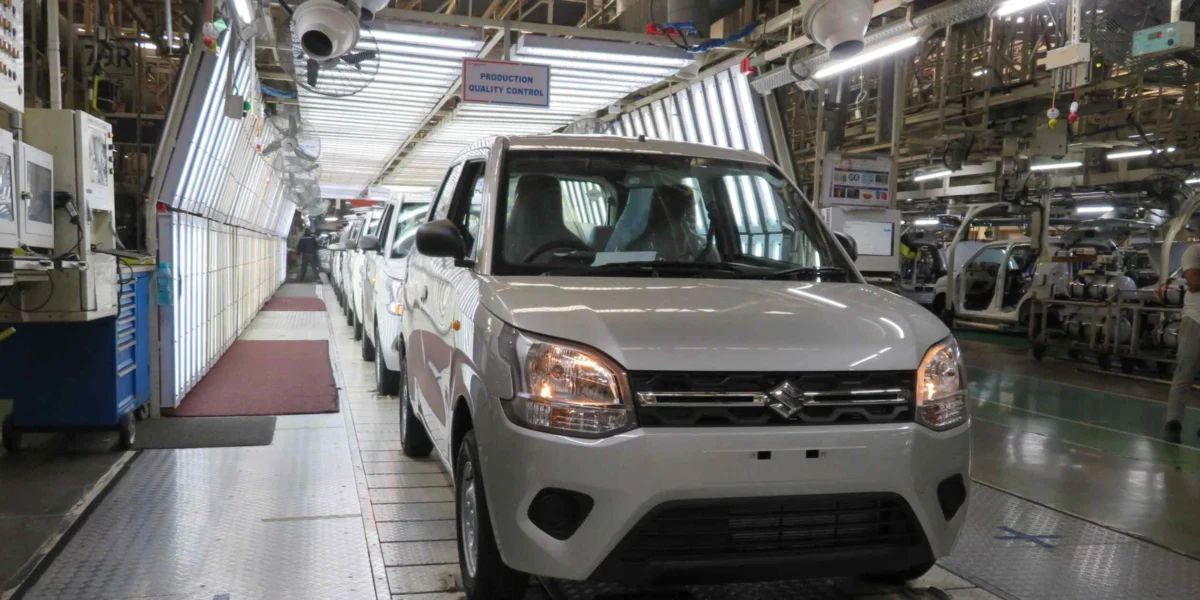
Suzuki Motor is actively encouraging its long-standing Japanese component manufacturers to establish a presence in India, a strategic move aimed at enhancing the quality of vehicles produced in the burgeoning Indian market and critically, securing the necessary supply chain to achieve ambitious production targets. While the automaker is experiencing robust performance, the full realization of its growth potential hinges on overcoming the logistical and operational hurdles faced by its smaller and medium-sized parts suppliers, many of whom find the prospect of setting up shop in India daunting.
The Japanese automotive giant, a dominant force in the Indian market through its majority stake in Maruti Suzuki India Ltd., has set a bold objective to elevate its annual production capacity in India to a remarkable 4 million units by the fiscal year 2030. This ambitious target underscores India’s pivotal role in Suzuki’s global manufacturing and sales strategy. However, achieving such a significant increase in output is intrinsically linked to the reliability and scalability of its extensive network of component suppliers. The current reliance on a mix of domestic and imported parts, coupled with existing supply chain vulnerabilities, presents a bottleneck that Suzuki is now directly addressing by seeking to deepen the localization of its supply base.
The Strategic Imperative for Localization
Suzuki’s push for its Japanese suppliers to invest in India is not merely about increasing volume; it is fundamentally about quality control and operational efficiency. By having suppliers closer to its manufacturing plants in India, Suzuki aims to reduce lead times, improve communication, and gain greater oversight of the production processes for critical components. This proximity is expected to lead to more consistent quality, fewer defects, and ultimately, more reliable vehicles for the Indian consumer.
For decades, Suzuki has cultivated strong relationships with a vast array of Japanese automotive parts manufacturers. These suppliers have been instrumental in providing the technological expertise and high-quality components that have underpinned Suzuki’s success globally, and particularly in India. However, the logistical complexities and costs associated with importing these components for large-scale production in India have become increasingly apparent. The COVID-19 pandemic and subsequent global supply chain disruptions further highlighted the risks associated with over-reliance on distant suppliers.
The decision to actively solicit these established suppliers to set up manufacturing facilities in India reflects a strategic shift towards greater self-sufficiency and resilience within Suzuki’s Indian operations. It also aligns with the Indian government’s "Make in India" initiative, which aims to boost domestic manufacturing and attract foreign investment. By facilitating the entry of these experienced Japanese firms, Suzuki is not only securing its own supply chain but also contributing to the development of India’s broader automotive component ecosystem.
Challenges and Apprehensions Among Suppliers
Despite the clear strategic advantages, the prospect of relocating or establishing new manufacturing operations in India presents significant challenges for many of Suzuki’s Japanese suppliers, particularly the small and medium-sized enterprises (SMEs). These companies often operate with leaner resources and may lack the extensive international experience or capital required for such a substantial undertaking.
Key concerns among these suppliers are likely to include:
- Infrastructure and Logistics: While India’s infrastructure is improving, challenges related to transportation networks, power supply, and port facilities can still impact manufacturing efficiency and supply chain reliability.
- Labor and Skill Development: While India offers a large labor pool, ensuring the availability of skilled workers with the precise technical expertise required for high-precision automotive component manufacturing can be a hurdle. Training and upskilling programs would be essential.
- Regulatory and Bureaucratic Environment: Navigating India’s regulatory landscape, including permits, licenses, and compliance requirements, can be complex and time-consuming. Although efforts are being made to streamline these processes, past experiences can breed caution.
- Cultural and Language Barriers: Establishing and managing operations in a foreign country involves overcoming cultural differences and language barriers, which can affect communication, management styles, and overall operational harmony.
- Investment and Return on Investment (ROI): The significant capital investment required to set up a new plant, coupled with the uncertainties of a new market, can make the ROI proposition daunting for smaller firms.
Suzuki’s role in this transition will be critical. The automaker is reportedly offering support and incentives to its suppliers, which may include financial assistance, guidance on navigating local regulations, and facilitating partnerships with local entities. The success of this initiative will largely depend on the effectiveness of these support mechanisms and Suzuki’s commitment to de-risking the investment for its partners.
Supporting Data and Market Context
Suzuki’s ambition to reach 4 million units in India by FY2030 is grounded in the consistent and rapid growth of the Indian automotive market. India is already the world’s third-largest automotive market by volume and is projected to become the third-largest by value within the next decade.
- Maruti Suzuki’s Dominance: Maruti Suzuki India Ltd. has historically held a commanding market share, often exceeding 40%, in the passenger vehicle segment. This dominant position provides a stable and significant demand base for Suzuki’s production.
- Growth Projections: Industry analysts project a compound annual growth rate (CAGR) of 6-8% for the Indian automotive market over the next five to seven years, driven by factors such as a growing middle class, increasing disposable incomes, urbanization, and a young demographic profile.
- Production Milestones: Maruti Suzuki achieved a cumulative production milestone of 30 million vehicles in March 2023, showcasing its manufacturing prowess. However, reaching 4 million units annually from its current capacity (which has been around 2 million units per annum) requires substantial expansion.
- Global Production Share: India currently accounts for a significant portion of Suzuki’s global production. With the planned expansion, its share is expected to increase substantially, solidifying India’s position as Suzuki’s primary manufacturing hub.
This growth trajectory, coupled with the increasing demand for advanced and safer vehicles, necessitates a sophisticated and localized supply chain capable of meeting stringent quality standards and production volumes.
Timeline and Evolution of Suzuki’s India Strategy
Suzuki’s involvement in India dates back to 1982 when it entered into a collaboration with the Indian government to form Maruti Udyog Ltd. (later privatized and renamed Maruti Suzuki India Ltd.). This partnership laid the foundation for a manufacturing revolution in India, introducing modern production techniques and a wide range of affordable vehicles.
- 1980s-1990s: Focus on establishing a strong domestic manufacturing base and popularizing small cars. Local sourcing of components gradually increased.
- 2000s: Expansion of product portfolio and capacity. Increased emphasis on research and development within India.
- 2010s: Suzuki’s global strategy began to increasingly emphasize India as a key market and manufacturing hub. Investments were made in new plants and technologies. The establishment of the Gujarat plant by Suzuki Motor Gujarat (a wholly-owned subsidiary) in 2017, with a capacity of 500,000 units per annum, was a significant step towards de-risking production and enhancing flexibility.
- Late 2010s – Present: Discussions and initiatives to deepen localization and enhance supply chain resilience. The current push to bring Japanese suppliers to India is a natural progression of this long-term strategy. The target of 4 million units by FY2030 was publicly articulated as part of Suzuki’s long-term plans, indicating a commitment to India’s future growth.
This historical context illustrates a gradual yet determined evolution of Suzuki’s strategy, moving from market penetration to establishing a comprehensive manufacturing and supply chain ecosystem in India.
Potential Reactions and Broader Implications
The initiative by Suzuki to encourage its Japanese suppliers to invest in India is likely to be met with a mix of responses.
- Positive Reception from Indian Government: The Indian government is expected to welcome this move, viewing it as a significant endorsement of its manufacturing policies and a catalyst for job creation and technological advancement in the automotive sector. Officials may offer further incentives and streamline processes to facilitate the entry of these suppliers.
- Cautious Optimism from Suppliers: While some larger, more internationally experienced suppliers might see this as a strategic opportunity to expand their global footprint and secure a key market, many SMEs will likely approach it with caution. Their decision will depend heavily on the level of support and risk mitigation offered by Suzuki and the perceived long-term viability of operations in India.
- Impact on Existing Indian Suppliers: The influx of Japanese suppliers could intensify competition for existing Indian component manufacturers. However, it also presents opportunities for collaboration, joint ventures, and technology transfer, potentially elevating the overall quality and capabilities of the domestic supply base.
- Global Automotive Supply Chain Dynamics: This move by Suzuki could influence other global automakers to re-evaluate their own supply chain strategies in India. It underscores the growing importance of India not just as a market but as a critical node in global automotive manufacturing networks.
- Technological Advancement: The presence of established Japanese suppliers is expected to bring advanced manufacturing technologies, quality control standards, and best practices to India, further enhancing the sophistication of the Indian automotive industry.
In conclusion, Suzuki’s strategic imperative to deepen its supply chain in India by bringing its Japanese component manufacturers to the country is a complex undertaking with far-reaching implications. While the automaker’s performance is strong and the Indian market offers immense growth potential, the success of this ambitious plan hinges on effectively addressing the concerns and challenges faced by its key suppliers. If successful, this initiative could solidify India’s position as a global automotive manufacturing powerhouse and further cement Suzuki’s dominant role in the world’s fastest-growing major economy. The coming years will be crucial in observing how Suzuki navigates these partnerships and how the Indian automotive landscape evolves as a result.
