

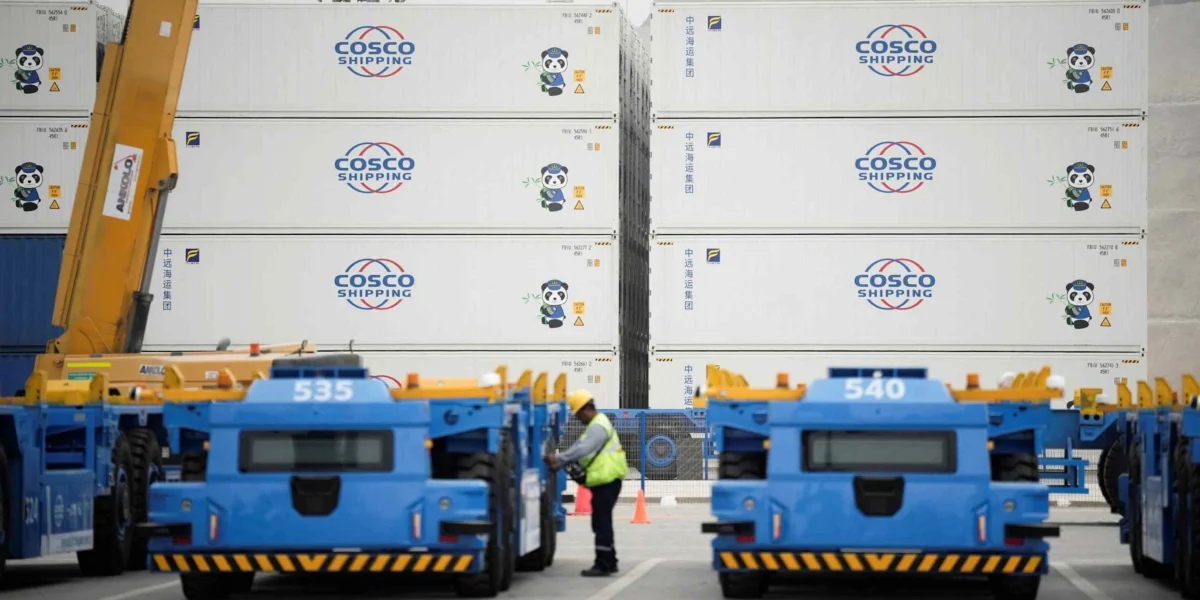
COSCO Shipping Ports, a titan in the global port infrastructure landscape and a key player in China’s Belt and Road Initiative, has officially confirmed that its strategic facility in Abu Dhabi has experienced disruptions as a direct consequence of the escalating conflict in Iran. This acknowledgment, made on Wednesday, March 18, 2026, by Kenji Kawase, a representative of the company, underscores the far-reaching and increasingly palpable effects of geopolitical tensions on international trade routes and supply chains. The statement comes at a critical juncture, as the protracted conflict continues to send ripples of uncertainty across global markets, impacting not only the immediate region but also vital maritime arteries that fuel the world economy.
The Escalating Geopolitical Tensions and Their Maritime Manifestations
The conflict in Iran, which has seen a significant escalation in recent months, has created a volatile environment in the Persian Gulf, a chokepoint for a substantial portion of global oil and gas shipments, as well as a crucial artery for containerized trade. Attacks on shipping, both by state-sponsored actors and proxy groups, have become increasingly frequent, forcing maritime operators to re-route vessels, increase insurance premiums, and implement more stringent security measures. The economic repercussions of these disruptions are multifaceted, ranging from increased transit times and fuel costs to potential shortages of goods and inflationary pressures.
The Abu Dhabi facility, operated by COSCO Shipping Ports, is strategically located to serve as a vital hub for transshipment and logistics in the Middle East, connecting East Asian markets with Europe and Africa. Its operational efficiency is directly tied to the smooth flow of traffic through the Strait of Hormuz and the broader Persian Gulf. Any impediment to this flow, whether through direct attacks, sanctions, or heightened security risks, inevitably impacts the throughput and profitability of such facilities.
A Timeline of Disruptions and COSCO’s Response
The current situation did not materialize overnight. The roots of the escalating tensions can be traced back to a series of geopolitical events and retaliatory actions that have gradually increased the risk profile of the region.
- Late 2024 – Early 2025: Initial signs of heightened naval activity and skirmishes in the Persian Gulf begin to impact shipping insurance rates. Minor delays and diversions are reported for some cargo vessels.
- Mid-2025: A significant escalation occurs with a series of targeted attacks on commercial shipping in the Strait of Hormuz. Several vessels sustain damage, leading to temporary closures of key transit points and a sharp increase in security concerns. COSCO Shipping Ports, like other major operators, begins to review its operational protocols and contingency plans.
- Late 2025: The geopolitical climate further deteriorates, leading to broader international sanctions and increased military posturing. Shipping companies face difficult decisions regarding the safety of their crews and vessels. Disruptions at regional ports, including those in the UAE, become more pronounced due to reduced vessel calls and logistical challenges.
- Early 2026: COSCO Shipping Ports’ Abu Dhabi facility begins to experience noticeable operational impacts. This includes longer waiting times for vessels, increased logistical costs associated with security escorts, and a potential decrease in cargo volume as some shipping lines opt for alternative, albeit longer, routes.
- March 18, 2026: COSCO Shipping Ports officially acknowledges the impact of the conflict on its Abu Dhabi operations, signaling a critical moment in recognizing the tangible economic consequences of the ongoing geopolitical instability.
The company’s statement, while acknowledging the challenges, also implies a commitment to navigating these difficulties. COSCO Shipping Ports, as a state-owned enterprise, plays a crucial role in China’s global trade strategy. Its resilience in the face of such disruptions is therefore of paramount importance to Beijing. The company is likely engaged in a multi-pronged approach, including:
- Enhanced Security Measures: Collaborating with local authorities and international maritime security forces to ensure the safety of its facilities and the vessels it handles.
- Operational Adjustments: Implementing flexible scheduling and cargo handling procedures to mitigate delays and optimize operations under challenging circumstances.
- Diversification of Routes: Exploring and potentially utilizing alternative shipping lanes where feasible, though this often comes with significant cost and time implications.
- Dialogue and Diplomacy: Engaging with relevant stakeholders, including governments and international organizations, to advocate for de-escalation and the safe passage of commercial shipping.
Supporting Data: The Ripple Effect on Global Trade
The impact of disruptions in the Persian Gulf extends far beyond the immediate region. According to data from the International Maritime Organization (IMO), the Strait of Hormuz alone accounts for approximately 30% of global seaborne oil trade and a significant portion of liquefied natural gas (LNG) shipments. Any disruption to this flow has a direct impact on global energy prices and supplies.
Furthermore, the Middle East is a critical hub for containerized trade, connecting major manufacturing centers in Asia with consumer markets in Europe and Africa. The Port of Jebel Ali in Dubai, one of the busiest ports in the world and a key regional competitor and partner to facilities like COSCO’s in Abu Dhabi, has also reported increased transit times and operational challenges. Data from the UN Conference on Trade and Development (UNCTAD) indicates that a significant percentage of global container traffic transits through this region.
The implications for COSCO Shipping Ports’ Abu Dhabi facility are likely reflected in:
- Increased Operating Costs: Higher insurance premiums for vessels calling at the port, increased costs for security personnel and escorts, and potentially higher fuel costs for longer transit times.
- Reduced Throughput: A decline in the volume of cargo handled as shipping lines seek to avoid perceived risks or navigate longer, more circuitous routes.
- Impact on Supply Chains: Delays in the delivery of goods, leading to potential shortages of manufactured products, raw materials, and components for industries reliant on these shipping lanes. This can contribute to inflationary pressures in consumer markets.
- Strategic Re-evaluation: The current challenges may prompt a re-evaluation of the long-term viability and strategic importance of facilities located in high-risk geopolitical zones.
Broader Implications and Future Outlook
The acknowledgment by COSCO Shipping Ports serves as a stark reminder of the interconnectedness of the global economy and the vulnerability of international trade to geopolitical instability. The Belt and Road Initiative, a flagship program of China’s global economic diplomacy, heavily relies on the security and efficiency of maritime routes. Disruptions in key transit zones like the Persian Gulf pose a significant challenge to the successful implementation and perceived benefits of such initiatives.
The incident also highlights the broader trend of rising geopolitical risk impacting global supply chains. Companies are increasingly being forced to factor in these risks into their strategic planning, leading to potential shifts in sourcing strategies, investments in supply chain resilience, and a greater emphasis on diversification.
For COSCO Shipping Ports, the current situation presents both challenges and potential opportunities. While immediate operations are undoubtedly affected, the company’s experience in navigating complex logistical environments and its deep ties to the Chinese state may allow it to weather the storm more effectively than some smaller competitors. Furthermore, the company has consistently signaled its intent to expand its global footprint, with a particular focus on emerging markets. The recent expansion of its port in Chancay, Peru, a megaport built by China’s state-owned COSCO Shipping, exemplifies this ambition. While the Abu Dhabi situation presents immediate headwinds, it may also reinforce the strategic importance of diversifying its portfolio and strengthening its presence in regions with less geopolitical volatility.
The ongoing conflict in Iran and its ramifications for global shipping will undoubtedly remain a critical factor to monitor. The ability of nations and corporations to adapt to this evolving landscape, mitigate risks, and ensure the continued flow of essential goods will be paramount in shaping the future of international trade and economic stability. COSCO Shipping Ports’ candid admission is a significant development in this ongoing narrative, bringing into sharp focus the tangible economic consequences of geopolitical conflict on the arteries of global commerce.
