

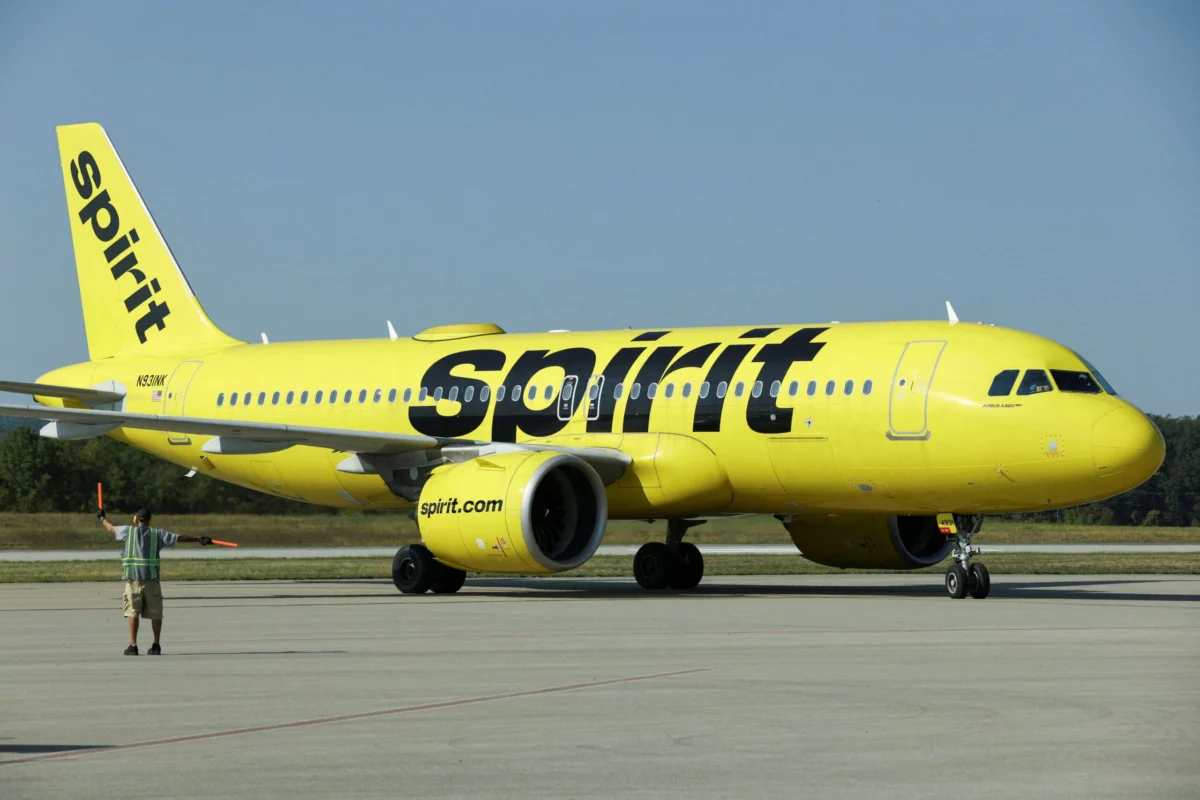
Spirit Airlines, the pioneering ultra-low-cost carrier, stands on the precipice of liquidation as early as this week, according to individuals with intimate knowledge of the situation. This dire prospect emerges as the airline grapples with the devastating impact of its second bankruptcy filing in less than a year, exacerbated by an unforeseen and dramatic spike in global jet fuel prices following the onset of the Iran war. The potential collapse of Spirit, once an industry trailblazer, underscores the extreme vulnerabilities of the airline sector to geopolitical instability, economic pressures, and operational challenges.
The airline’s journey toward this critical juncture has been fraught with a series of escalating financial and operational hurdles. Having filed for Chapter 11 bankruptcy protection for the second time in rapid succession, Spirit was already navigating a treacherous path to solvency. The company had pinned its hopes on a strategic contraction, focusing on high-demand routes and peak travel seasons, coupled with significant concessions from its labor unions, all aimed at emerging from bankruptcy by spring 2026. However, these meticulously crafted plans have been critically undermined by external forces beyond its immediate control, primarily the unprecedented surge in jet fuel expenses, which represent the largest cost component for airlines after labor.
The Unfolding Crisis: Fuel Prices as a Catalyst
The immediate trigger for Spirit’s accelerated crisis is the dramatic escalation in jet fuel prices. The conflict that erupted in Iran on February 28, 2026, sent shockwaves through global energy markets, leading to an immediate and sustained increase in crude oil and subsequently, refined jet fuel. As of April 2, 2026, the average price for jet fuel across key U.S. hubs—New York, Houston, Chicago, and Los Angeles—had soared to $4.88 per gallon. This represents an astonishing approximately 95% increase since the commencement of the Iran war, effectively doubling one of the airline’s most significant operational expenditures in a matter of weeks.
This sudden and severe cost shock has thrown Spirit’s already fragile financial projections into disarray. JPMorgan, a leading financial institution, had previously analyzed Spirit’s outlook, noting that if fuel prices were to stabilize around $4.60 per gallon for the remainder of 2026, the airline’s forecast operating margin would plummet from an already negative 7% to a staggering negative 20%. This calculation, made prior to the most recent surge, indicates that Spirit could face an additional $360 million in costs for the year. This figure starkly contrasts with the airline’s cash balance of $337 million at the close of 2025, as highlighted by JPMorgan airline analyst Jamie Baker. Such a disparity reveals a deepening liquidity crisis that has now reached critical levels, threatening to exhaust the airline’s remaining cash reserves and rendering its recovery efforts untenable.
A Chronology of Compounding Challenges
Spirit Airlines’ current predicament is not an isolated event but the culmination of several years of mounting pressures and unfortunate circumstances.
- 2023: Engine Recall and Operational Headwinds: The airline’s operational stability began to erode significantly in 2023 when a widespread recall of Pratt & Whitney engines, which power many of its Airbus aircraft, forced dozens of its planes to be grounded. This recall created immediate capacity constraints, disrupted flight schedules, and incurred substantial unforeseen costs, directly impacting the airline’s ability to generate revenue and serve its routes efficiently.
- 22024: Blocked Merger and Lost Opportunity: A pivotal blow came two years prior to the current crisis (i.e., in 2024) when a federal judge blocked JetBlue Airways’ planned acquisition of Spirit. The court ruled against the merger, deeming it anticompetitive. This decision was devastating for Spirit, as the acquisition would have provided a much-needed capital injection, operational synergies, and a potential pathway out of its burgeoning financial difficulties. Instead, both Spirit and JetBlue were left to navigate a challenging market dominated by larger, more resilient carriers, without the anticipated benefits of consolidation.
- March 13, 2025: First Chapter 11 Exit: Spirit managed to emerge from its first Chapter 11 bankruptcy protection on March 13, 2025, a testament to initial efforts at restructuring. However, the respite was short-lived.
- August 2025: Mounting Losses and Second Bankruptcy Filing: Despite its efforts, Spirit reported a staggering loss of nearly $257 million in a matter of months, spanning from its first Chapter 11 exit in March through the end of June 2025. This rapid deterioration of its financial health forced the airline to file for Chapter 11 bankruptcy protection again less than a month later, indicating the severity and persistence of its underlying issues.
- October 10, 2025: Lifeline Financing Approved: Amidst its second bankruptcy proceedings, a court approved lifeline financing, providing a temporary reprieve and allowing the airline to continue operations while it attempted to reorganize.
- December 2024 (Court Filing): Misplaced Optimism: Despite the turbulent reality, a court filing from December 2024 revealed that Spirit had optimistically forecast a net profit of $252 million for the year 2025. This projection, made before the full extent of its losses and the subsequent fuel price shock, underscores the rapidly changing and unpredictable environment in which the airline was operating.
- February 28, 2026: The Iran War Begins: The geopolitical event that fundamentally altered Spirit’s trajectory, leading to the catastrophic fuel price increases.
- March 10, 2026: Union Concessions: In a desperate bid to keep the airline afloat, Spirit’s pilot and flight attendant unions agreed to significant concessions in recent months. These sacrifices, which likely involved adjustments to wages, benefits, and working conditions, were made with the hope of contributing to the airline’s survival and preserving jobs.
- April 15, 2026: Potential Liquidation: The current week marks the critical window during which liquidation proceedings could commence, as first reported by Bloomberg and corroborated by sources familiar with the matter.
Post-Pandemic Struggles and Evolving Market Dynamics
Spirit’s struggles intensified significantly in the post-pandemic era. While the airline had enjoyed years of largely steady profitability and enviable margins within the industry, the landscape shifted dramatically after 2020. A confluence of factors conspired against U.S.-focused carriers like Spirit:
- Soaring Costs: Wages and other operational expenses surged, driven by labor shortages and inflationary pressures.
- Customer Preference Shifts: Post-pandemic, customer preferences began to evolve. While budget travel remained popular, there was also a noticeable trend towards higher-spending customers seeking more comfort and reliability, a segment better served by legacy carriers.
- Oversupply of Domestic Flights: A glut of domestic flight capacity led to intense competition and a downward pressure on airfares. This was particularly punishing for ultra-low-cost carriers (ULCCs) whose business model relies heavily on high volume and lean margins, and who lack the buffer provided by lucrative first-class cabins, extensive credit card partnerships, and robust loyalty programs that buoy the profits of larger rivals.
In an attempt to adapt, Spirit had experimented with strategies to attract higher-spending customers, including offering roomier seats and bundled fares that incorporated seat assignments and baggage. These initiatives aimed to better compete with larger airlines that had seen their profits bolstered by big-spending travelers post-pandemic. However, these strategic pivots proved insufficient to counteract the overwhelming macro-economic and geopolitical headwinds.
Industry Reactions and Competitive Landscape
As Spirit’s financial health deteriorated, rival airlines began to strategically position themselves to absorb its market share. Competitors, particularly other budget carriers, have been actively adding flights to destinations previously dominated by Spirit. Deutsche Bank analyst Michael Linenberg noted that in the current quarter, Frontier Airlines and JetBlue Airways exhibit the most significant overlap with Spirit’s network. Frontier has nearly 32% of its capacity directly competing head-to-head with Spirit, while JetBlue has approximately 21% overlap. This aggressive expansion by competitors highlights the rapid adjustments within the highly competitive U.S. airline industry, where market vacuums are quickly filled.
The potential liquidation of Spirit Airlines would undoubtedly send ripples throughout the U.S. aviation sector. For passengers, it could mean significant disruptions, particularly for those who have purchased tickets for future travel. While mechanisms typically exist for refunds or alternative arrangements in such scenarios, the immediate impact would be uncertainty and inconvenience. The loss of a major ultra-low-cost carrier would also likely reduce competition on certain routes, potentially leading to higher fares for consumers in the long term, especially in markets where Spirit was a dominant player.
For Spirit’s thousands of employees, a liquidation would signify massive job losses, a devastating outcome despite the unions’ recent concessions. The highly specialized nature of airline work means that finding equivalent positions quickly could be challenging, particularly for those in specific roles.
The broader implications for the U.S. airline industry include a further trend towards consolidation, potentially strengthening the market positions of the remaining larger carriers. While some competitors might benefit from increased market share, the underlying vulnerabilities exposed by Spirit’s collapse—such as the extreme sensitivity to fuel price volatility and the challenges of the ULCC model in a high-cost environment—will likely prompt a re-evaluation of strategies across the sector.
Uncertain Future
The exact timeline for Spirit’s potential liquidation, or indeed if it will ultimately take that path, remains fluid. While sources indicate an imminent threat, the complexities of bankruptcy proceedings mean that various scenarios could still unfold, though the options appear increasingly limited. Spirit Airlines, in its official statement, maintained a cautious stance, stating, "We don’t comment on market rumors and speculation." This standard corporate response offers little solace to employees, passengers, and investors bracing for what could be the final chapter for a once-prominent name in affordable air travel.
The potential demise of Spirit Airlines serves as a stark reminder of the volatile nature of the aviation industry, where even established players can be brought down by a combination of internal operational challenges, strategic missteps, and unpredictable external shocks, particularly those stemming from global geopolitical events. The current spring break season, typically a busy and profitable period for the airline industry, now concludes with a cloud of profound uncertainty hanging over one of its most recognizable budget carriers.
