

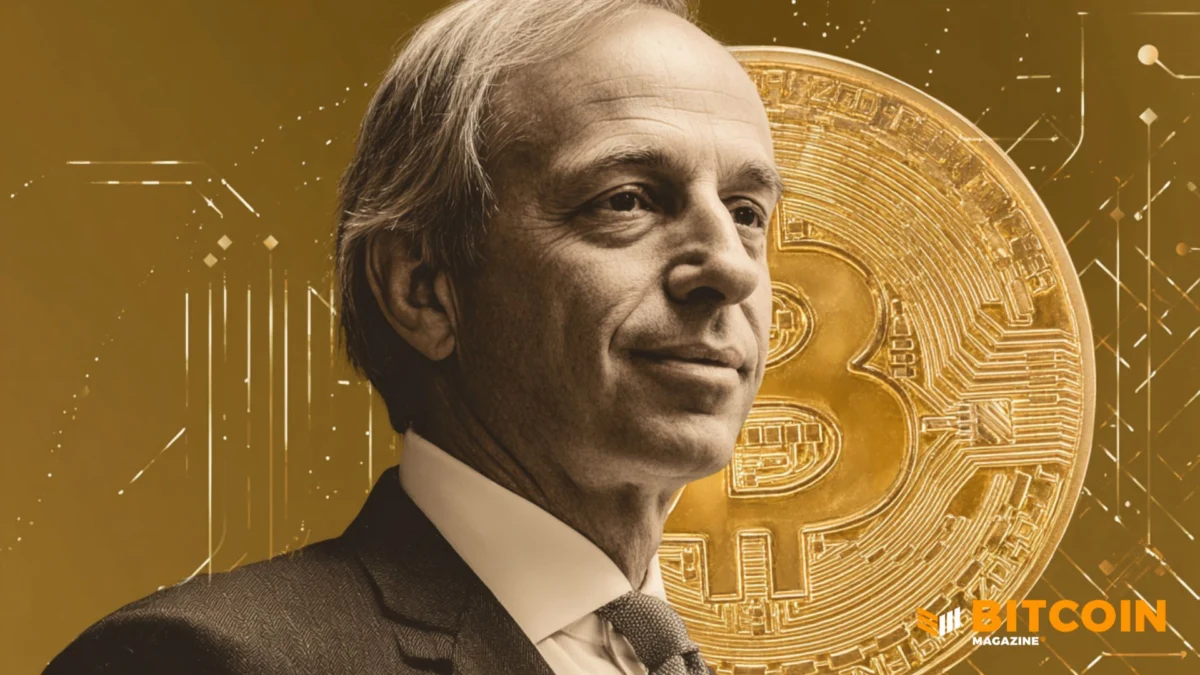
Prominent investor and founder of Bridgewater Associates, Ray Dalio, has once again highlighted the potential of Bitcoin as a valuable asset, albeit with a measured endorsement. In his latest essay, Dalio posits that non-government-issued digital assets like Bitcoin, alongside traditional safe haven gold, are poised to perform relatively well as government debt continues its relentless ascent. This stance comes as the U.S. national debt has surpassed the significant milestone of $40 trillion, a figure that underscores Dalio’s long-standing concerns about fiscal irresponsibility.
Dalio’s Evolving Stance on Bitcoin
Dalio’s perspective on Bitcoin has undergone a notable evolution. Previously expressing skepticism about the cryptocurrency’s viability as a medium of exchange due to its volatility, he has since acknowledged its inclusion in his investment portfolio. This shift reflects a growing recognition among established financial figures of Bitcoin’s potential as a store of value and a hedge against economic instability.
In a recent discussion, Dalio reiterated his allocation to Bitcoin, stating it comprises approximately 1% of his overall investments. While this is a modest allocation, it signifies a significant departure from his earlier hesitations. He continues to advise a diversified investment strategy, emphasizing assets with strong financial fundamentals and geographical stability. His specific recommendation includes underweighting debt-based assets like bonds and overweighting gold and "a bit of Bitcoin."
The Macroeconomic Landscape: Rising Debt and Currency Debasement
Dalio’s advocacy for Bitcoin and gold is intrinsically linked to his analysis of the global macroeconomic environment. He identifies a pervasive trend of over-borrowing by governments, particularly in major economies such as the United States, the United Kingdom, Europe, and Japan. To manage the widening gap between debt supply and demand, central banks often resort to monetary easing, essentially printing more money. This practice, Dalio argues, leads to the debasement of fiat currencies, diminishing their purchasing power over time.
This phenomenon of currency debasement has historically driven investors to seek alternative assets that are not subject to the inflationary pressures of government monetary policy. Gold, with its millennia-long history as a store of value, has long been the primary beneficiary of such shifts. Bitcoin, as a relatively new asset class, is now increasingly being viewed through a similar lens by investors concerned about the future stability of fiat currencies.
Bitcoin’s Narrative as a Digital Gold
The narrative of Bitcoin as "digital gold" has gained considerable traction within the cryptocurrency community and among a growing segment of the investment world. Proponents argue that Bitcoin shares key characteristics with gold that make it an attractive hedge against inflation and economic uncertainty. These characteristics include:
- Scarcity: Bitcoin has a fixed supply cap of 21 million coins, a fundamental design feature that prevents arbitrary inflation through increased issuance. This inherent scarcity is often compared to the finite nature of gold.
- Decentralization: Bitcoin operates on a decentralized network, meaning it is not controlled by any single entity, including governments or central banks. This independence from centralized authority is seen as a crucial advantage in an era of increasing government intervention.
- Portability and Divisibility: Unlike gold, which can be cumbersome to transport and store, Bitcoin can be easily transferred globally and can be divided into smaller units, making it more practical for a wide range of transactions and holdings.
- Durability: Digital assets, in theory, do not degrade over time, unlike physical commodities.
The argument that Bitcoin can act as a hedge against government printing is directly supported by historical price movements. During periods of significant quantitative easing and monetary expansion by central banks, Bitcoin has often experienced periods of substantial price appreciation, suggesting that investors have indeed turned to it as a store of value when fiat currencies are being diluted.
Historical Context of Dalio’s Views
Ray Dalio’s journey to embracing Bitcoin as a potential investment has been a gradual one. In earlier years, he expressed significant reservations, primarily citing Bitcoin’s volatility and lack of intrinsic value compared to traditional assets. However, the evolving economic landscape and the demonstrable resilience of Bitcoin in certain market conditions appear to have influenced his perspective.
His admission of holding Bitcoin marked a turning point, signaling a level of acceptance from a figure of his stature. Even as he acknowledges its potential, Dalio remains pragmatic, cautioning about potential threats. One such concern he has raised is the advent of quantum computing, which could theoretically pose a risk to the cryptographic security underlying Bitcoin. This highlights the need for ongoing technological development and adaptation within the cryptocurrency space.
The Global Debt Crisis: A Deepening Concern
The magnitude of global government debt is a critical factor underpinning Dalio’s current outlook. The U.S. national debt crossing the $40 trillion mark is not an isolated event; many major economies are grappling with similar fiscal challenges.
- United States: The U.S. national debt has been on an upward trajectory for decades, exacerbated by significant spending on social programs, defense, and economic stimulus packages. Projections indicate continued growth, raising concerns about long-term fiscal sustainability.
- Europe: Several European nations face substantial debt burdens, a legacy of the sovereign debt crisis and ongoing fiscal challenges. The European Central Bank’s accommodative monetary policies have helped manage this debt but have also contributed to concerns about inflation and currency devaluation.
- Japan: Japan has the highest debt-to-GDP ratio among developed nations, a situation that has persisted for years. While the low interest rate environment has kept debt servicing costs manageable, the sheer volume of debt remains a significant economic factor.
- United Kingdom: The UK’s national debt has also seen a considerable increase, particularly following the global financial crisis and more recently due to pandemic-related spending.
This widespread fiscal pressure creates an environment where investors are increasingly looking for assets that offer protection against the potential consequences of unsustainable debt levels, such as inflation, currency devaluation, and economic instability.
Implications for Investors: Diversification and Risk Management
Dalio’s advice to diversify across asset classes and countries with strong financial health is a cornerstone of prudent investment strategy, especially in volatile times. His specific recommendation to overweight gold and Bitcoin, while underweighting debt assets, suggests a belief that these alternative assets can provide a buffer against the risks associated with a debt-laden global economy.
For investors, this implies:
- Re-evaluating Bond Holdings: Traditional bond investments, often considered safe havens, may offer diminished returns and increased risk in an environment of rising interest rates and potential currency devaluation.
- Considering Gold as a Hedge: Gold’s historical performance as a store of value during times of economic uncertainty makes it a compelling option for portfolio diversification.
- Exploring Bitcoin with Caution: While Dalio sees value in Bitcoin, his cautious allocation (1%) and acknowledgment of risks like quantum computing suggest that investors should approach it with a clear understanding of its speculative nature and potential volatility. A small, strategic allocation, as Dalio suggests, might be a way to gain exposure to its potential upside while managing risk.
The Broader Impact on Financial Markets
The growing acceptance of Bitcoin by influential figures like Ray Dalio has significant implications for the broader financial landscape. It contributes to the ongoing legitimization of cryptocurrencies as an asset class, potentially attracting more institutional investment and further integrating them into the global financial system.
However, this also brings challenges:
- Regulatory Scrutiny: As cryptocurrencies gain prominence, they are likely to face increased regulatory attention from governments worldwide, which could impact their accessibility and trading.
- Market Volatility: Despite increasing adoption, Bitcoin and other cryptocurrencies remain volatile assets, subject to rapid price swings driven by market sentiment, regulatory news, and technological developments.
- Technological Risks: As Dalio noted, emerging technologies like quantum computing could present unforeseen risks to the security of existing blockchain networks. Continuous innovation and adaptation are crucial for the long-term viability of these digital assets.
Conclusion: A Cautiously Optimistic Outlook
Ray Dalio’s latest commentary on Bitcoin reflects a nuanced perspective. He recognizes its potential as a hedge against the economic headwinds of rising global debt and currency debasement, aligning it with the traditional safe haven of gold. While his endorsement is not a call for wholesale adoption, it represents a significant validation from a seasoned investor who has historically been more reserved.
The increasing focus on fiscal sustainability and the devaluing nature of fiat currencies in major economies provide a fertile ground for assets like Bitcoin to demonstrate their value. As Dalio suggests, a well-diversified portfolio that includes a measured allocation to both gold and Bitcoin may offer a prudent approach for investors navigating the complexities of the current global economic climate. The continued evolution of Bitcoin and its integration into the financial mainstream will be a key story to watch in the coming years.
