

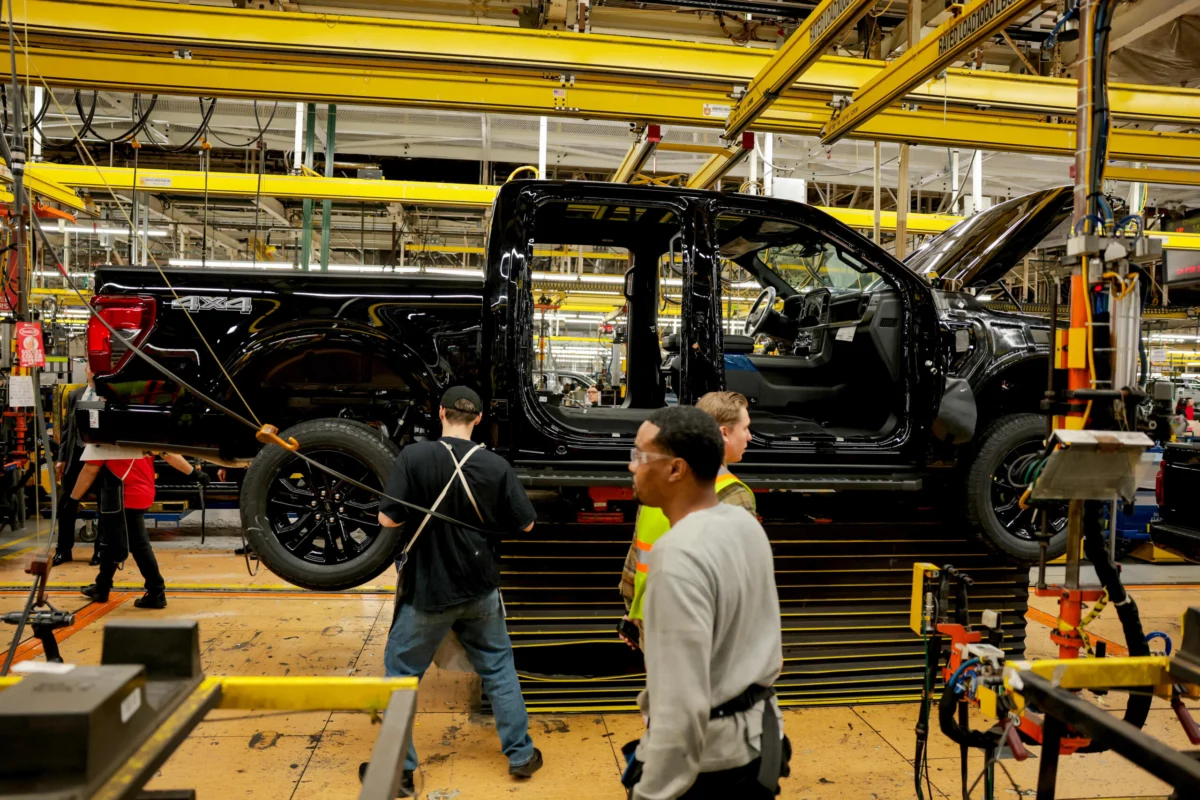
DETROIT – Ford Motor Company is significantly escalating production of its critically important F-Series trucks, marking a robust recovery after nearly a year of severe disruptions stemming from fires at a key aluminum supplier. The Dearborn-based automaker confirmed Wednesday that its efforts have led to unprecedented output levels for its most profitable vehicles, promising a much-needed influx of pickups to dealerships nationwide in the coming weeks and months. This resurgence is a pivotal development for Ford, which has weathered substantial financial and logistical challenges due to the supply chain interruptions.
The Indispensable F-Series: Ford’s Economic Backbone
The F-Series, encompassing the iconic F-150 and the heavier-duty F-250, F-350, and F-450 Super Duty models, stands as the cornerstone of Ford’s North American operations and its global profitability. For over four decades, the F-Series has consistently held the title of America’s best-selling truck, and for an impressive run of more than 40 years, it has also been the best-selling vehicle overall in the U.S. Its dominance is not merely a matter of sales volume but of strategic importance; these trucks command higher profit margins, particularly the Super Duty models and the F-150, which often serve as workhorses for commercial fleets under the burgeoning Ford Pro business unit. The F-150’s adoption of an aluminum-intensive body structure, introduced in 2015, revolutionized the segment by reducing weight, enhancing fuel efficiency, and improving performance – a technological leap that simultaneously increased the truck’s reliance on a robust aluminum supply chain.
A Year of Unforeseen Challenges: The Novelis Fires
The recent production crisis for Ford’s F-Series can be directly traced to a series of catastrophic events at Novelis Inc., a crucial aluminum supplier. In September of last year (2025), a fire erupted at Novelis’s Oswego, New York, plant, followed by another significant blaze in November of the same year. These incidents severely hampered the plant’s ability to supply the specialized aluminum sheet and other components essential for the construction of the F-Series’ lightweight yet durable bodies. Given the scale and complexity of modern automotive manufacturing, where just-in-time delivery is paramount, the disruption at a single, critical supplier can have cascading effects throughout the entire production network.
Ford’s assembly lines for the F-150 at the Dearborn Truck Plant within the historic River Rouge Complex and for the Super Duty models at the Kentucky Truck Plant were directly impacted. The inability to secure sufficient quantities of aluminum meant that production rates had to be curtailed, leading to significant backlogs and dwindling dealer inventories. The financial toll on Ford has been considerable, with the automaker estimating a cost of approximately $1.5 billion this year alone due to these supplier issues. This figure encompasses not only lost revenue from unbuilt vehicles but also costs associated with recovery efforts, expedited shipping of available components, and the operational inefficiencies caused by fluctuating production schedules.
Ford’s Proactive Intervention and Production Revival
Recognizing the existential threat posed by the Novelis disruptions, Ford embarked on an intensive, year-long collaborative effort to assist the aluminum supplier in getting its Oswego plant back to full operational capacity. This partnership involved deploying Ford’s own engineering and logistics experts to aid Novelis in rebuilding damaged facilities, re-establishing production processes, and ensuring the quality and consistency of the aluminum supply. This direct intervention underscores the strategic importance of supplier relationships in the complex global automotive ecosystem.
The fruits of these arduous efforts are now evident. Ford announced a remarkable rebound in August 2026 production figures:
- Super Duty Trucks: Output soared to over 39,000 units, marking its best monthly performance since March 2006 – an impressive two-decade high. This surge is particularly critical for the Ford Pro business, which caters to commercial and government fleets and relies heavily on these larger, more robust trucks.
- F-150 Pickups: Production reached its highest level in two years, a significant milestone given the F-150’s volume leadership.
These production increases are not merely incremental but represent a substantial step towards normalizing inventory levels and fulfilling a significant backlog of customer orders.
Replenishing the Pipeline: Dealer Inventory and Sales Outlook

The immediate impact of this production surge will be felt at Ford dealerships across the U.S. Rob Kaffl, Ford’s head of U.S. sales, articulated the timeline for this replenishment: "We’re increasing production. Dealers will start seeing in the next 30, 60, 90 days that ramp-up in production." He added, "We have a healthy chain of in-transit and in-system," indicating that the pipeline is already filling up.
This influx of new trucks is critically important for dealers who have been operating with severely constrained inventories. Currently, Ford dealers report having roughly a 40 days’ supply of pickup trucks. This figure is approximately half of what the automotive industry has historically considered a healthy level for these high-demand vehicles, which typically ranged from 75 to 90 days. Ford, however, is targeting a more streamlined inventory strategy, aiming for a days’ supply of between 50 and 60 days. Kaffl emphasized this deliberate approach: "We’re being very intentional to make sure the production is meeting the demand." This strategy seeks to balance availability with maintaining strong pricing power, avoiding the need for heavy discounting that can erode profitability.
Navigating Broader Market Headwinds and Sales Dynamics
Despite the positive news regarding F-Series production, Ford’s overall U.S. new vehicle sales experienced their eighth consecutive month of year-over-year declines in August 2026. The automaker reported a 10.3% decrease in sales for the month compared to August of the previous year. F-Series sales, while showing signs of recovery in production, remained off by 10.9% through August compared to a year earlier, including a 1.2% decrease last month.
Several factors beyond the Novelis fires have contributed to these broader sales challenges:
- Vehicle Discontinuations: Ford’s decision to discontinue two vehicles earlier in the year has made year-over-year comparisons more difficult, as there are fewer models contributing to the overall sales volume.
- Reduced Fleet Sales: The automaker has strategically planned lower sales to daily rental fleets, a move that can temporarily depress overall sales figures but often leads to higher average transaction prices and better residual values for its vehicles.
- Calendar Shifts: The timing of major sales holidays can also impact monthly comparisons. Labor Day, historically a significant sales weekend, fell in September this year compared to August of last year, shifting some potential sales out of the August reporting period.
Despite the declines in total sales volume, Ford noted a silver lining: its U.S. retail market share, which excludes sales to fleet customers and provides a clearer picture of consumer demand, has remained relatively stable this year, holding at 11.7% in August. This suggests that while the overall market is slowing, Ford is maintaining its competitive position among individual buyers.
The slowdown is not unique to Ford. U.S. automakers collectively are experiencing softening demand, with Ford estimating an industrywide decline of 6% in new vehicle sales for August. This broader trend reflects various macroeconomic factors, including higher interest rates, inflationary pressures impacting consumer purchasing power, and evolving post-pandemic buying habits.
Strategic Implications and Future Outlook
The successful ramp-up of F-Series production is more than just a logistical triumph; it represents a critical step in Ford’s financial recovery and market strategy. The F-Series, with its high profit margins, is essential for funding Ford’s ambitious investments in electric vehicles and other future technologies. The $1.5 billion cost incurred due to the Novelis issues highlights the acute vulnerability of modern supply chains, prompting automakers to potentially re-evaluate their single-source dependencies and invest in greater resilience.
For consumers, the increased availability of F-Series trucks means shorter waiting times for custom orders and a wider selection on dealership lots. For dealers, it translates into more opportunities to meet pent-up demand and boost profitability. For Ford, it signifies a return to a more stable operational footing, allowing the company to regain lost ground and capitalize on the enduring strength of its most iconic product line.
As the automotive industry continues to navigate a complex landscape of supply chain challenges, economic shifts, and technological transitions, Ford’s ability to overcome a significant supplier disruption and restore production of its flagship F-Series trucks serves as a testament to its resilience and strategic focus. The coming months will be crucial in demonstrating how effectively this restored production translates into market share gains, improved financial performance, and sustained customer satisfaction amidst a cautious broader market.
