

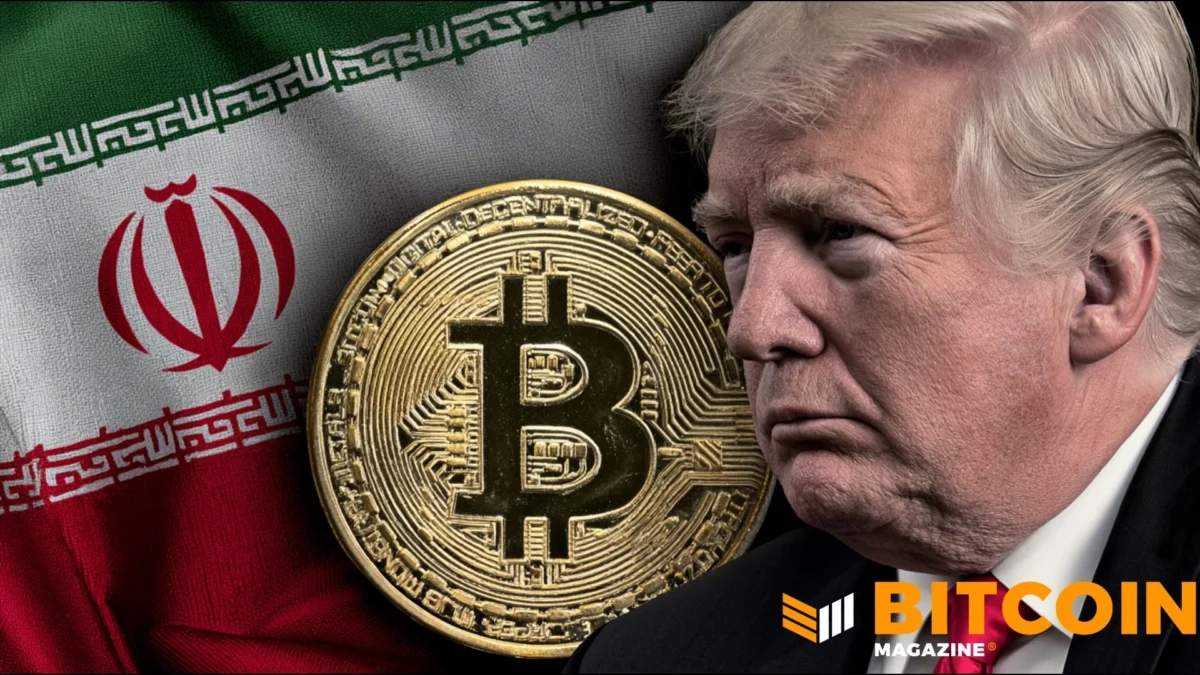
Bitcoin, the world’s preeminent cryptocurrency, has shown a remarkable decoupling from geopolitical turmoil, notably exhibiting steadfastness in the face of escalating tensions in the Middle East. On Monday, despite pronouncements from U.S. President Donald Trump of a forceful response against Iran, the digital asset’s price remained largely unfazed. This resilience marks a significant departure from historical patterns where geopolitical instability has typically exerted downward pressure on Bitcoin’s value.
The leading cryptocurrency was recently observed trading at approximately $79,076, a figure that had seen minimal fluctuation over the preceding 24-hour period. Furthermore, its price remained consistent with its position seven days prior, underscoring a period of unusual stability for an asset often characterized by its inherent volatility. This recent placidity contrasts sharply with earlier instances in the year when news of conflict in the Middle East directly correlated with a decline in Bitcoin’s market price. Historically, such events have led to downward pressure, with rallies anticipated only in the prospect of de-escalation or a ceasefire.
Historical Context: Geopolitical Shocks and Bitcoin’s Reactions
Throughout the earlier months of the year, Bitcoin’s price trajectory was significantly influenced by geopolitical developments. The initial U.S. and Israeli actions against Iran in February, for example, triggered a noticeable dip in the cryptocurrency’s value. Subsequent periods of heightened conflict in March and April also contributed to a shaky market sentiment for Bitcoin. This pattern suggested a clear correlation: increased geopolitical risk translated to increased risk aversion among investors, leading them to divest from perceived speculative assets like Bitcoin.
However, analysts have observed a marked shift in recent months. Bitcoin’s volatility, while still present, has been demonstrably muted. Monday’s market behavior served as a salient example of this evolving dynamic. As President Trump issued strong warnings of further punitive measures against Iran, the digital asset remained conspicuously stable, exhibiting no discernible reaction. This recalibration suggests that the market may be developing a more nuanced understanding of Bitcoin’s role and its drivers, potentially viewing it as a more mature asset class or as a hedge against specific economic policies rather than solely a barometer of global conflict.
President Trump’s Stance and Escalating Military Actions
President Trump’s forceful remarks, quoted by Fox News on Monday, indicated a readiness to engage in significant retaliatory actions against Iran. This declaration followed renewed strikes between the U.S. and Iran that commenced on Sunday, marking the first such exchanges in over a month. The resumption of hostilities in the Middle East, a region critical to global energy markets and geopolitical stability, would typically be expected to ripple through financial markets, including the cryptocurrency space. The absence of a pronounced reaction from Bitcoin, therefore, warrants closer examination.
Bitcoin’s Phenomenal Run: Underlying Drivers
Despite the geopolitical backdrop, Bitcoin has been on an extraordinary upward trajectory in recent weeks. The cryptocurrency has experienced its most significant rally in three years, registering an impressive nearly 30% increase in value over the past month. This surge appears to be fueled by a confluence of factors, primarily stemming from shifts in U.S. monetary policy and positive regulatory developments.
The catalyst for Bitcoin’s recent surge can be traced back to an announcement by the U.S. Treasury Department indicating a substantial increase, at least doubling, in its liquidity-support buyback operations. This policy move, designed to inject liquidity into the financial system, had a dual effect: it weakened the U.S. dollar, a traditional safe-haven asset, while simultaneously benefiting non-yielding assets such as Bitcoin and gold. As the dollar’s value depreciated, investors sought alternative stores of value, and Bitcoin, alongside gold, emerged as a preferred option. This dynamic highlights a recurring theme in asset allocation, where monetary policy decisions can significantly influence the attractiveness of different investment classes.
Regulatory Winds of Change: The Clarity Act
Adding further momentum to Bitcoin’s ascent has been a series of positive regulatory developments. Last week, President Donald Trump publicly endorsed the long-awaited cryptocurrency Clarity Act, describing it as a "very, very powerful" piece of legislation and urging lawmakers to expedite its passage. This endorsement from a key political figure signals a potential shift towards a more defined and supportive regulatory environment for digital assets.
The Clarity Act, a piece of legislation long sought by the cryptocurrency industry, aims to establish a clear and comprehensive framework for categorizing digital assets. Specifically, it seeks to delineate between those that should be classified as securities, commodities, or payment stablecoins. Such a framework is crucial for providing regulatory certainty, reducing ambiguity for businesses and investors, and fostering innovation within the digital asset space. The lack of clear regulatory guidelines has been a persistent challenge for the crypto industry, hindering mainstream adoption and investment. President Trump’s vocal support suggests a growing recognition of the importance of this legislation.
The Reinvigoration of Crypto ETFs
Beyond monetary policy and regulatory advancements, the resurgence of investor interest in cryptocurrency Exchange-Traded Funds (ETFs) has also played a significant role in bolstering Bitcoin’s price. Data from the past week reveals that crypto ETFs attracted substantial inflows, totaling $3.2 billion. This figure represents the largest weekly intake for these investment vehicles since October 2025, indicating a renewed appetite for direct exposure to cryptocurrencies through traditional investment products.
BlackRock’s iShares Bitcoin Trust (IBIT) emerged as a frontrunner in this trend, leading with $928 million in inflows last week alone. This follows an already impressive $1.3 billion inflow from the preceding week, underscoring strong and sustained institutional demand. The aggregated inflows over a two-week period demonstrate a significant commitment from investors, signaling a growing confidence in the long-term prospects of Bitcoin as an asset class. The availability of regulated investment products like ETFs has made it easier for both institutional and retail investors to participate in the Bitcoin market, thereby increasing demand and contributing to price appreciation.
Market Performance and Investor Behavior
The impact of these converging factors is evident in Bitcoin’s recent price action. Last week, the cryptocurrency reached a peak of $81,281 before experiencing a slight pullback on Friday. This minor correction, however, does not negate the overall positive sentiment and the strong upward trend that has characterized its performance. The resilience shown by Bitcoin, particularly its ability to withstand geopolitical shocks, suggests a maturation of the market and a growing conviction among investors regarding its intrinsic value and its potential as a hedge against inflation and currency devaluation.
Analysis of Implications: A Maturing Asset Class?
Bitcoin’s recent behavior challenges the long-held assumption that it is purely a risk-on asset, highly sensitive to global instability. The muted reaction to Middle Eastern tensions, coupled with its strong performance driven by monetary policy and regulatory clarity, suggests a more complex interplay of factors influencing its price.
- Decoupling from Traditional Risk Assets: The ability of Bitcoin to remain stable while geopolitical risks escalate could indicate a gradual decoupling from traditional financial markets. Investors may be beginning to view Bitcoin not just as a speculative bet, but as a distinct asset class with its own set of drivers.
- The Dollar’s Weakness as a Catalyst: The U.S. Treasury’s decision to increase liquidity-support operations has had a tangible impact on the dollar’s value. This, in turn, has made dollar-denominated assets less attractive and has driven investors towards alternatives like Bitcoin and gold. This highlights the sensitivity of Bitcoin to macro-economic policies.
- Regulatory Certainty as a Boon: The potential passage of the Clarity Act signifies a crucial step towards regulatory maturity. Such clarity can unlock further institutional investment by reducing perceived risks and providing a more predictable operating environment for businesses in the digital asset space.
- ETF Inflows as a Barometer of Institutional Confidence: The substantial inflows into crypto ETFs are a strong indicator of growing institutional adoption. This trend suggests that major financial players are increasingly incorporating Bitcoin into their portfolios, lending legitimacy and driving demand.
Looking Ahead: Continued Volatility and Evolving Drivers
While Bitcoin has demonstrated remarkable resilience, it is important to acknowledge that the cryptocurrency market remains inherently volatile. Geopolitical events can still trigger significant price swings, and unforeseen regulatory changes or market shocks could alter the current trajectory. However, the recent performance suggests that the primary drivers of Bitcoin’s price are increasingly shifting from broad geopolitical sentiment to more specific economic and regulatory factors.
The continued success of Bitcoin will likely depend on the interplay of these evolving dynamics. A stable U.S. monetary policy that favors liquidity, coupled with clear and supportive regulatory frameworks, could pave the way for further sustained growth. Conversely, any significant reversal in these trends, or a severe escalation of geopolitical conflicts that directly impacts global financial stability, could introduce new challenges.
The data presented, including the significant inflows into ETFs and the positive legislative signals, paints a picture of a maturing asset class gaining traction amidst a complex global landscape. Bitcoin’s ability to navigate these diverse influences will be a key determinant of its future performance and its role in the evolving global financial system.
