

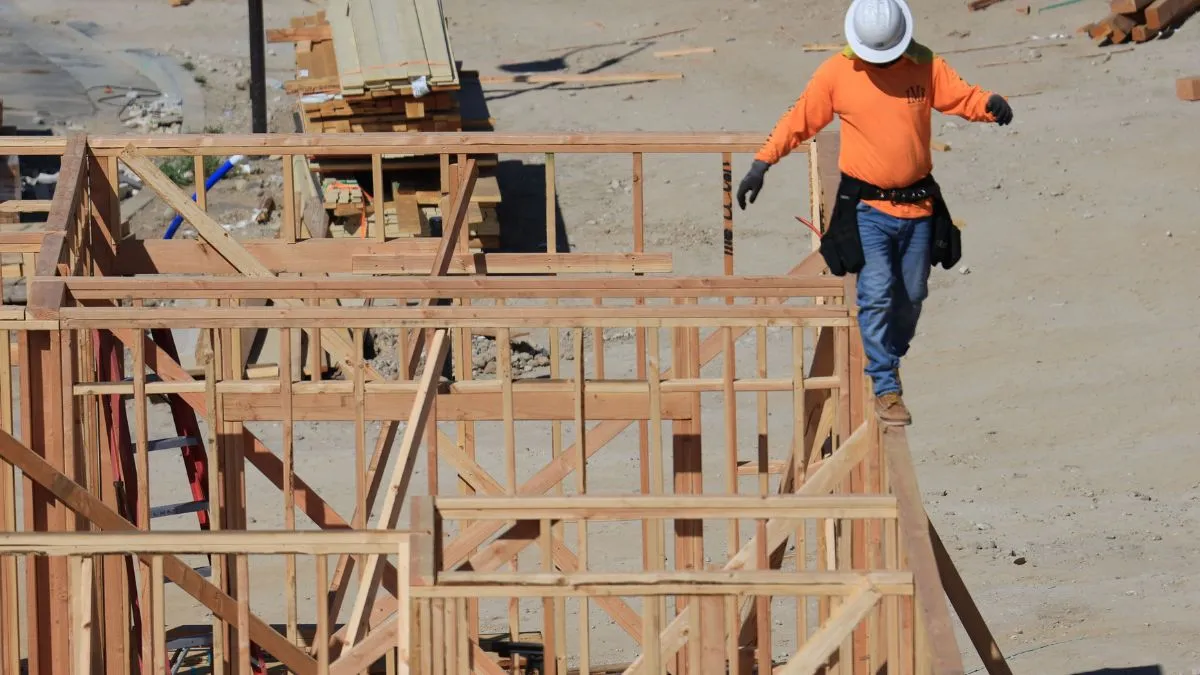
The United States residential construction industry is currently navigating a period of profound instability, characterized by a chronic shortage of skilled labor and intensified federal immigration enforcement. According to recent data from the Home Builders Institute (HBI), the industry must recruit approximately 723,000 new workers annually to keep pace with housing demand and compensate for an aging workforce. This labor gap, which began widening during the mid-2000s and accelerated following the Great Financial Crisis (GFC), has reached a critical juncture as recent job-site raids and a surge in enforcement actions under the current administration have left both undocumented and legally authorized workers in a state of heightened anxiety.
For decades, the homebuilding sector has relied heavily on immigrant labor. Official statistics suggest that foreign-born workers comprise approximately 25% of the residential construction workforce, though industry analysts widely consider this an underestimate, with some markets seeing participation rates closer to 40% or 50%. The recent escalation in enforcement has not only disrupted daily operations but has also created what homebuilders describe as an existential threat to the industry’s ability to complete projects, meet delivery timelines, and service construction loans.
The Legislative Landscape: From the ROAD Act to the Dignity Act
In early June 2026, more than 1,100 stakeholders, including homebuilders and remodelers, convened on Capitol Hill for the National Association of Home Builders (NAHB) legislative conference. The primary objective of this advocacy push was to address the structural deficiencies in the housing market through the 21st Century ROAD to Housing Act. While the ROAD Act—which focuses on reducing regulatory red tape and streamlining housing supply—was successfully signed into law within a month of the conference, the more contentious issue of immigration reform remains stalled.
The advocacy efforts coincided with the passage of a $70 billion immigration enforcement bill in the U.S. Senate, which served as the catalyst for record-level arrests by Immigration and Customs Enforcement (ICE) throughout the summer months. In response, industry leaders are championing the Dignity Act, a bipartisan piece of legislation sponsored by Representatives Maria Elvira Salazar (R-FL) and Veronica Escobar (D-TX).
The Dignity Act proposes a pragmatic compromise: it seeks to strengthen border security while establishing a legal framework for undocumented workers who have resided in the U.S. since before December 31, 2020. Unlike traditional "amnesty" programs, the act requires participants to pass criminal background checks, pay back taxes, and contribute an annual $1,000 restitution fee. These fees would be directed into a national fund dedicated to training American workers for the skilled trades. Jim Tobin, President and CEO of the NAHB, has identified the Dignity Act as the most viable path forward to bring workers "out of the shadows" and into the formal economy where they can contribute to Social Security and Medicare.
Historical Context: Decades of Legislative Gridlock
The current friction in the labor market is the result of nearly thirty years of legislative stagnation regarding immigration policy. The last major overhaul of the system occurred in 1996 with the Illegal Immigration Reform and Immigrant Responsibility Act, signed by President Bill Clinton. However, that legislation focused primarily on enforcement and did not address the long-term status of the undocumented population already integrated into the workforce.

To find a precedent for comprehensive reform that includes a pathway to legal status, one must look back to the Immigration Reform and Control Act (IRCA) of 1986. Passed during the Reagan administration, IRCA provided legal status to millions while attempting to tighten border controls. In the intervening years, the political climate has shifted significantly, making bipartisan cooperation increasingly difficult.
In 2024, a $118 billion national security package negotiated by Senators James Lankford (R-OK), Chris Murphy (D-CT), and Kyrsten Sinema (I-AZ) failed to pass the Senate despite containing significant border provisions. This failure underscored the difficulty of achieving a "grand bargain" on immigration, leaving industries like construction to deal with the fallout of inconsistent enforcement and a lack of predictable labor pipelines.
The Operational Impact of Enforcement Surges
The intensity of recent ICE raids has had a chilling effect on construction sites across the country. Homebuilders report that even workers with legal authorization are increasingly reluctant to show up for work, fearing that broad-based enforcement actions could lead to mistaken detentions or prolonged legal battles. This atmosphere of fear has led to significant project delays, particularly in high-growth markets where the labor pool is already stretched thin.
The Trump administration briefly introduced a temporary pause on ICE raids in June 2025 for sectors such as agriculture and hospitality. However, construction was notably excluded from these carve-outs, and the exemptions for other sectors were quickly rescinded. Industry advocates who met with administration officials in Washington reported a firm commitment from the executive branch to maintain the current enforcement trajectory, arguing that such measures are necessary to protect jobs for U.S. citizens.
White House spokesperson Lauren Bis defended the administration’s stance, stating that the agenda aims to capitalize on the "untapped potential" of the American workforce. Yet, homebuilders argue that the transition from an immigrant-reliant workforce to a domestic one cannot happen overnight, and that aggressive enforcement in the interim risks collapsing the very industry responsible for solving the nation’s housing affordability crisis.
Modernizing Guest Worker Programs and State-Level Advocacy
Beyond the status of undocumented workers, the NAHB and other trade groups are calling for a modernization of the legal immigration system. Currently, many builders rely on the H-2B visa program, which is designed for temporary, seasonal non-agricultural labor. However, the program is capped at 66,000 visas annually, a figure industry leaders describe as woefully inadequate for a sector as large as construction.
The industry is also pushing for the reinstatement of the "returning worker" exemption, which allowed employers to hire previous H-2B recipients without them counting against the annual cap. This exemption, which expired in 2016, provided a level of stability for contractors who rely on a consistent crew of specialized workers year after year.

While federal reform remains the primary goal, much of the legislative battle has shifted to the state level. In Idaho, for example, the Idaho Home Builders Association has formed a coalition with the dairy and agriculture industries to oppose state-level mandates, such as mandatory E-Verify requirements and laws requiring school districts to report the immigration status of students. These coalitions argue that immigration is a federal jurisdiction and that state-level "patchwork" laws only serve to destabilize local economies.
Rebranding the Skilled Trades: The Decade-Long Domestic Strategy
Industry leaders acknowledge that immigration reform is only one half of the solution. To ensure long-term stability, there is a concerted effort to re-engage the domestic workforce. This involves a fundamental shift in how the skilled trades are perceived by parents, educators, and the youth.
Ed Brady, President and CEO of the Home Builders Institute, emphasizes that the "college-for-all" narrative has historically devalued the trades, treating them as a fallback option rather than a lucrative career path. To counter this, the NAHB supports the CONSTRUCTS Act, which would provide $20 million in annual funding through 2030 for residential construction training programs.
The industry’s recruitment strategy focuses on three primary barriers:
- Financial Barriers: Increasing grants and scholarships for trade schools to make them as accessible as four-year universities.
- Logistical Barriers: Providing transportation and support services for students in rural or underserved areas who lack access to training centers.
- Psychological Barriers: Rebranding construction jobs as "AI-proof" careers. As artificial intelligence threatens entry-level white-collar roles, the industry is highlighting that plumbing, electrical work, and framing require physical dexterity and on-site problem-solving that technology cannot currently replicate.
Economic Outlook and the Road Ahead
The path forward for the homebuilding industry is fraught with complexity. The "Builders’ Cliff"—a term used to describe the aging out of the current skilled workforce—threatens to stall housing production for a generation if not addressed. Industry experts suggest that even with an immediate surge in domestic training, it could take a decade or more to fully offset the current labor deficits.
The economic implications of this shortage are vast. A restricted labor supply leads to higher wages, which, while beneficial for workers, contributes to the rising cost of new homes. This, in turn, exacerbates the national housing shortage and makes homeownership less attainable for the average American family.
As the nation approaches the midterm elections, industry leaders like Jim Tobin believe that the political narrative must shift toward a "reality-based" approach. This involves acknowledging that the U.S. economy requires both a robust domestic training pipeline and a modernized, legal immigration system to function at its highest level. For now, the homebuilding industry remains caught between the need to build the nation’s future and a political environment that has left its essential workforce frozen in uncertainty.
