

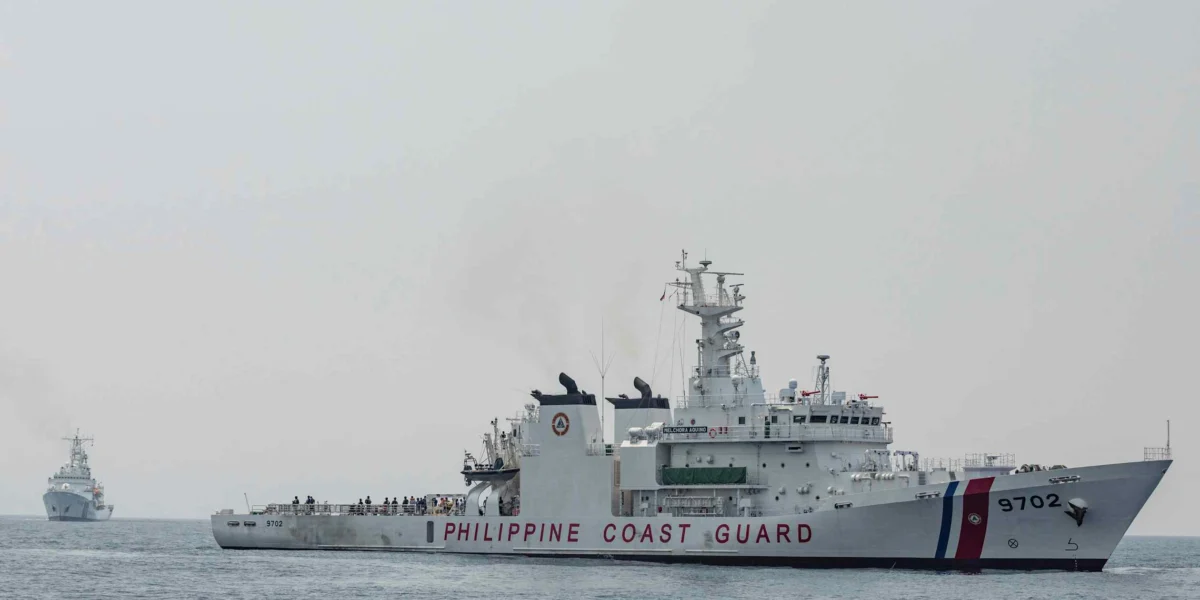
The Philippines and Japan, two nations increasingly aligned in the face of growing regional assertiveness, recently concluded a significant joint maritime exercise aimed at bolstering their interoperability and collaborative capabilities in the strategically vital South China Sea. The drills, which took place on June 6, 2023, off the coast of Bataan, Philippines, involved vessels from both the Philippine Coast Guard (PCG) and the Japan Coast Guard (JCG). The exercise underscored a deepening security partnership, a trend observed across the Indo-Pacific region as countries seek to enhance their collective maritime domain awareness and response mechanisms.
Background of Enhanced Cooperation
This latest joint exercise is not an isolated event but rather a tangible manifestation of a broader, multi-year trend of escalating cooperation between Manila and Tokyo. The backdrop for this intensified partnership is the increasingly assertive posture of China in the South China Sea, a maritime area through which a significant portion of global trade flows and which is rich in natural resources. For the Philippines, which has experienced numerous standoffs and confrontations with Chinese vessels in its exclusive economic zone (EEZ), particularly around the Second Thomas Shoal and Scarborough Shoal, enhancing its maritime security capabilities is a paramount concern. Japan, too, has its own security concerns regarding China’s actions, including territorial disputes in the East China Sea and its expanding naval presence.
The security relationship between the Philippines and Japan has seen a marked increase in depth and breadth over the past decade. This includes a series of bilateral agreements, defense dialogues, and, crucially, joint training exercises. These collaborations extend beyond mere symbolic gestures; they are designed to build practical capacity in areas such as maritime patrol, law enforcement, search and rescue (SAR), and disaster response. The participation of the Philippine Coast Guard’s BRP Melchora Aquino (MRRV-9702) and Japan Coast Guard’s Akitsushima (PLH-32) in these recent drills exemplifies this commitment to tangible operational coordination.
Timeline of Escalating Maritime Engagement
The roots of this particular joint exercise can be traced back to earlier engagements and a consistent pattern of bilateral maritime diplomacy.
- 2016: The Philippines and Japan sign a Memorandum of Cooperation on Defense, laying the groundwork for expanded security ties.
- 2017: Japan provides the Philippines with two large patrol vessels, the BRP Davao del Sur and BRP Tarlac, and announces the planned transfer of six TC-90 patrol aircraft to the Philippine Navy and Coast Guard, enhancing their aerial surveillance capabilities.
- 2018: The first joint maritime exercises between the PCG and JCG are conducted, focusing on search and rescue operations.
- 2019: The Philippines and Japan conduct their first joint naval exercises, further broadening the scope of military cooperation.
- 2020: Japan pledges to provide the Philippines with a loan for the procurement of five new multi-role patrol vessels, reinforcing the PCG’s capacity.
- 2021: During a period of heightened tensions in the South China Sea, both countries reaffirm their commitment to a free and open Indo-Pacific and pledge to enhance maritime security cooperation.
- 2022: The Philippines and Japan elevate their diplomatic ties to a "Special Strategic Partnership," signaling a deepening of their bilateral relationship across all domains, including security. This year also saw increased joint patrols and training exercises, including a notable one involving PCG and JCG vessels.
- June 6, 2023: The joint exercise involving the BRP Melchora Aquino and the Akitsushima takes place off the coast of Bataan, focusing on search and rescue collaboration and enforcement.
This chronological progression illustrates a deliberate and sustained effort by both nations to fortify their maritime security partnership in response to evolving regional dynamics.
Supporting Data and Capabilities
The vessels involved in the June 6 drills represent significant assets for their respective coast guard forces. The Philippine Coast Guard’s BRP Melchora Aquino (MRRV-9702) is a 97-meter offshore patrol vessel, built in Japan by Mitsui E&S Shipbuilding. It is part of the MRRV-970 class, designed for extended maritime patrols, law enforcement, and disaster relief operations. These vessels are equipped with advanced communication systems and are capable of deploying smaller boats for interdiction and rescue missions. The acquisition of these vessels, facilitated by Japanese aid and expertise, has substantially augmented the PCG’s operational reach and endurance.
The Japan Coast Guard’s Akitsushima (PLH-32) is a larger and more capable vessel, a Kunisaki-class patrol vessel. These ships are typically equipped with advanced surveillance systems, including radar and sonar, and are designed for long-duration missions. They often carry helicopters, significantly enhancing their search and rescue capabilities, aerial reconnaissance, and the ability to respond rapidly to incidents at sea. The presence of such a capable Japanese vessel underscores the sophistication and scope of the joint training.
The exercises themselves likely encompassed a range of simulated scenarios designed to test and improve coordination. These could include:
- Search and Rescue Operations: Practicing coordinated efforts to locate and rescue individuals or vessels in distress, a critical function for coast guards operating in busy maritime routes.
- Maritime Law Enforcement: Simulating scenarios involving illegal fishing, smuggling, or other maritime crimes, where joint interdiction and boarding procedures would be rehearsed.
- Communication and Navigation: Ensuring seamless communication protocols and synchronized navigation between vessels of different navies, crucial for effective joint operations.
- Information Sharing: Practicing the exchange of critical maritime intelligence and situational awareness, vital for monitoring and responding to potential threats.
The effectiveness of such exercises can be measured by the improvement in response times, the clarity of command and control, and the successful execution of simulated tasks. While specific metrics from this single exercise are not publicly available, the continued commitment to such drills suggests a positive impact on the operational readiness of both coast guards.
Official Responses and Strategic Alignment
While specific official statements directly addressing this particular exercise were limited in the immediate aftermath, the broader strategic alignment between the Philippines and Japan regarding maritime security is well-documented. Both nations are key partners in the US-led Indo-Pacific strategy, which emphasizes the importance of maintaining a free, open, and secure maritime environment.
Philippine officials, including those from the Department of National Defense and the Philippine Coast Guard, have consistently highlighted the importance of partnerships with like-minded nations like Japan and the United States to enhance their maritime security capabilities. They often cite the need to protect their sovereignty, sovereign rights, and maritime interests in accordance with international law, particularly the UN Convention on the Law of the Sea (UNCLOS).
Japanese officials have similarly articulated their commitment to a "Free and Open Indo-Pacific" and have stressed the importance of strengthening partnerships with Southeast Asian nations to ensure regional stability. The JCG, in particular, plays a crucial role in Japan’s foreign policy, providing technical assistance, training, and conducting joint exercises with coast guard forces across the region.
The United States, a long-standing ally of both the Philippines and Japan, has actively supported and encouraged these bilateral and trilateral maritime security initiatives. The US views such partnerships as essential for maintaining a balance of power in the Indo-Pacific and deterring potential aggressors. Joint exercises involving the US, Japan, and the Philippines, though not directly part of this specific PCG-JCG drill, often occur and further enhance interoperability among these key regional players.
Broader Impact and Implications
The joint exercise between the Philippine and Japan Coast Guards carries significant implications for regional security and maritime governance.
Enhanced Deterrence and Stability
The visible cooperation between the Philippines and Japan sends a clear signal to regional actors that these nations are prepared to work together to uphold international law and maintain maritime order. This can contribute to a more stable maritime environment by acting as a deterrent against unilateral actions that could challenge the existing rules-based order.
Capacity Building and Interoperability
For the Philippines, these exercises are crucial for building its capacity to effectively patrol and protect its vast maritime domain. The transfer of knowledge, technology, and best practices from the more experienced Japan Coast Guard significantly enhances the PCG’s operational effectiveness. Improved interoperability means that in a real-world crisis, such as a major maritime incident or a humanitarian disaster, the two forces can respond more efficiently and effectively.
Upholding International Law
By focusing on maritime law enforcement and search and rescue, these exercises reinforce the importance of international maritime law, particularly UNCLOS. This is critical in a region where territorial disputes and competing claims can lead to friction. Joint patrols and enforcement activities demonstrate a commitment to a rules-based approach to maritime governance.
Strengthening Alliances and Partnerships
The exercise is a testament to the strengthening security architecture in the Indo-Pacific. It complements existing alliances and partnerships, creating a more robust network of countries committed to regional security. This trend of deepening cooperation is likely to continue as nations collectively address shared security challenges.
Economic Implications
A stable and secure maritime environment is crucial for the unimpeded flow of trade and commerce. The South China Sea is a vital global shipping lane, and any disruption can have significant economic consequences. By working together to ensure maritime security, the Philippines and Japan contribute to the economic prosperity of the region and beyond.
Future Trajectory
The success of this and previous joint exercises will likely pave the way for even more ambitious collaborations in the future. This could include more complex trilateral exercises involving the United States, as well as expanded cooperation in areas such as maritime domain awareness, cybersecurity, and the development of advanced maritime technologies. The sustained commitment to these joint efforts signals a long-term strategic vision for a secure and prosperous Indo-Pacific, built on a foundation of strong bilateral and multilateral partnerships. The presence of the BRP Melchora Aquino and the Akitsushima operating in tandem is more than just a photo opportunity; it is a concrete demonstration of a shared commitment to peace, stability, and the rule of law in one of the world’s most critical maritime regions.
