

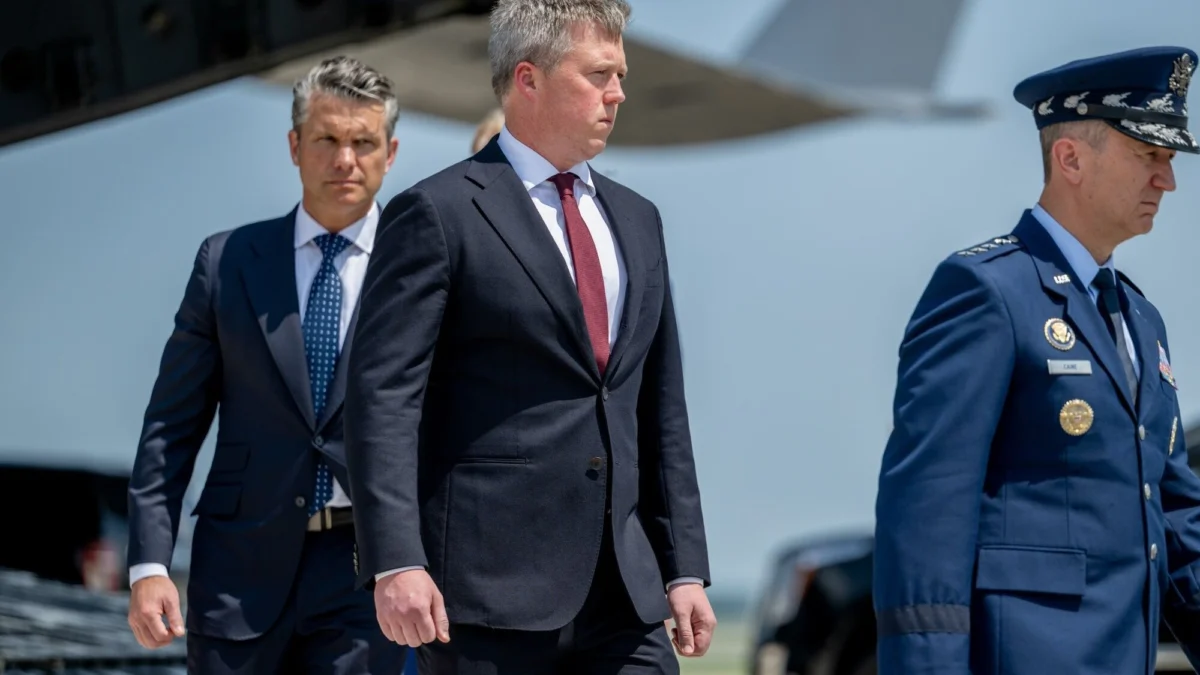
Washington D.C. – The United States Army is undergoing a significant leadership transition as Daniel Driscoll, the civilian Secretary of the Army, has reportedly submitted his resignation. The news, first reported by CNN and Fox News citing anonymous sources, signals further turbulence within the Pentagon and raises questions about the stability of senior leadership within the nation’s largest military branch. Driscoll’s tenure, which lasted a mere eighteen months, was marked by close association with Vice President JD Vance, and his departure comes amidst swirling speculation about internal disagreements.
The Army, as a branch of the U.S. military, is typically led by two key figures: the civilian Secretary, responsible for its administration and management, and the Chief of Staff, the senior-most military officer who oversees operations and readiness. This dual leadership structure is designed to ensure civilian oversight of military matters, a cornerstone of American defense policy. However, recent events suggest a potential breakdown in this delicate balance.
H2: A Short Tenure and Growing Tensions
Daniel Driscoll’s appointment as Secretary of the Army was seen by many as a move to align the branch more closely with the priorities of the current administration. His relatively brief tenure, however, has been punctuated by reports of significant friction, particularly with Secretary of Defense Pete Hegseth. While the exact nature of these disputes remains largely undisclosed, sources suggest they have reached a critical point, leading to Driscoll’s decision to step down.
The U.S. Army, with a personnel strength numbering in the hundreds of thousands and a budget in the tens of billions of dollars, plays a crucial role in national security. Any instability at its highest civilian leadership level can have ripple effects on morale, strategic planning, and operational effectiveness. Driscoll’s resignation adds to a recent pattern of high-level departures from the Department of Defense, suggesting a period of significant flux.

H2: A Preceding Departure and Allegations of Conflict
Driscoll’s resignation follows closely on the heels of another high-profile departure from the Army’s leadership. In early April, Secretary Hegseth reportedly pressured the then-Army Chief of Staff, General Randy George, into resigning. This action alone sent ripples through the military community, as the removal of a four-star general is an uncommon and significant event. CNN reports indicate that Driscoll and General George had maintained a particularly close working relationship, suggesting that the events surrounding George’s departure may have contributed to the growing tensions between Driscoll and Secretary Hegseth.
The alleged conflict between Hegseth and Driscoll is reportedly not an isolated incident. Several U.S. media outlets have also reported on similar ongoing disputes between Secretary Hegseth and John Phelan, the Secretary of the Navy, who also recently departed from his post. These repeated instances of reported conflict between the Secretary of Defense and the civilian heads of military branches indicate a broader pattern of discord at the highest echelons of the Department of Defense. Such internal disagreements, if left unaddressed, can undermine the cohesive functioning of the military apparatus.
H3: The Army’s Dual Leadership Structure
Understanding the Army’s leadership structure is crucial to appreciating the implications of these resignations. The Secretary of the Army is a presidential appointee confirmed by the Senate, serving as the principal advisor to the Secretary of Defense on Army matters. This role encompasses the vast administrative and programmatic aspects of the branch, including personnel, training, equipping, and logistics.
Conversely, the Army Chief of Staff is the highest-ranking uniformed officer in the Army. The Chief of Staff is responsible for advising the Secretary of Defense and the President on military matters related to the Army, and for commanding the Army’s operations. The relationship between the civilian Secretary and the military Chief of Staff is intended to be one of collaboration and mutual respect, ensuring that military operations are conducted within the framework of civilian policy and strategic objectives. The reported departures of both the Army Chief of Staff and the Army Secretary within a short period suggest a significant disruption to this critical partnership.

H2: Broader Implications for National Security
The series of resignations and reported internal conflicts within the Pentagon raise significant questions about the stability and effectiveness of U.S. defense leadership. At a time of complex geopolitical challenges, including ongoing conflicts and evolving threats, a unified and stable military command structure is paramount.
The constant churn in senior leadership can lead to a perception of disarray, potentially impacting strategic decision-making, international alliances, and the morale of service members. It can also create opportunities for adversaries to exploit perceived weaknesses or divisions within the U.S. military. Furthermore, the frequent departures of high-ranking officials can disrupt ongoing policy initiatives and long-term strategic planning, as new leaders may bring different priorities and approaches.

H3: A Pattern of Departures in the Defense Establishment
The recent departures from the Army and Navy are not isolated incidents. Over the past several months, a number of other high-ranking civilian officials within the Department of Defense have also left their positions. This trend suggests a broader environment of contention or disagreement within the defense establishment, or perhaps a strategic realignment of leadership priorities.
The cumulative effect of these departures means that critical leadership roles are being filled and refilled, potentially leading to a lack of institutional memory and continuity in policy. The vetting and confirmation process for these positions can be lengthy, further exacerbating potential leadership vacuums.

H2: Analysis: The Interplay of Civilian and Military Authority
The reported friction between Secretary Hegseth and his civilian subordinates, Driscoll and Phelan, highlights the inherent tension between civilian oversight and military command. While civilian leadership is essential for ensuring democratic accountability and setting strategic direction, effective military operations rely on the expertise and operational command of uniformed officers.
When these lines of authority become blurred or when disagreements devolve into personal conflict, the entire defense apparatus can suffer. The reported pressure on General George to resign, for instance, raises concerns about the appropriate use of civilian authority over military leadership. Similarly, the reported disputes between Secretaries Hegseth and Phelan suggest that inter-branch cooperation and strategic alignment may be facing challenges.

H3: Potential Impact on Military Readiness and Modernization
The ongoing leadership flux at the Pentagon could have tangible consequences for military readiness and modernization efforts. Key programs and strategic initiatives may be delayed or altered as new leaders take the helm. For example, the Army and Navy are engaged in critical modernization efforts to adapt to future warfare, including advancements in artificial intelligence, cyber capabilities, and advanced weaponry. Leadership instability can hinder the consistent implementation of these long-term strategies.
The ability of the U.S. military to maintain its technological edge and operational superiority depends on stable and experienced leadership. The current situation underscores the importance of clear communication, defined roles, and a collaborative approach among all levels of the defense hierarchy.

H2: Looking Ahead: The Search for Stability
The resignation of Daniel Driscoll marks another significant development in a period of considerable upheaval within the U.S. military leadership. As the administration seeks to fill these critical positions, the focus will undoubtedly be on finding individuals who can foster stability, ensure cohesive leadership, and effectively navigate the complex challenges facing the Department of Defense. The coming months will be crucial in determining whether the Pentagon can regain its equilibrium and project an image of strength and decisiveness on the global stage. The selection of Driscoll’s successor, and indeed any subsequent appointments, will be closely watched for indications of the administration’s approach to defense leadership and its commitment to the principles of civilian control and military effectiveness.
