

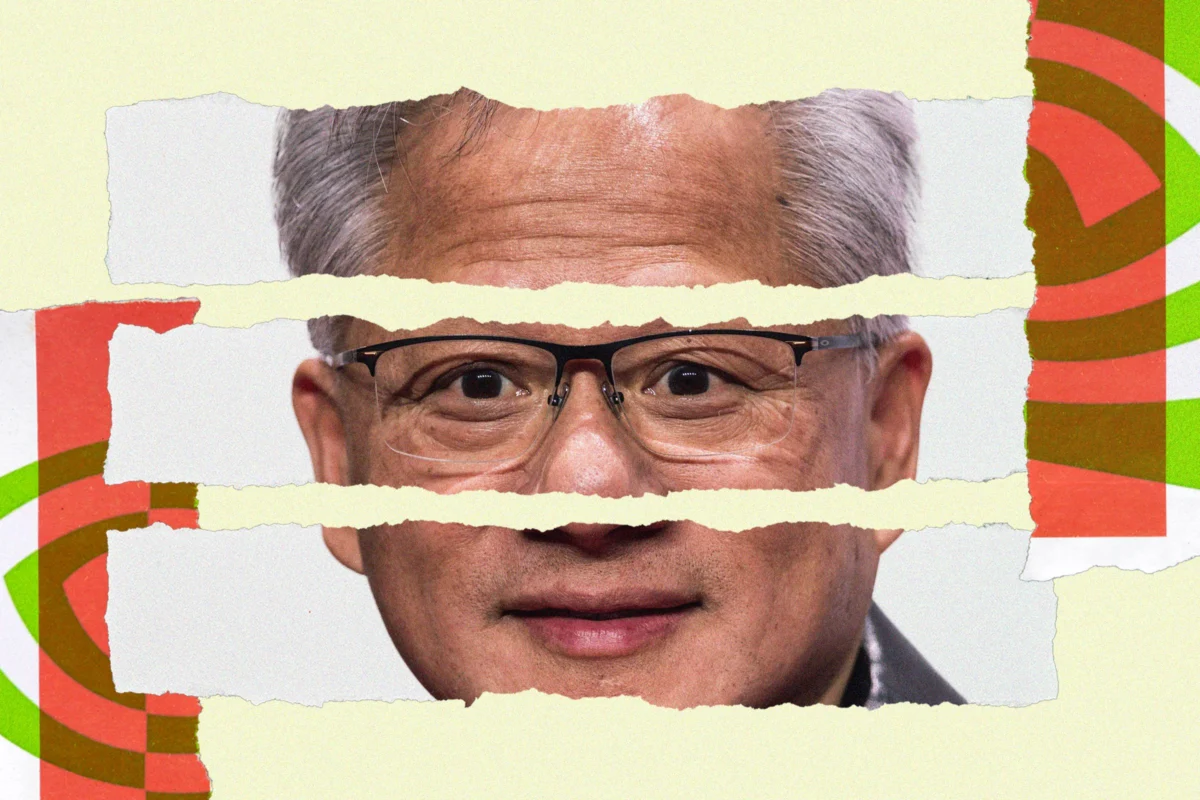
Five days after stepping down as chief executive of Nvidia, Jensen Huang has expressed his openness to returning to the helm of the semiconductor giant, citing an overwhelming wave of support from employees, investors, and business partners. The dramatic turn of events follows a turbulent period for Huang and the company, marked by revelations of personal misconduct and a subsequent internal investigation.
Huang’s statement, published Tuesday morning on X (formerly Twitter), revealed that since his resignation, he has been inundated with requests for his return. "I have received an outpouring of calls from Nvidia’s employees, investors, business partners, and customers for me to return as CEO," Huang stated. He further elaborated, "If the board of directors decides that my return is in the best interest of our shareholders, our employees, the company, and America, I would be honored to answer these calls and return as CEO." This declaration signals a significant shift in the narrative surrounding his departure, indicating a potential comeback driven by strong internal and external advocacy.
The former CEO also took the opportunity to express gratitude for the "kindness" shown to him and his family, acknowledging the "love and support of friends, industry colleagues, and people I’ve never met." He reiterated his deep affection for both the United States and Nvidia, while also acknowledging his remorse for his "unfaithfulness to his wife," a sentiment he had previously conveyed in a company-wide email.
A Rapid Succession of Events
Huang’s resignation, announced just five days prior, was precipitated by an internal investigation launched by Nvidia into an admitted affair with Chinese businesswoman Alice Huang, who shares no known relation to Jensen Huang. Reports indicated that Huang had allegedly misled the company’s general counsel and chief marketing officer regarding this affair.
The timeline of these disclosures is critical to understanding the unfolding situation:
- October 2025: The New York Times first reported Jensen Huang’s association with Alice Huang, also known as Huang Le.
- Spring 2026: An intelligence memo reportedly circulated among Trump administration officials, suggesting a potential link between Alice Huang and China’s Ministry of State Security (MSS).
- November 6, 2026: The New York Times and the Financial Times reported on these intelligence findings, raising questions about Alice Huang’s alleged ties to the MSS. The Chinese government has since rejected these claims.
- November 11, 2026: The New York Times published a report detailing a second alleged affair involving Jensen Huang, this time with a direct report at Nvidia.
- November 12, 2026: Following Huang’s resignation, Reuters reported on an alleged third affair with another Nvidia employee.
- November 12, 2026: Nvidia officially announced Jensen Huang’s resignation as CEO.
- November 13, 2026: Colette Kress, Nvidia’s long-serving Chief Financial Officer, was appointed interim CEO.
- November 15, 2026: President Donald Trump publicly stated he "would not mind" if Huang returned as CEO, suggesting Huang had "learned a big lesson."
- November 16, 2026: Reports indicated that Nvidia’s board of directors was not considering reinstating Huang as CEO.
- November 17, 2026: Huang published his statement on X expressing openness to returning.
- November 17, 2026: Nvidia’s board announced the establishment of a National Security and Export Control Oversight Committee.
This rapid succession of events highlights the volatile nature of the situation, with public opinion and internal sentiment seemingly at odds with the board’s initial stance.
The Storm of Allegations and Investigations
The core of the controversy lies in Jensen Huang’s admitted affair with Alice Huang. While Huang has acknowledged the infidelity, the implications of his business dealings and the alleged misinformation provided to company leadership have cast a long shadow. Nvidia’s code of conduct explicitly discourages "personal relationships" that "may create a conflict of interest," a guideline that appears to have been breached.
The allegations of a second and third affair with Nvidia employees further compounded the issues. These reports, amplified by prominent news outlets, raised serious questions about leadership ethics and corporate governance within one of the world’s most influential technology companies. The mere existence of an internal investigation into these matters, coupled with the reported misleading of senior executives, created an untenable situation for Huang’s continued leadership.
Public and Employee Support Mounts
Despite the serious nature of the allegations and the company’s initial response, a powerful groundswell of support for Jensen Huang has emerged. On the same day of his resignation, Nvidia employees initiated a petition to the board calling for his reinstatement. This internal appeal quickly gained significant traction, reportedly garnering over 1,600 comments within hours.
This sentiment has been echoed and amplified by a broader public campaign. A dedicated online petition, titled "Stand With Jensen," has garnered over 193,000 signatures. Notably, this includes more than 11,000 self-identified current and former Nvidia employees and over 100,000 self-identified shareholders. The visibility of this petition has been further boosted by endorsements from influential figures in the tech industry. Elon Musk, CEO of Tesla and SpaceX, announced his intention to sign the petition, and Garry Tan, CEO of Y Combinator, claimed to have already done so.
Former President Donald Trump also weighed in, telling reporters on Monday that he "would not mind" if Huang returned as CEO, adding his belief that Huang had "learned a big lesson." This public endorsement from a former head of state, while not directly influencing board decisions, adds another layer of complexity to the public discourse.
Board’s Position and Strategic Realignment
In contrast to the vocal public and employee support, Nvidia’s board of directors has, according to reports, maintained a firm stance against Huang’s immediate reinstatement. On Monday, the board reportedly stated it was "not considering" reinstating Huang as CEO. This indicates a clear division between the board’s fiduciary responsibilities and the desires of many stakeholders.
Adding a new dimension to the company’s strategic response, the board announced on Tuesday the establishment of a National Security and Export Control Oversight Committee. This committee will provide "board-level oversight of the company’s national security policies, export control compliance and global trade risk management." This move suggests a proactive approach to addressing potential geopolitical risks and regulatory scrutiny, particularly given the context of the allegations involving Alice Huang and her alleged ties to Chinese intelligence. The creation of such a committee, independent of the CEO’s immediate role, could be seen as a measure to reinforce compliance and governance standards, especially in light of the recent controversies.
Implications for Nvidia and the Semiconductor Industry
Jensen Huang’s tenure at Nvidia has been transformative. Under his leadership, the company ascended to become a dominant force in the semiconductor industry, particularly renowned for its pivotal role in the artificial intelligence revolution. Nvidia’s graphics processing units (GPUs) are indispensable for AI training and inference, making the company a linchpin in the global technological landscape.
The current turmoil presents several significant implications:
- Leadership Stability: The protracted uncertainty surrounding the CEO position could impact investor confidence and strategic decision-making. While Colette Kress is serving as interim CEO, a permanent solution is crucial for long-term stability.
- Corporate Governance: The events have raised questions about Nvidia’s internal controls and how leadership personal conduct is managed. The board’s response and the new committee’s mandate will be closely watched.
- Geopolitical Sensitivity: The alleged connections to Chinese intelligence entities, however unproven, highlight the increasing geopolitical complexities faced by global technology companies. Nvidia’s significant operations in China and its role in critical technologies make it a focal point for international scrutiny.
- Talent Retention and Morale: The strong employee support for Huang suggests a deep loyalty, but the ongoing scandal and leadership transition could still affect morale and retention if not handled transparently and effectively.
- Market Perception: While Nvidia’s stock has shown resilience, sustained leadership questions or perceived governance weaknesses could eventually influence market perception and valuation.
The coming days and weeks will be critical in determining the ultimate outcome for Jensen Huang and Nvidia. The board’s decision, influenced by its legal and ethical obligations, will be paramount. However, the unprecedented level of public and employee advocacy for Huang’s return underscores his profound impact on the company and the broader tech industry, creating a complex scenario where stakeholder voices are undeniably loud. The establishment of the National Security and Export Control Oversight Committee signals a strategic pivot, aiming to fortify the company’s position in an increasingly scrutinized global environment, irrespective of the final decision regarding its chief executive.
