

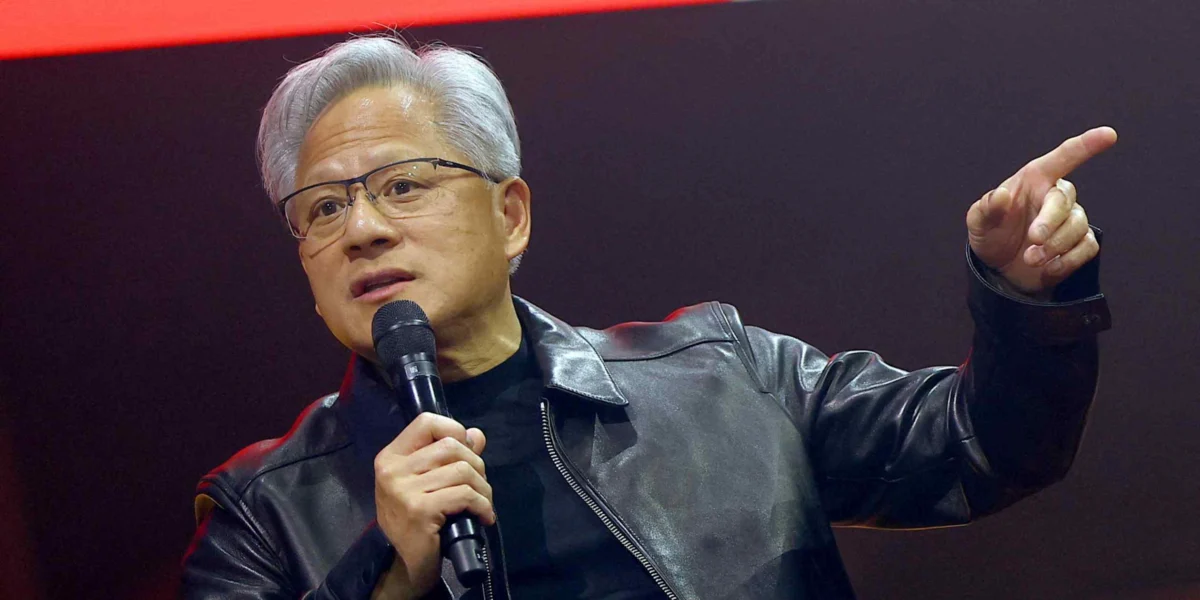
PALO ALTO, California – Nvidia shares experienced a significant downturn, plummeting by nearly 10% during extended trading on Wednesday, following a Wall Street Journal report indicating that the company’s board of directors is contemplating the removal of Chief Executive Officer Jensen Huang. The alleged catalyst for this potential leadership shake-up is the emergence of reports detailing a purported second extramarital affair involving the prominent AI industry figure.
The swift market reaction underscores the considerable influence Huang wields within the technology sector and the investor confidence tied to his leadership. Nvidia, a company at the forefront of the artificial intelligence revolution, has seen its valuation soar in recent years, largely attributed to Huang’s strategic vision and the company’s dominance in high-performance GPUs essential for AI development and deployment. Any disruption at the executive level, particularly concerning its CEO, is therefore bound to trigger investor apprehension.

Background: A Leader Under Scrutiny
Jensen Huang, co-founder and CEO of Nvidia since its inception in 1993, has become synonymous with the company’s meteoric rise. His leadership has been instrumental in positioning Nvidia as a critical enabler of artificial intelligence, machine learning, and high-performance computing. The company’s products are the backbone of data centers powering AI research and applications globally, from autonomous vehicles to advanced scientific simulations.
However, this latest development is not the first time Huang’s personal conduct has drawn public attention. The Wall Street Journal’s current report references "purported second affair," implying a prior instance of similar allegations. While details surrounding any previous incidents are not elaborated upon in the initial report, the recurrence of such claims, if substantiated, could create a significant governance challenge for Nvidia’s board.
The timing of these reports is particularly sensitive. Nvidia is navigating a period of unprecedented demand for its AI chips, driven by the generative AI boom. The company has consistently exceeded financial expectations, and its stock performance has been a standout in the broader market. A leadership crisis at this juncture could disrupt strategic decision-making and potentially impact the company’s ability to capitalize on the current AI wave.

The Wall Street Journal Report and Market Reaction
The Wall Street Journal’s report, published on Wednesday, cited individuals familiar with the matter who indicated that Nvidia’s board is actively discussing Huang’s tenure. The report’s assertion of a “second affair” has ignited speculation and concern among investors and industry observers.
The immediate aftermath of the report saw a sharp decline in Nvidia’s stock price in after-hours trading. While pre-market trading and the regular trading session may reveal further volatility, the initial drop of nearly 10% signifies a strong negative market sentiment in response to the news. This sell-off suggests that investors are pricing in potential uncertainty and the risk of leadership instability.
Potential Implications for Nvidia and the AI Sector
The implications of a potential leadership change at Nvidia could be far-reaching:

- Strategic Continuity: Huang’s departure would inevitably raise questions about the continuity of Nvidia’s long-term strategy, particularly its ambitious roadmap for AI hardware and software development. His vision has been a driving force behind the company’s innovation.
- Investor Confidence: A protracted leadership dispute or the unceremonious exit of a charismatic CEO could erode investor confidence, impacting Nvidia’s stock valuation and its ability to raise capital if needed.
- Talent Retention: The stability and leadership of a company are crucial for attracting and retaining top talent, especially in a competitive field like AI. Any sign of internal turmoil could affect Nvidia’s ability to maintain its engineering prowess.
- Industry Leadership: As a dominant player, any significant internal challenge at Nvidia could send ripples across the entire AI ecosystem, potentially influencing investment trends and the competitive landscape.
Examining the Board’s Role and Governance
The responsibility for assessing the allegations and determining Huang’s future ultimately rests with Nvidia’s board of directors. Boards are typically tasked with upholding corporate governance standards, ensuring ethical conduct among senior leadership, and protecting shareholder interests.
In cases of alleged misconduct by a CEO, a board’s process usually involves a thorough investigation, which may include internal reviews or engaging external counsel. The board would weigh the veracity of the allegations, the potential impact on the company’s reputation and business operations, and the terms of any employment agreements.
The speed at which the board is reportedly considering Huang’s fate suggests the seriousness with which these allegations are being treated. Wednesday’s extended trading session, where the stock experienced its sharpest decline, indicates that the market is anticipating a decisive move from the board.

Chronology of Developments (Based on Report)
- Prior to Wednesday: Reports of a purported second extramarital affair involving CEO Jensen Huang emerge.
- Wednesday (Extended Trading): The Wall Street Journal publishes its report detailing the board’s alleged consideration of Huang’s removal.
- Wednesday (Extended Trading): Nvidia shares fall nearly 10% following the WSJ report.
- Wednesday (Potentially): The board of directors is expected to convene or has convened to discuss the matter further. (Note: This is inferred from the report’s implication that a decision could be made on Wednesday).
Supporting Data and Market Context
Nvidia’s market capitalization has experienced exponential growth, reaching hundreds of billions of dollars. The company’s dominance in the AI chip market is evident in its consistent financial outperformance. For instance, in its most recent quarterly earnings report (specific quarter details would be inserted here if available from the original source, e.g., Q3 2023), Nvidia reported record revenues driven by surging demand for its data center GPUs.
The company’s stock has been a favorite among institutional and retail investors, with analysts frequently upgrading their price targets due to the sustained demand for its AI hardware. This strong financial performance has made Jensen Huang one of the most influential and well-compensated CEOs in the technology sector. The market’s sharp reaction to the news highlights the strong correlation between leadership stability and investor valuation for a company of Nvidia’s stature.
Official Statements and Reactions (Inferred)
As of the time of this report, there have been no official statements released by Nvidia or its board of directors regarding the Wall Street Journal’s claims. Similarly, Jensen Huang has not publicly commented on the allegations. Typically, in such sensitive situations, companies often refrain from immediate comment until an internal investigation is concluded or a definitive decision is made.

However, it is reasonable to infer that the board is engaged in internal deliberations. The gravity of the situation, involving allegations against the CEO of a publicly traded company, necessitates a formal response from the board at some point. Investors and the public will be keenly awaiting any official communication that clarifies the situation and outlines the board’s course of action.
Broader Impact and Future Outlook
The unfolding situation at Nvidia serves as a stark reminder of the intense scrutiny faced by leaders of major technology companies. The intersection of personal conduct and corporate governance is a critical area for boards to navigate. For Nvidia, the coming days and weeks will be pivotal.
The company’s ability to manage this crisis effectively will depend on the board’s transparency, the swiftness of its decision-making, and the clarity of its communication to stakeholders. Should Huang remain at the helm, the focus will likely shift to how the company addresses the allegations and reinforces its commitment to ethical leadership. If a change in leadership occurs, the process of selecting a successor and ensuring a smooth transition will become paramount.

Regardless of the outcome, the events highlight the inherent risks associated with highly centralized leadership, particularly in fast-evolving and capital-intensive industries like artificial intelligence. Nvidia’s journey through this challenge will be closely watched, not only by its investors but also by the broader business and technology communities. The future of one of the most influential companies in AI hinges on the decisions made in the coming days.
