

Nike Inc. has unveiled an ambitious strategic roadmap and financial targets stretching to fiscal year 2031, presenting a bold vision for growth and profitability during its first investor day in nine years. The sportswear giant, facing a prolonged period of market challenges and a significant decline in its stock value, sought to reassure investors that its turnaround strategy is gaining traction and poised to deliver substantial long-term returns. The announcements, made on Tuesday, reinforced its existing fiscal year 2027 guidance while laying out aggressive new goals for the subsequent four years, signaling a commitment to reignite growth and reclaim cultural dominance in a fiercely competitive global landscape.
The core of Nike’s future trajectory was encapsulated in its reaffirmation of fiscal year 2027 financial guidance, which anticipates a revenue decline in the high-single-digit range, an adjusted operating margin of approximately 6%, and adjusted earnings per share (EPS) between $1.15 and $1.35. These near-term projections reflect the ongoing restructuring and market adjustments the company is undertaking. However, the true aspiration was revealed in the longer-term framework: by the end of fiscal year 2031, Nike is targeting approximately $5 billion in incremental revenue growth from fiscal year 2027, operating margins of 12% to 14%, and adjusted earnings per share ranging from $3.00 to $3.50. The company attributes its ability to achieve these significant leaps to a focus on higher-quality revenue, strategic gross margin expansion, and company-wide productivity improvements.
"Full Stride Ahead": A New Strategic Imperative
Central to Nike’s revitalized growth plan is a new strategy dubbed "Full Stride Ahead." This initiative, as articulated by the company, aims "to get closer to athletes and focus resources on the greatest opportunities for long-term growth." CEO Elliott Hill elaborated on this vision in an interview, stating that the new direction is fundamentally about "being closer to the athletes we serve." Hill emphasized a renewed commitment to innovation, noting, "What’s different today is the depth and breadth we’re taking from an innovation perspective." This focus on innovation is critical, as Nike seeks to differentiate itself in a market increasingly saturated with performance-wear brands and rapidly evolving consumer preferences.
Beyond technological advancements, the "Full Stride Ahead" strategy places a strong emphasis on regaining cultural relevance, an area where Nike has acknowledged a perceived drop-off. This perceived decline has contributed to a slowdown in key markets, particularly its home market of North America and the crucial Chinese market. To counter this, Nike will strategically concentrate its efforts on performance sports and sportswear opportunities deemed to have "the greatest potential for long-term growth." The company has identified five priority sports that will receive heightened focus: running, training, global football (soccer), basketball, and outdoor. These categories represent both historical strengths and significant future growth avenues, allowing Nike to leverage its heritage while adapting to evolving athletic and lifestyle trends.
A Challenged Path: Recent Performance and Restructuring
The ambitious targets for 2031 come against a backdrop of a challenging period for Nike. The company has been grappling with a years-long slump characterized by intense competition, shifting consumer habits, and macroeconomic pressures. Over the past two years, shares of Nike have fallen by 50%, reflecting investor concerns about its growth trajectory and profitability.
Just last month, the company reported mixed fiscal first-quarter results for 2027, which saw both net income and revenue decline compared to the previous year. This performance coincided with the announcement of a significant restructuring plan, including layoffs slated to begin next year. This marks the third round of job cuts announced by Nike within the current fiscal year, underscoring the urgency of its cost-saving and efficiency initiatives. The broader turnaround plan, known internally as "Pace," focuses on optimizing the company’s supply chain and reorganizing into three distinct geographies. This comprehensive overhaul is projected to deliver approximately $2.5 billion in savings through fiscal year 2031, providing crucial capital for reinvestment into strategic growth areas.
Geographic Rebalancing: China’s Decline and India’s Ascent
A critical element of Nike’s current challenges and future strategy lies in its geographic performance. The company has experienced significant and sustained declines in its once-booming China market. In the most recent quarter, revenue in China plummeted by 26% compared to a year ago. Market experts and analysts have increasingly pointed to a perceived loss of relevance for Nike in the country, attributing it to a rise in powerful domestic brands such as Anta and Li-Ning, which resonate more strongly with local consumers, coupled with geopolitical tensions impacting consumer sentiment towards international brands. Nike has acknowledged these challenges and stated it is actively working to win over younger consumers in China through localized marketing, product innovation, and deeper cultural engagement.
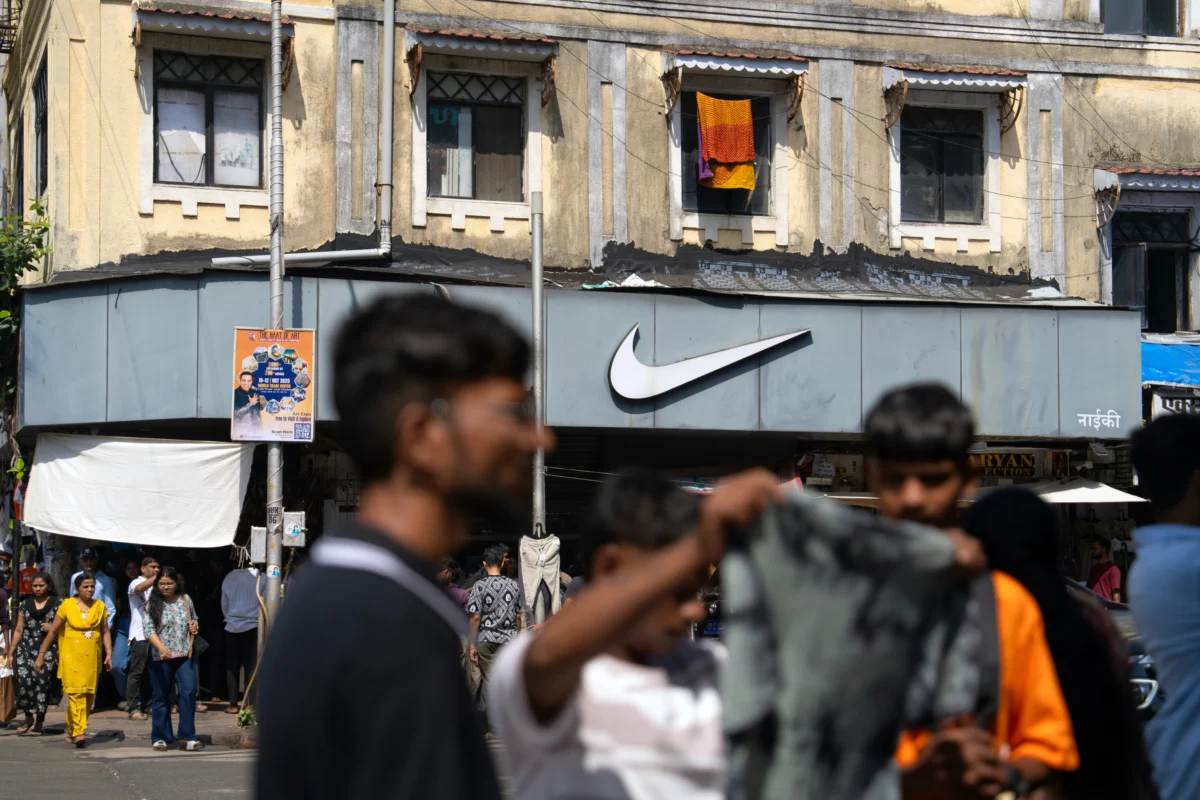
Simultaneously, Nike is embarking on a strategic expansion into India, positioning the country as a key growth engine for the future. Last quarter, the company announced plans to establish a new global campus in India, signaling a significant commitment to the market. Nike’s COO, Venkatesh Alagirisamy, highlighted the immense potential, stating that the company sees an opportunity to triple its business in India over the next five years. Alagirisamy emphasized how Nike’s broader strategic pillars—brand building, delivering innovations to marketplaces in a locally connected fashion, and operating with a faster pace—are particularly well-aligned with the aspirations and dynamic growth of the Indian market. This dual focus underscores a calculated rebalancing of global priorities, aiming to mitigate risks in one major market by accelerating growth in another high-potential region. While building out its India presence, Nike reiterated its commitment to remaining focused on revitalizing its performance in China.
Macroeconomic Headwinds and Consumer Behavior
Beyond internal strategic adjustments, Nike’s performance has also been significantly impacted by broader macroeconomic pressures. Rising inflation, mounting geopolitical tensions, and general economic uncertainty have collectively exerted pressure on consumer spending power. As discretionary income tightens, consumers are becoming more judicious with their purchases, potentially shifting away from premium-priced sportswear or extending the lifespan of existing products. This environment necessitates a more compelling value proposition from Nike, whether through enhanced product performance, stronger brand affinity, or more competitive pricing strategies. CEO Elliott Hill acknowledged that while there have been some signs of progress in the North America business, this improvement has not been sufficient to offset the pervasive pressures experienced elsewhere, particularly in international markets.
Investor Day: A Bid for Confidence
The investor day itself was a critical juncture for Nike, designed to instill confidence in a skeptical market. For nearly a decade, investors have awaited a comprehensive update on the company’s long-term vision. The detailed financial framework, the "Full Stride Ahead" strategy, and the candid assessment of challenges alongside ambitious targets were all carefully curated to demonstrate a clear path forward. The emphasis on innovation, cultural relevance, and strategic geographic rebalancing serves as a blueprint for regaining market share and improving financial performance.
Analysts will be closely scrutinizing the execution of these plans, particularly the ability to achieve the ambitious 2031 targets while navigating the immediate challenges outlined in the 2027 guidance. The success of the "Pace" restructuring in delivering promised savings, the effectiveness of the "Full Stride Ahead" strategy in reconnecting with consumers, and the turnaround efforts in China will be key indicators of Nike’s trajectory. The company’s ability to innovate rapidly, adapt to localized market demands, and manage its supply chain efficiently will determine whether it can indeed run the "full stride ahead" toward its ambitious future goals and restore investor confidence after a period of significant volatility.
