

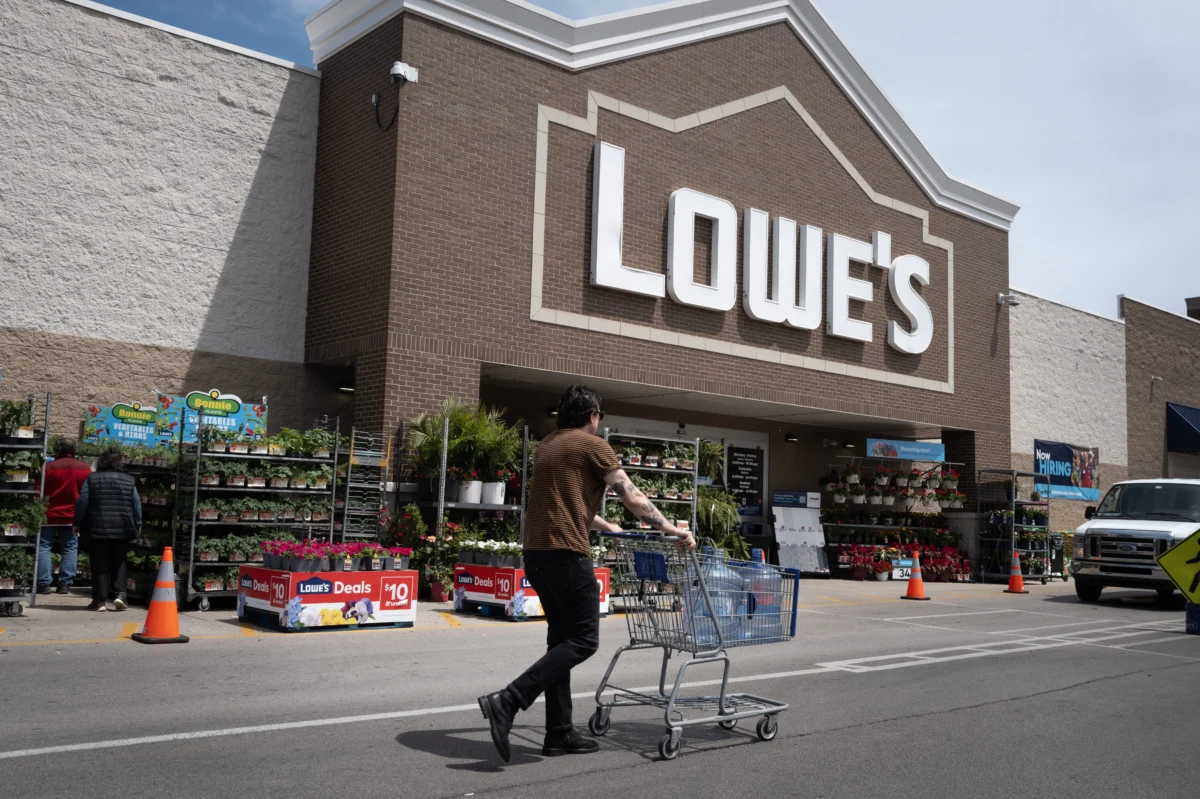
Lowe’s Companies, Inc. on Wednesday reported robust financial results for its fiscal third quarter, exceeding market expectations and prompting the home improvement giant to raise its full-year sales and comparable sales guidance. The strong performance was largely attributed to sustained strength within its professional customer segment and significant growth in online sales, signaling a resilient operational strategy amidst a challenging macroeconomic environment characterized by inflation, high interest rates, and a decelerating housing market.
Q3 Performance Highlights and Exceeding Expectations
For the fiscal third quarter, which concluded on October 30, Lowe’s recorded net sales of $22.76 billion. This figure represents a notable achievement, especially when benchmarked against prevailing economic conditions that have constrained consumer discretionary spending. Comparable sales, a key metric for retail health, grew by an impressive 1.8% during the quarter. This growth was primarily fueled by a substantial 17.4% increase in online sales, underscoring the company’s successful investments in its digital capabilities and omnichannel strategy. Additionally, the pro and home services sales segments demonstrated "solid" performance, indicating a strategic focus paying dividends.
The company’s net income for the quarter stood at $1.67 billion, or $2.98 per share, a positive uplift compared to $1.62 billion, or $2.88 per share, reported in the same period a year prior. These figures surpassed the consensus estimates from Wall Street analysts, who, based on a survey by LSEG, had likely anticipated a more conservative outcome given the broader economic pressures. The outperformance underscores Lowe’s operational efficiency and ability to capture market share despite external challenges.
Strategic Focus on the Pro Customer and Digital Transformation
A cornerstone of Lowe’s recent success, as highlighted by CEO Marvin Ellison, has been its unwavering focus on the professional shopper segment. Ellison noted that the company is actively "giving those pros what they need," which includes improvements in fulfillment capabilities and enhancements to its pro loyalty program. This strategic emphasis recognizes the distinct purchasing patterns and needs of professional contractors, who often require bulk orders, specialized tools, and efficient delivery or pickup options to manage their projects effectively. While do-it-yourself (DIY) customers and pro shoppers alike are reportedly scaling back on major renovation projects, they continue to invest in essential repair and maintenance tasks. This shift in spending patterns plays directly into Lowe’s strengths, particularly with its well-stocked inventory for everyday project needs and its tailored services for professionals.
The significant 17.4% surge in online sales is another testament to Lowe’s strategic foresight. In recent years, the company has heavily invested in its e-commerce platform, aiming to provide a seamless digital experience that complements its extensive physical store network. These investments include improved website navigation, enhanced mobile app functionality, and robust supply chain integration to support efficient order fulfillment, whether through curbside pickup, in-store collection, or direct delivery. This digital transformation has proven crucial in capturing market share, especially as consumer shopping habits increasingly lean towards online convenience.
Timeline of Performance and Economic Context
Lowe’s journey through recent quarters has been one of navigating persistent economic headwinds. CEO Marvin Ellison has consistently acknowledged the "pressure" on consumer spending, particularly as households grapple with elevated inflation and macroeconomic uncertainty. This cautious outlook was reiterated by Ellison in prior statements to CNBC, where he anticipated consumers would remain conservative through the end of the year.
Despite these challenges, Lowe’s has demonstrated remarkable resilience, with the fiscal third quarter marking its sixth consecutive quarter of comparable sales growth. This sustained positive trend indicates that the company’s strategic initiatives, particularly those targeting the pro segment and enhancing its omnichannel presence, are effectively offsetting broader market slowdowns. A notable highlight within this period was the performance of the appliances category, which recorded its largest revenue growth in five years, suggesting that even in a cautious spending environment, consumers are prioritizing essential home upgrades and replacements.
The broader economic backdrop for this quarter included persistent inflation, with the Consumer Price Index (CPI) remaining elevated, albeit showing signs of moderation. The Federal Reserve’s aggressive interest rate hikes throughout the year have directly impacted mortgage rates, which have soared to multi-decade highs, significantly cooling the housing market. Existing home sales have contracted, and new housing starts have faced headwinds, reducing demand for major home improvement projects that typically accompany home purchases or large-scale renovations. Consumers, facing tighter budgets and higher borrowing costs, have shifted their spending from discretionary, large-ticket renovations to more essential, smaller-scale repairs and maintenance – a trend Lowe’s has adeptly capitalized on.
Tariff Refunds and Financial Prudence
Adding to the positive financial picture, Lowe’s reported a pretax benefit of approximately $250 million from tariff refunds during the quarter. This unexpected windfall contributed a significant 34-cent boost to earnings per share. CEO Marvin Ellison stated that the company intends to strategically deploy these funds to "enhance the customer experience and bring value to shoppers." This could manifest in various ways, such as further investments in store modernization, technology upgrades, enhanced training for associates, or even targeted promotions and pricing strategies designed to provide greater value to both DIY and pro customers. The responsible allocation of these funds underscores Lowe’s commitment to long-term growth and customer satisfaction.
Managing Operational Costs Amidst Volatility
While the quarter presented many positives, Lowe’s executives also addressed ongoing operational challenges. During a call with analysts, CFO Brandon Sink highlighted the accelerating fuel costs as a significant concern that intensified through the third quarter. Sink noted that diesel prices had reached approximately $6 per gallon, representing about a 15% increase compared to the second quarter. These rising transportation costs directly impact Lowe’s supply chain and logistics, increasing the expense of delivering goods to stores and customers. "So we’re trying to continue to manage that, balance that, and we’re reflecting that into our Q4 guide," Sink explained, indicating that cost management and strategic pricing would remain critical priorities for the upcoming quarter. This proactive approach to managing inflationary pressures within its operating model is essential for maintaining profitability in a volatile economic landscape.
Revised Outlook and Future Optimism
Based on its strong Q3 performance, Lowe’s has confidently revised its full-year financial outlook. The company now anticipates full-year sales to reach approximately $92.5 billion, an increase from its previous projection of $92 billion. Furthermore, comparable sales are now expected to be up 0.5% for the full year, a significant improvement from its prior guidance of flat comparable sales. This upward revision signals management’s confidence in the company’s strategic direction and its ability to continue capturing market share.
Despite the prevailing economic uncertainties, CEO Marvin Ellison expressed optimism regarding consumer spending for the upcoming holiday season. He confirmed that November sales were aligning with the company’s internal expectations so far, suggesting a potentially stronger finish to the year than previously anticipated. This cautiously optimistic stance reflects a belief that despite broader economic pressures, certain consumer segments remain willing to spend, particularly on essential home-related items and gifts.
Broader Industry Context and Competitive Landscape
Lowe’s strong showing is not isolated, echoing similar trends observed within the home improvement sector. Its primary competitor, Home Depot, also reported comparable sales growth and noted resilience among professional shoppers earlier this week. This synchronized performance across industry leaders suggests that while the overall housing market and discretionary spending for major renovations might be subdued, the underlying demand for repair, maintenance, and essential upgrades remains robust, particularly within the professional segment.
The home improvement industry, valued at over $400 billion annually in the U.S., traditionally thrives on a combination of new housing starts, existing home sales, and homeowners’ desire to maintain and upgrade their properties. In the current environment, the emphasis has shifted from large, elective projects to smaller, necessary ones. Both Lowe’s and Home Depot have been adept at pivoting their strategies to cater to this evolving demand, investing in supply chain efficiencies, digital tools, and loyalty programs specifically designed for contractors and tradespeople. This competitive dynamic ensures continuous innovation and customer-centric strategies within the sector.
Implications for Investors and the Economy
For investors, Lowe’s Q3 results and the raised guidance provide a strong signal of stability and effective management in a turbulent market. The company’s ability to consistently deliver positive comparable sales growth for six consecutive quarters, coupled with its strategic deployment of tariff refunds, reinforces confidence in its operational execution. Analysts are likely to view Lowe’s performance as a testament to the effectiveness of its "Total Home" strategy, which aims to serve customers across all their home improvement needs, from DIY to complex pro projects.
Economically, Lowe’s results offer a nuanced perspective. While they confirm the slowdown in large-scale housing-related spending, they also highlight the persistent demand for essential home maintenance and the resilience of the professional contracting segment. This indicates that while consumers may be tightening their belts on discretionary purchases, they are still prioritizing the upkeep and functionality of their homes. The strength in online sales also underscores the ongoing shift towards digital commerce, even for traditional brick-and-mortar retailers, serving as a bellwether for broader retail trends. As the industry heads into the crucial holiday season and looks towards the new fiscal year, Lowe’s performance provides a valuable indicator of consumer behavior and the adaptability of major retailers in navigating complex economic landscapes.
