

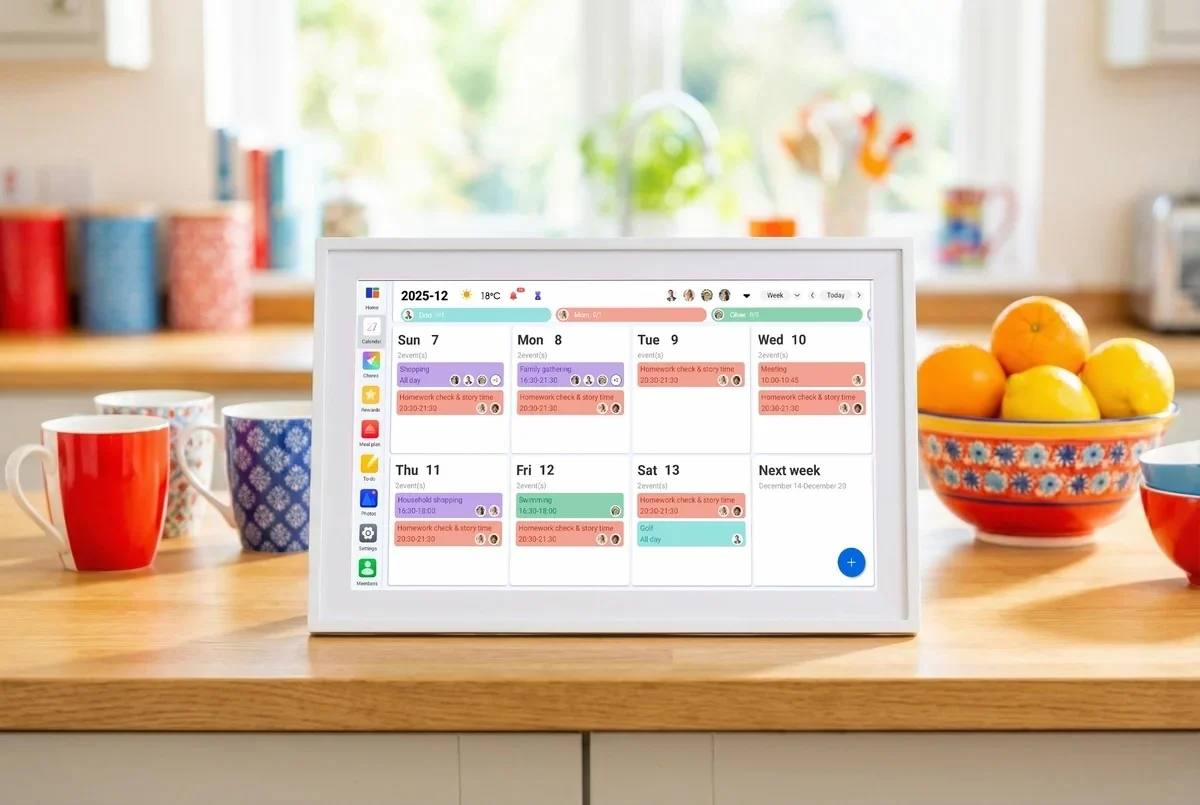
As the annual back-to-school season either approaches or is already underway for countless families worldwide, the intricate ballet of managing diverse schedules has once again taken center stage, often spiraling into a maelstrom of conflicting appointments, extracurricular activities, work commitments, and household responsibilities. The days when a simple paper calendar sufficed to orchestrate a family’s life are rapidly fading into obsolescence, giving way to a pressing demand for more sophisticated, integrated solutions. It is against this backdrop of escalating organizational complexity that Linkdaze introduces its innovative smart digital calendar – a purpose-built, wall-mounted touchscreen tablet meticulously designed to serve as the central command hub for an entire household, moving beyond the limitations of single-user scheduling tools. This strategic entry into the burgeoning smart home market addresses a critical need for seamless, multi-platform synchronization and intuitive management, promising to transform chaotic family logistics into a streamlined, harmonious operation.
The Evolving Landscape of Family Management and the Need for Centralization
The modern household operates on a dizzying array of digital platforms. From professional commitments managed through Outlook to personal events scheduled on Google Calendar, school activities tracked via various portals, and social engagements noted in iCloud, individual family members often inhabit disparate digital ecosystems. This fragmentation, while offering individual flexibility, creates a significant challenge for collective household coordination. The lack of a unified, easily accessible interface often leads to missed appointments, double-bookings, and a constant barrage of "what’s happening today?" inquiries, contributing to heightened household stress.
Linkdaze directly confronts this pervasive issue by offering unparalleled calendar compatibility. Its system boasts the remarkable ability to synchronize schedules across a spectrum of popular services, including Google Calendar, Apple’s iCloud, Microsoft Outlook, Yahoo Calendar, and Cozi – a dedicated family-organizing application. This broad interoperability is arguably one of Linkdaze’s most significant strengths, as it eliminates the cumbersome requirement for every family member to migrate to a single, monolithic calendar app. Instead, Linkdaze acts as a powerful aggregator, pulling diverse schedules into a single, cohesive view. To further enhance clarity and immediate comprehension, the device employs an intelligent color-coding system, making it effortless to identify individual family members’ commitments at a glance, thus transforming a potentially overwhelming display of events into an easily digestible visual timeline.
Hardware and Design: Tailored for the Modern Home
Understanding that different homes have varying spatial and aesthetic requirements, Linkdaze offers its smart digital calendar in two distinct sizes: a generous 15.6-inch model and a more compact 10.1-inch version. This flexibility allows consumers to select a device that best fits their available wall space and viewing preferences, ensuring that the Linkdaze calendar integrates seamlessly into kitchen, hallway, or communal living areas. The choice of a wall-mounted touchscreen tablet as the form factor is deliberate. Unlike a mobile phone or a general-purpose tablet, a dedicated wall display serves as a persistent, always-on information hub that is readily visible and accessible to everyone in the household, without the distractions of personal notifications or the need to locate a device. This strategic placement ensures that critical information, from daily schedules to chore assignments, is always front and center, promoting collective awareness and accountability.
Beyond its primary function as a calendar aggregator, Linkdaze has been engineered as a multifaceted household management tool. Its capabilities extend far beyond mere appointment tracking, encompassing features designed to streamline various aspects of daily family life. Users can leverage the system for assigning and tracking chores, complete with an integrated rewards system, fostering responsibility and cooperation among younger family members. The device also facilitates comprehensive meal planning, generates dynamic shopping lists based on planned meals, and offers myriad other organizational functionalities. Furthermore, in moments of quiet utility, the Linkdaze calendar can elegantly transition into a digital photo frame, continuously displaying cherished family memories, thereby blending practical utility with sentimental value and enhancing the aesthetic appeal of the home environment.
Revolutionizing Meal Planning with AI: The "Snap-to-Sync" Innovation
While the core calendar and organizational features provide robust functionality, Linkdaze distinguishes itself further through its innovative AI-powered meal planner, featuring a groundbreaking capability dubbed "Snap-to-Sync." This particular feature represents a significant leap forward in reducing the friction associated with digital meal planning. Traditionally, digitizing recipes or school lunch menus involved tedious manual data entry, a deterrent for many busy individuals. Linkdaze eliminates this hurdle by allowing users to simply take a photograph of a paper recipe, a handwritten meal plan, or even a printed school lunch menu. The device’s advanced AI then processes this image, extracting relevant information such as ingredients and meal timings, and seamlessly converts it into a digital meal plan. Crucially, this digital plan then automatically generates a corresponding shopping list, itemizing all necessary ingredients.
The "Snap-to-Sync" feature is not merely a novel gimmick; it offers tangible benefits for busy households. It saves considerable time and mental effort, simplifies grocery shopping by ensuring all necessary items are listed, and can contribute to healthier eating habits by encouraging planned meals over spontaneous, less nutritious choices. While the concept of AI-driven data extraction from images is not entirely new in the broader technological landscape, its dedicated integration and optimization within a family organizational device like Linkdaze represents a thoughtful application that significantly enhances its practical utility and helps it stand out in a crowded market.
A Strategic Business Model: Challenging the Subscription Norm

In an era where recurring revenue models have become the default for hardware and software companies alike, Linkdaze makes a bold and potentially disruptive choice: it does not require a monthly subscription for its main features. This decision stands in stark contrast to many of its competitors, most notably Skylight, another prominent smart-calendar brand, which offers additional features and functionalities through a $79 per month subscription plan. Linkdaze’s no-subscription model for core features is a critical element of its market positioning and value proposition.
This strategic pricing decision carries significant implications for both the company and the consumer. For the consumer, it represents a clear value advantage, offering a comprehensive, feature-rich device with a single upfront purchase, free from the ongoing financial commitment of a subscription. This can significantly lower the barrier to entry and increase the attractiveness of the product, especially for budget-conscious families. For Linkdaze, this approach could be a double-edged sword. On one hand, it serves as a powerful differentiator in a market increasingly saturated with subscription-based services, potentially driving higher initial sales and market penetration. On the other hand, it means the company must find alternative ways to sustain ongoing software development, customer support, cloud infrastructure, and future innovation without a steady stream of recurring revenue. Industry analysts suggest that this approach could position Linkdaze as a challenger brand focused on hardware sales and consumer-centric value, potentially banking on future premium, non-essential features, or partnerships to diversify revenue streams, rather than locking users into mandatory monthly fees for basic functionality.
Competitive Edge and Market Positioning
Beyond its subscription-free model, Linkdaze also offers a compelling price advantage. The 10.1-inch Linkdaze model is priced at an accessible $119.99, significantly undercutting Skylight’s comparable 10-inch model, which retails for $159.99. This combination of lower upfront cost and the absence of mandatory subscriptions creates a highly competitive offering in the smart display and family organization market.
The smart display market itself has seen substantial growth, with general-purpose devices like Google Nest Hub and Amazon Echo Show establishing a presence in many homes. However, Linkdaze carves out a distinct niche by specializing. While general smart displays offer broad functionalities including voice assistance, media consumption, and smart home control, they often lack the deeply integrated, family-specific organizational tools that Linkdaze provides. Linkdaze’s focus on calendar synchronization across diverse platforms, its chore management system, and its unique AI meal planning feature allow it to offer a more tailored and robust solution for the specific pain points of household management, rather than a jack-of-all-trades approach. This specialization positions Linkdaze not just as another smart display, but as a dedicated family command center.
Broader Implications and Target Audiences
The introduction of Linkdaze signifies a broader trend in the smart home ecosystem: a move towards more specialized, purpose-built devices that address specific user needs with greater depth and integration than generalist platforms. This product is poised to have a significant impact on several key demographics.
For busy parents, Linkdaze offers a beacon of order in an otherwise chaotic environment. It promises to reduce the mental load associated with managing multiple children’s schedules, parental work commitments, and household duties. The ability to visualize everyone’s day on a large, central screen can dramatically improve communication, reduce conflicts, and empower children to take more ownership of their responsibilities.
College students and individuals in shared living arrangements could also find Linkdaze to be an invaluable tool. In communal settings, coordinating chores, study schedules, shared meal planning, and social events among roommates can be surprisingly complex. A Linkdaze calendar provides a neutral, public platform for managing these shared responsibilities, fostering a more harmonious living environment and minimizing misunderstandings.
Furthermore, professionals and entrepreneurs who juggle an intensive schedule of interviews, project deadlines, client meetings, and personal appointments can leverage Linkdaze to bring a holistic view of their commitments into their home life. The ability to integrate work calendars with personal and family schedules on a dedicated display ensures that no critical appointment is overlooked, promoting a better work-life balance.
Beyond these groups, Linkdaze also holds potential for elderly individuals and their caregivers. The device could serve as a visual reminder for medication schedules, doctor’s appointments, and social engagements, aiding in independent living. The digital photo frame feature could also provide a comforting visual connection to family, enhancing well-being and reducing feelings of isolation.
In conclusion, Linkdaze’s entry into the market with its smart digital calendar represents a timely and well-considered response to the escalating demands of modern household organization. By prioritizing universal calendar compatibility, integrating innovative AI-driven features like "Snap-to-Sync," and adopting a consumer-friendly, subscription-free business model for its core functionalities, Linkdaze is poised to offer a compelling solution. It stands not just as a practical gift for harried parents but as a significant step forward in making our increasingly complex digital lives more manageable, integrated, and harmonious within the physical space of our homes. Its success will likely be a testament to the growing consumer demand for specialized, intelligent tools that truly simplify daily routines and foster better communication and coordination within the household unit.
