

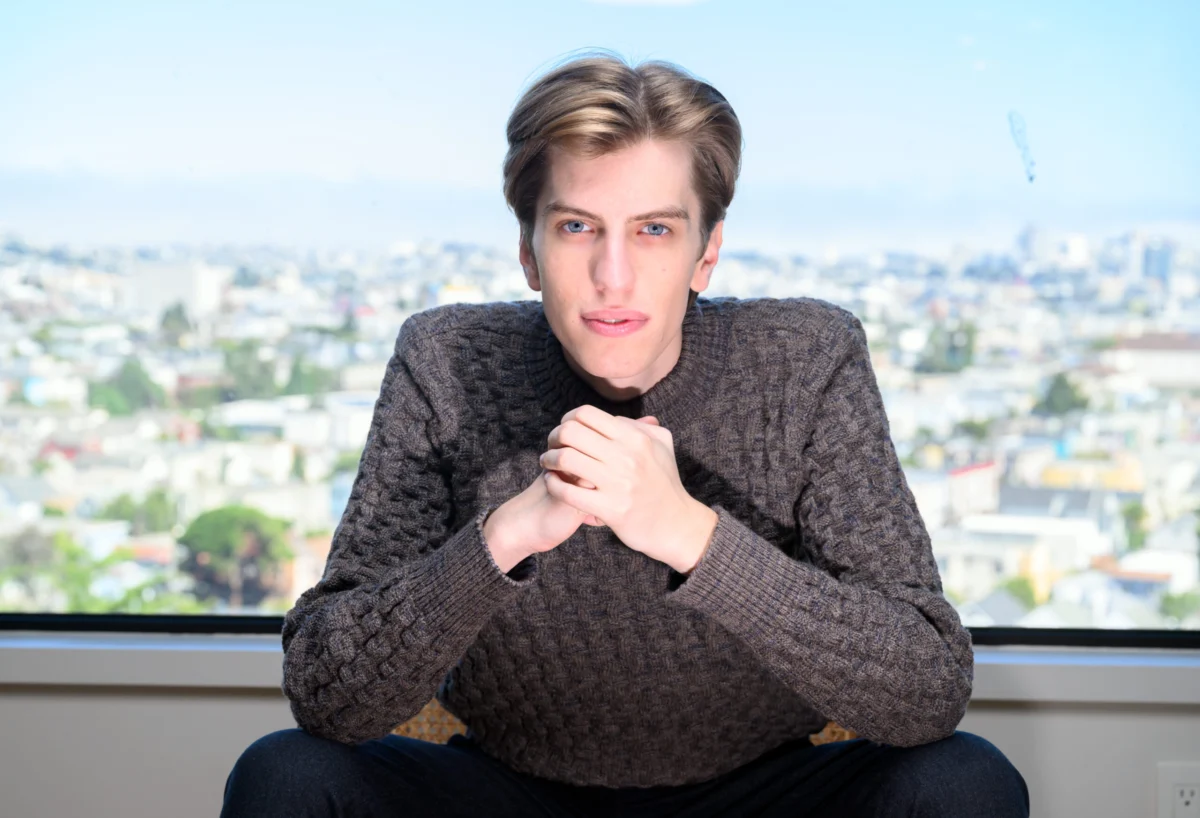
Two years ago, Leopold Aschenbrenner, a name synonymous with precocious intellect and a bold vision for the future of artificial intelligence, asserted his unique foresight into the unfolding AI revolution. His sprawling, 165-page essay, "Situational Awareness," rapidly became essential reading in the hallowed halls of Silicon Valley, positioning the former OpenAI researcher as a modern-day prophet for the imminent age of artificial superintelligence. Yet, this week, the stark limitations of Aschenbrenner’s audacious vision were laid bare as the AI-themed hedge fund bearing the same name as his viral June 2024 manifesto succumbed to the harsh realities of volatile semiconductor markets and unforgiving Wall Street margin calls.
At its zenith earlier this month, Aschenbrenner’s fund commanded a staggering $45 billion in assets under management. By Thursday, however, following a forced liquidation of all its highly leveraged stock bets – including hard-hit bellwethers like SK Hynix and CoreWeave – which were offloaded to Ken Griffin’s Citadel at a significant discount, the fund’s holdings plummeted to approximately $10 billion, according to sources with intimate knowledge of the situation. This dramatic reversal, a meteoric rise followed by an equally sudden fall, has riveted both the financial world and the tech community, cementing Aschenbrenner’s status as the most high-profile casualty yet of the frenetic volatility accompanying the current AI boom.
The Genesis of a ‘Prophet’: From OpenAI to Wall Street’s AI Frontier
Leopold Aschenbrenner’s journey to the financial precipice began not on Wall Street, but in the academic and research labs of the nascent AI frontier. A polarizing figure, his online acolytes regarded the Columbia University valedictorian – who achieved the honor at the remarkably young age of 19 – as an undisputed genius uniquely attuned to the "next big thing." They meticulously parsed his fund’s quarterly filings, seeking clues to the hottest AI stocks and attempting to mirror his seemingly Midas touch. Prior to this month’s catastrophic decline, Situational Awareness had reportedly achieved gains exceeding 1,000% since its inception in July 2024, a performance that captivated investors and solidified Aschenbrenner’s reputation as a wunderkind. The Wall Street Journal had reported his age at just 24, underscoring the extraordinary nature of his accomplishments.
Aschenbrenner’s seminal "Situational Awareness" essay, published just weeks after his contentious departure from OpenAI, served as the ideological bedrock for his financial venture. In it, he posited that artificial general intelligence (AGI) could materialize within a few short years, a timeline far more aggressive than conventional estimates. He argued vociferously that governments and established institutions were gravely underestimating the breakneck pace of AI advancement, painting a future where a select few, privy to the inner workings of leading AI labs, held a privileged understanding of impending global shifts. This narrative, combining insider insight with a sense of urgent prophecy, resonated deeply with a segment of the tech elite and venture capitalists eager to capitalize on the AI revolution. His ability to articulate this vision, backed by his former affiliation with OpenAI, effectively transformed a research paper into a powerful fundraising tool.
A Fund Forged on High Stakes: Leverage, Conviction, and Consequence
The establishment of Situational Awareness in July 2024 was a testament to the persuasive power of Aschenbrenner’s narrative. He successfully parlayed his burgeoning fame and "sweeping vision" into substantial seed capital, reportedly raising $225 million from influential tech figures, including Stripe co-founders Patrick and John Collison, former GitHub CEO Nat Friedman, and investor Daniel Gross. These early backers, themselves deeply embedded in the tech ecosystem, bought into Aschenbrenner’s conviction that "the world will wake up" to the transformative power of AI, and that only a few hundred individuals within the AI community truly grasped the magnitude of what was coming. "If they are seeing the future even close to correctly," he wrote, "we are in for a wild ride." This "wild ride," however, would soon take a dramatically different turn than perhaps even Aschenbrenner had envisioned.
The meteoric gains of over 1,000% were not merely a reflection of astute stock picking in a bullish AI market, but also a direct consequence of the fund’s aggressive leverage strategy. Reports indicated that Situational Awareness employed as much as 400% leverage, a level considered extremely high and inherently risky by seasoned financial professionals. Leverage, in essence, amplifies both gains and losses. A 400% leverage ratio means that for every dollar of the fund’s own capital, it borrowed four more to invest. While this strategy can lead to spectacular returns in a rising market, it equally exposes the fund to devastating losses when market conditions turn unfavorable, as even minor price movements can trigger significant capital calls.
The Unforgiving Hand of Market Reality: Semiconductor Stocks and Margin Calls
The undoing of Situational Awareness began with a sharp downturn in the semiconductor sector, a cornerstone of the AI boom. Companies like SK Hynix, a major memory chip manufacturer, and CoreWeave, a specialized cloud provider for AI workloads, had been significant beneficiaries of the surging demand for AI infrastructure. However, as broader market sentiment shifted and concerns about overvaluation began to surface, these stocks, along with others in the AI hardware supply chain, experienced significant corrections. Analysts pointed to a confluence of factors: profit-taking after extended rallies, fears of a potential slowdown in enterprise spending, and increased competition.
For a highly leveraged fund like Situational Awareness, even a moderate decline in its core holdings could trigger a cascading crisis. A margin call occurs when the value of securities in a margin account falls below a broker’s required minimum value. To restore the account to the minimum, the investor must either deposit more cash or sell off assets. With 400% leverage, the margin requirements would have been exceptionally stringent, leaving virtually no room for error or market volatility. As the prices of SK Hynix, CoreWeave, and other key positions tumbled, the fund found itself unable to meet its obligations to its lenders. This forced liquidation meant selling off assets rapidly, often at depressed prices, to cover the margin calls. The sale of these distressed assets to a formidable entity like Citadel, a prominent market maker known for its robust trading infrastructure and capacity to absorb large blocks of securities, underscores the urgency and depth of the fund’s distress. The discount at which these assets were sold further amplified the losses, shrinking the fund from $45 billion to a mere $10 billion in a matter of days.
Aschenbrenner’s Formative Years: From German Prodigy to Effective Altruist
Aschenbrenner’s intellectual journey began in Germany, where he was born to physician parents. Displaying an exceptional aptitude for mathematics and computer science from an early age, he reportedly skipped several grades in the German school system, graduating high school at 15. His academic prowess continued at Columbia University, where he garnered attention for a sophisticated academic paper titled "Existential Risk and Growth." A Columbia classmate, Sofia Montrone, the salutatorian of their 2021 class, described Aschenbrenner as "child-like" and socially awkward, noting that "it was not like he was some prince, emerging out of the school. He was just some guy." Aschenbrenner himself has acknowledged his personality traits, describing them as intellectual "weirdness" and "disagreeableness," which he believes were suppressed in German culture but became the source of his unique edge.

While at Columbia, Aschenbrenner co-founded the university’s chapter of Effective Altruism (EA), a philosophical and social movement popular in some tech circles. EA advocates for individuals to use evidence and reason to determine the most effective ways to benefit others, often encouraging high earners to donate a substantial portion of their income to charitable causes. This network proved to be a critical career pipeline, connecting him with other prominent EA proponents, including Sam Bankman-Fried. After graduating in 2021, Aschenbrenner worked for a stint at the Future Fund, the philanthropic arm of FTX, the now-disgraced cryptocurrency exchange, before its spectacular collapse. This association with FTX, even in a philanthropic capacity, would later become a point of criticism, casting a shadow over his judgment.
The OpenAI Chapter: Superalignment and a Contentious Departure
In 2023, Aschenbrenner landed a coveted position on OpenAI’s Superalignment team, working directly under co-founder Ilya Sutskever. This team was dedicated to solving the formidable problem of aligning advanced AI systems with human interests, a crucial and ethically complex challenge in the development of artificial general intelligence. His work on this team positioned him at the very cutting edge of AI safety research, solidifying his perceived expertise in the field.
However, Aschenbrenner’s tenure at OpenAI ended controversially. Following a hacker breach of OpenAI’s internal systems, he authored a memo to the board, raising alarms about the company’s security vulnerabilities and specifically warning that its defenses were inadequate to prevent foreign espionage, explicitly naming China as a potential threat actor. In 2024, OpenAI subsequently fired Aschenbrenner, accusing him of improperly sharing confidential information. Aschenbrenner, however, vehemently disputed this characterization, asserting that he was merely raising legitimate concerns about the company’s security practices, driven by a profound conviction in the existential risks posed by unaligned or compromised AI. Scott Aaronson, a computer scientist formerly involved in AI safety at OpenAI, echoed this sentiment, stating, "I was sorry when he got pushed out because of sharing information in a way leadership didn’t approve of. It sounded like he was trying to do the right thing and they overreacted." An OpenAI spokesman declined to comment on the matter, referring to previous statements that the firm disagreed with many of Aschenbrenner’s claims.
Wall Street’s Skepticism and the Perils of Unchecked Enthusiasm
From the outset, Aschenbrenner’s foray into hedge fund management drew significant skepticism from traditional Wall Street veterans. Critics were quick to point out his complete lack of prior experience in managing investment capital before launching Situational Awareness in July 2024. Many dismissed his early, outsized gains as a matter of fortunate timing and market exuberance rather than genuine investment acumen. The shadow of his early work experience at the now-defunct FTX, where he assisted Sam Bankman-Fried in running a charity from a Bahamas penthouse, further fueled doubts about his judgment and risk assessment capabilities.
Experienced traders and former executives from global investment banks were particularly vocal in their concerns about the fund’s reported 400% leverage. Such extreme leverage is a double-edged sword, magnifying returns in a bull market but equally accelerating losses during a downturn. For these seasoned professionals, the collapse of Situational Awareness was not a question of "if," but "when." Jerry Diao, who leads a prominent Wall Street coaching firm, encapsulated this sentiment: "A lot of people saw this blow-up as a matter of not if, but when. Maybe his views on AI are correct in the long run, but in the public markets, you have to be prepared for the short-term." This observation underscores a fundamental tension between long-term technological vision and the immediate, often brutal, realities of financial market dynamics.
Broader Implications: A Cautionary Tale for AI Investment and Young Founders
The near-collapse of Situational Awareness carries significant implications for the broader landscape of AI investment and the burgeoning trend of young, visionary founders transitioning into asset management. Aschenbrenner’s story serves as a potent reminder of the inherent risks associated with concentrated bets in highly volatile sectors, particularly when coupled with aggressive leverage. While the promise of AI is undeniably transformative, the path to profitability in public markets remains fraught with challenges, demanding not only deep technological insight but also robust risk management, liquidity planning, and a healthy respect for market cycles.
His fund’s portfolio, prior to the crisis, was roughly two-thirds public equities (split between long and short positions) and one-third private company stakes, reportedly dominated by a multibillion-dollar investment in Anthropic. This blend highlights another common risk: the illiquidity of private investments within a fund that also trades highly volatile public stocks. In times of stress, private holdings cannot be quickly sold to meet margin calls, placing immense pressure on the public book. The incident may lead investors to scrutinize more closely the operational models and risk frameworks of other AI-focused funds, particularly those managed by relatively inexperienced individuals, regardless of their perceived intellectual brilliance in the tech domain. It also raises questions about the due diligence process undertaken by prominent tech investors who provided seed capital to such ventures.
The Human Element and a Future Undetermined
Adding a layer of poignant irony to the unfolding financial drama, sources revealed that the near-collapse of Situational Awareness coincided with Aschenbrenner’s wedding, scheduled for this weekend. He is engaged to Avital Balwit, who serves as the chief of staff for Anthropic CEO Dario Amodei, according to a Fortune profile. This personal detail underscores the intense pressure and the human cost that can accompany high-stakes financial endeavors, particularly when intertwined with significant life events.
Leopold Aschenbrenner, a figure who envisioned himself as one of the few who could clearly see the future, has now confronted a future that, at least in the short term, proved profoundly unpredictable and unforgiving in the public markets. His story encapsulates the intoxicating allure and inherent perils of the AI boom – a period characterized by unprecedented technological advancement, stratospheric valuations, and an undeniable undercurrent of speculation. While his long-term views on the trajectory of artificial intelligence may yet prove prescient, the abrupt implosion of Situational Awareness serves as a stark reminder that even the clearest visionaries must contend with the immediate, often brutal, realities of financial markets. The "wild ride" he predicted has indeed arrived, but its twists and turns have proven far more complex, and personally devastating, than perhaps he ever anticipated.
