

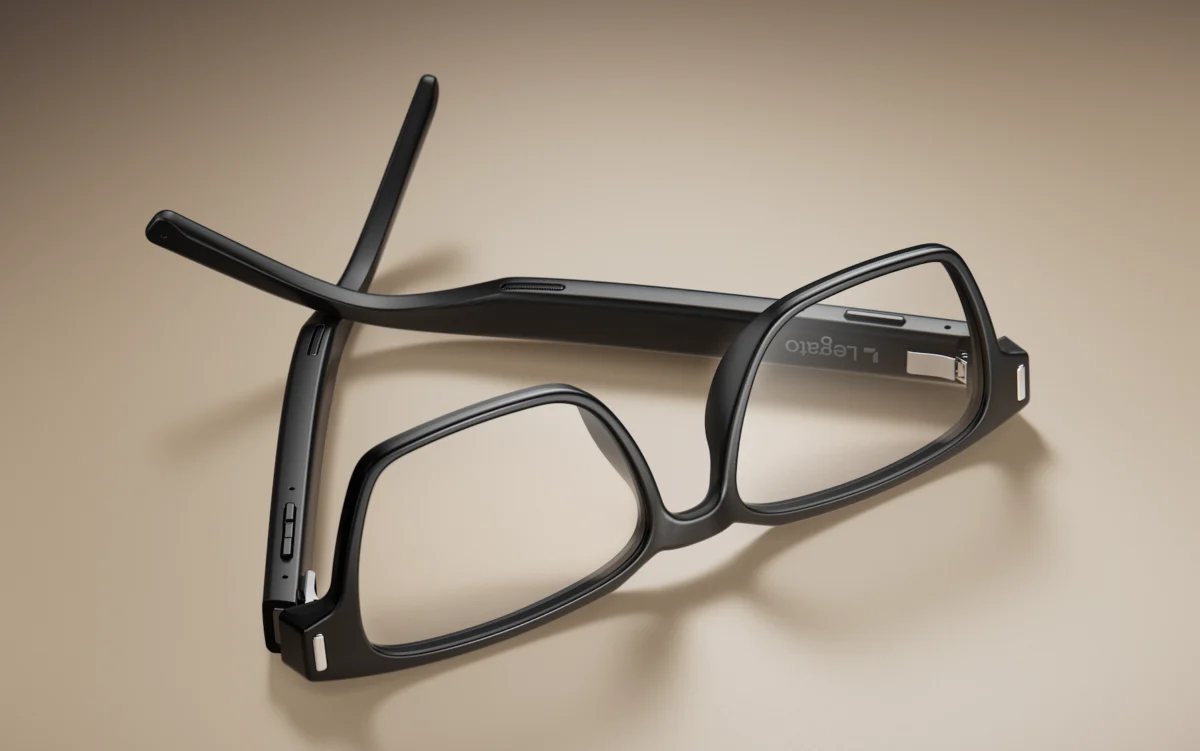
In a significant development poised to disrupt the multi-billion dollar hearing care industry, Legato, a new technology startup, has officially emerged from stealth mode, announcing $12 million in funding and unveiling its groundbreaking AI-powered hearing glasses. The company, founded by industry veterans Mehul Trivedi and Steve Romine, aims to bridge the substantial gap between the widespread prevalence of hearing loss and the alarmingly low rates of treatment in the United States. Legato’s innovative product, dubbed Legato Frames, integrates advanced hearing assistance technology directly into the arms of eyewear, offering a discreet, comfortable, and intelligent solution for millions.
The Unaddressed Crisis of Hearing Loss in America
Hearing loss represents a profound public health challenge in the United States, affecting an estimated 50 million adults. Despite this staggering number, a mere 20% of individuals diagnosed with hearing loss actively seek or receive treatment. This vast chasm between diagnosis and intervention is attributable to a complex interplay of factors, including the prohibitive cost of traditional hearing aids, perceived discomfort, and a persistent social stigma associated with wearing visible hearing devices.
Untreated hearing loss extends far beyond simply diminished auditory perception. Research has increasingly linked it to a host of serious health complications, including an elevated risk of cognitive decline and dementia, increased rates of depression and anxiety, and significant social isolation. The inability to fully participate in conversations and engage with one’s environment can lead to profound impacts on quality of life, mental well-being, and overall health. The economic burden is also considerable, encompassing lost productivity and increased healthcare costs. The traditional hearing aid market, while robust, has struggled to overcome these barriers, leaving a vast segment of the population underserved. With devices often costing thousands of dollars out-of-pocket and not typically covered by standard health insurance, accessibility remains a critical hurdle for many.
Legato Frames: A New Paradigm in Auditory Assistance
Legato’s core innovation lies in its Legato Frames, a device designed to fundamentally rethink how hearing assistance is delivered. Unlike conventional hearing aids, which can be conspicuous and often require an adjustment period, Legato Frames are engineered to look and feel like regular prescription eyewear. The company’s patented hearing-assistance technology is seamlessly embedded within the frame’s arms, making the device virtually indistinguishable from standard glasses. This design choice directly addresses the social stigma, offering a solution that users can wear confidently without feeling self-conscious.

The technological prowess behind Legato Frames is rooted in a proprietary acoustic system, a sophisticated signal-processing stack, and an innovative mechanical architecture. These elements have been meticulously developed to ensure the glasses are not only effective but also remarkably small and lightweight. The goal, as articulated by co-founder Mehul Trivedi, is to make hearing correction "as ubiquitous as vision," suggesting a future where addressing hearing loss becomes as routine and accepted as wearing eyeglasses for visual impairment. Trivedi envisions a world where people "almost forget about" their hearing assistance, much like they do with their glasses.
AI-Powered Clarity in Complex Soundscapes
One of the most significant advancements in Legato Frames is its reliance on an AI-powered system for sound processing. Traditional hearing aids often employ directional microphones, which excel at focusing on sounds originating from a specific direction, performing well in quiet, one-on-one settings. However, their effectiveness often diminishes dramatically in dynamic, noisy environments such as bustling restaurants, crowded gatherings, or public spaces, where distinguishing desired speech from background cacophony becomes a cognitively draining task.
Legato’s AI takes a different approach. By intelligently differentiating between ambient background noise and human voices, the system is designed to amplify only the voices, thereby making conversations clearer and less fatiguing. This sophisticated noise reduction and voice enhancement capability aims to mitigate the "cognitively draining listening experience" often associated with some traditional hearing aids. The objective is to provide an effortless, "set-it-and-forget-it" experience that delivers superior hearing in a wide range of real-world scenarios, without requiring users to constantly adjust settings.
Furthermore, despite their open-ear design, Legato Frames incorporate a dual-speaker system engineered to direct sound specifically towards the wearer. This system simultaneously cancels out sound that attempts to escape, ensuring that private conversations remain private. The company states that this technology can reduce sound leakage by 99% just a few inches from the ear, a crucial feature for maintaining discretion and preventing audio bleed in public settings.
A Founding Team Forged in Wearables and Hearing Care
The leadership behind Legato brings a formidable combination of expertise in both wearable technology and advanced hearing solutions. Co-founders Mehul Trivedi and Steve Romine boast extensive, high-level experience from their tenures at industry giants.

Mehul Trivedi is renowned for leading the creation of Bose Frames, a pioneering product that blended audio technology with eyewear, essentially laying the groundwork for the concept of smart glasses. After his impactful work at Bose, Trivedi transitioned to EssilorLuxottica, a global leader in eyewear, where he spearheaded smart eyewear initiatives and played a key role in projects like the Meta Ray-Bans. His career trajectory clearly demonstrates a deep understanding of integrating sophisticated electronics into stylish, everyday eyewear.
Steve Romine, on the other hand, possesses a rich background in the hearing care sector. At Bose, he was instrumental in running the company’s hearing aids division, gaining invaluable insight into the challenges and opportunities within the traditional hearing aid market. Following his time at Bose, Romine served as the Chief Operating Officer (COO) of Audicus, another prominent hearing care company, further solidifying his operational and strategic expertise in the field.
The genesis of Legato in late 2024 was a deliberate convergence of these two distinct yet complementary domains. Trivedi, after taking time off to explore the burgeoning intersection of hearing technology and smart eyewear, identified a unique technological approach he believed could marry the two effectively. He then reconnected with Romine, recognizing their combined skills and vision as the perfect foundation for a new venture. This strategic pairing of deep tech integration experience with profound hearing care market knowledge positions Legato uniquely to address longstanding industry challenges.
Financial Backing and Strategic Vision
Legato’s successful emergence from stealth is underscored by its impressive $12 million funding round, supported by notable investors including Neotribe Ventures, Listen, and Village Global. This significant capital injection is primarily earmarked for continued product development, ensuring the Legato Frames reach their full potential, and for initiating robust marketing efforts ahead of their anticipated launch.
The backing from these venture capital firms signals strong investor confidence in Legato’s potential to disrupt a market ripe for innovation. These firms likely recognize the immense untapped potential in the untreated hearing loss population and Legato’s novel approach to addressing the core barriers of cost, comfort, and stigma. The investment validates the company’s patented technology and the strategic vision of its founders.
Targeting the Largest Segment and Enhancing Accessibility

Legato is strategically targeting individuals with mild to moderate hearing loss. This segment represents the largest proportion of the overall hearing-loss population and is often the demographic most hesitant to adopt traditional hearing aids due to their perceived bulkiness, cost, and social implications. By offering a discreet and stylish alternative, Legato aims to lower the barrier to entry for millions who might otherwise delay or forgo treatment.
A key aspect of Legato’s strategy revolves around accessibility and affordability. While specific pricing details will be revealed closer to the launch later this fall, the company has indicated that Legato Frames will "cost a fraction" of traditional hearing aids. This commitment to affordability is critical for widespread adoption, especially considering the lack of comprehensive insurance coverage for many traditional devices.
Furthermore, Legato plans to make its frames available through select eye-care providers nationwide. This distribution model is highly strategic, leveraging existing infrastructure where people already go to address their vision needs. By positioning Legato Frames as an extension of eyewear, the company hopes to normalize hearing assistance. Importantly, Legato suggests that when purchased through an eye-care clinic, the frames "may be eligible for vision insurance," potentially further reducing the financial burden on consumers and integrating hearing care into a more familiar and accessible healthcare pathway.
Broader Implications and Future Outlook
The entry of Legato into the market carries significant implications for the future of hearing care and the broader wearable technology landscape.
- Market Disruption: Legato’s innovative approach could fundamentally disrupt the established hearing aid industry. By offering a more aesthetically pleasing, potentially more affordable, and technologically advanced solution, it could pressure traditional manufacturers to innovate more rapidly and reconsider their pricing and distribution models.
- Convergence of Health Technologies: Legato Frames exemplify a growing trend towards the convergence of health monitoring and assistance technologies within everyday wearables. Just as smartwatches monitor heart rate and activity, smart glasses are becoming platforms for integrating advanced functionalities, blurring the lines between fashion, technology, and health. This integration could lead to a future where vision and hearing correction are seamlessly combined, potentially offering a holistic sensory enhancement experience.
- Public Health Impact: If successful, Legato could significantly increase the rate of hearing loss treatment. By making hearing assistance more accessible and less stigmatized, the company has the potential to improve the quality of life for millions, reducing the associated risks of cognitive decline, depression, and social isolation. This could translate into substantial public health benefits and reduced societal costs in the long term.
- Challenges and Competition: While promising, Legato will face challenges. Consumer adoption of new technologies, particularly in the health sector, can be gradual. The market for smart glasses, while growing, has seen its share of successes and failures. Competition will also come from other innovative OTC hearing aids that have emerged following recent regulatory changes, as well as from other tech giants exploring smart eyewear. Legato’s ability to deliver on its promise of effortless, high-quality hearing in diverse environments will be paramount to its success.
- The Vision of Effortless Connection: Trivedi’s broader vision extends beyond simply "hearing the TV better." He emphasizes that improved hearing is fundamentally about "connection" – connecting to the world, to conversations, and to loved ones. He highlights the "impactful hearing health factors associated with better hearing," including reduced risks of dementia and depression. By creating a product that users can wear for extended periods, seamlessly integrating into their daily lives, Legato aims to foster these connections and contribute to a healthier, more engaged population.
As Legato prepares for its launch later this fall, the industry will be watching closely to see if its AI-powered hearing glasses can indeed deliver on their promise to transform hearing care, making it as effortless and ubiquitous as vision correction. The potential to close the vast treatment gap for hearing loss represents not just a business opportunity, but a profound chance to improve the lives of millions.
