

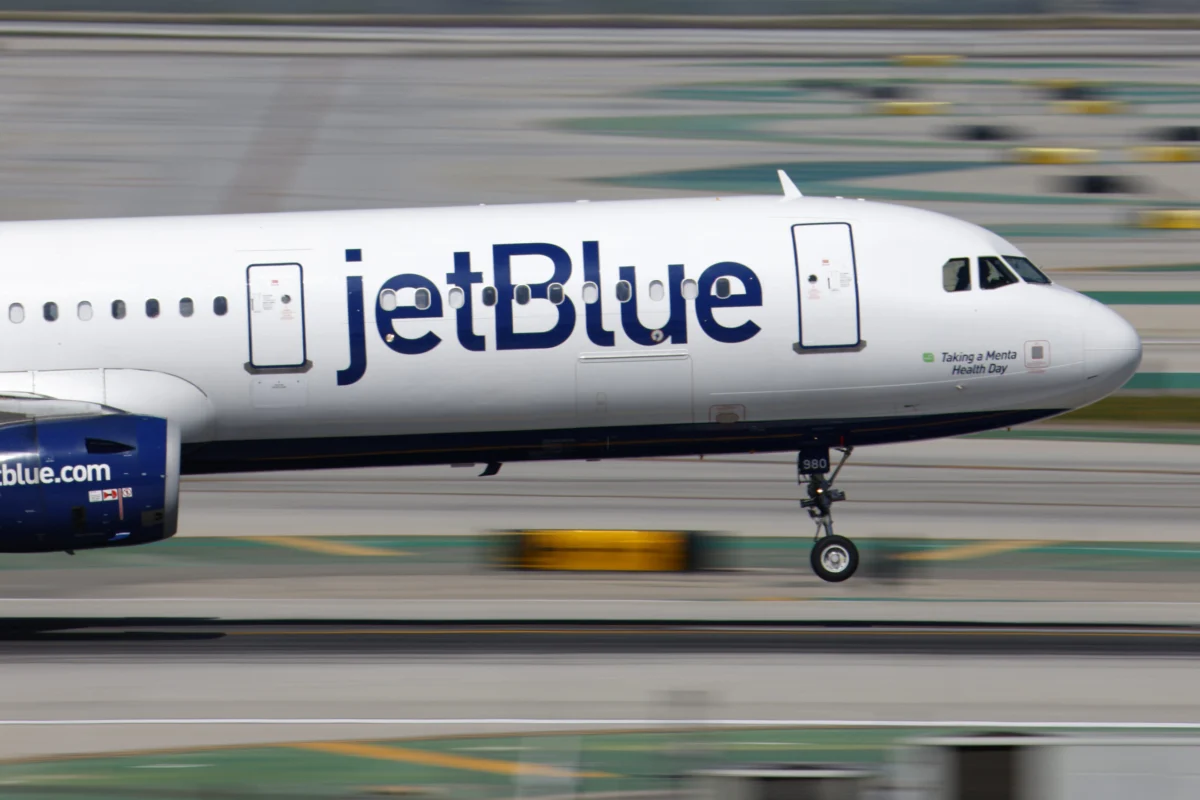
JetBlue Airways has officially launched BlueFirst, its highly anticipated domestic first-class product, now available for booking on more than 30 routes across its network. The airline confirmed the availability on Thursday, marking a significant strategic pivot aimed at bolstering profitability and catering to the escalating demand for premium travel experiences within the United States. This new offering is meticulously designed for domestic flights that do not currently feature JetBlue’s acclaimed lie-flat Mint business class, extending a higher tier of comfort and service to a broader segment of the airline’s operations.
The introduction of BlueFirst is a cornerstone of a comprehensive overhaul of JetBlue’s fare options, a strategic initiative first hinted at earlier this year. This broader restructuring includes the introduction of basic economy fares that forgo perks like advance seat assignments, a standard fare option, and a flexible fare that offers greater refundability and changeability. By segmenting its product offerings more distinctly, JetBlue aims to optimize revenue streams from diverse customer needs, from the most budget-conscious traveler to those prioritizing comfort, flexibility, and an elevated journey.
Strategic Imperative: Reaching for Profitability
JetBlue’s move into a dedicated domestic first-class product comes at a critical juncture for the airline. After navigating a period of financial turbulence, exacerbated by the global pandemic and subsequent operational challenges, the carrier has been actively seeking pathways to sustained profitability. The failed acquisition attempt of Spirit Airlines, which consumed significant resources and management attention, further underscored the need for internal strategic adjustments. Industry analysis has consistently pointed to the robust demand for premium cabin travel as a key driver of airline revenue in the post-pandemic era. Travelers, particularly those on business or leisure trips seeking enhanced comfort, have shown a willingness to pay more for spacious seating, improved service, and expedited airport processes. JetBlue’s expansion of its higher-priced offerings, therefore, aligns with a clear market trend and represents a calculated effort to capitalize on this resilient demand.
For years, JetBlue distinguished itself with its Mint business class, a groundbreaking lie-flat product that redefined premium travel on transcontinental and longer international routes, offering a high-value alternative to legacy carriers. However, a significant portion of JetBlue’s domestic network, particularly shorter and mid-haul flights, lacked a comparable premium option, leaving a gap between its standard economy offering and the premium Mint experience. BlueFirst is engineered to fill this void, providing a distinct upgrade that appeals to a broader demographic of travelers who desire more than an economy seat but may not require or have access to Mint.
BlueFirst: Product Details and Enhanced Experience
JetBlue has outlined the key features designed to distinguish the BlueFirst experience. Passengers booking these tickets will benefit from seats that offer a recline of up to 5 inches, providing a noticeable comfort improvement over standard economy seats. Crucially, these seats boast up to 7 inches more legroom compared to Main Cabin seats, a significant factor for passenger comfort, especially on longer domestic routes. Beyond the physical seating, the BlueFirst experience is enriched with a suite of amenities and services:
- Advanced In-Flight Entertainment: Each BlueFirst seat will feature Bluetooth-connected seatback screens, allowing passengers to pair their personal wireless headphones for a seamless entertainment experience. This modern amenity reflects JetBlue’s continued commitment to providing contemporary connectivity and entertainment options.
- Curated Food and Beverage Options: BlueFirst passengers will receive an enhanced selection of complimentary food and beverages, a step up from the standard Main Cabin offerings. While specific menus are expected to evolve, this typically includes premium snacks, alcoholic beverages, and more substantial meal options on longer flights.
- Expedited Airport Experience: To streamline the journey, BlueFirst ticket holders will receive Group 1 boarding priority, allowing them to settle into their seats earlier and store their carry-on luggage with ease. Additionally, access to expedited security lanes, where available, will help minimize pre-flight stress and optimize time at the airport.
Within the BlueFirst class, JetBlue intends to offer a tiered fare structure, similar to its broader fare categories. While the initial announcement confirmed "three tiered fare options," specific details regarding these tiers were not immediately available. Based on industry standards and JetBlue’s existing fare philosophy, these tiers are likely to differentiate based on factors such as baggage allowance, cancellation flexibility, change fees, and potentially additional perks like lounge access or higher TrueBlue points accrual. For example, a "BlueFirst Basic" might offer the core first-class seat and service with restricted flexibility, while a "BlueFirst Flex" could provide maximum flexibility for changes and cancellations, catering to business travelers whose plans often shift.
Timeline and Initial Rollout
The inaugural BlueFirst flight is scheduled for December 8, operating between Boston Logan International Airport (BOS) and Fort Lauderdale-Hollywood International Airport (FLL), a key leisure and business corridor for JetBlue. Following this launch, BlueFirst will quickly expand to routes connecting Fort Lauderdale with New York’s LaGuardia Airport (LGA), another high-demand route. The airline plans a phased rollout, with additional flights and routes being introduced progressively in the weeks and months following the initial launch.
To encourage adoption and allow customers to experience the new product, JetBlue is offering introductory fares on select BlueFirst routes. These promotional prices include a $299 fare from Boston to Fort Lauderdale, a $249 option from New York to Fort Lauderdale, and a $299 fare from New York to Liberia, Costa Rica. These introductory prices are strategically positioned to be highly competitive, aiming to entice travelers to upgrade from economy and sample the enhanced service.
CEO’s Vision and Customer Focus
JetBlue CEO Joanna Geraghty articulated the airline’s philosophy behind BlueFirst in a recent news release. "We designed BlueFirst to deliver a more accessible first-class experience that combines the thoughtful hospitality and service customers expect from JetBlue with exceptional value and comfort," Geraghty stated. "We’re excited that customers can now start making BlueFirst part of their travel plans." Her comments underscore JetBlue’s commitment to maintaining its reputation for customer-centric service while expanding into new revenue-generating segments. The emphasis on "accessible" suggests a pricing strategy that aims to be more competitive than traditional legacy carrier first-class offerings, aligning with JetBlue’s value-driven brand identity.
Competitive Landscape and Market Implications
The introduction of BlueFirst intensifies competition in the domestic premium travel market. JetBlue will now more directly compete with established first-class products offered by legacy carriers such as American Airlines, Delta Air Lines, and United Airlines on overlapping routes. While JetBlue’s Mint product has carved out a unique niche in the transcontinental market, BlueFirst positions the airline to capture a share of the broader domestic premium segment. Unlike Southwest Airlines, which operates a single-class cabin, JetBlue’s multi-tiered offering provides customers with more choices, a strategy increasingly favored by major airlines.
Industry analysts suggest that BlueFirst could be a critical component in JetBlue’s financial turnaround. "JetBlue has always excelled at product innovation, and BlueFirst is a logical extension of their successful Mint strategy," commented aviation analyst Michael O’Leary. "By bringing a premium experience to a wider range of domestic routes, they can tap into a growing segment of travelers willing to pay more for comfort and convenience. The challenge will be ensuring consistent service delivery across the expanding network and differentiating it sufficiently from legacy carriers’ offerings."
The decision to launch BlueFirst also reflects broader industry trends. According to recent reports from the International Air Transport Association (IATA) and various aviation consultancies, premium travel demand has recovered faster and stronger than economy travel post-pandemic. Corporate travel budgets, while still scrutinized, are increasingly allowing for premium cabin bookings, and leisure travelers are often willing to splurge on comfort for significant trips. This robust demand creates a fertile ground for JetBlue’s new product.
Operational Considerations and Future Growth
Implementing BlueFirst will involve significant operational adjustments for JetBlue. The airline will need to retrofit a substantial portion of its Airbus A320 and A321 narrow-body fleet to accommodate the new cabin configuration. This retrofitting process, typically phased over several months or years, will require careful planning to minimize disruption to flight schedules. The selection of specific aircraft types for retrofitting, which will likely prioritize those operating on the target BlueFirst routes, will be crucial.
Furthermore, training for cabin crew to deliver the distinct BlueFirst service standards will be essential. JetBlue’s reputation for friendly and attentive service is a core brand asset, and ensuring that the premium experience aligns with customer expectations will be paramount. This includes specialized training on enhanced food and beverage service protocols, personalized passenger interactions, and efficient handling of premium cabin ground services.
The long-term implications for JetBlue are substantial. If successful, BlueFirst could significantly boost the airline’s average revenue per passenger, improve load factors in premium cabins, and enhance its overall brand perception as a full-service carrier with a distinct premium offering. It could also help JetBlue attract a new demographic of business travelers who might have previously opted for legacy airlines due to the absence of a comparable first-class product on JetBlue’s shorter routes. Conversely, the success of BlueFirst will depend on its pricing strategy remaining competitive, the quality of the in-flight product consistently meeting expectations, and effective marketing to differentiate it in a crowded market. The strategic rollout across key routes like Boston-Fort Lauderdale and New York-Fort Lauderdale indicates a focus on high-traffic, high-yield corridors where the demand for an elevated travel experience is demonstrably strong. As JetBlue continues to refine its fare options and expand its premium offerings, BlueFirst is poised to play a pivotal role in the airline’s journey toward sustainable growth and enhanced profitability in the evolving aviation landscape.
