

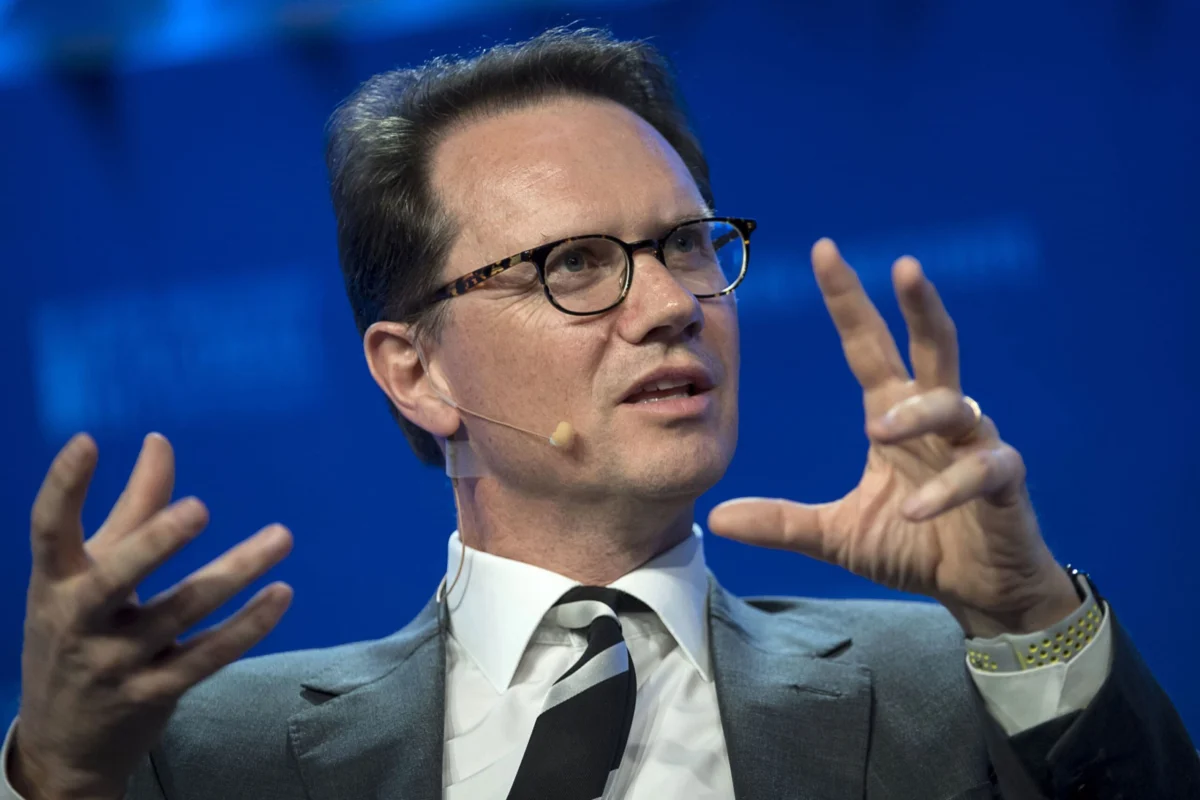
Los Gatos, California – Netflix, the global streaming behemoth, has announced a significant executive shakeup at its highest echelons, appointing veteran media executive Peter Rice as its new Chief Content Officer. This pivotal leadership change sees Rice, formerly a prominent figure at Disney and 21st Century Fox, stepping into the role previously held by Bela Bajaria, a ten-year Netflix veteran who spearheaded the company’s global content strategy and multi-billion-dollar budget. The announcement, made on Thursday, October 15, 2026, signals a decisive move by Netflix to address persistent engagement woes, stagnating viewership growth, and an increasingly competitive streaming landscape. The change comes just days after the company initiated a substantial round of layoffs, impacting approximately 1,000 employees, or 6% of its workforce, underscoring a period of intense re-evaluation and strategic realignment for the streaming giant.
The Shifting Landscape at Netflix: A Deep Dive into Content and Strategy
Netflix’s decision to bring in an external leader with Rice’s extensive background reflects a critical juncture for the company. For years, Netflix enjoyed unparalleled growth, pioneering the subscription video-on-demand model and captivating audiences worldwide with its aggressive content acquisition and original programming strategy. However, recent quarters have painted a different picture, marked by heightened competition, subscriber saturation in key markets, and a perceived decline in the consistent production of "water-cooler" level hits that once defined its brand.
The executive change is directly linked to these performance indicators. In July 2026, Netflix reported a modest 2% increase in viewership during the first half of the year, a figure that starkly contrasts with its historical growth trajectory. Co-CEO Ted Sarandos himself acknowledged these challenges last month during the Bloomberg Screentime conference, admitting that the company is "not growing as fast as I want us to." This sentiment, coupled with the recent mass layoffs—the largest since 2022 when Netflix reported its first quarterly subscriber loss in over a decade—indicates a systemic effort to recalibrate its cost base and content investment strategy. Brian Pitz, managing director and head of internet and interactive entertainment equity research at BMO Capital Markets, noted in a research brief that this round of layoffs likely reflects "more structural changes to the cost base than a reaction to near-term subscriber dynamics," suggesting a deeper, more strategic overhaul.
The battle for consumer attention has intensified dramatically. Nielsen data from July 2026 revealed that Netflix accounted for 7.8% of total TV viewership, significantly trailing YouTube, which commanded nearly double that share at 14.2%. This disparity highlights a fundamental challenge: while Netflix excels in premium, scripted entertainment, it faces formidable competition from free, user-generated content platforms and a rapidly expanding array of rival streaming services. The need for distinctive, high-impact content capable of cutting through the noise and generating widespread cultural conversation has become paramount.
Bela Bajaria’s Legacy: A Decade of Growth and Evolution
Bela Bajaria’s departure marks the end of a significant era for Netflix. Hired in 2016, Bajaria initially played a crucial role in establishing the streamer’s unscripted division and expanding its licensing and studio co-productions. Her influence grew substantially, culminating in her leadership of the company’s global content team and oversight of its formidable $20 billion annual content budget.
Under Bajaria’s guidance, Netflix delivered some of its most globally acclaimed and commercially successful series and films. Her tenure saw the release of cultural phenomena such as "Stranger Things," the Regency-era romance "Bridgerton," the global sensation "Squid Game," the critically lauded "Wednesday," "Adolescence," and "Beef." She also oversaw film projects like "Frankenstein" and "KPop Demon Hunters." Furthermore, Bajaria was instrumental in Netflix’s strategic push into live sports and events, securing groundbreaking deals with entities like the WWE and the NFL, and launching high-profile specials such as "The Roast of Tom Brady." This diversification into live content was a direct response to the evolving competitive landscape, aiming to capture real-time engagement and broader audience segments.
However, despite these successes, the narrative around Netflix’s content output began to shift. While still producing popular titles, the sheer volume of content, a hallmark of Netflix’s strategy, sometimes overshadowed the consistent delivery of universally resonant "must-watch" shows. The slowdown in Emmy recognition, for instance, offered a tangible metric of this evolving perception. In 2021, Netflix tied a record with 44 Emmy trophies in a single year. By 2026, this haul had diminished to 16 prizes, marking its lowest Emmy count in a decade. This decline, whether indicative of quality or simply the sheer volume of new contenders, suggested a need for a renewed focus on critically acclaimed, award-winning productions that also drive mass engagement.
Peter Rice: A New Chapter for Content Leadership
The appointment of Peter Rice is a clear signal of Netflix’s strategic intent to pivot towards a more curated, high-impact content strategy, potentially with a greater emphasis on theatrical releases and broad entertainment across various genres. Rice brings an unparalleled breadth of experience across television, film, and streaming, making him an ideal candidate to navigate Netflix’s current challenges.

Prior to joining Netflix, Rice held the prestigious position of chairman of Walt Disney Television and chairman of general entertainment for Disney. In this capacity, he oversaw a vast portfolio of channels and platforms, including ABC, Disney Channel, Hulu, and FX Networks. His tenure at Disney was marked by a string of critical and commercial successes, with his divisions producing over 300 shows, including Emmy darlings like "American Idol," "Modern Family," "Abbott Elementary," "The Bear," "Only Murders in the Building," and "Shogun." Crucially, under Rice’s leadership, Disney’s television properties garnered approximately 300 Primetime Emmy nominations between 2021 and 2022, securing nearly 60 awards. This track record of both popular and critically acclaimed programming directly addresses Netflix’s current need for "breakout hits" and awards recognition.
Beyond television, Rice’s experience extends deeply into film. Before his impactful run at Disney, he served as president of 21st Century Fox and CEO of Fox Networks Group, playing a pivotal role in the company’s strategic direction. Earlier in his career, as president of Fox Searchlight Pictures, he was instrumental in the release of a slate of acclaimed independent films, including "Slumdog Millionaire," "Juno," "Little Miss Sunshine," and "Sideways." These films not only achieved critical success but also demonstrated strong commercial viability, highlighting Rice’s ability to identify and nurture projects with both artistic merit and broad audience appeal.
Rice’s move to Netflix also follows a notable chapter in his career. He was famously ousted by then-Disney CEO Bob Chapek in mid-2022, a decision that sent ripples through Hollywood and saw him transition into an independent producer role. Since 2023, he has remained active in the film industry, producing projects like "Saturday Night" and "28 Years Later," and is currently developing a movie adaptation of the popular video game "Elden Ring." This continued engagement in film production, coupled with his deep studio experience, positions him uniquely to potentially steer Netflix towards a more integrated film strategy that bridges streaming and theatrical distribution.
A Chronology of Challenges and Strategic Realignment
The appointment of Peter Rice is not an isolated event but the culmination of a series of strategic shifts and challenges faced by Netflix over the past few years:
- 2022: Netflix reports its first quarterly subscriber loss in over a decade, leading to significant layoffs. This period marks a turning point, signaling the end of its hyper-growth phase and the beginning of a focus on profitability and efficiency. Around mid-2022, Peter Rice is ousted from Disney, a high-profile industry event.
- Late 2022/Early 2023: Co-founder Reed Hastings steps down as co-CEO, transitioning to Executive Chairman, further signaling a generational shift in leadership and strategy.
- July 2026: Netflix’s Q2 earnings report reveals a mere 2% increase in viewership in the first half of the year, disappointing investors and fueling concerns about content engagement.
- September 2026: Co-CEO Ted Sarandos publicly acknowledges the company’s growth struggles at the Bloomberg Screentime conference, setting the stage for potential executive action.
- Late Last Year (2025): Netflix reportedly attempts to acquire Warner Bros. Discovery’s film studio and streaming assets, signaling a potential interest in large-scale M&A to bolster its content library and studio capabilities.
- February 2026: Netflix is outbid for the WBD assets by Paramount Skydance, which ultimately completes its acquisition in early October 2026. This highlights Netflix’s strategic appetite for major content acquisitions.
- October 14, 2026: Netflix announces substantial layoffs, cutting approximately 1,000 employees, or 6% of its workforce, a move widely interpreted as a cost-cutting measure and a response to decelerating growth.
- October 15, 2026: The company formally announces Peter Rice as the new Chief Content Officer, replacing Bela Bajaria.
- October 18, 2026: Netflix is scheduled to release its fiscal third-quarter earnings, an event analysts will scrutinize closely for further insights into user engagement and financial performance following these major changes.
Wall Street’s Perspective and Broader Implications
Analysts have been quick to react to the news, largely interpreting Rice’s appointment as a positive signal for Netflix’s future content strategy. Brian Pitz of BMO Capital Markets suggested that Bajaria’s "sudden departure likely signals to us that user engagement may have remained soft throughout [the third quarter]," reinforcing the urgency behind the executive change.
The move is seen as a strategic play to inject fresh perspective and proven expertise into Netflix’s content engine. Steven Cahall, equity analyst at Wells Fargo, had previously emphasized the need for "breakout hits" for Netflix’s stock to recover, stating, "We see breakout hits as a must for the stock to work again." Rice’s track record of delivering both critically acclaimed and commercially successful content across diverse platforms aligns directly with this imperative.
Furthermore, Rice’s extensive experience with studio consolidation and M&A could be a significant asset for Netflix. Alicia Reese, senior vice president of equity research at Wedbush, noted, "[Rice’s] long tenure at Fox, and then Disney after its acquisition of Fox, gives him unique insight into the consolidation of two major studios, relevant if Netflix chooses to go after another studio." This speculation gains traction given Netflix’s reported interest in Warner Bros. Discovery assets and ongoing rumors about potential M&A targets, including assets from NBCUniversal after its anticipated split from parent company Comcast. Rice’s expertise could be invaluable should Netflix pursue further large-scale acquisitions to strengthen its content library and studio infrastructure.
Redefining Netflix’s Content Strategy: Balancing Quantity with Quality
With Rice at the helm of global content, Netflix is expected to refine its strategy, potentially moving away from a pure volume-driven approach towards a more focused pipeline of high-quality, culturally resonant projects. His background suggests a possible increased emphasis on:
- Theatrical Releases: Rice’s deep roots in film production and distribution, particularly with Fox Searchlight, could lead Netflix to explore more robust theatrical windows for its original films, balancing its streaming-first model with the prestige and marketing benefits of cinema releases.
- Broad Entertainment Appeal: His experience managing diverse networks like ABC, Hulu, and FX, which cater to a wide range of demographics and tastes, may encourage Netflix to diversify its content offerings further beyond its traditional scripted drama and comedy strongholds, potentially exploring more genre-specific or niche programming that still resonates widely.
- Award-Winning Content: Rice’s proven ability to cultivate award-winning shows could help Netflix regain its footing in the prestige television arena, driving critical acclaim that often translates into heightened brand perception and subscriber loyalty.
- Strategic Partnerships and IP Development: Leveraging his extensive network and experience, Rice could foster new partnerships and prioritize the development of strong intellectual properties (IP) that can be spun off into multiple series, films, and even video games, creating interconnected universes that deepen subscriber engagement.
In conclusion, the appointment of Peter Rice as Netflix’s Chief Content Officer is more than just an executive change; it represents a strategic inflection point for the company. Facing unprecedented competition, evolving audience habits, and the imperative to reignite growth, Netflix is signaling a renewed commitment to impactful, high-quality content that can capture global attention. Rice’s formidable background in both television and film, coupled with his proven track record of delivering critical and commercial successes, positions him as a crucial figure in shaping Netflix’s future and ensuring its continued relevance in the dynamic world of entertainment. All eyes will now be on Netflix’s upcoming earnings report and the strategic direction Rice will steer the content giant in the months and years to come.
