

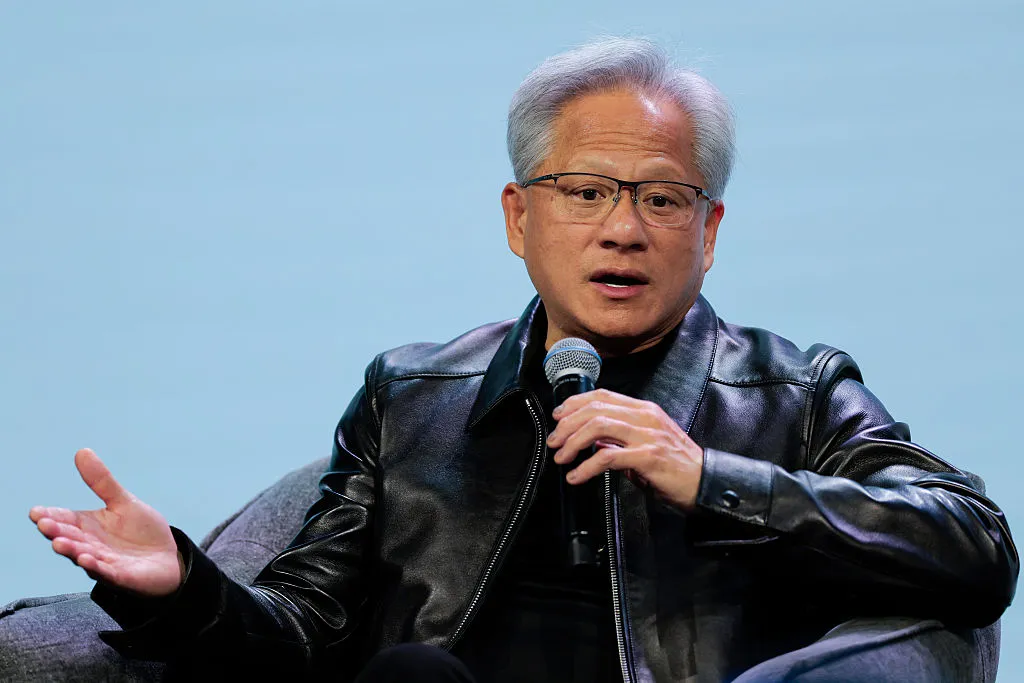
The tech world reeled this week following the abrupt resignation of Jensen Huang, Nvidia’s iconic co-founder and CEO, who had helmed the chipmaking giant for 33 years. His departure, effective immediately, reverberated across Silicon Valley and beyond, leaving a vacuum at the pinnacle of a company that has become synonymous with the artificial intelligence revolution. "It’s like a bomb went off," a neocloud founder told TechCrunch, capturing the palpable shock felt across the industry. The unexpected exit of the "embattled CEO," whose leadership has been under scrutiny amid an alleged affair with a Chinese spy, marks a pivotal moment for Nvidia and the myriad startups whose fortunes have been inextricably linked to its formidable financial and technological might.
A Legacy Defined by Innovation and Aggressive Expansion
Jensen Huang’s tenure at Nvidia, which he co-founded in 1993, has been nothing short of transformative. Starting as a graphics card manufacturer, Huang masterfully pivoted the company to become the undisputed leader in AI computing, largely through its pioneering Graphics Processing Units (GPUs) and the CUDA software platform. CUDA, a proprietary parallel computing platform and API model, has become the de facto standard for AI development, creating a formidable ecosystem that has long served as Nvidia’s competitive moat. Under Huang, Nvidia’s market capitalization soared, frequently surpassing a trillion dollars, driven by the insatiable demand for its chips that power everything from data centers to autonomous vehicles and sophisticated AI models.
However, Huang’s leadership, while visionary, was not without its controversies. Over recent years, Nvidia has adopted an exceptionally aggressive investment strategy, pouring tens of billions into AI startups annually. According to PitchBook data, the company participated in an astonishing 105 funding rounds in 2026 alone, often emerging as the single largest investor. This expansive dealmaking, while fueling the nascent AI industry, also raised eyebrows on Wall Street and among competitors, who viewed it as a potent tool for extending Nvidia’s market dominance. Concerns mounted that this strategy, while brilliant for securing market share and ensuring CUDA adoption, might be fiscally overzealous and potentially anti-competitive, effectively locking promising startups into Nvidia’s hardware ecosystem.
The Chronology of an Unexpected Departure
The events leading to Huang’s resignation unfolded rapidly. While the immediate trigger for his "embattled" status and eventual resignation has been widely reported as an alleged affair with a Chinese spy – a development that reportedly raised significant national security concerns given Nvidia’s critical role in global technology supply chains and AI development – the underlying pressure points had been accumulating.
- 1993: Jensen Huang co-founds Nvidia, laying the groundwork for what would become a tech titan.
- Early 2000s: Nvidia establishes itself as a leader in graphics processing, revolutionizing gaming.
- Mid-2000s: Huang makes the strategic bet on parallel computing with CUDA, inadvertently setting the stage for Nvidia’s AI dominance.
- 2012-2018: Nvidia’s GPUs become indispensable for deep learning research, propelling its stock price and market influence.
- 2020: Nvidia acquires Mellanox Technologies, a networking chipmaker, for approximately $7 billion, further expanding its data center capabilities and solidifying its infrastructure play. Umesh Padval, managing partner at Seligman Ventures, who knew Huang from his time on the Mellanox board, noted Huang’s deep personal involvement in such strategic acquisitions.
- 2023-2026: Nvidia embarks on an unprecedented investment spree, becoming a prolific venture capital force in the AI startup ecosystem, deploying billions annually. This period saw significant investments in neoclouds, inference providers, and open-weight model developers.
- 2026 (September): Nvidia confirms its intent to acquire Hugging Face, a leading platform for AI model development, for a staggering $13 billion, with the deal expected to close in 2027. This move, while cementing Nvidia’s software capabilities, further underscored the scale of Huang’s aggressive expansion.
- 2026 (November 12): Amid swirling reports and growing scrutiny over his personal conduct and its potential implications for national security, Jensen Huang officially steps down as CEO. Colette Kress, Nvidia’s long-serving Chief Financial Officer, is named interim CEO.
- 2026 (November 10 – coincidentally): Google announces two new specialized AI chips, a move that, while planned, took on heightened significance given the unfolding drama at Nvidia.
The Scale of Nvidia’s Investment Footprint
Nvidia’s venture capital activities under Huang were not merely opportunistic; they were foundational to the company’s ecosystem strategy. The scale of these investments is staggering. Beyond the 105 rounds in 2026, many of which saw Nvidia as the largest participant, the company’s portfolio boasts an impressive array of high-profile AI startups.
- Neoclouds and Inference Providers: Nvidia backed companies like CoreWeave when it was still private, providing crucial early capital to build out GPU-centric cloud infrastructure. It also participated in two rounds for Crusoe, including its massive $1.4 billion Series E, highlighting its commitment to sustainable and energy-efficient data center solutions that leverage its hardware. These investments ensured a robust demand channel for Nvidia’s high-performance GPUs.
- Open Weight Models: Recognizing the strategic importance of foundational AI models, Nvidia invested heavily in this space. Notable examples include stakes in Mistral AI, a rising European player in open-source AI, Lambda, and Black Forest Labs. As Zain Javaid, co-founder of the hardware company Ghost, observed, "Jensen’s initiatives are a big reason an ecosystem has emerged despite that," referring to the high costs associated with building such sophisticated models.
- Early-Stage Infrastructure: The Wall Street Journal reported that Nvidia injected an $800 million check into a $2 billion Series B round for Reflection AI last year, an open-source startup that, at the time, had yet to earn meaningful revenue. This exemplified Huang’s willingness to make significant, high-risk bets on companies critical to the future AI infrastructure, often at lofty valuations.
These investments were not just about capital; they were about cultivating an ecosystem. By providing such generous checks, Nvidia effectively incentivized and, in many cases, mandated, the use of its chips and CUDA platform. This symbiotic relationship fostered innovation within the AI startup community while simultaneously reinforcing Nvidia’s dominant market position, creating a virtuous cycle that was immensely difficult for competitors to penetrate.
Interim Leadership and a Shift Towards Conservatism
With Colette Kress stepping in as interim CEO, the immediate expectation is a significant recalibration of Nvidia’s investment strategy. Kress, as the company’s CFO, has a reputation for financial prudence and a more conservative approach compared to Huang’s entrepreneurial fervor. "She’s much more conservative," one investor noted, adding, "I don’t think she’s going to commit the same amount of money to keep the early-stage ecosystem going."
This shift is anticipated to be particularly pronounced in Nvidia’s investments into AI startups crucial to the "billion-dollar data center build-out." Wall Street had openly voiced concerns about Huang’s "rampant dealmaking" in this sphere, viewing it as potentially undisciplined and dilutive to shareholder value in the long run. Kress is expected to institute changes that align Nvidia’s investment activities more closely with traditional financial metrics and strategic imperatives, potentially favoring more mature companies or those with clearer revenue paths.
The implications for startups are profound. Under Huang, it was common for infrastructure companies needing, for instance, $100 million to $500 million in GPUs, to raise half of that amount at pre-money valuations of $1 billion or more directly from Nvidia. This strategic backing often served as a powerful signal, providing other venture capitalists with the confidence to participate in these highly valued rounds. "When Nvidia was on the cap table, everyone felt safe," said Umesh Padval. Without that imprimatur, traditional VCs are likely to exercise greater caution, potentially pausing certain dealmaking and contributing to a noticeable drop in valuations across the AI startup landscape. Nvidia is now expected to be far more selective in its new investments and likely to write smaller checks into its existing portfolio companies.
The Void and the Rise of New Contenders
Huang’s absence leaves a significant void, particularly for the startup ecosystem. His personal belief in open source and international development, especially in regions like Europe, meant Nvidia’s funding extended globally. "Jensen believed in open source and frankly speaking, Europe," said Shamillah Bankiya of Dawn Capital. The potential cessation of this global support, especially in regions outside America, "would be a massive funding and honestly ecosystem gap that no one can fill."
However, this seismic shift also presents an opportunity for rivals and smaller competitors. Nvidia’s previous dominance, while beneficial for its ecosystem, had at times bordered on a monopolistic influence, effectively dictating the technological choices for many startups. A more conservative Nvidia could open pathways for alternative hardware and software platforms.
Coincidentally, Google’s announcement of two new specialized AI chips this week, amidst the Nvidia fallout, underscores the intensifying competition in the AI hardware space. Investors with whom TechCrunch spoke expressed hope that other major cloud companies and chipmakers would step in to fill the investment vacuum left by Huang.
Dharmesh Thakker, a general partner at Battery Ventures, anticipates that Big Tech rivals will vie for Nvidia’s investment crown. He believes success will depend "upon who brings the best combination of a great product, an ecosystem and community to compete with CUDA, and the financial power to bankroll the ecosystem." Companies like Google, Amazon, Microsoft, and AMD certainly possess the financial muscle and cloud infrastructure to back mature startups, especially those that can drive adoption of their proprietary chips and cloud services.
Yet, Thakker remains skeptical that these rivals will replicate Nvidia’s unique model of pouring hundreds of millions into pre-revenue infrastructure startups. Nvidia’s willingness to make such large, early-stage, and often high-risk investments was driven by its specific need to cultivate an ecosystem around its GPUs and CUDA platform. Other tech giants, while keen to expand their AI footprint, may adopt a more traditional, risk-averse investment posture, focusing on later-stage companies with proven traction.
Resilience of the Broader AI Boom
Despite the immediate shockwaves and the anticipated tightening of capital for AI startups, few industry observers believe that Nvidia’s investment slowdown will, by itself, halt the broader AI boom. The fundamental drivers of AI — technological advancement, insatiable demand for automation, and the transformative potential across industries — remain robust.
While acknowledging Huang as a "massive loss for Nvidia," Amulya Vishwanath, an ex-Nvidia employee now running her own VC fund, emphasized the importance of accountability and the resilience of the ecosystem. "Founders and leaders must be held accountable," she stated, asserting that the ecosystem "is bigger than one person. That talent will, and must, continue to thrive."
The coming months will be critical for the AI startup landscape. While the era of Nvidia’s unrestrained investment may be drawing to a close, it may also usher in a more diversified and competitive funding environment, forcing startups to demonstrate stronger fundamentals and clearer paths to profitability. The immediate future promises a re-evaluation of valuations, a potential shift in investor priorities, and a dynamic reshuffling of alliances as the AI industry adapts to a post-Jensen Huang Nvidia. The bomb may have gone off, but the debris is now settling, revealing a new landscape for innovation.
