

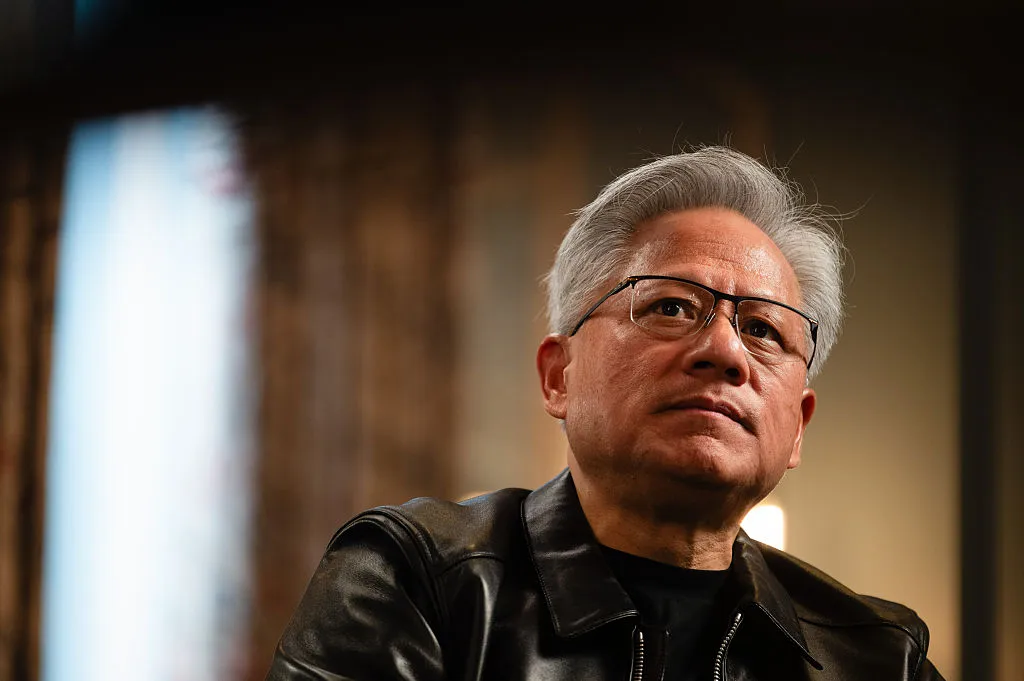
The abrupt departure of Jensen Huang from his role as CEO of Nvidia, a global titan in the semiconductor industry, has sent ripples across the technology landscape, particularly in Asia. The unfolding events, which include an independent investigation by Nvidia’s board into alleged links between Huang and a Chinese spy operation, coupled with his admission of an affair with Alice Huang, a former executive at Singapore-based chip company Megaspeed, have necessitated urgent responses from governments and industry leaders across the region. Nvidia’s pervasive influence, rooted in its near-monopoly of advanced graphics processing units (GPUs) essential for artificial intelligence development, means that any leadership upheaval or operational uncertainty carries significant economic and strategic implications for its vast network of partners and customers worldwide.
The Nexus of Allegations and Geopolitical Scrutiny
The catalyst for this global concern emerged on Sunday, November 8, [2026], when Nvidia’s board of directors initiated an independent investigation. This probe followed credible reports suggesting that Jensen Huang, a revered figure in the tech world and co-founder of Nvidia, had been a target in a sophisticated Chinese spy operation. Compounding the complexity of the situation, Huang subsequently admitted to an affair with Alice Huang, a former executive at Megaspeed, a Singapore-based cloud computing company. This admission, while personal, has inadvertently intertwined corporate governance with national security concerns, given the allegations of espionage. The timing of these developments is particularly sensitive, occurring amidst an escalating technological rivalry between the United States and China, where control over advanced semiconductors is a critical battleground.
Nvidia’s position in the global technology ecosystem is virtually unrivaled. The company commands an estimated 80% to 95% market share in the data center GPU market, which is the backbone of modern AI development. Its H100 and A100 GPUs are indispensable for training large language models and powering high-performance computing, making Nvidia a strategic asset for nations aiming to lead in AI. The company’s market capitalization has soared, reflecting its critical role and the explosive growth of AI. Consequently, any instability at its helm raises immediate questions about future chip supply, project continuity, and the broader trajectory of AI innovation globally.
A Chronology of Intertwined Events
The narrative surrounding Jensen Huang’s departure and its related investigations is a complex tapestry woven from corporate actions, personal admissions, and international probes.
The timeline began to crystallize well before the public announcement of Huang’s departure:
- June 2025: Singaporean authorities seized the passport of Alice Huang, then CEO of Megaspeed, a local cloud computing firm. This action was part of an ongoing investigation by the Ministry of Home Affairs (MHA) into suspected false declarations concerning server purchases made by Megaspeed. The primary focus of this probe was to ascertain whether servers initially shipped from Singapore to Malaysia were subsequently diverted to other nations without the requisite customs declarations, potentially bypassing export controls. Police noted that Alice Huang was not based in Singapore, necessitating the passport seizure to ensure her availability for questioning.
- February 2026: Singapore’s police concluded a significant portion of their investigation into Alice Huang. While they found insufficient evidence to definitively establish that she had committed offenses related to the suspected false declarations concerning server shipments, the authorities did determine that she had knowingly provided inaccurate information about her specific role at Megaspeed. As a result, she was issued a formal warning and subsequently barred from re-entering Singapore. Her passport, which had been seized, was returned that month. Notably, the Singapore MHA also publicly stated that it had received only "limited assistance" from U.S. authorities despite repeated requests for information pertaining to U.S. server manufacturer Supermicro, a potential key player in the server supply chain under investigation. The MHA confirmed that its broader investigation into Megaspeed and six other individuals remains ongoing, though the identities of these individuals and their alleged roles were not specified.
- Sunday, November 8, [2026]: The Nvidia board announced it had launched an independent investigation into reports of Jensen Huang being targeted by a Chinese spy operation. This formal corporate action immediately elevated the issue from rumor to a serious internal inquiry.
- Following November 8: Jensen Huang publicly admitted to having an affair with Alice Huang, the former Megaspeed executive who had been the subject of the Singaporean investigation. This admission directly connected the ongoing corporate probe at Nvidia with the earlier regulatory issues in Singapore, adding a personal dimension to the unfolding geopolitical and corporate drama.
This sequence of events paints a picture of intricate connections between a high-profile corporate leader, a complex international investigation into trade compliance, and broader national security concerns, all against the backdrop of an intensely competitive and regulated global semiconductor market.
Regional Repercussions and Official Responses
The ramifications of Jensen Huang’s departure and the associated investigations have been felt acutely across Asia, prompting varied official responses and strategic reassessments.
China:
The most direct and sensitive responses have emanated from China, given the allegations of a Chinese spy operation and the crucial role Nvidia chips play in its burgeoning AI sector.
- Official Denial: On November 10, China’s foreign ministry vehemently rejected the allegations linking a Chinese businesswoman to former Nvidia CEO Jensen Huang as a spy, labeling them "groundless and a smear against Beijing." This firm denial underscored China’s consistent stance against accusations of state-sponsored espionage in technological spheres.
- Export Control Opposition: Just days later, on Friday, a foreign ministry spokesperson reiterated China’s long-standing opposition to export controls that disrupt global supply chains, implicitly referencing U.S. restrictions on advanced semiconductor exports to China. The spokesperson also stated that the ministry was "not aware of reports" linking restricted Nvidia chips to a Shanghai data center associated with Alice Huang, carefully distancing Beijing from any potential illicit activities.
- Economic Impact and Project Uncertainty: Beyond official statements, Huang’s exit has cast a pall of uncertainty over more than $3 billion in Chinese AI computing projects. These ambitious initiatives are heavily reliant on Nvidia’s restricted processors, such as the A100 and H100, which are subject to stringent U.S. export controls designed to curb China’s access to cutting-edge AI capabilities. Reuters’ review of procurement notices, investment plans, and corporate disclosures revealed the extent of this reliance. The difficulty for Chinese companies to legally obtain these high-performance chips has already spurred domestic efforts to develop alternatives, such as Huawei’s Ascend series. However, these domestic alternatives currently lag significantly behind Nvidia’s offerings in terms of performance and ecosystem maturity, creating a substantial bottleneck for China’s AI ambitions. The uncertainty surrounding future supply could force Chinese firms to either significantly downgrade their AI projects or accelerate investments in less powerful, domestically produced hardware, potentially slowing their AI development trajectory.
Singapore:
Singapore’s role in the unfolding saga primarily centers on its ongoing investigation into Megaspeed and Alice Huang.
- MHA Investigation Details: The Ministry of Home Affairs’ detailed account of its investigation highlights Singapore’s commitment to upholding trade integrity and combating illicit financial flows. The seizure of Alice Huang’s passport in June 2025 and the subsequent probe into false declarations regarding server purchases underscore the city-state’s vigilance against activities that could undermine its reputation as a transparent and reliable global trading hub. The MHA’s finding that while direct offenses related to false declarations were not sufficiently proven, Alice Huang did knowingly provide inaccurate information about her role, led to her being issued a warning and barred from re-entry.
- International Cooperation Challenges: The revelation that Singapore received "limited assistance" from U.S. authorities despite repeated requests for information about Supermicro, a critical U.S. server maker, adds another layer of complexity. This highlights potential friction or gaps in international cooperation on sensitive cross-border investigations, especially when national security interests are perceived to be at play. Singapore, a nation that prides itself on its robust legal framework and its strategic position as a neutral tech and financial hub, faces the challenge of maintaining its integrity while navigating intricate geopolitical dynamics. The ongoing investigation into Megaspeed and six other individuals suggests a broader network of activities that authorities are still unraveling.
South Korea:
South Korea, a powerhouse in advanced memory semiconductors, maintains deep symbiotic ties with Nvidia.
- Critical Supply Chain Role: Major Korean chipmakers Samsung Electronics and SK Hynix are pivotal suppliers of High Bandwidth Memory (HBM) chips, which are essential components for Nvidia’s advanced AI processors. HBM’s ability to provide immense memory bandwidth directly to the GPU is critical for the performance of AI workloads, making South Korea an indispensable link in Nvidia’s supply chain.
- Reassurance and Continuity: Following Huang’s departure, South Korea’s Science Ministry quickly confirmed that Nvidia had reaffirmed its commitment to supply 260,000 advanced GPUs to the country and continue joint AI projects. This reassurance was crucial for calming market anxieties and ensuring the continuity of South Korea’s ambitious national AI strategy.
- Government Assessment: Recognizing the potential for broader disruptions, South Korea’s government AI strategy council convened an emergency meeting on Friday. The objective was to thoroughly assess the potential impact of Huang’s departure on the country’s AI industry, encompassing both hardware supply and collaborative research initiatives. This proactive stance underscores South Korea’s vulnerability as a major tech exporter and its strategic interest in a stable global semiconductor market.
Taiwan:
Taiwan’s position as the manufacturing heart of the global semiconductor industry makes it an indispensable partner for Nvidia.
- TSMC’s Indispensable Role: Taiwan Semiconductor Manufacturing Company (TSMC), the world’s largest dedicated independent semiconductor foundry, is the exclusive manufacturer of Nvidia’s most advanced GPUs. TSMC’s cutting-edge process technologies are crucial for producing the high-performance, power-efficient chips that power Nvidia’s dominance in AI. Any disruption to Nvidia directly impacts TSMC and, by extension, Taiwan’s economy.
- Official Optimism: Taiwan’s Economy Minister Kung Ming-shin expressed confidence that Huang’s departure was unlikely to significantly alter the growth trajectory of the global AI industry. This statement, while perhaps aimed at reassuring markets, reflects Taiwan’s underlying strength in chip manufacturing and its belief in the fundamental demand driving AI.
- Project Continuity: Reinforcing this sentiment, Taipei’s city government confirmed that Nvidia’s planned overseas headquarters in the city remained on track despite the leadership change. Officials stated that Nvidia had met its contractual obligations and pledged continued support for the project. This signifies a commitment from both sides to maintain their strategic partnership, vital for both Nvidia’s global operations and Taiwan’s status as a tech innovation hub.
Japan:
Japan, a nation actively investing in its domestic semiconductor capabilities and AI infrastructure, is also closely monitoring the situation.
- Strategic Importance: Japan’s Industry Ministry immediately announced that the government would closely monitor Nvidia following Huang’s resignation, acknowledging the chipmaker’s critical role in Japan’s nascent but ambitious AI semiconductor industry. Japan is investing heavily in establishing advanced chip fabrication capabilities (e.g., through Rapidus) and fostering AI adoption across various sectors, making stable access to leading-edge AI hardware paramount.
- Cautious Assessment: Deputy Chief Cabinet Secretary Masanao Ozaki stated that it was "too early to assess the impact" on the global AI industry, reflecting a cautious but watchful approach. He stressed Japan’s unwavering commitment to ensuring a stable supply of semiconductors, a national priority given past supply chain vulnerabilities. This incident serves as another reminder of the need for supply chain resilience and diversification for Japan.
Broader Implications and Future Outlook
The departure of Jensen Huang from Nvidia, intertwined with allegations of espionage and an internal investigation, extends far beyond a typical corporate leadership change. It underscores several critical themes shaping the contemporary global technological and geopolitical landscape:
- Supply Chain Fragility and Resilience: The incident highlights the inherent fragility of highly concentrated global supply chains, particularly for critical components like advanced AI chips. Nvidia’s near-monopoly means that any internal or external shock can have cascading effects worldwide. This event will likely intensify efforts by nations and corporations to diversify supply chains, foster domestic production capabilities, and reduce reliance on single points of failure. Initiatives like the U.S. CHIPS Act, Europe’s Chips Act, and Japan’s investments in Rapidus will gain renewed urgency.
- Escalating Geopolitical Tensions and Tech Decoupling: The allegations of a Chinese spy operation targeting a leading U.S. tech executive directly fuel the ongoing U.S.-China tech rivalry. This incident could further accelerate the trend of technological decoupling, where nations increasingly seek to control their own technological destinies, often at the expense of global integration. This could lead to more stringent export controls, increased scrutiny of foreign investments, and a more fragmented global tech ecosystem.
- Corporate Governance and National Security: The investigation into Huang’s conduct and the alleged spy operation raises profound questions about corporate governance in an era where national security interests are increasingly intertwined with corporate operations. Companies operating in strategic sectors face immense pressure to bolster internal security protocols, conduct thorough due diligence, and navigate complex ethical and legal landscapes that transcend traditional business concerns. The incident serves as a stark reminder that personal affairs of executives in critical industries can have significant national security implications.
- Future of AI Development: While industry leaders like Taiwan’s Economy Minister expressed confidence in the long-term growth of the AI industry, the short-term impact on specific projects and the pace of innovation, particularly in China, cannot be ignored. The uncertainty surrounding Nvidia’s leadership and chip supply could compel AI developers to explore alternative hardware architectures, invest more in open-source AI models that are less hardware-dependent, or accelerate the development of domain-specific accelerators, potentially diversifying the AI hardware landscape in the medium term.
- Nvidia’s Strategic Trajectory: Nvidia faces a critical period of transition. The company will need to swiftly address corporate governance concerns, reassure investors, and articulate a clear vision for its post-Huang leadership. Maintaining its technological edge, navigating complex geopolitical landscapes, and sustaining its aggressive innovation pipeline will be paramount to preserving its market dominance and investor confidence. The impact on its R&D initiatives, strategic partnerships, and stock performance will be closely watched.
In conclusion, Jensen Huang’s departure from Nvidia marks a pivotal moment, intertwining the personal and professional with profound geopolitical and economic implications. As investigations continue and the full scope of the fallout becomes clear, the incident serves as a potent reminder of the intricate and often volatile interplay between corporate leadership, national security, and the global economy in the age of artificial intelligence. The responses across Asia underscore the region’s critical role in the global tech ecosystem and its immediate vulnerability to such high-stakes developments.
