

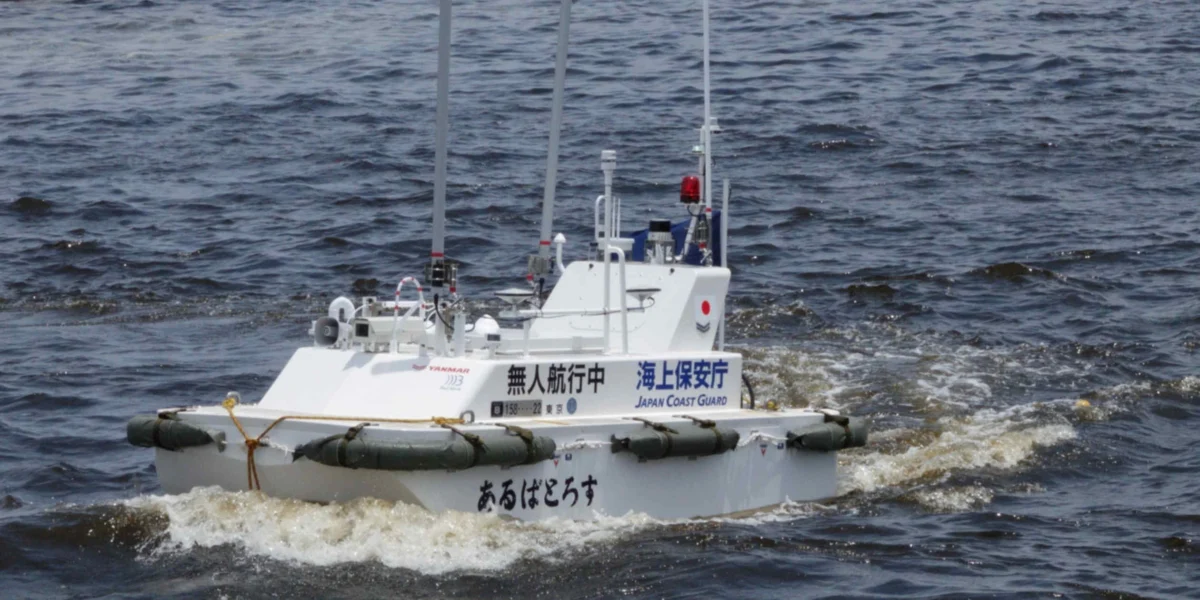
TOKYO – The Japan Coast Guard has embarked on a significant technological advancement, initiating trials of the nation’s first fully automated boat navigation system developed by Yanmar Holdings. This cutting-edge technology is poised to revolutionize the response to maritime incidents, particularly those involving the release of dangerous gases, by enhancing safety protocols and substantially reducing the human labor required for such critical operations. The pilot program, which commenced recently near the bustling port of Yokohama, represents a forward-thinking step in maritime safety and emergency response capabilities for Japan.
The testing phase involves a specially designed uncrewed vessel equipped with sophisticated gas detection apparatus. This autonomous boat is engineered to navigate complex maritime environments, including areas affected by accidents, with precision and efficiency. The core objective is to enable rapid and accurate identification of hazardous gas leaks, such as liquefied petroleum gas (LPG) or other volatile substances, which can pose severe risks to both rescue personnel and the surrounding environment. Traditional methods often necessitate manned vessels approaching potentially dangerous zones, exposing crews to significant risks. Yanmar’s autonomous system aims to mitigate these dangers by deploying an unmanned platform to conduct initial assessments.
Background of the Initiative
Maritime accidents, while infrequent, can have devastating consequences. Incidents involving the leakage of hazardous gases from cargo ships, offshore platforms, or even recreational vessels present a unique set of challenges for emergency responders. The immediate aftermath of such an event requires swift action to assess the extent of the leak, identify the specific gases involved, and determine the safest approach for containment and mitigation. Historically, this process has relied heavily on the expertise and courage of human teams, often operating under extreme duress and in close proximity to potential threats.
The development of Yanmar’s autonomous gas detection boat stems from a growing recognition within maritime safety organizations worldwide of the need for advanced technological solutions to augment human capabilities. Japan, as a nation with extensive coastlines and a significant maritime industry, has consistently prioritized the safety and security of its waters. This initiative aligns with Japan’s broader strategy to embrace innovation in critical infrastructure and emergency services. Yanmar Holdings, a company with a long-standing reputation in marine engineering and propulsion systems, has leveraged its expertise to create a system that is not only technologically advanced but also robust and reliable for demanding operational conditions.
The Chronology of Development and Testing
While specific dates for the full development cycle are not publicly available, the announcement of the testing phase in late August 2026 marks a significant milestone. This period of testing near Yokohama is expected to involve a series of simulated scenarios designed to evaluate the boat’s performance under various conditions. These scenarios will likely include different weather patterns, sea states, and types of simulated gas releases.
The development process would have involved extensive research and development, encompassing the design of the uncrewed vessel, the integration of advanced sensor technology for gas detection, and the sophisticated algorithms required for autonomous navigation and decision-making. The selection of Yokohama as the testing ground is strategic, given its status as one of Japan’s busiest ports and its proximity to a hub of technological innovation. This location provides a realistic operational environment and access to specialized maritime expertise.
It is reasonable to infer that the testing phase will proceed through several stages. An initial stage would focus on basic navigation and sensor calibration in controlled environments. This would be followed by more complex simulations replicating various accident scenarios. The data collected during these tests will be crucial for refining the system’s performance, ensuring its accuracy in gas detection, and optimizing its autonomous navigation capabilities. Following successful trials, a period of evaluation and potential further refinement would precede any official deployment.
Supporting Data and Technological Capabilities
The efficacy of Yanmar’s autonomous gas detection boat hinges on its advanced technological features. The uncrewed vessel is likely equipped with a suite of sensors capable of detecting a wide range of hazardous gases, including but not limited to:
- Flammable Gases: Such as methane, propane, and hydrogen, which pose explosion risks.
- Toxic Gases: Including carbon monoxide, hydrogen sulfide, and chlorine, which can be lethal even in low concentrations.
- Asphyxiant Gases: Such as nitrogen and carbon dioxide, which can displace oxygen and lead to suffocation.
These sensors will be integrated into a sophisticated onboard system that can process data in real-time, identify specific gas signatures, and quantify their concentrations. The accuracy of these measurements is paramount, as it directly informs the subsequent response actions taken by the Coast Guard.
The autonomous navigation system is equally critical. It likely employs a combination of GPS, inertial navigation systems (INS), radar, lidar, and advanced visual recognition technologies to enable the boat to operate independently. This system must be capable of:
- Path Planning: Generating optimal routes to the incident site, avoiding obstacles and navigating safely.
- Obstacle Avoidance: Dynamically adjusting its course to steer clear of other vessels, debris, or submerged objects.
- Station Keeping: Maintaining a precise position relative to the source of the gas leak for continuous monitoring.
- Return-to-Base Functionality: Safely returning to its home port or a designated recovery area.
The uncrewed nature of the boat is a significant advantage. By eliminating the need for human operators to enter potentially hazardous zones for initial assessment, the risk of injury or fatality is drastically reduced. This allows for a more efficient allocation of human resources, enabling trained personnel to focus on strategic decision-making and specialized intervention tasks rather than immediate reconnaissance in dangerous conditions.
The platform itself is likely designed for resilience, capable of withstanding challenging maritime conditions, including rough seas and adverse weather. Its propulsion system would be optimized for maneuverability and efficiency, allowing for sustained operation in the vicinity of an incident.
Statements and Reactions from Related Parties (Inferred)
While direct quotes from specific individuals involved in the trials are not yet available, it is highly probable that key stakeholders have expressed optimism and highlighted the significance of this technological leap.
Japan Coast Guard Officials: It can be inferred that officials within the Japan Coast Guard would emphasize the enhanced safety and operational efficiency that this autonomous system promises. They would likely articulate how this technology aligns with their mission to protect lives and property at sea, particularly in the face of increasingly complex maritime threats. The ability to deploy an unmanned asset to assess dangerous situations before committing manned crews would be a primary talking point, underscoring a commitment to the well-being of their personnel. They might also highlight the potential for this technology to improve response times and the overall effectiveness of maritime disaster management.
Yanmar Holdings Representatives: Representatives from Yanmar Holdings would likely express pride in their company’s contribution to national safety and technological innovation. They would probably underscore the years of research and development that have gone into creating this system, emphasizing its reliability, precision, and potential for widespread application. Their statements would likely focus on Yanmar’s commitment to providing advanced solutions that address critical societal needs and contribute to a safer maritime future. They might also hint at future developments and the potential for this technology to be adapted for other maritime applications.
Maritime Safety Experts and Industry Analysts: Experts in maritime safety and technology would likely view this development as a crucial step forward in the evolution of emergency response. They might comment on the growing trend of automation in maritime operations and the specific benefits of applying it to hazardous gas detection. Analysts could point to the potential for this technology to set new standards for maritime safety protocols and encourage similar innovations in other countries. They might also discuss the economic implications, such as potential cost savings through reduced risk and optimized resource allocation.
Broader Impact and Implications
The successful integration of Yanmar’s autonomous gas detection boat into the Japan Coast Guard’s operational framework carries significant implications for maritime safety, technological development, and national security.
Enhanced Maritime Safety: The most immediate and profound impact will be the enhancement of safety for rescue personnel. By allowing an uncrewed vessel to perform initial hazardous gas assessments, the risk of human exposure to toxic or explosive atmospheres is dramatically reduced. This could lead to fewer injuries and fatalities among Coast Guard members and potentially save lives by enabling quicker and more confident decision-making in critical situations. Furthermore, faster and more accurate detection of gas leaks can contribute to the containment of environmental damage, protecting marine ecosystems and coastal communities.
Technological Advancement and Innovation: This initiative serves as a powerful demonstration of Japan’s commitment to leveraging advanced technology for public safety. The success of this pilot program could spur further research and development in autonomous maritime systems, not only within Japan but also globally. It highlights the potential for unmanned vessels to play an increasingly vital role in various maritime operations, from environmental monitoring and search and rescue to cargo inspection and port security. The integration of sophisticated sensors with AI-driven navigation represents a significant technological achievement.
Economic and Operational Efficiency: While the initial investment in such advanced technology may be substantial, the long-term economic benefits are considerable. Reduced risk to personnel translates into lower healthcare costs and fewer disruptions due to accidents. Moreover, the ability of an autonomous system to operate continuously and perform tasks that would otherwise require multiple manned vessels can lead to increased operational efficiency and optimized resource allocation for the Coast Guard. This could free up human resources for more complex strategic roles.
National Security and Maritime Domain Awareness: In a broader sense, this technology contributes to Japan’s maritime domain awareness and its ability to respond effectively to a range of maritime incidents, including those that could have national security implications. The ability to quickly and safely assess situations involving hazardous materials strengthens the nation’s resilience against potential threats and accidents.
Future Outlook: The testing of this autonomous gas detection boat is likely just the beginning. As the technology matures and proves its effectiveness, it could be integrated into a wider range of maritime safety operations. Future iterations might include enhanced capabilities for sampling, real-time data transmission to command centers, and even limited intervention capabilities, such as the deployment of containment booms. The success of this program will undoubtedly pave the way for further innovation in the field of unmanned maritime systems, shaping the future of maritime safety and operations for decades to come. The collaboration between a leading maritime technology firm like Yanmar and a critical government agency like the Japan Coast Guard exemplifies a proactive approach to addressing the evolving challenges of the maritime environment.
